A backyard cleanup goes fastest in one order: make the yard safe, sort what comes out, remove the bulk, then tidy and maintain. Most people lose the weekend at the third step, because the pile of branches, old furniture and soil outgrows the bin. Plan the disposal before you pick up a rake. If the job is bigger than your council’s bins and collections allow, as it often is for an end-of-lease clean, a neglected rental or a site handover, our garden waste removal takes the whole pile in one visit.
TL;DR
- Work in this order: safety check, clear debris, sort waste, prune and weed, clean hard surfaces, then dispose.
- Sort green waste from hard rubbish and from hazardous items. Paint, pesticides, batteries and pool chemicals never go in a household bin.
- Council bins and hard-rubbish collections have strict size, volume and booking rules, and spring waits can be long.
- Large clearances, tree waste, old furniture and mixed piles are quicker with a single removal booking.
- Keep the yard maintained with regular mowing and trimming so the next cleanup is smaller.
Table of Contents
- What a backyard cleanup actually involves
- Before you start: a safety and planning pass
- The checklist, in order
- Sort the waste before you move it
- What to check with your council first
- Worked example: an end-of-lease backyard
- When to book a removal instead
- Our part in your cleanup
- Keep the next cleanup small
- FAQ
- Sources
What a backyard cleanup actually involves
A cleanup is not gardening. It is clearing a space so that gardening, a handover or a sale can happen. Australian gardening guides agree on the core tasks: clear fallen branches, leaves, rotten fruit and weeds, then clean paths and outdoor furniture before the warm weather arrives. After that comes selective pruning, mulching, an irrigation check and lawn repair.
For the people most likely to be reading this on our site, that list has a different emphasis:
- Tenants need the yard returned in the condition set out in the lease, which usually means no rubbish, no dumped furniture and tidy beds and lawn.
- Property managers need a yard that is clean and safe between tenancies, without the cost of repeated visits.
- Businesses and construction firms with outdoor areas, courtyards or site perimeters need offcuts, pallets, green waste and old fittings gone without disrupting operations.
The checklist below suits all of them. The steps are the same. The scale differs.
Before you start: a safety and planning pass
Spend ten minutes walking the yard with a notebook. Bakyard’s checklist suggests inspecting plants, paths, drains and beds first, then clearing slippery surfaces, blocked drains and hazardous branches before anything else. That order is sound because the hazards are what injure people.
Write down:
- Hazards. Broken glass, rusty metal, loose paving, wasp or ant nests, hanging limbs, sharp offcuts.
- Waste types. Green waste, hard rubbish (furniture, fencing, timber), hazardous items, soil and rubble.
- Rough volume. Count how many trailer loads or wheelie-bin loads you expect. Be generous.
- Deadline. A lease end, an inspection or a site handover decides whether you can wait for a council collection.
Tools and protective gear
You need heavy-duty gloves, closed-in boots, eye protection, long sleeves, a wheelbarrow, a rake, a shovel, secateurs and loppers, and tarps for carrying loose material. Keep secateurs sharp and clean. Hoselink advises wiping blades with methylated spirits between plants to limit the spread of disease.
Two safety rules matter more than the rest. Call Dial Before You Dig on 1100 before any digging, even shallow digging, because buried services run through many yards. And do not use a chainsaw unless you are trained and equipped with full protective gear. For large limbs, a tree job is better booked than attempted.
The checklist, in order
1. Clear the loose debris
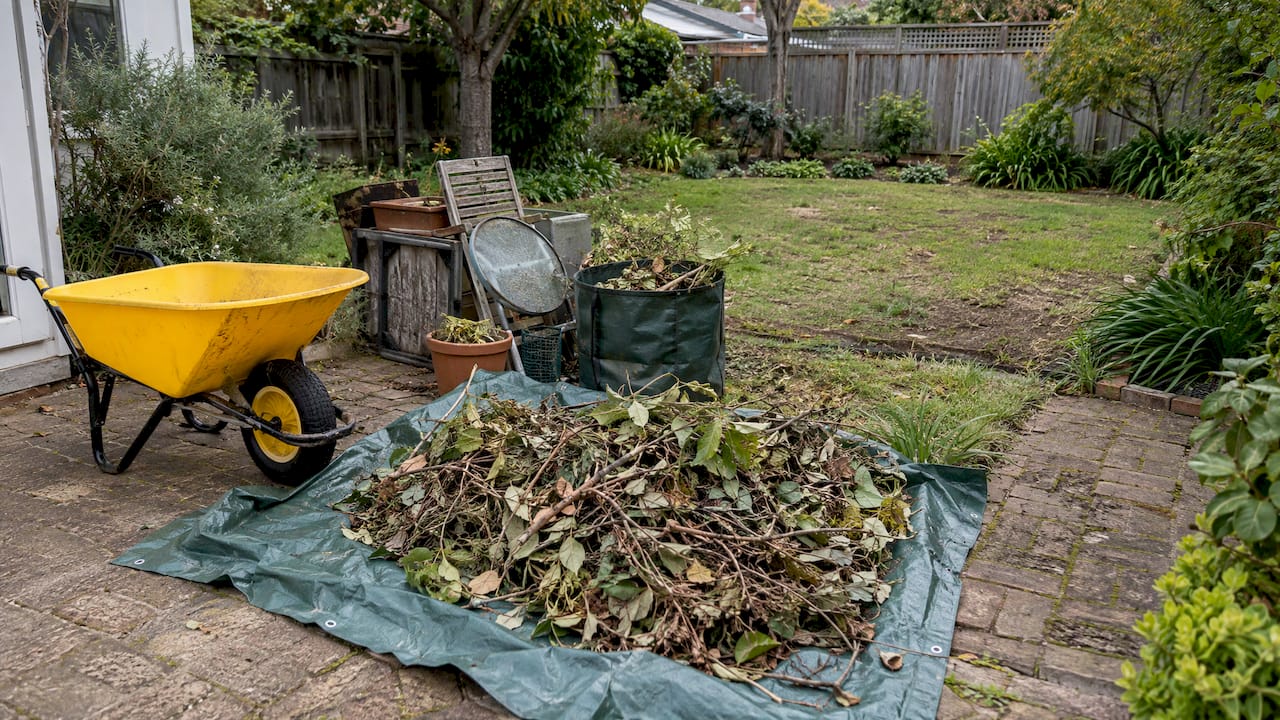
Start with what is on the ground: fallen branches, leaves, rotten fruit, dead plants, litter and anything blown in. Do this first because everything else, from weeding to cleaning paving, is easier on a clear surface. Use a tarp to drag piles to one collection point near where the waste will leave the property.
2. Remove the obvious rubbish and unwanted items
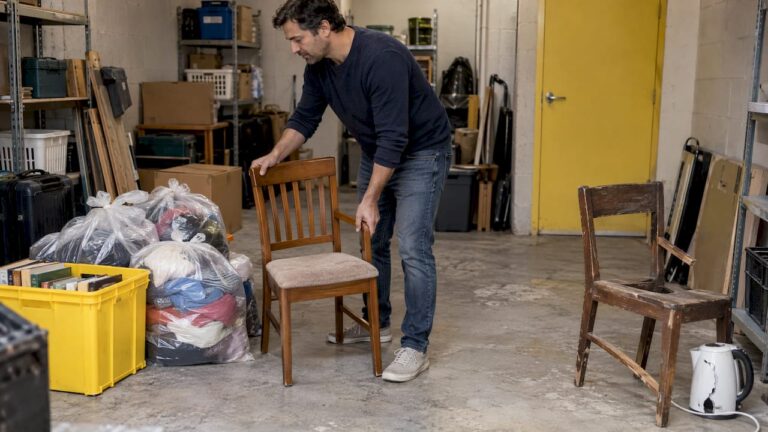
Old pots, broken outdoor furniture, offcut timber, rusted barbecues, cardboard, paving offcuts and abandoned items from earlier tenants all go in this step. Do not leave this until last. These are the items that cause problems at end-of-lease inspections and the ones council collections are strictest about.
Usable furniture can be reused or given away. If it is broken or too bulky to move, our furniture disposal and recycling service collects it.
3. Weed the beds, lawn edges and paths
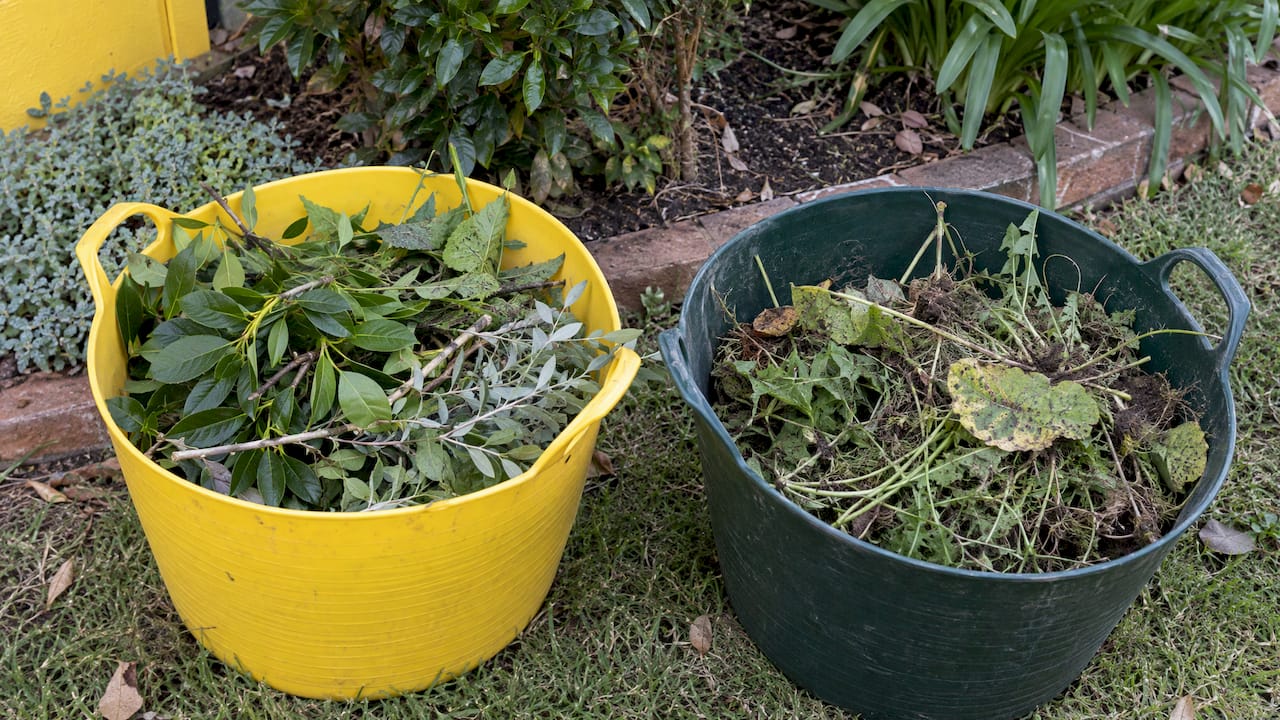
Remove weeds before they seed. Pull them by the roots where you can, and bag invasive or diseased material separately from healthy cuttings, since some councils treat them differently. Bakyard’s guidance is to sort healthy leaves and prunings from diseased or invasive material and to check local council advice on green-waste collection and weed disposal.
4. Prune only what should be pruned
Remove dead, diseased, broken or crossing growth. Hoselink cautions against pruning spring-flowering shrubs before they bloom, because you cut off this year’s flowers. If you do not know a plant, take out only the dead or damaged parts and leave the rest. Bakyard gives the same advice: identify each plant and check the right pruning time before cutting hard.
For a tenant, the rule is simpler still. Tidy, do not redesign. A heavily pruned garden can be worse than a slightly overgrown one when the property manager inspects it.
5. Mow, edge and tackle the overgrown lawn
Do not take more than a third of the grass height in one mow. ADL Landscaping advises that for an extremely long lawn you cut it down with a line trimmer first, then mow lower over two to three sessions. Bag or collect the clippings with the rest of the green waste, or mulch them back into the lawn if they are short.
6. Clean paths, decks and outdoor furniture
Shaded decks and paving pick up algae and mould. Flower Power’s checklist recommends cleaning algae or mould from shaded decks and paving once the debris is gone. Sweep first, then wash. Do the cleaning after the heavy lifting so you do not dirty clean surfaces again.
7. Check irrigation, gutters and fences
Check sprinklers and drip lines for splits, blocked heads and missing fittings before hot, dry weather returns, as Flower Power’s checklist advises. Clear gutters and downpipes, trim branches overhanging the roof and secure loose items. Fraser Coast Regional Council recommends exactly these steps before dangerous weather, and they apply across Australia’s storm seasons.
8. Refresh the beds
Only now is it worth mulching, replanting pots or tidying edges. Doing this earlier means trampling the result while you move waste out.
Sort the waste before you move it
The disposal step is where most backyard cleanups stall. Sorting into four piles makes it manageable.
| Pile | Examples | Where it usually goes |
|---|---|---|
| Green waste | Grass, leaves, weeds, prunings, small branches | Green or garden-organics bin, bundled prunings collection, or removal |
| Hard rubbish | Broken furniture, fencing, timber offcuts, old barbecues | Council hard-rubbish booking, or removal |
| Hazardous items | Paint, pesticides, batteries, pool chemicals, motor oil | Specialist drop-off, never the household bin |
| Soil, rubble, concrete | Pavers, bricks, excess soil | Usually excluded from bins and kerbside collections; needs removal |
Hazardous items need a separate route
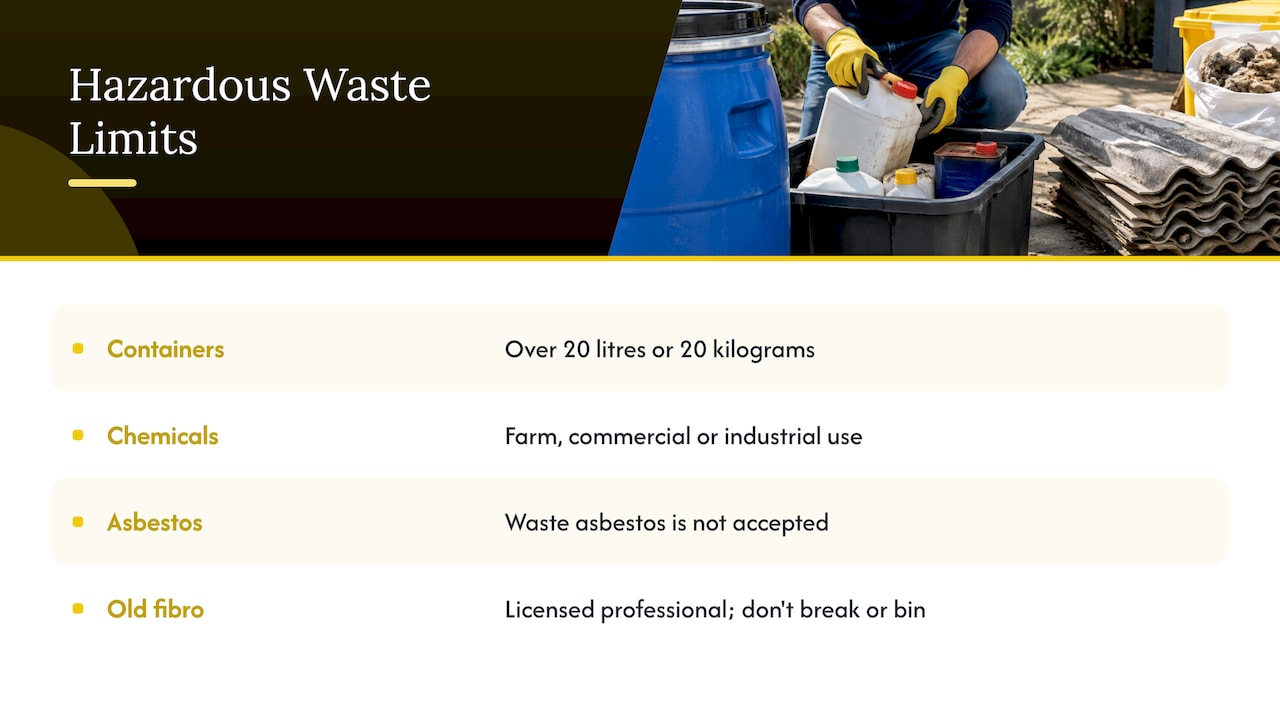
In Victoria, household hazardous waste includes solvent-based paints, garden chemicals and pesticides, batteries, motor oils, petrol, pool and spa chemicals and fluorescent tubes. The same page explains that the Detox your Home service does not take containers over 20 litres or 20 kilograms, chemicals from farm, commercial or industrial use, or waste asbestos. The ACT Government gives the same warning from the other side of the country: paint, pesticides, batteries, poisons, pool chemicals and oil must not go in household bins or down drains.
If you suspect old fibro sheeting, treat it as a specialist job and do not break it up or put it in any bin. Ask a licensed professional to assess it.
Green waste has its own rules
Councils accept green waste, but with limits on size and contents. The official examples show how much the limits vary:
- Maroondah City Council accepts tied prunings up to 150 cm long and 30 cm wide, and tree limbs under 20 cm wide and 150 cm long.
- Logan City Council limits branches in its green bin to 10 cm in diameter and 75 cm long, and excludes soil, rocks, pots, hoses, chemicals and treated timber.
- Ballina Shire Council accepts small branches under 60 cm long and 10 cm wide in its FOGO (food organics and garden organics) bin and excludes plastics, packaging, treated timber and large amounts of soil.
- Brisbane City Council says to keep garden waste loose in the green bin, keep the lid closed and stay under the 70 kg bin weight limit.
The pattern is consistent. Plant material goes in. Plastic bags, pots, soil, treated timber and chemicals stay out. Your own council’s page is the one that counts, so check it before you fill a bin or bundle prunings.
Garden waste should not go in general rubbish either. The ACT’s City Services explains that garden waste breaking down in landfill can generate methane, while correctly collected garden organics become compost and mulch. If you want your cleanup to have a low footprint, how the green waste leaves the yard matters. Our guide to sorting green waste in Melbourne covers the local options.
What to check with your council first
Council collections are good value when your waste fits them. Before you rely on one, check:
- Booking. Is a booking needed, and how far ahead?
- Accepted materials. What counts as green waste, and what is excluded?
- Volume limit. Sorell Council, for example, allows up to two cubic metres of bulk green waste, with pieces under 1.5 m long and 20 cm in diameter that two people can safely lift. City of Cockburn’s verge limit is also two cubic metres.
- Bundling and bags. Many councils refuse green waste in plastic bags or cardboard boxes.
- Placement. Keep waste clear of footpaths, roads, driveways and utilities, and only put it out in the allowed period.
- Excluded items. Soil, rubble, treated timber and chemicals are commonly refused.
Sutherland Shire Council suggests booking early in the spring peak, when waits can reach eight weeks. That example is from New South Wales, but spring is the busy season for yards everywhere, and a long wait is a real problem when you have an inspection date.
In Melbourne, limits differ from council to council. Our summary of hard rubbish limits in Melbourne by council area is the place to start, and our rubbish removal preparation checklist shows how to avoid items being rejected.
If you are preparing items for a kerbside clean-up, backyard cleanup essentials is a handy outline of how seasonal yard cleanups are organised and what to set aside for pickup.
Worked example: an end-of-lease backyard
A tenant has two weeks until the final inspection. The yard has overgrown lawn, a dead shrub, rotting fruit, a broken plastic table, half a dozen old pots, offcut timber from a fence repair and a tin of old paint.
- Day 1: Walk the yard, list the waste and estimate the volume.
- Day 2: Clear debris and rotten fruit, drag everything to one point.
- Day 3: Mow in stages, trim the edges, remove the dead shrub.
- Day 4: Separate the paint for a hazardous-waste drop-off. Stack the timber and table separately from the green waste.
- Day 5: Wash the paving and tidy the beds.
- Day 6 onwards: Remove the waste.
The council’s rules decide what happens at the last step. The green bin takes the green waste only if the branches meet the size limit and the bin has room. The hard-rubbish collection takes the table and timber only if it is booked and the dates match. With a fixed inspection date, any gap between steps puts the bond at risk. This is where a booked removal earns its place: it takes the green waste, timber and broken items together, on a day you choose.
When to book a removal instead
Council services work when the volume is small, the timing is flexible and the waste is the right type. A removal service is the better route when:
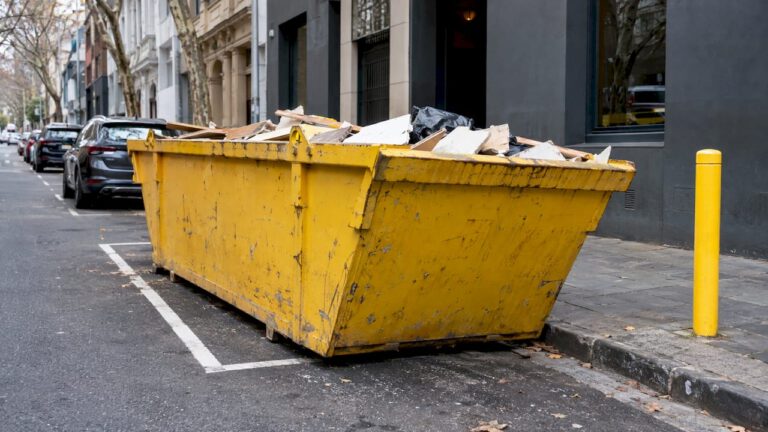
- the pile is bigger than your bin or collection limit;
- you have a fixed deadline, such as a lease end, a sale or a site handover;
- the waste is mixed, for example green waste with timber, broken furniture and rubble;
- there are large limbs or whole trees to clear, where our tree waste removal applies;
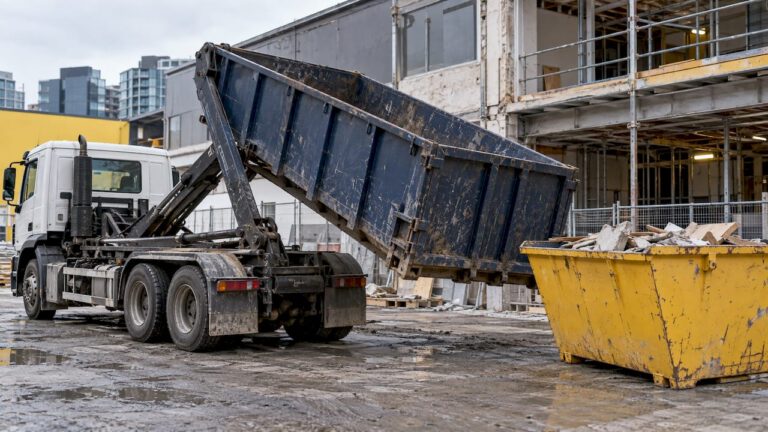
- the yard is part of a commercial or construction site, where waste from works can be taken through our construction waste removal;
- you manage several properties and want one consistent process.
We offer carbon-neutral disposal as an opt-in, so you can choose it for a cleanup if reducing footprint matters to you. Our sustainable waste disposal guide explains the approach.
Our part in your cleanup
Melbourne City Rubbish removes rubbish across Melbourne for commercial and residential clients, including green waste, construction debris, furniture and mixed clearances. Our punctuality is backed by real-time notifications and a lateness credit, we leave no mess and no damage to property, and we promise to beat any written quote by 5%. Quotes are given per project. Send us the photos and volume from your checklist and we will quote the job through our quick quote page.
Keep the next cleanup small
The cheapest cleanup is the one that never grows. Brisbane City Council recommends regular tree and branch trimming and lawn mowing, and putting the green bin out fortnightly, mowing shortly before collection. A short routine does the job:
- Weekly or fortnightly: mow, empty the green bin, pick up fallen material.
- Monthly: pull weeds, check for new rubbish, clear drains.
- Each season: prune what is due, refresh mulch, check irrigation and gutters.
- Each year: do a full walk-through with this checklist.
Compost suitable garden waste at home where you can. That reduces what leaves the yard in the first place.
FAQ
What does a backyard cleanup consist of?
It covers clearing debris and rubbish, weeding, selective pruning, mowing and edging, cleaning paths and furniture, and disposing of the waste. The disposal step is the one that takes planning, because bins and collections have size and booking limits.
What order should I clean the backyard in?
Start with safety hazards, then clear loose debris and unwanted items, then weed, prune and mow. Clean hard surfaces last so they stay clean, and refresh the beds at the end. Book your waste removal before you start so the pile has somewhere to go.
Can I put garden waste in the general rubbish bin?
Usually not. Councils ask for garden waste to go in the green or organics bin because landfill breakdown can generate methane. Check your own council’s rules, since branch size limits and excluded items differ.
What should never go in a backyard waste pile?
Paint, pesticides, batteries, pool chemicals, motor oil and similar items need a hazardous-waste drop-off, not a bin. Victoria’s health guidance lists these as household hazardous waste. Suspected asbestos needs a licensed professional.
Sources
- The Ultimate Spring Garden Reset: An Australian Checklist (Hoselink)
- Autumn Garden Cleanup Checklist for Australia (Bakyard)
- The ultimate outdoor spring cleaning checklist for Sydney gardens (Flower Power)
- Garden Clean-Up: How to Tackle an Overgrown Yard (ADL Landscaping)
- Fraser Coast Regional Council: Storm season clean up
- ACT Government: Spring cleaning? Declutter the sustainable way
- ACT City Services: Green garden waste
- Maroondah City Council: Hard rubbish and bundled prunings
- Ballina Shire Council: FOGO bin
- Brisbane City Council: What you should know about garden waste
- Sorell Council: Bulk green and hard waste bookings
- City of Cockburn: Verge collection
- Sutherland Shire Council: Simple steps to prepare for your clean-up