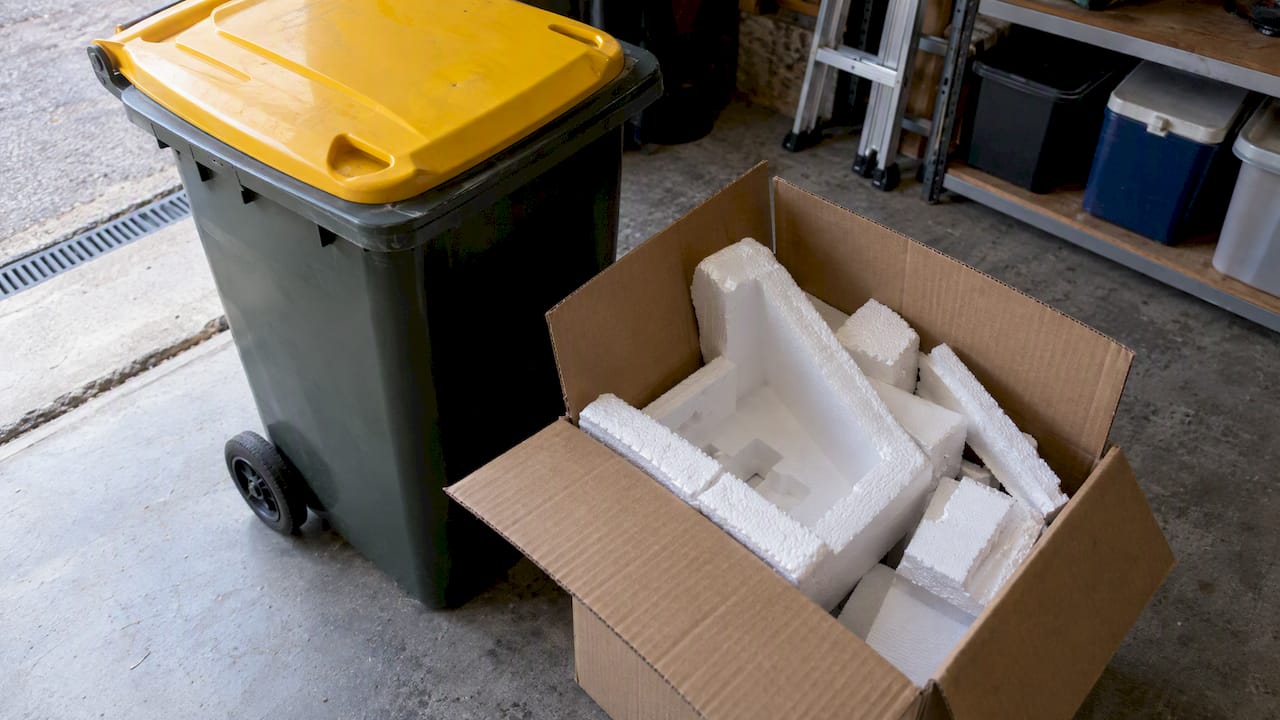
Clean EPS foam can be recycled in Australia, but it cannot go in your kerbside yellow bin. Take it to a specialised drop-off such as StyroCycle, a participating council depot or a commercial recycler. If none of those options are within reach, bag it securely and place it in the red-lid general waste bin instead. Businesses generating larger volumes should arrange a booked collection or a manufacturer take-back scheme.
TL;DR:
- Recycling EPS foam requires it to be clean, dry, and free of labels, with acceptable items limited to uncontaminated packaging and offcuts.
- Most local councils accept small quantities at dedicated drop-off points, but large volumes or contaminated foam should go to commercial recyclers or manufacturer take-back programs.
- When recycling isn’t an option, securely bag EPS and place it in the general waste bin, avoiding contamination of curbside recycling loads.
- Household foam food containers with food residue are generally not accepted for recycling and should be disposed of in the waste bin.
- Commercial operations should arrange regular collection with specialized recyclers or producers, providing volume and contamination details to avoid waste.
Table of Contents
- Where to drop off EPS foam in Australia
- What EPS is accepted and what gets rejected
- How to prepare EPS for recycling or disposal
- Options for businesses and large-quantity generators
- Safe disposal when recycling isn’t an option
- How Melbourne City Rubbish handles EPS and polystyrene collection
- FAQ
- Sources
Where to drop off EPS foam in Australia
The easiest starting point is StyroCycle, a national network of community drop-off sites built with local councils and manufacturers. Its site lookup tool shows the nearest location, and small household quantities are often accepted free of charge, though larger commercial volumes may attract a fee or need a pre-arranged drop.
Council resource recovery centres are the next layer, and acceptance varies a lot between local government areas. The City of Kingston allows small pieces in the red-lid garbage bin and also lists a Foamex drop-off point for larger clean pieces, while Inner West Council in Sydney runs a dedicated EPS recycling trial offering both drop-off and booked collection for residents. These trials show how quickly local rules shift, so it pays to check your own council’s waste page before loading up the car.
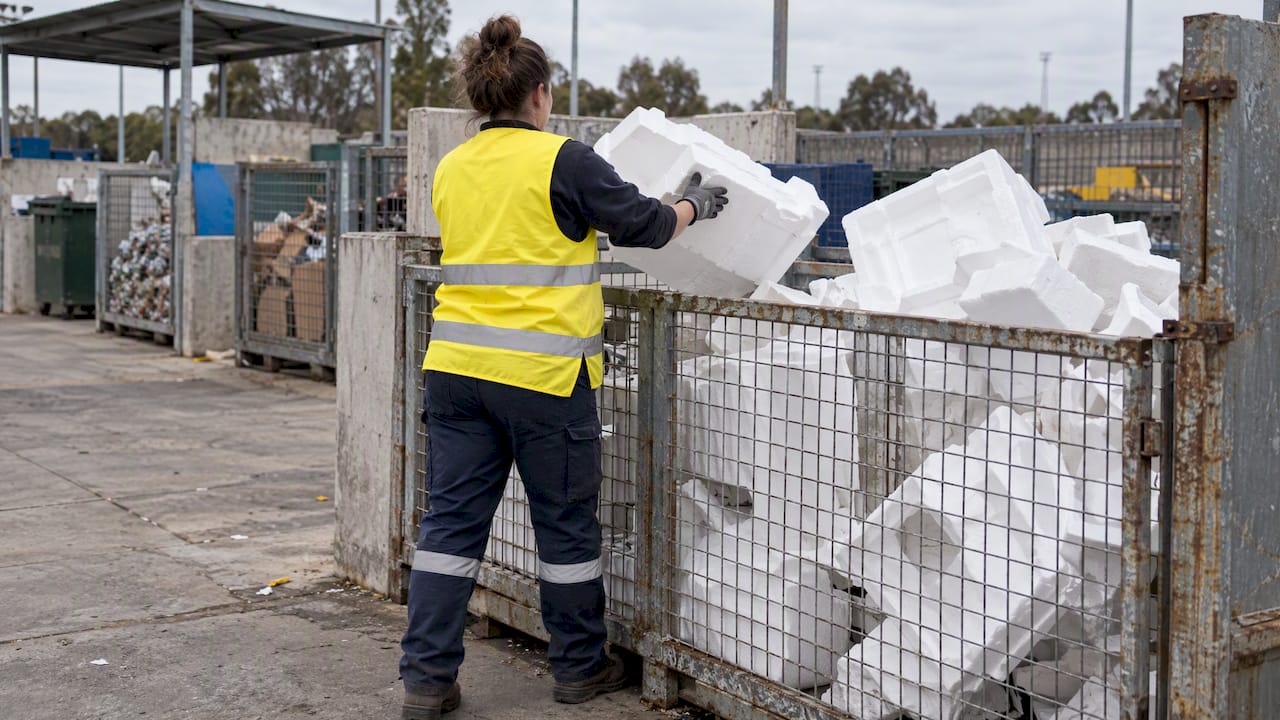
Commercial recyclers and manufacturer take-back programs through Expanded Polystyrene Australia members are worth contacting directly if you have construction offcuts, large appliance packaging or a regular supply of clean EPS. These channels are generally better suited to volume than one-off household drop-offs.
To confirm what is accepted near you, use one of these:
- Your local council’s waste and recycling page, searched by postcode or suburb.
- RecyclingNearYou, which lists material-specific drop-off points.
- The StyroCycle site locator, which flags whether a site takes household or commercial volumes.
What EPS is accepted and what gets rejected
Recyclers and councils generally want clean, rigid, white EPS only. Breaking foam into fragments makes it more likely to contaminate a load and get the whole batch rejected, since processors rely on intact or compacted material to run efficiently, according to Expanded Polystyrene Australia.
Commonly accepted items include:
- Clean white moulded packaging from electronics and appliances.
- Produce and seafood boxes once rinsed and dried.
- Uncontaminated construction offcuts from insulation or formwork.
Commonly rejected items include:
- Food-soiled containers and takeaway trays.
- Translucent, foldable or coloured foam.
- Loose packing peanuts mixed with other rubbish.
- Offcuts contaminated with concrete, glue or paint.
The practical reality: EPS is 100% recyclable when clean, but collection and sorting are what make or break the system. Expanded Polystyrene Australia reports that a significant quantity of EPS was recycled nationally in a single year through industry channels, which shows the infrastructure exists, it just needs clean input to work. Acceptance lists differ between councils and recyclers, so check before you drive across town with a car full of foam.
How to prepare EPS for recycling or disposal
Getting EPS ready properly is the difference between a successful drop-off and a wasted trip.
- Strip off tape, labels, food residue and any concrete or glue, then keep the foam clean and dry.
- Contain loose beads or packing peanuts in a sealed bag or box, and label the contents if you are dropping off at an unstaffed site.
- Compact only where a site specifically offers community baling or compaction. Do not crush foam into dust for the kerbside bin, since fragmented EPS blows around and contaminates other recycling.
If a batch is heavily contaminated with food, chemicals or building residue, sending it to general waste is better than risking contamination of a whole recycler’s load, a point StyroCycle makes clear in its acceptance guidance.
Pro Tip: Keep a dedicated box near your bin for clean EPS as it comes in, so you’re not sorting a mountain of foam the night before a drop-off.
Options for businesses and large-quantity generators
Builders, retailers and manufacturers producing EPS waste regularly need a different approach to a single household drop-off. StyroCycle, EPSA-member manufacturers and specialised commercial recyclers all accept larger volumes, though costs, minimum quantities and pickup frequency vary by provider and location.
Before contacting a recycler, it helps to have the basics ready:
- An approximate volume or weight of EPS generated per week or month.
- Confirmation of whether the material is clean or mixed with other waste.
- How often you need collection, since regular contracts often get better terms than one-off pickups.
Following EPSA’s Pod Code of Conduct, bagging and segregating offcuts on-site, is considered best practice for construction sites, since it lets manufacturers collect material straight back into new EPS products. Document the volumes you send for recycling if you need figures for sustainability reporting. Requesting quotes from two or three providers and confirming their acceptance criteria upfront saves a wasted trip with a truck full of foam nobody will take.
Safe disposal when recycling isn’t an option
Sometimes there is no drop-off nearby and no time to arrange a commercial collection. In that case, the safest fallback is simple:
- Bag EPS securely before placing it in the red-lid general waste bin, which stops lightweight pieces becoming litter in transit.
- Never put EPS in the yellow recycling bin. A single piece can contaminate an entire load of glass, paper and plastic, and councils including The Hills Shire explicitly warn against it.
- Store the material somewhere dry until you can get to a drop-off, or check whether a neighbour or local community group is already collecting for a bulk run.
How Melbourne City Rubbish handles EPS and polystyrene collection
For Melbourne households and businesses dealing with more foam than a car boot can carry, we offer a direct alternative to chasing down drop-off points yourself. Our plastics and polystyrene removal service collects EPS alongside other waste streams, and we offer carbon-neutral disposal options for clients who want their rubbish handled with a lighter footprint through our eco-friendly rubbish removal service.
A booked removal makes sense when you are dealing with large volumes from a fit-out or strip-out, foam that is too contaminated for a community drop-off, or simply a job that needs to be gone today rather than scheduled around a depot’s opening hours. Get a quick quote and we will sort out collection from there.
FAQ
How do you recycle polystyrene foam in Australia?
Clean, dry EPS can be taken to a StyroCycle drop-off site, a participating council depot or a commercial recycler, never a kerbside yellow bin. Remove tape, labels and food residue first, since contaminated foam is commonly rejected at the point of drop-off.
Is polystyrene recyclable in Australia?
Yes, EPS is recyclable when it is clean and uncontaminated, and industry reprocesses it into products such as waffle pods and insulation, according to Expanded Polystyrene Australia. It is not accepted through standard kerbside recycling collection in most areas.
Do I throw away or recycle foam food containers?
Food-contaminated foam containers are usually not accepted at EPS recycling drop-offs and should go in the red-lid general waste bin. Rinsing and drying a container sometimes makes it acceptable, but check your local drop-off’s rules first since standards vary between sites.
What types of foam cannot be recycled through EPS programs?
Coloured foam, translucent or foldable packaging foam, loose contaminated packing peanuts and foam soiled with concrete, glue or paint are typically rejected by recyclers. These materials are better suited to general waste than a specialised EPS drop-off.
Can businesses arrange regular EPS collection instead of one-off drop-offs?
Yes, larger generators can set up recurring collection through commercial recyclers or EPSA-member manufacturers rather than relying on individual drop-offs. Providers typically ask for an approximate volume and contamination level before confirming pickup frequency and any fees.
Sources
- Expanded Polystyrene Australia — EPS and recycling
- StyroCycle — where to recycle polystyrene
- Polystyrene — City of Kingston