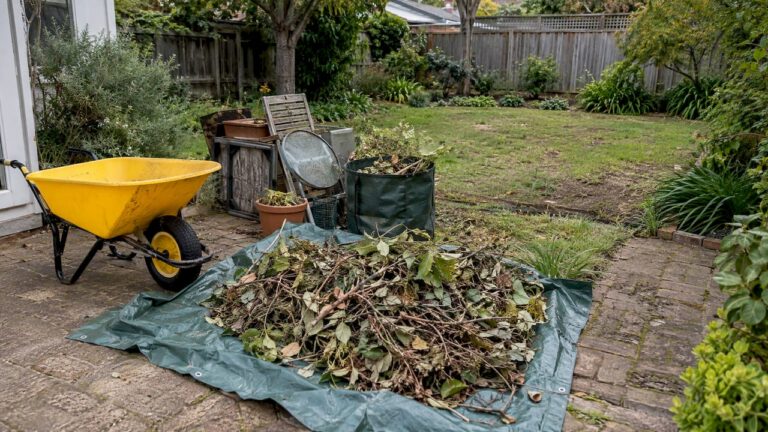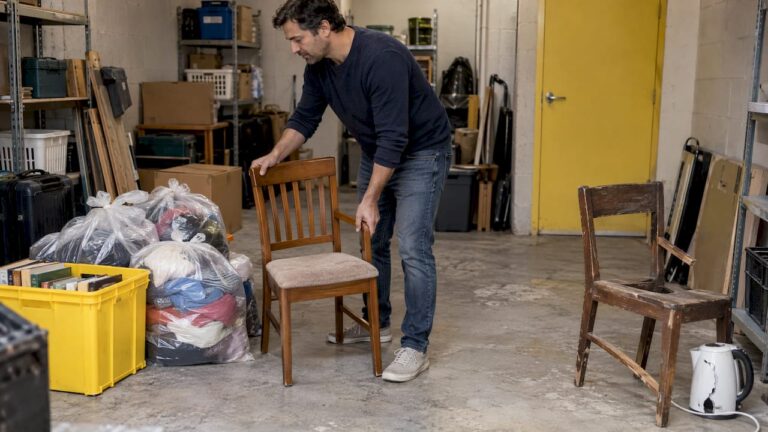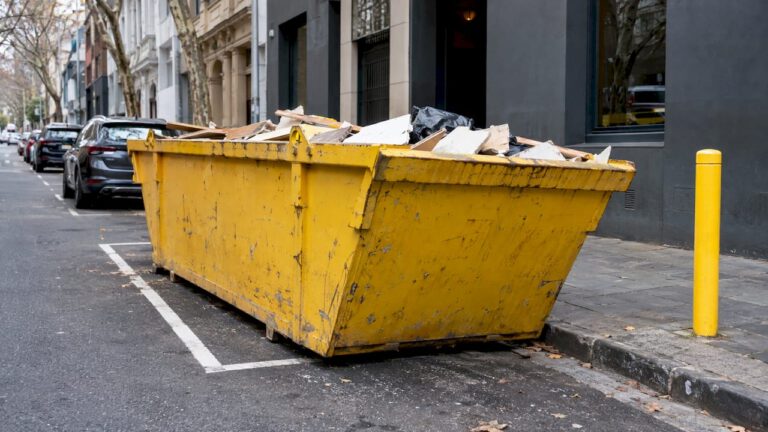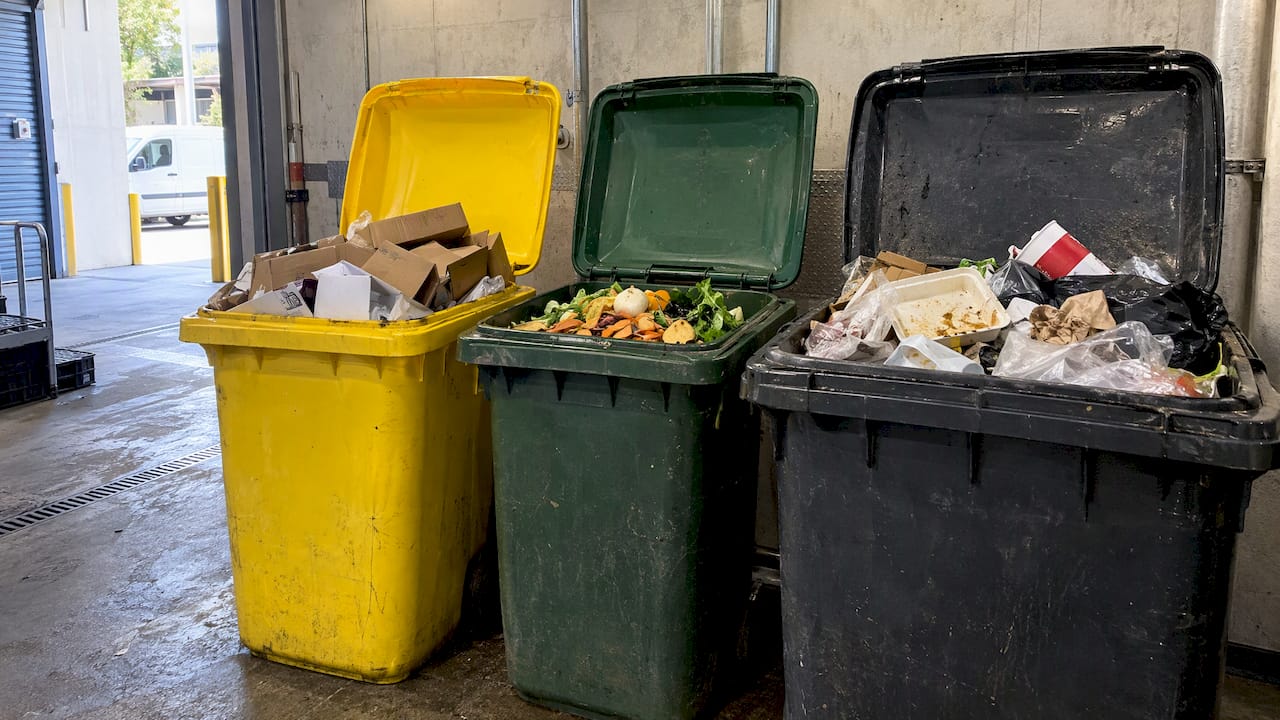
Source separation means sorting waste into streams (cardboard, organics, timber, e-waste) where it is created. Mixed waste means everything goes into one bin or skip and is sorted, if at all, later. For most Melbourne offices, building sites and strata properties, separating at the source recovers more material and keeps your costs more predictable. Mixed collection still has a place for small residual loads. We collect both kinds of jobs across Melbourne, and our crews can work to the streams you set up on site.
TL;DR
- Source separation keeps each material clean, so recyclers can sell it at higher value. Mixed waste can only be used for lower-value purposes, and some of it still ends up in landfill.
- Victoria’s four-stream household system becomes mandatory from 1 July 2027, and the state targets 80% waste diversion by 2030. Commercial sites are being pushed in the same direction.
- Landfill costs more every year in Victoria. Material you keep out of the general skip is material you don’t pay levy on.
- Building sites and fit-outs gain most from separation: timber, concrete, cardboard, metals and plasterboard are easier to recover when kept apart.
- A short waste audit tells you which streams your site actually produces before you choose a bin setup.
Table of Contents
- What the two terms mean
- How each one is processed
- Why separated streams recover more
- What it means for Victorian businesses
- Which approach suits which site
- Setting up separation: a practical sequence
- How we work with separated and mixed loads
- The sensible position
- FAQ
- Sources
What the two terms mean
Source-separated waste is sorted by the person who generates it: at the desk, in the tenancy kitchen, on the building site. The WA Waste Authority defines source separation as separating waste at home, in the office, on building sites and in public places.
Mixed waste is, in the NSW EPA’s reporting definitions, any waste containing more than one waste type, including mixed commercial and industrial waste. A general skip filled with offcuts, packaging, furniture and food scraps is mixed waste.
There is a middle category worth knowing: commingled recycling. Cans, bottles, plastics and paper go in one recycling bin, separate from general waste. That is still source separation, only with fewer streams.
How each one is processed
Separated streams travel to facilities built for one material. Mixed waste can be treated mechanically, biologically or thermally to pull out some resources, but the Better Bins guidelines note that residual waste still goes to landfill. They also note that mixed-waste treatment plants are much more expensive to build, and sometimes to run, than plants handling source-separated material, whose outputs are of higher quality and market value.
The same guidelines say combining the two approaches can achieve higher recovery. In practice that means separating the streams that are easy to keep clean and leaving only the genuine leftovers in the general bin.
Why separated streams recover more
The core reason is purity. The WA Waste Authority explains that a homogenous stream is easier and cheaper for recyclers to process. Glass kept clean can be re-melted into new containers, while contaminated glass ends up as crushed aggregate. Clean food and garden organics become quality compost and mulch, while organics contaminated with glass or plastic make poorer products or go to landfill.
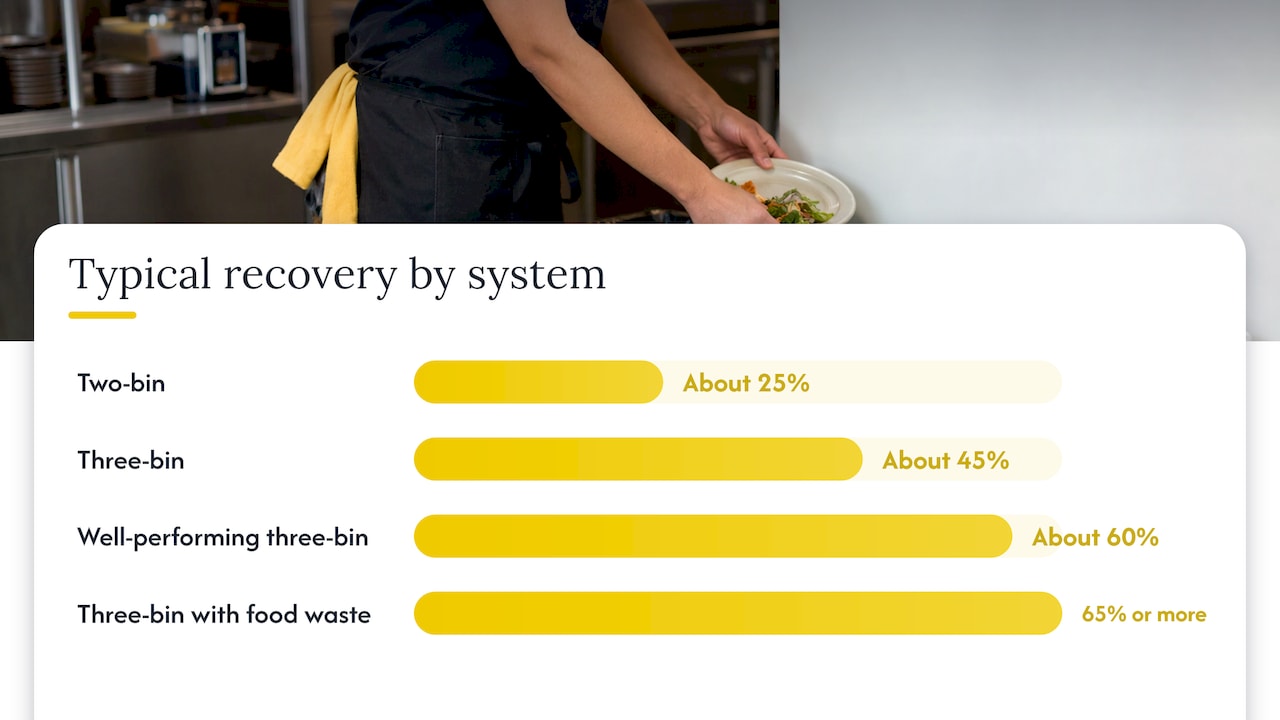
The numbers from kerbside systems show the pattern:
| System | Typical recovery |
|---|---|
| Two-bin | About 25% |
| Three-bin | About 45% |
| Well-performing three-bin | About 60% |
| Three-bin with food waste | 65% or more |
These figures come from the Better Bins guidelines, which also set a contamination benchmark of under 5% for co-mingled recycling. The Victorian Government says separating household waste into four streams reduces contamination and increases both the volume and the quality of materials recovered.
A caution on participation: the NSW Food Organics Research Project found that separate food collection only paid off when people used it properly. Houses with food bins separated 47% of available food, against 33% in multi-unit dwellings. The lesson for strata managers is to invest in clear bins and signage, not just more bins.
What it means for Victorian businesses
Commercial and industrial waste is the biggest problem area. Victoria’s Circular Economy Market Report shows the state’s recovery rate steady at 69 to 70% since 2016-17, with the commercial and industrial sector contributing just over 40% of disposed material. It names contamination-driven processing costs as one of the barriers and points to better separation and collection systems as the lever.
The state’s Implementation Plan 2025 sets an 80% diversion target by 2030 and halving organics to landfill by 2030. Mandatory requirements for the four-stream household system start on 1 July 2027. Households are the first group affected, but landlords, strata managers and employers will be handling the same stream names in their own buildings.
The landfill levy effect
Every tonne in a mixed skip that goes to landfill carries the Victorian levy. A Resource Hub levy factsheet for FY2025/26 lists $169.79 per tonne for metropolitan municipal waste and $149.33 per tonne for industrial waste. Its worked example puts total landfill cost at $369.79 a tonne against about $200 a tonne to recycle. Levy rates are reset by the Victorian Government and change on a yearly schedule, so check the current rate before budgeting. The direction is clear: the more you keep out of general waste, the less levy sits in your invoice.
Which approach suits which site
The WA Waste Authority says source separation matters most where high product quality is needed or mechanical sorting is difficult and costly. That includes organics and building-site streams such as timber, tiles, cardboard and gyprock.
| Situation | Best fit |
|---|---|
| Office with daily paper, cardboard, coffee cups and food scraps | Separate streams: recycling, organics, general |
| Fit-out, strip-out or make-good | Separate skips for timber, metals, plasterboard, concrete; general for leftovers |
| End-of-lease clearance with furniture and fittings | Sorted by item type so furniture and metals can be reused or recycled |
| Small one-off clean-out of mixed household items | Mixed load, with e-waste and hazardous items set aside |
| Strata with shared bin rooms | Clear bin colours, signage and images |
Construction and demolition
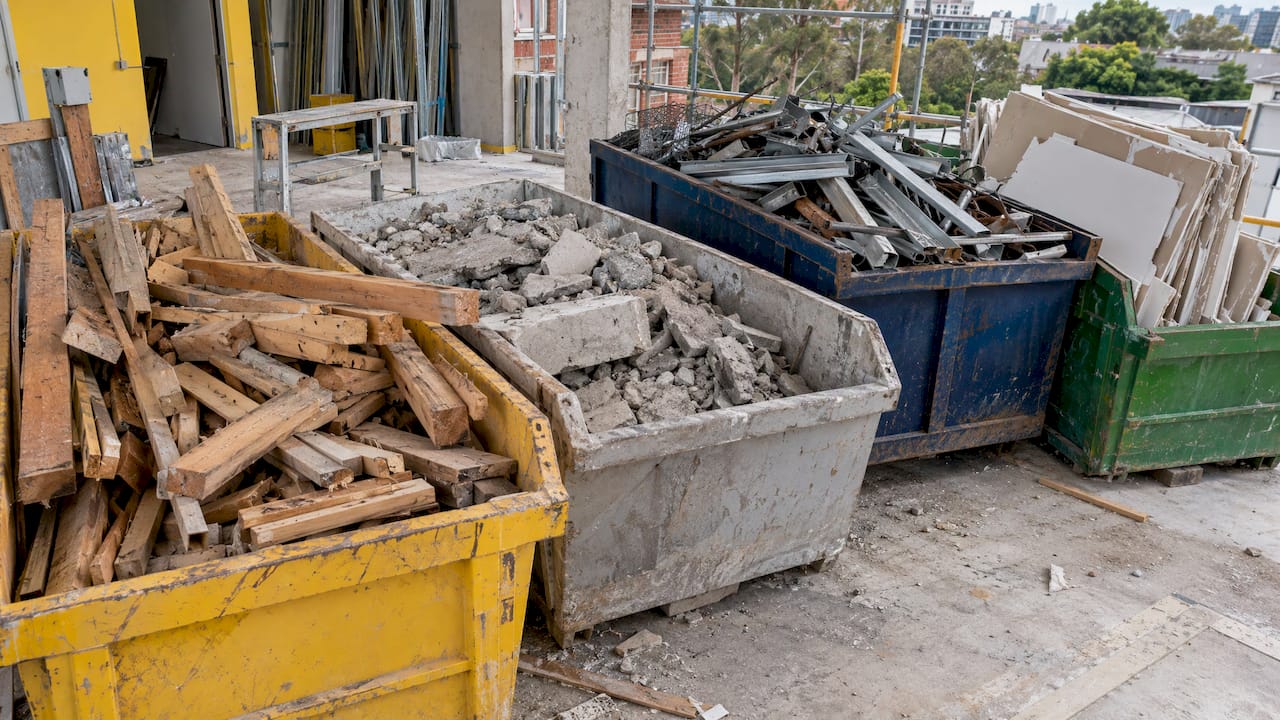
Building sites make the case most plainly. Timber, concrete, metal and plasterboard each have a different recycling pathway. Dumped together, they become a heavy, expensive general load. Our construction waste removal covers building and renovation debris, and for renovation projects our guide to managing renovation waste explains how to stage the skips.
Offices and tenancies
Office waste is more uniform: paper, cardboard, packaging, food. This is where a three-stream setup works well. If you manage a building, our page on waste management for office building managers sets out the routine.
Setting up separation: a practical sequence
- Audit first. business.gov.au advises a waste audit to set a baseline: landfill tonnage, waste composition, recycling types, where waste is generated and what stops people sorting properly. We explain our approach in our 3-day business recycling audit.
- Provide separate bins with clear signage and images. The same business.gov.au guidance lists re-use, recycling (cans, bottles, plastics, paper, cardboard, e-waste, coffee pods) and composting as the usual streams.
- Meet the facility rules. The NSW EPA commercial guidelines call for garbage and recycling facilities that are equally convenient, separate containers, at least one day’s waste storage per tenancy, and multilingual signage. They are a NSW document, but the layout principles are sensible anywhere.
- Handle hazardous items separately. The industrial property guide says e-waste, chemicals, paints, oils, globes and batteries must be containerised and collected by a specialised licensed contractor. See our guide to e-waste disposal in Melbourne.
- Book collection that matches your streams. Regular or one-off pickups can be set to the bins you have chosen. Our rubbish removal preparation checklist shows how to avoid rejected items on the day.
How we work with separated and mixed loads
We remove office junk, construction debris, green waste, e-waste, strip-outs, demolition debris and make-good clearances across Melbourne, on regular or one-off bookings, with a carbon-neutral option you can opt into. Our punctuality comes with real-time notifications and a lateness credit, and we promise to beat any written quote by 5%. We leave no mess and no damage to property.
If you are planning a clear-out and want streams handled sensibly, start with our services or request a quick quote.
The sensible position
Separate what is easy to keep clean: cardboard, paper, organics, timber, metals, concrete, e-waste. Let the genuine leftovers go in the general bin. That mix cuts landfill volume, matches where Victorian rules are heading, and keeps your waste invoice tied to what you can’t recover. Our business waste guide and obligations overview cover the next layer of detail.
FAQ
Is mixed waste always sent to landfill?
No. Mixed waste can be treated mechanically, biologically or thermally to recover some material. The Better Bins guidelines say this diverts some, but not all, waste from landfill, and that the recovered material is generally lower in quality than separated streams.
Does Victoria require businesses to separate waste?
The state’s mandatory four-stream requirements start on 1 July 2027 for households, as set out in the Implementation Plan 2025. Businesses should read our guide to Melbourne waste obligations and confirm site-specific requirements with their council or building owner.
Which streams matter most on a building site?
The WA Waste Authority names timber, tiles, cardboard and gyprock as building-site streams where source separation is particularly important. Concrete and metals are also worth keeping apart because of their weight and recycling value.
What should I do before booking a clearance?
Sort items by type, set aside e-waste and hazardous goods, and note the volume. Then request a quote. Our preparation checklist covers the common reasons items get rejected.
Sources
- Source Separation of Waste, WA Waste Authority (2014)
- Waste reporting definitions, NSW EPA
- Better Bins: Kerbside Collection Guidelines (2015)
- Standardising household recycling across Victoria
- Summary Report Food Organics Research Project, NSROC (2022)
- Victoria Circular Economy Market Report 2022-23
- Victorian Government Implementation Plan 2025
- VIC Levy Factsheet FY2025/26
- Manage business waste, business.gov.au
- Better Practice Guidelines for Waste Management, NSW EPA (2012)
- Improving Industrial Property Waste Performance (ESR093)