Glass partitions can be reused or recycled, but not through kerbside glass bins. Office partition glass is plate glass, which has a different composition from bottle glass. It has to be removed whole, sorted by type and sent to a facility that takes flat glass. On a Melbourne strip-out, the outcome depends on the glass type, how the panels come out and how the job is written into your quote. We remove glazed partitions as part of office strip-outs, make-good and de-fit work across Melbourne, so this guide follows the job in order: identify, remove, sort, send.
TL;DR
- Partition glass is plate glass, so it cannot go in bottle-glass recycling bins. It needs its own pathway.
- Annealed, toughened and low-e glass can be recycled with virtually no restrictions. Laminated glass, mirror, ceramic frit and double-glazed units need extra processing and are not accepted everywhere.
- Whole panels in good condition can sometimes be reused, but non-standard sizes are the main barrier. Decide before demolition starts, not after.
- Safe removal means a pre-strip-out audit, two-person lifts, protective gear and panels kept clean and unbroken for sorting.
- Put glass handling in your written quote: dismantling, sorting, where it goes and the paperwork that proves it.
Table of Contents
- Why partition glass is not “normal” glass recycling
- Identify the glass before anyone touches it
- What affects whether a panel is accepted
- Reuse versus recycling: which makes sense
- What happens to glass after it leaves your building
- How to remove glass partitions safely
- Where our strip-out service fits
- Put glass handling in writing
- A worked example: a 12-panel meeting room wall
- FAQ
- Sources
Why partition glass is not “normal” glass recycling
Most Australians know glass recycling as the bottle and jar stream. That stream is built for container glass. The NSW EPA explains that plate glass used in windows, glass doors, transparent walls and windscreens has a different composition from bottle glass, so it cannot be put in bottle-glass recycling bins. The same applies in Victoria in practice: the panels from your office meeting rooms are not kerbside material, and a mixed skip load of broken partition glass is a poor outcome.
There is a second reason. Even in the glass industry, very little flat glass goes back into new flat glass. A recycling-industry commentary on fit-out waste notes that very little glass is recycled into its original use because contamination risks the continuous production line. Glass is also heavy, so landfill is costly and there are usually other uses for it. The realistic goal for most partition glass is clean separation, then recycling into other products, with reuse for panels that are suited to it.
Identify the glass before anyone touches it
The type of glass decides how it is handled, what it costs to move and where it can go. Most office partitions are one of three kinds.
Toughened (tempered) glass
Toughened glass is annealed glass heated to about 600°C and cooled rapidly. It is roughly four times stronger than annealed glass of the same thickness, and when it breaks it falls into small, regular fragments rather than long shards. It also cannot be cut or drilled after tempering. That matters for reuse: a toughened panel can only be reused at its existing size.
Laminated glass
Laminated glass is two or more layers bonded with an interlayer, most commonly PVB. It is safety glass because it tends to stay intact when broken. In offices you often see it in acoustic meeting rooms and in glazing where a broken panel must hold together.
Annealed and other glass
Plain annealed glass breaks into sharp shards and is not safety glass. In older fit-outs you may also find mirror, ceramic-frit (the baked-on dotted or coloured patterns used for privacy) and double-glazed units.
How to read the markings
Safety glass in Australia is marked. A “T” or “toughened” marking indicates toughened safety glass, “L” or “laminated” indicates laminated, and “TL” indicates toughened laminated. The panels must comply with AS/NZS 2208, the standard for safety glazing materials in buildings. Look for the etched or stamped mark in a corner of each panel, usually visible once the framing cover is off. Photograph it and list it in the audit. This is a small job that saves a lot of argument later, because the mark tells you which pathway a panel belongs on.
What affects whether a panel is accepted
A technical paper from the Glass Association in the United States sets out the position clearly, and the glass is the same soda-lime architectural glass used here. Annealed, tempered and low-e glass can be recycled with virtually no restrictions. Laminated, mirror, ceramic frit and insulating glass units need additional processing and may not be accepted at every recycling location.
The same paper lists what recyclers can usually cope with and what they cannot:
| Usually manageable | Hinders recycling |
|---|---|
| Small amounts of cutting stones, metal, aluminium or plastic frames | Mixed chemical compositions such as some borosilicate and glass ceramic |
| Plastic films and temporary protective film | Lead-based paints |
| Caulk and rubber gaskets | Desiccants and hazardous or heavy-metal material |
| Small amounts of refractory or rocks | High levels of ordinary contamination |
The practical lesson is to deglaze carefully. Take off gaskets, sealant and framing where you can, keep the glass separate from plasterboard, ceiling tile and general fit-out debris, and flag anything unusual such as painted or coated glass before a recycler sees it. Laminated panels are worth the effort: the paper notes that laminated glass can be a valuable part of the recycled glass stream once the PVB is separated, and that the best way to segregate scrap should be agreed with the recycler before shipment.
Acceptance rules differ between facilities, so confirm the glass types a destination takes before the truck is loaded, not at the weighbridge.
Reuse versus recycling: which makes sense
Reuse keeps the glass at its highest value. A July 2025 report from the Alliance for Sustainable Building Products (ASBP) in the UK concludes that reuse of glass partitioning is possible, offers carbon savings and is financially feasible in some cases. It also says greater demand and more reclamation could improve the economics. The same report states that recent best practice has seen only 6% of flat glass effectively recycled, most of it downcycled into lower-quality products such as bottles and glass wool.
So what makes reuse work on a Melbourne job?
- Standard sizes. The recycling commentary above identifies non-standard sizes as a key reason glazed assemblies are not salvaged. Designers would need to adapt new work to the sizes found, or specify standard sizes in the first place.
- Undamaged edges. A chipped edge on toughened glass can lead to failure, and the panel cannot be re-cut. Handle every panel as a future reuse candidate or lose that option.
- A buyer or destination arranged early. Reclaimed panels need somewhere dry to wait. The ASBP report recommends numbering panels as they come out and storing them in a climate-controlled environment.
- Time. Strip-outs run to a make-good deadline. Reuse needs the decision before the program is locked.
If the panels are one-offs, laminated with an unknown interlayer, or cracked, recycling is the sensible route. That is not a failure. A glass wool maker, for instance, can take a lot of recycled glass: Australian government guidance on construction and demolition waste says that up to 74 per cent of the raw material input at one Australian glass wool producer comes from post-consumer waste, and the industry has capacity to recycle over 50,000 tonnes of glass a year from construction and demolition waste.
What happens to glass after it leaves your building
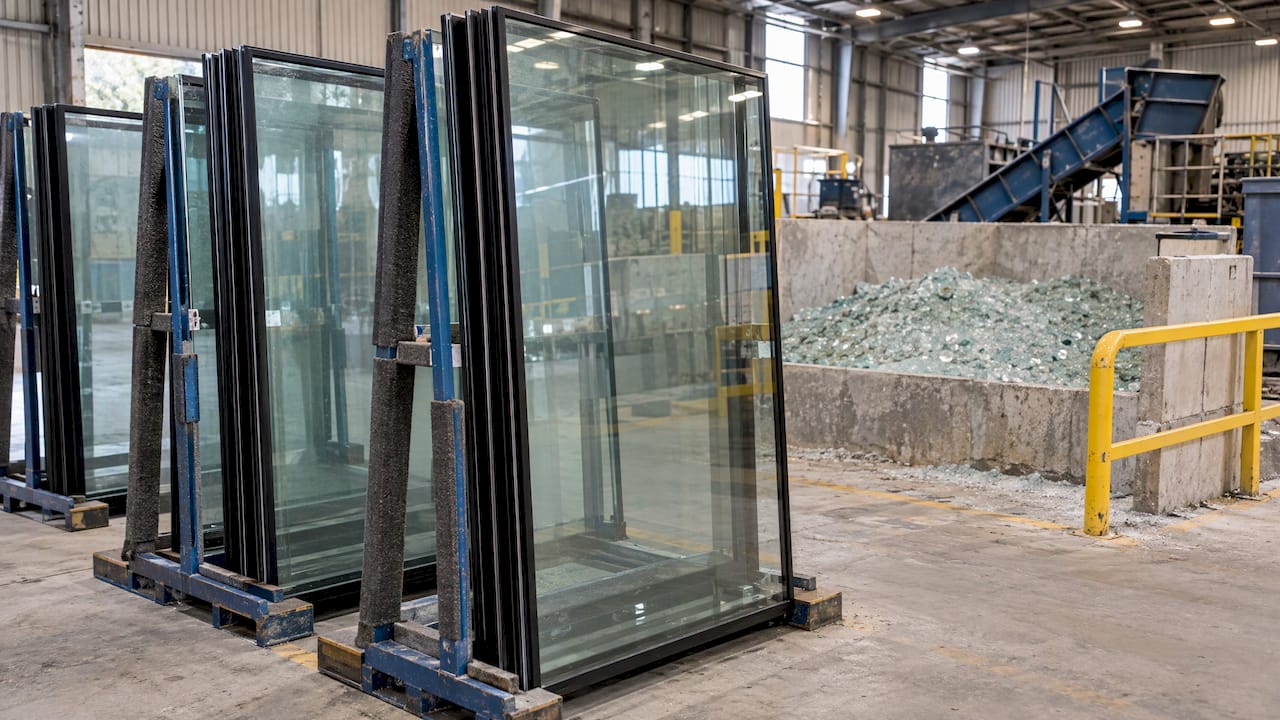
Recycled flat glass goes through beneficiation: sorting, cleaning and crushing. The Department of Climate Change, Energy, the Environment and Water describes how ferrous metals are removed by magnets, plastic and paper by air systems, and ceramics are removed and glass sorted by colour by optical sorting. The result is furnace-ready cullet that can be remanufactured into glass packaging and glass fibre, while the finer fraction can be processed into sand and aggregate substitutes for construction.
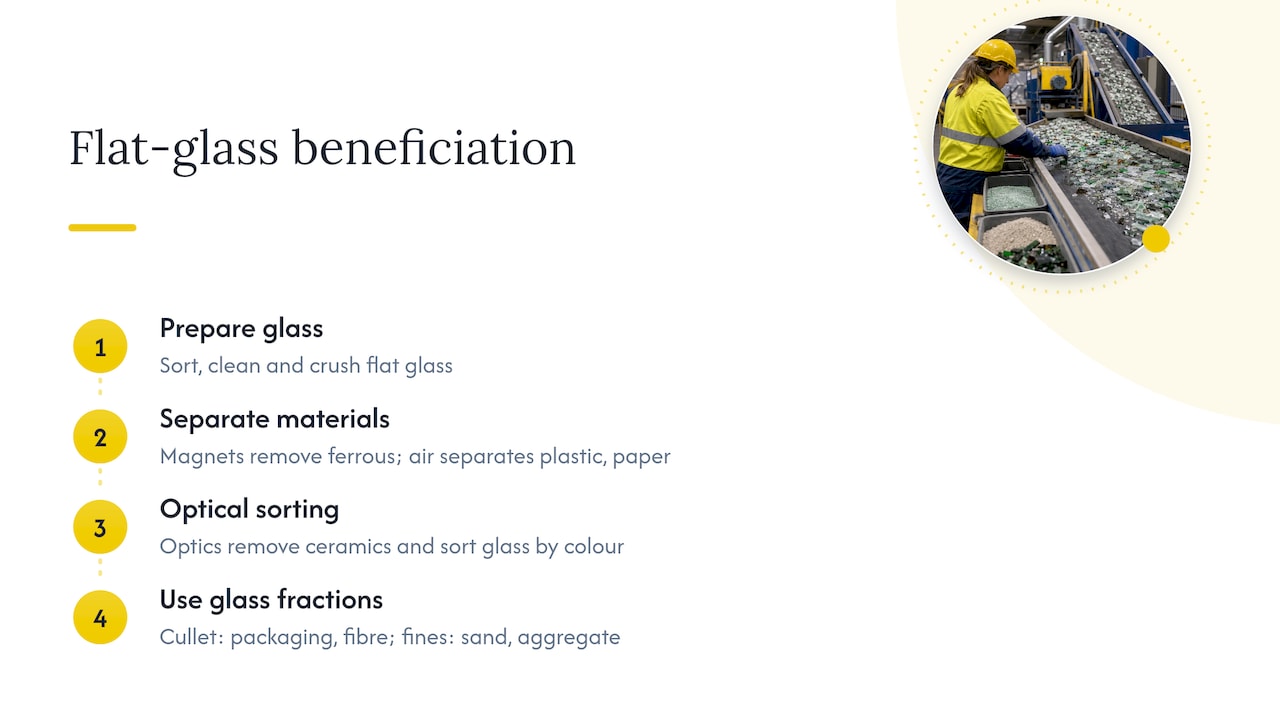
There is a quality ceiling for laminated glass. The NSW EPA’s study of the benefits of recycling found that laminated sheet glass generates lower benefits because contamination limits it to a substitute for fine sand aggregates, for example in asphalt or concrete. That is still a diversion from landfill and a real use. It is also the reason to separate clean glass from laminated and coated panels at the source.
One more point for procurement teams: the Australian Council of Recycling (ACOR) has published standards for beneficiated glass cullet, though compliance is not compulsory. Ask where the glass is going and what it becomes. A clear answer is a good sign.
How to remove glass partitions safely
Glazed partitions are not a casual tear-out. The ASBP report advises a pre-refurbishment audit to estimate what can be reclaimed, a specialist contractor for deconstruction, and a Risk Assessment and Method Statement covering health and safety, including extra protective gear such as Kevlar sleeves. The report also says panels should come down in a dust-free environment and be numbered as they are removed.
Here is the sequence we would follow on an office job, and where each step goes wrong.
- Audit before you strip. Walk the floor, list partition runs, photograph glass markings and record panel sizes. Check for asbestos in adjoining materials and isolate services first. Where it goes wrong: assuming every glazed wall is the same type, then finding laminated and toughened panels mixed on the day.
- Decide reuse or recycle, panel by panel. Standard-size, undamaged toughened or annealed panels are reuse candidates. Cracked, coated or unknown panels go to recycling. Where it goes wrong: deciding late, after the glass has been stacked in a skip.
- Protect the floor and the building. Cover the floor area to reduce contamination and avoid scratching finished floors, lifts and lobby areas. Where it goes wrong: glass dust and fragments tracked into common areas, which creates a building-management complaint. Our work in Melbourne commercial buildings is done to leave no mess and no damage to property.
- Deglaze carefully. Remove gaskets, sealant and beading, then lift the panel out with a two-person lift and edge protection. Where it goes wrong: levering panels out, which chips edges and kills reuse.
- Handle breakage deliberately. Glass that is not being reused is broken over a cullet table or collection bag under cover, not dropped in a bin. The ASBP decision tree describes covering the table with protective sheeting and smashing the glass into the bag below before stockpiling for collection. Where it goes wrong: loose shards in a general waste skip, which contaminates the load.
- Sort and label. Keep clean flat glass, laminated glass, mirror and double-glazed units apart. Where it goes wrong: one mixed pile that a facility will downgrade or reject.
- Move it with the paperwork. Load, transport and deliver to a place that lawfully accepts glass, and keep the records.
If you are a tenant approaching an end-of-lease make-good, the lease usually requires partitions and fit-out to come out and the space to be returned to a set condition. Build the glass pathway into that scope rather than leaving it for the last weekend.
Where our strip-out service fits
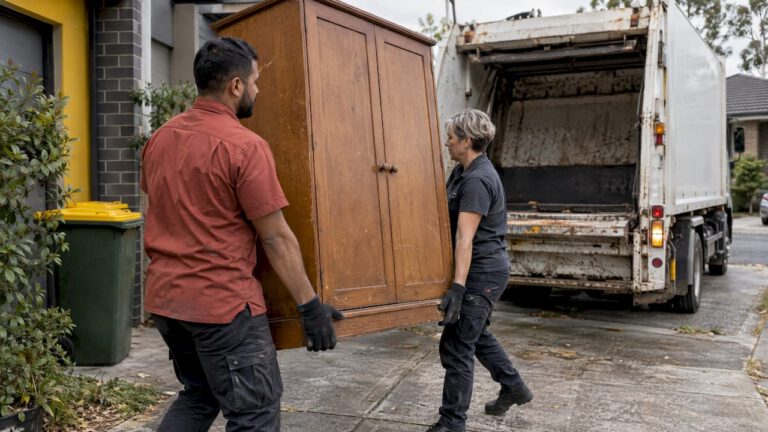
We handle building strip-outs, make-good and de-fit work, and furniture and joinery removal across Melbourne for commercial and residential clients. For glazed partitions that means dismantling inside occupied or finished buildings without leaving a mess. Our punctuality is backed by real-time notifications and a lateness credit, which matters when a lift booking or a landlord inspection date is fixed. We also offer a carbon-neutral option for disposal, and we will beat any written quote by 5%.
If you want to see how a full job is scoped, the office strip-out and commercial de-fit page is the place to start, and our Melbourne strip-out cost guide explains what drives price. Property managers planning ahead can read our waste management guide for office building managers. When the scope is clear, request a quote through our quick quote page.
Put glass handling in writing
The quote is where good intentions turn into outcomes. Ask for a written scope that lists:
- dismantling method for glazed partitions, including two-person lifts and edge protection;
- service isolation and any asbestos checks before work begins;
- how glass is separated from other waste on site;
- the destination for each stream, and what the glass is turned into;
- the paperwork you will receive at the end.
On the paperwork, planning guidance in NSW states that waste must go only to a place lawfully used as a waste facility, and that you should keep records such as weighbridge dockets and invoices. Victorian rules differ in their details, but the habit of keeping dockets and invoices that show where your waste went is sound everywhere and protects you if a landlord or auditor asks.
A recovery target gives the scope teeth. The Better Buildings Partnership’s stripout guidelines set a best-practice minimum resource recovery target of 60% for office strip-out and refurbishment, and they note that an average of only 21% of fit-out waste in Sydney is diverted from landfill. Glass, metals, plasterboard, ceiling tiles, carpet and furniture make up that waste. A tenant or property manager who writes a recovery target into the contract is asking for something measurable.
If your job involves more than glass, our office cleanout and furniture disposal and recycling services cover the rest of the floor in one booking. Construction firms with larger volumes can look at our construction waste removal service.
A worked example: a 12-panel meeting room wall
Take a tenant leaving a floor with a run of twelve glazed panels between meeting rooms and the corridor.
In the audit, the markings show eight toughened panels of one standard size and four laminated panels in the acoustic room. The eight toughened panels are in good condition, so they are flagged as reuse candidates, numbered and stored. The laminated panels cannot be re-cut or easily reused, so they go to recycling as a separate stream. The frames, gaskets and sealant are removed and kept out of the glass.
The outcome is a clean separation: reusable glass held for a buyer, laminated glass going to a facility that accepts it, and nothing glass-related in the general waste skip. The tenant has a record of where each stream went. That is the standard to write into your scope. Reuse is not guaranteed, because a buyer is needed, but the choice stays open only if the panels come out whole.
FAQ
Can I put a glass partition in my recycling bin?
No. Partition glass is plate glass with a different composition from bottle glass, so it does not belong in kerbside glass or mixed recycling bins. It also breaks into sharp pieces that endanger collection workers. Plan removal through a strip-out or waste removal job that handles flat glass separately.
Is toughened glass harder to recycle than ordinary glass?
No. Annealed, tempered and low-e glass can be recycled with virtually no restrictions. The difference is in reuse, because toughened glass cannot be cut or drilled after tempering. Laminated glass, mirror, ceramic frit and double-glazed units are the types that need extra processing.
How do I know if my partition is laminated or toughened?
Check for the etched or stamped mark in a panel corner. “T” indicates toughened, “L” laminated and “TL” toughened laminated. Safety glass used in Australia must comply with AS/NZS 2208. Record the mark for every panel in your pre-strip-out audit.
Can glass partitions be reused instead of recycled?
Sometimes. Reuse is possible and can offer carbon savings, but it depends on standard sizes, undamaged edges and a buyer or storage arranged before demolition. If those are not in place, recycling is the practical route.
What should I ask for in a quote for glass partition removal?
Ask for the dismantling method, how glass is separated, where each stream goes and the dockets or invoices you will receive. Include a recovery target if your lease or building standards set one.
Sources
- The Reuse of Glass Partitioning Systems (ASBP, July 2025)
- Recyclability of Architectural Glass Products (Glass Association, June 2021)
- Reducing business waste materials fact sheet: Glass (NSW EPA)
- Waste Glass Industry Standards snapshot (DCCEEW, February 2021)
- Construction and Demolition Waste Guide case studies (DCCEEW, 2012)
- Environmental benefits of recycling (NSW EPA, June 2010)
- Glass types used in buildings (NATSPEC, October 2022)
- Guide to Glass, safety glass markings and AS/NZS 2208 (2016)
- To reduce fit-out waste we need changes in our leasing process (2020)
- Stripout Waste Guidelines (Better Buildings Partnership)