Safe rubbish removal comes down to four things: how heavy items are moved, how bins and trucks are positioned, what goes into the load, and where the waste ends up. Get any of them wrong and the risk lands on your site: an injured worker, a damaged lobby, a banned item or a fine for dumping. Giving the job to a crew that works in Melbourne commercial buildings every day, and that plans for no mess and no damage to property, is the most direct way to cover all four. This guide explains what to expect and what to prepare, whether you manage an office, a strata building, a construction site or an end-of-lease make-good.
TL;DR
- Manual lifting, vehicle movement and skip bin handling are where injuries happen. Safe crews plan the job, use mechanical aids and keep people clear of trucks.
- Never overfill a bin, and keep the access path clear on collection day. Overfilled loads are unsafe to lift and to transport.
- Asbestos, batteries, chemicals and gas cylinders need special handling. Separate them from general rubbish before anyone arrives.
- In Victoria, dumping penalties reach $3,951,800 for businesses, and landlords can be left liable for waste abandoned on their property.
- Melbourne City Rubbish removes office, construction and strip-out waste across Melbourne, with punctuality backed by real-time notifications and a lateness credit.
Table of Contents
- Why rubbish removal is a safety job, not just a transport job
- Lifting and carrying: what a safe crew does
- Protective equipment and keeping people apart from vehicles
- Skip bins and loads: overfilling, ground and access
- What must never go in with general rubbish
- The legal side: who is responsible for the waste
- Choosing a removal provider with safety in mind
- How Melbourne City Rubbish handles it
- Preparing your site: a one-page routine
- FAQ
- Sources
Why rubbish removal is a safety job, not just a transport job
Waste work looks simple: load, drive, tip. In practice it combines heavy manual handling, moving vehicles, unknown contents and public spaces. The safety regulator in New South Wales, SafeWork NSW, publishes a Code of Practice for the collection and transport of waste (March 2026). It applies to domestic, commercial and industrial waste, including skip bin waste. It is a New South Wales document, but it reflects the same national work health and safety framework that underpins Victorian practice, and it is a useful yardstick for any commercial job.
Its central principle is simple. The business running the work (a “person conducting a business or undertaking”, or PCBU) must eliminate risks, or if that is not reasonably practicable, minimise them. Personal protective equipment is the least effective control in that hierarchy, so it supports good planning and never replaces it.
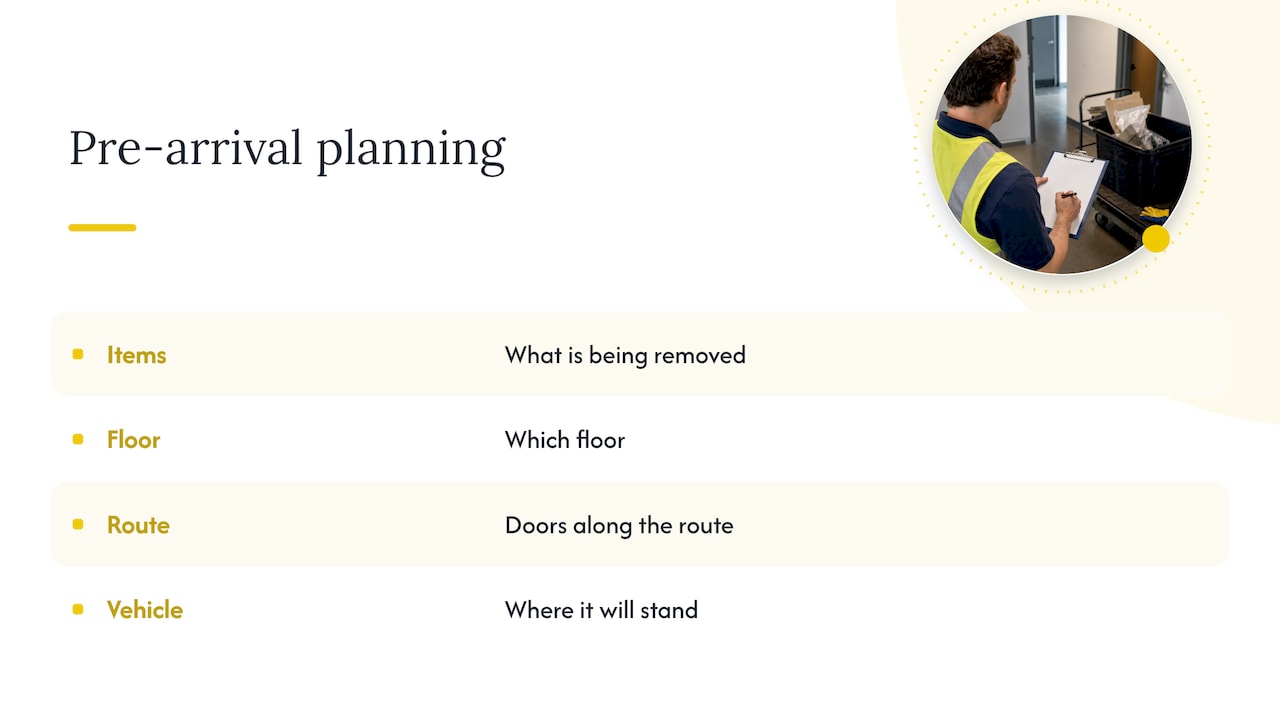
For you as the site owner, tenant or manager, this has a practical meaning. The safest removal is one planned before the truck arrives: what is being removed, from which floor, through which doors, and where the vehicle will stand.
Lifting and carrying: what a safe crew does
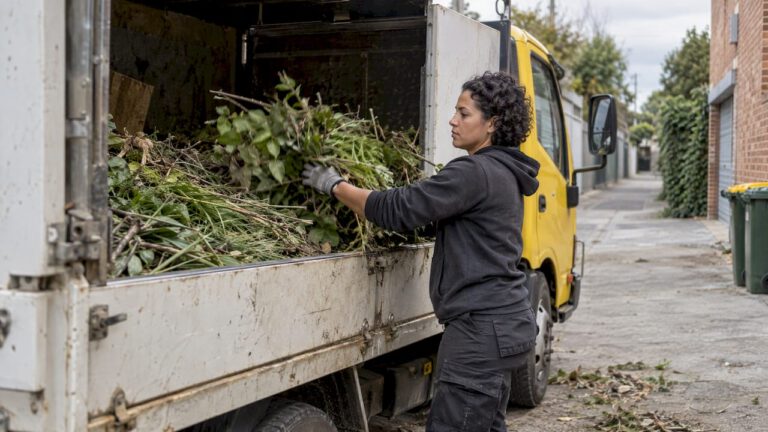
Most injuries in clean-outs come from lifting. Desks, filing cabinets, joinery, appliances and bags of mixed waste are awkward and heavy, and offices are full of corners, lifts and stairs.
According to the SafeWork NSW code, safe practice includes:
- Planning ahead to eliminate or minimise manual lifting.
- Using fit-for-purpose equipment such as trolleys, vehicle loading cranes, tilt trays, pallet jacks and tailgate lifters.
- Using team lifting or lifting equipment for bulky loads.
- Keeping three points of contact when climbing in and out of vehicles.
- Parking on even, flat, solid ground.
What you can do to make this easier is practical. Consolidate items in one area. Measure doorways and lifts for large furniture. Tell the crew if there are stairs, because carrying down flights changes both the effort and the risk. Our guide to stair carry rubbish removal and the details behind a quote explains how access shapes the job. If you are unsure about weight, the junk removal weight limits guide sets out what applies in Melbourne.
Office staff should not be lifting furniture for removal day. Where possible, keep your own team out of the lifting and let the crew handle the heavy items with the right equipment.
Protective equipment and keeping people apart from vehicles
The same code lists protective equipment matched to the risk assessment: non-slip footwear, high-visibility clothing, gloves, eye and ear protection, sun hats with UV protection, dust masks where required, and protective coveralls. It also expects workers to be trained in how to use and look after it.
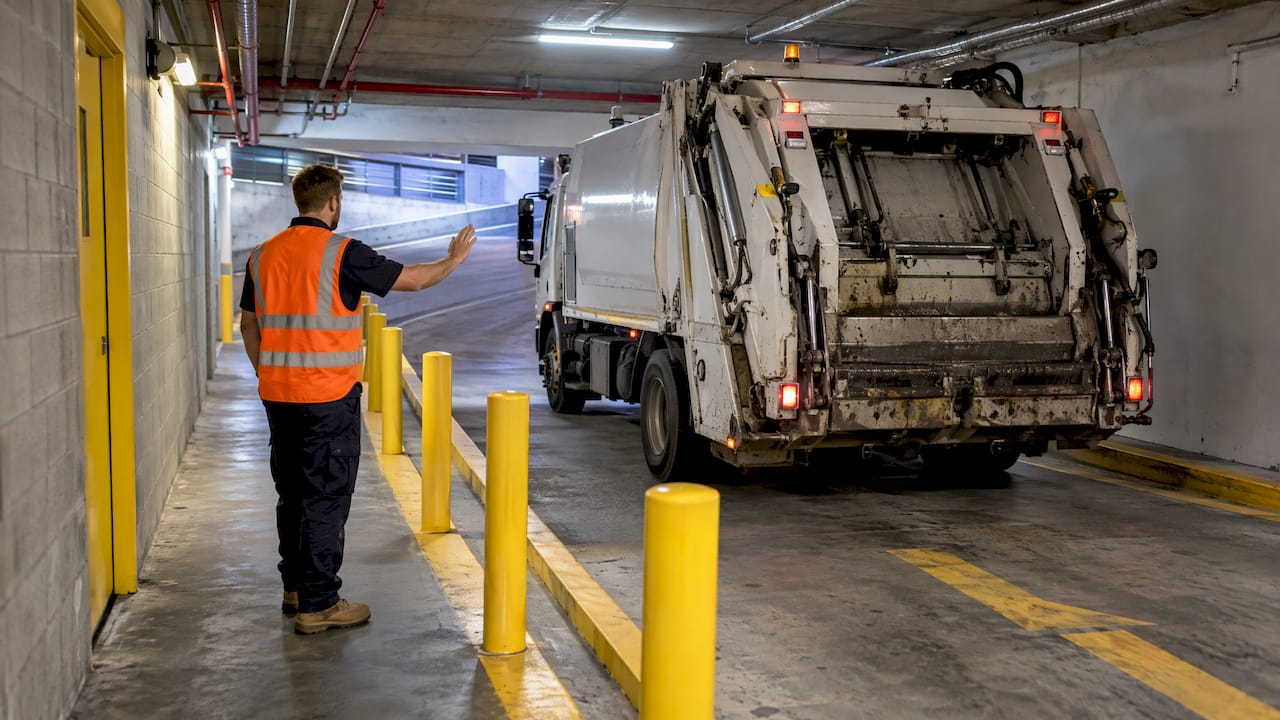
Vehicles are the other half of the picture. SafeWork NSW’s waste management and recycling guidance recommends separating vehicles and pedestrians, setting traffic flow patterns, and ensuring good visibility. In a CBD building, that means thinking about:
- Loading dock hours and booking slots.
- Where pedestrians and other tenants walk while the truck is loading.
- Barriers or signage around the loading zone.
- Who on your side is the contact for the building and for the crew.
Good timing also helps. A truck that arrives when it said it would, within the dock window, avoids queuing in laneways and rushed loading. That is why punctuality is part of our service: we send real-time notifications on the day and apply a lateness credit if we are late.
Skip bins and loads: overfilling, ground and access
The top Australian pages on this topic all make the same point: do not overfill. Overfilled loads are hard to lift, they can spill, and they put collection staff at risk. Keep waste below the rim and check for prohibited items before pickup.
There is a serious reason behind the advice. WorkSafe Victoria’s safety alert on loading and unloading skip bins follows a fatal incident in which a truck driver was crushed when the truck rolled forward against a brick wall. The alert recommends:
- Parking on level ground away from walls and fences.
- Using chocks and stabilisers on slopes.
- Fitting parking-brake alarms.
- Written pre-operation inspection checklists.
- An exclusion zone around the truck while it loads or unloads.
On the road, load restraint is a national heavy-vehicle issue. The NHVR’s Waste and Recycling Industry Code of Practice (June 2024) covers loads that could blow or spill out of containment, including bagged waste and irregularly shaped items.
Your part is straightforward:
- Keep the pickup area clear of cars, pallets and stock.
- Make sure the ground is flat and firm where a bin or truck needs to stand.
- Keep the load below the edge of the bin.
- Keep staff and visitors out of the loading area until the truck leaves.
Our rubbish removal preparation checklist walks through six checks that stop items being rejected on the day.
What must never go in with general rubbish
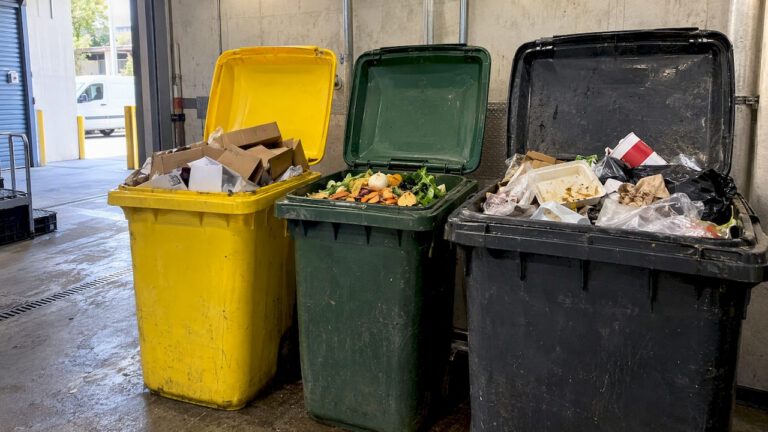
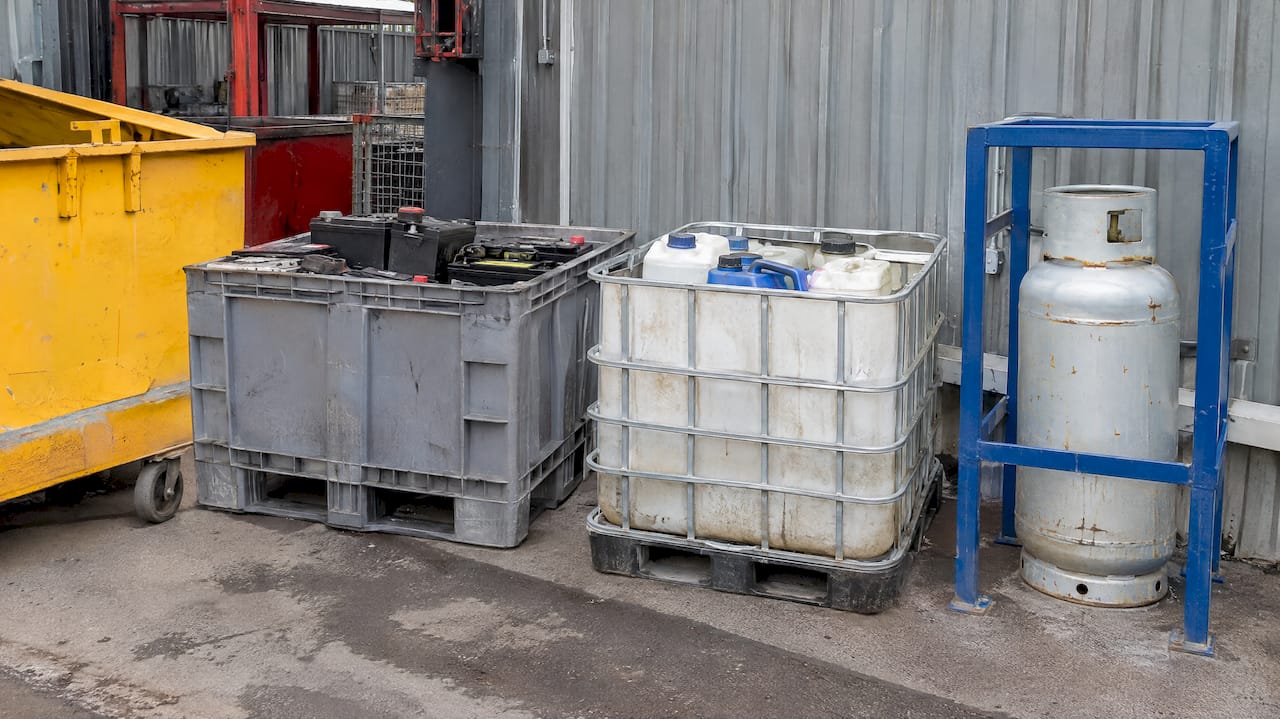
The biggest hidden hazard is the item nobody mentioned. Separate these before the crew arrives.
Asbestos
In older buildings, asbestos can sit in ceiling tiles, wall sheeting, floor tiles and lagging. Councils are clear that it does not belong in general bins. Lake Macquarie City Council’s waste guide says a licensed removalist is legally required for all friable asbestos and for more than 10 square metres of bonded asbestos, and that dumping it at an unlicensed place can bring a penalty of up to $5,000. City of Mandurah’s guidance adds that asbestos should be kept wet, and that blasting with high-pressure water, compressed air, cutting, breaking sheets or using a household vacuum cleaner must be avoided.
If you suspect asbestos in a strip-out or make-good, stop work and get it identified first. Our article on strip out versus demolition for property managers explains how to avoid asbestos surprises.
Batteries, chemicals and gas cylinders
Batteries cause fires in trucks and waste facilities. Lake Macquarie council says household batteries must stay out of home bins and can be dropped off for free at community recycling centres or participating retailers. City of Mandurah reports that around 90% of batteries are disposed of incorrectly. The same council lists acids, aerosols, engine oils, flammables, fluorescent lamps, small gas cylinders, paint, pesticides, pool chemicals and smoke detectors as hazardous household items that need dedicated disposal, with unknown chemicals sealed in chemical-resistant containers.
For businesses, WorkSafe Victoria’s guide to safe handling of industrial waste sets out the principles:
- Assess your waste and tell the people who collect and transport it what it is.
- Keep incompatible wastes apart: liquids from solids, acids from alkalis, flammables from non-flammables.
- Store waste in sealed containers on impermeable surfaces.
- Never fill transport containers beyond 90%.
- Dangerous goods need approved storage containers.
If you have liquids or hazardous materials on site, see our hazardous and liquid waste removal page before you book, and tell us what is there when you request a quote.
Segregation is the habit that makes all of this work. A clear list of items that cannot go in a dumpster, such as this overview of prohibited dumpster items, shows how much of the risk comes down to what is mixed into a load. Local rules differ, so use it as a prompt for your own sort and rely on Victorian requirements for the detail.
The legal side: who is responsible for the waste
Safety does not stop when the truck leaves. If waste ends up somewhere it should not, the consequences can reach back to the business that generated it, and to landlords whose property is used.
In Victoria, the Premier’s office stated on 11 October 2025 that illegal dumping and littering on public land under the Environment Protection Act 2017 carries a maximum penalty of $3,951,800 for businesses, and $800,000 or five years’ imprisonment (or both) for individuals. The same announcement committed $21.5 million to an Illegal Dumping Taskforce, including $13 million for EPA-led surveillance and enforcement.
On-the-spot fines are lower but still material. A Brimbank Council meeting paper from April 2025 records on-the-spot fines for businesses of up to $9,087 (rising to $218,088 in court), and $1,800 for a caged trailer load of waste.
What does that mean for you?
- Businesses and construction firms: you generate the waste, so you should know where it is going. Use a provider that takes it to a lawful facility and that can explain where each stream ends up.
- Property managers and landlords: EPA guidance, as reported in the media, is that landlords may carry legal liability when tenants abandon waste on a property. A tenant who leaves a mess at the end of a lease can become your clean-up bill.
- Tenants: make-good obligations usually require the space to be left clear. Removing everything in one planned job protects your bond and your relationship with the landlord.
Other states set their own penalties. In New South Wales, for example, a realestate.com.au report from January 2026 describes strict liability offences for dumping building materials that can reach $500,000 for individuals and $2 million for corporations. If you work across borders, check the rules of each state.
Choosing a removal provider with safety in mind
Use this checklist when you compare quotes for an office clean-out, construction clearance or strip-out:
- Insurance and licensing. Confirm the provider carries appropriate insurance. Our guide to rubbish removal insurance requirements in Australia explains what to look for.
- Experience in your type of building. A crew used to commercial towers knows lift bookings, dock rules and building management expectations. We work in all types of Melbourne commercial buildings and aim to leave no mess and no damage to property.
- A written scope. The quote should state what is being removed, from where, and what the crew will do about access and protection of the property.
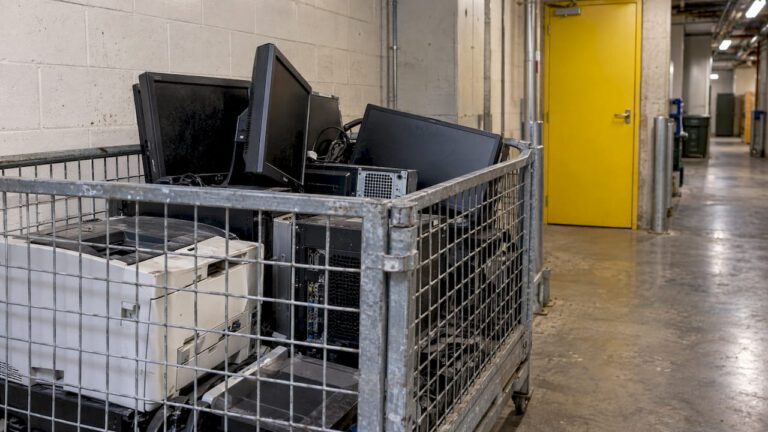
- Handling of special items. Electronic waste, furniture, concrete, green waste and demolition debris each need different handling. Tell the provider about every category up front.
- Where waste goes. For demolition and construction, our guide to demolition debris disposal explains how recycling rates of 70 to 90% are planned with a waste management plan.
- Reliable timing. Late trucks mean rushed loading and blocked docks. Real-time notifications and a lateness credit keep both sides honest.
Once you have a written quote from anyone, we promise to beat it by 5%. Lower price should not mean cutting safety corners, and a clear written scope is the way to compare like with like.
How Melbourne City Rubbish handles it
Melbourne City Rubbish removes office junk, construction debris, green waste, electronic waste, strip-out and demolition waste, and make-good clearances for commercial and residential clients across Melbourne, on a one-off or regular basis. For offices, start with commercial office rubbish removal. For building sites, see construction waste removal. You can also opt in to carbon-neutral disposal.
To get a price for your job, use our quick quote form and describe the access, the volume and any hazardous items.
Preparing your site: a one-page routine
A short routine before every removal prevents most problems:
- Walk the site and list everything going, by category.
- Tag items that are not general waste: batteries, chemicals, gas cylinders, anything that might contain asbestos.
- Photograph access routes, doors, lifts and the loading area.
- Book lifts and loading docks and tell the building manager.
- Clear the pickup area and keep it clear until the truck has gone.
- Name one person on site who can answer questions from the crew.
For building managers running regular collections, our page on waste management for office building managers covers the routine side.
FAQ
Is it illegal to dump rubbish on private property in Victoria?
Yes. Dumping waste where it is not permitted is an offence under the Environment Protection Act 2017, and penalties for businesses can reach $3,951,800 according to the Victorian Premier’s office. Landlords can also face liability for waste left on their property, so a documented removal at lease end matters.
What should never go in a skip bin or rubbish pile?
Asbestos, batteries, gas cylinders, chemicals, paints, fluorescent lamps and smoke detectors need special handling and should be separated before collection. Tell your provider about any hazardous or liquid waste when you request a quote.
How do I avoid injuries during an office clean-out?
Let the crew do the lifting with trolleys and lifting equipment, keep staff away from the loading zone, and make sure the ground and access path are clear. The SafeWork NSW code advises planning to minimise manual lifting and using team lifts or equipment for bulky loads.
Why shouldn’t I overfill a bin?
Overfilled bins are hard to lift and can spill during transport, which endangers collection staff and other road users. Keep waste below the rim and the load stable so the bin can be handled safely.
Sources
- SafeWork NSW, Collection and transport of waste (Code of Practice, March 2026)
- SafeWork NSW, Waste management and recycling
- WorkSafe Victoria, Safety when loading and unloading skip bins
- NHVR, Waste and Recycling Industry Code of Practice
- Lake Macquarie City Council, A-Z waste and recycling guide
- City of Mandurah, Asbestos, hazardous, and special waste
- WorkSafe Victoria, Safe handling of industrial waste
- Victorian Premier, Cracking down on illegal dumping
- Brimbank City Council, April 2025 meeting paper
- realestate.com.au, Truck abandoned after 10 tonnes of construction waste dumped