Yes, for most Australian businesses. The ATO lists waste removal and recycling among general operating expenses, and most operating expenses are generally deductible in the income year you incur them. What decides whether your claim stands is the paperwork: a tax invoice that names the supplier, the job and the amount. When we quote and invoice a commercial clearance, that is the document you need to keep.
TL;DR
- Rubbish removal for a business is generally deductible as an operating expense in the year you incur it.
- The three ATO tests: the expense is for your business, only the business portion is claimed if use is mixed, and you hold records to prove it.
- Landlords can claim the cost of removing rubbish left by tenants in full. Costs tied to private use of the property are not deductible.
- Keep invoices and payment records for five years. Claim the GST component only if you cannot claim it back as a GST credit.
- Large jobs such as strip-outs and demolition may be capital in nature, so confirm the treatment with your accountant or registered tax agent.
Table of Contents
- What the ATO says about waste removal
- Operating expense or capital expense?
- GST: do not claim it twice
- Records you need to keep
- Landlords and property managers
- Tenants and individuals
- Estimating what the cost might be
- Getting the claim right: a checklist
- Book a clearance that is easy to claim
- FAQ
- Sources
What the ATO says about waste removal
The ATO’s business deductions page sets three golden rules for any deduction:
- The expense must be for your business, not for private use.
- If it mixes business and private use, you can claim only the business portion.
- You must have records to prove it.
Rubbish removal fits easily. Clearing office junk, hauling away offcuts from a fit-out or collecting green waste from a commercial property all relate directly to earning business income. That is the test the ATO applies in its focus area on over-claiming: a claim must directly relate to earning income, not be private, and be backed by valid records. The ATO says it is seeing small businesses claim expenses and GST credits that fail those tests, so clean records are your protection.
Operating expense or capital expense?
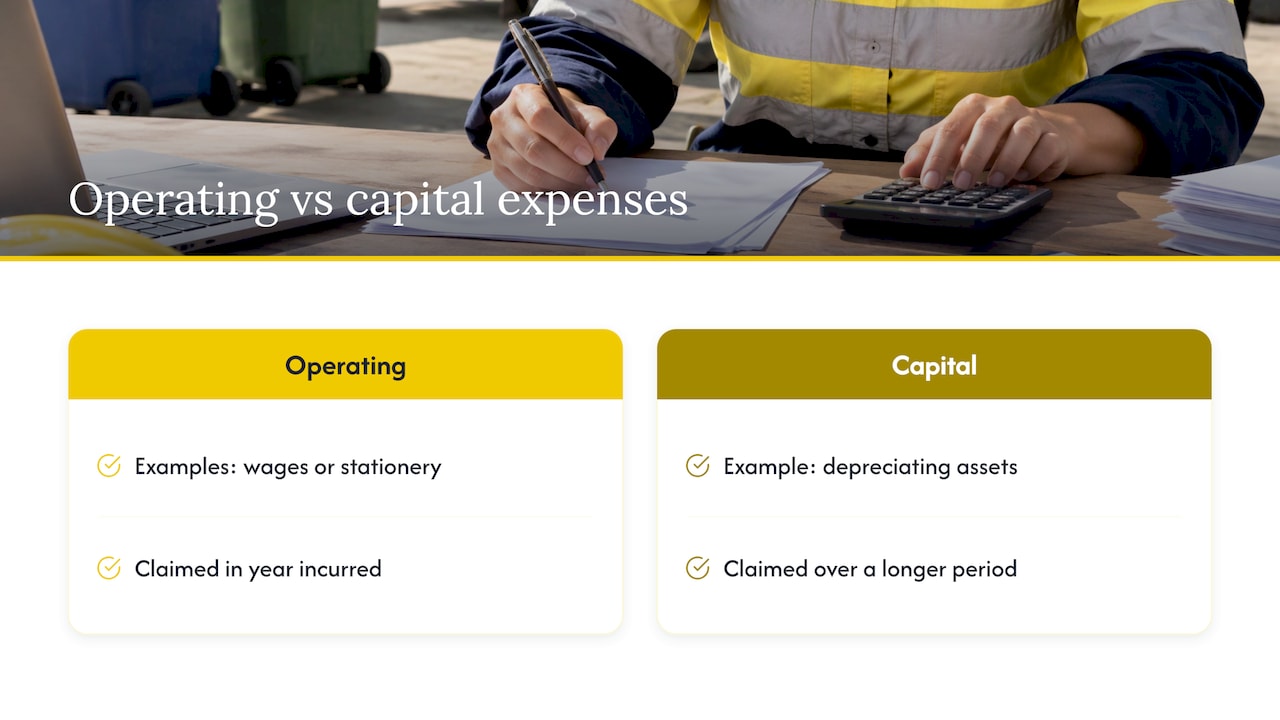
The ATO draws a line between two kinds of cost. Operating expenses, such as wages or stationery, are claimed in the year incurred. Capital expenses, such as depreciating assets, are claimed over a longer period. An expense is generally incurred when you have a legal obligation to pay it. The same business deductions page notes that an invoice is not strictly required to incur an expense, but a record of it is.
Regular and one-off clearances
A weekly or monthly collection, an office cleanout before a move or the removal of old furniture is routine. It keeps the business running and does not create a lasting asset, so it sits with other operating costs. Our ongoing collection service suits businesses that want a steady, predictable line item to claim each year.
Strip-outs, demolition and make-good
Bigger projects need more care. Waste removal that is part of building or altering a structure can be bundled into the cost of a capital project. Separately, the ATO’s Depreciating Assets Guide allows an immediate deduction for environmental protection activities, meaning spending for the sole or dominant purpose of treating, cleaning up, removing and storing waste from your earning activity. It excludes things like land acquisition and the construction or alteration of buildings.
The practical lesson: ask for the waste removal to be itemised separately on the invoice from any building, demolition or fit-out work. Your accountant can then treat each part correctly. Our make-good, strip-out and demolition services are quoted per project, so you can request that split when you book.
GST: do not claim it twice
If you are registered for GST, you generally claim the GST in a rubbish removal invoice as a credit on your business activity statement. The ATO is explicit that you cannot also claim the GST component as a deduction when you can claim it as a credit. Deduct the GST-exclusive amount and claim the GST through your BAS. If you are not registered, the full amount is generally the cost you deduct.
Records you need to keep
The ATO’s small business guidance on records says you must be able to show evidence such as receipts, tax invoices, credit card vouchers, and diaries for cash expenses. For mixed-use items you must show how you worked out the business portion.
In practice, a good rubbish removal record includes:
- the supplier’s name and ABN
- the date of the service and of the document
- a description of what was removed and the job address
- the amount, with GST shown separately
- proof of payment, such as a bank or card statement
The ATO’s record keeping publication for small business states that business records must be kept for five years after they are prepared, obtained or the transaction is completed, whichever is later, in English or a form the ATO can access. Penalties apply if you do not maintain them. Records for a dispute with the ATO may need to be kept longer.
A tax professional’s guide notes that a valid tax invoice is needed for expenses over $100 including GST. Ask for one on every job, large or small.
How we help with the paperwork
We quote each project and bill per job or by the volume of waste collected, so you get a clear document tied to a specific clearance. If you need the invoice to separate waste removal from demolition or concrete work, say so when you request the quote.
Landlords and property managers
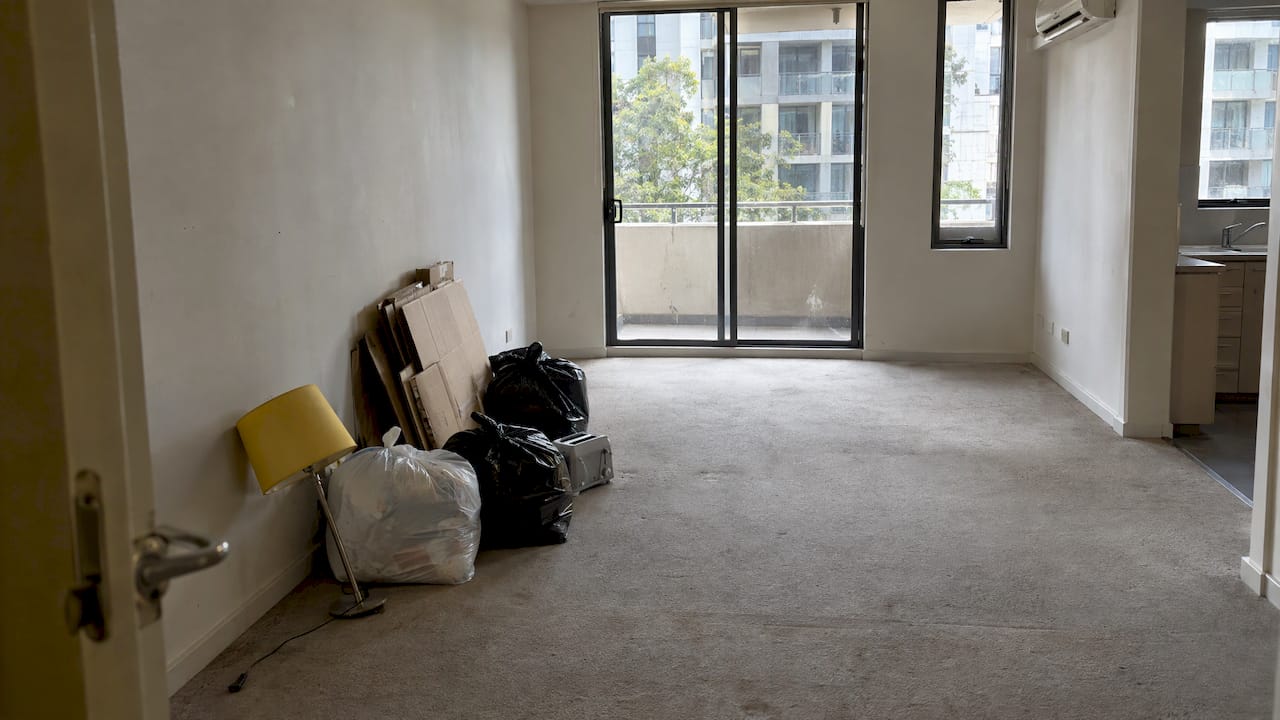
If you own a rental property, the ATO’s rental expenses guidance says the cost of removing rubbish left by tenants relates solely to renting the property. It is fully deductible, with no need to apportion by the time the property was rented. Expenses that relate solely to periods when the property is not rented out, such as fixing damage from your own private use, are not deductible.
The Rental properties guide 2026 adds that cleaning, repairs and maintenance qualify for an immediate deduction in the income year incurred, while expenses of a capital or private nature cannot be claimed that way, though depreciation, capital works or capital gains cost base treatment may apply.
Two practical points for landlords and managers:
- Keep before-and-after photos and the tenant’s exit report with the invoice, so the link between the rubbish and the rental is clear.
- Know your obligations before you clear goods left behind. Our guide on what landlords may need to do with tenant-left goods covers the notice period.
For end-of-lease clearouts, our service is built around leaving the property clean and bond-ready.
Tenants and individuals
Tenants clearing a home for a lease end are dealing with a private expense. Private or domestic costs are among the non-deductible items on the ATO’s list. The exception is a home-based business: if part of the property is used for work, only the business portion of the cost can be claimed, and you need to be able to show how you calculated it.
Estimating what the cost might be
Prices depend on volume, access, waste type and the number of workers. One Melbourne pricing guide from 2026 reports typical ranges of $180 to $650 for a standard house cleanout, and surcharges for heavy inert waste. Commercial jobs vary far more, so we price each project individually. If you have a written quote from elsewhere, we promise to beat it by 5%. Our quick quote page is the fastest way to get a figure.
Getting the claim right: a checklist
- Confirm the work is for your business, or for a rental property.
- Get a written quote and a tax invoice from the supplier with an ABN.
- Ask for waste removal to be itemised if it is part of a larger building project.
- Claim the GST-exclusive amount if you claim GST credits.
- File the invoice and payment proof where you can find them for five years.
- Check any large or structural project with your accountant or registered tax agent.
This article is general information, not tax advice. For a specific situation, your registered tax agent or accountant is the person to confirm treatment.
Book a clearance that is easy to claim
We handle office junk, construction debris, green waste, electronic waste, strip-outs, demolition debris and make-good clearances across Melbourne, as regular or one-off collections. Our commercial office rubbish removal and construction waste removal pages show what each job covers. We offer carbon-neutral disposal as an option, real-time notifications and a lateness credit, and we aim to leave no mess and no damage to your property.
FAQ
Can I claim rubbish removal if I am a sole trader?
Yes, if the removal is for your business. Sole traders follow the same three rules: business purpose, business portion only if mixed, and records. Keep the invoice with your business records.
Can I claim the cost of removing e-waste?
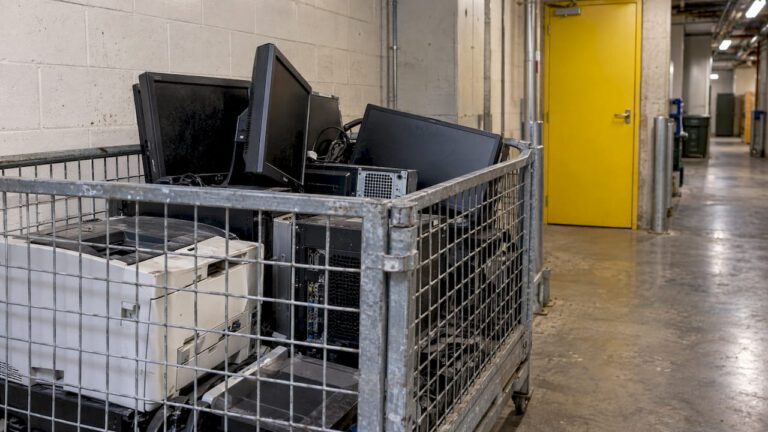
Generally yes, when disposing of business equipment is part of running the business. Keep the invoice and note what was removed. Our guide to e-waste regulations for businesses explains your obligations.
Do I need a tax invoice for a small job?
For business expenses over $100 including GST, a valid tax invoice is needed, according to Chan & Naylor. For smaller amounts, still keep a receipt and proof of payment, as the ATO expects a record of every claim.
How long should I keep the records?
The ATO requires business records to be kept for five years after they are prepared or the transaction is completed, whichever is later. Keep them longer if you are in a dispute with the ATO.
Is the clearance of a rental property after tenants leave deductible?
Yes. The ATO says removing rubbish left by tenants relates solely to renting the property, so it is fully deductible. Keep the invoice and evidence of what was left.
Sources
- Deductions for other operating expenses, ATO
- Business deductions, ATO
- Over-claiming expenses and GST credits, ATO
- Capital expenditure deductible under UCA, ATO
- Operating and other expenses records, ATO
- Record keeping for small business, ATO
- Rental expenses, ATO
- Rental properties guide 2026, ATO
- Top 10 Tax Deductions for Small Businesses, Chan & Naylor
- How Much Does Rubbish Removal Cost in Melbourne?, Home Upkeep