Apartment waste contamination is what happens when the wrong items end up in a shared bin: plastic bags and clothing in recycling, or recyclables and food in general waste. In a block with dozens of households, a few wrong items per bin can mean the whole bin goes uncollected, the owners corporation pays for it, and the material is lost to landfill. The good news is that audits show where the problems come from, and most are fixable with better bin rooms, clear signs and steady reminders.
TL;DR
- Contamination means non-recyclable items in the recycling bin. Common culprits are bagged recycling, textiles, soft plastics and broken glass.
- Councils can refuse to empty a contaminated bin. In Yarra, repeated issues can lead to bin removal or withdrawal of the council service, with the owners corporation responsible.
- Convenience and consistency matter most: bins side by side, standard signs and colour coding, and ongoing education.
- Bulky items, e-waste and renovation debris are a separate problem. Book a proper removal rather than leaving them in the bin room.
- Check who services your building (council or a private operator) before you set rules or order signs.
Table of Contents
- What counts as contamination in an apartment building
- What actually goes wrong in the bins
- Why shared bin rooms are prone to contamination
- What contamination costs
- How building managers can reduce contamination
- What residents can do
- Bulky waste, e-waste and renovation debris
- Check your local rules first
- FAQ
- Sources
What counts as contamination in an apartment building
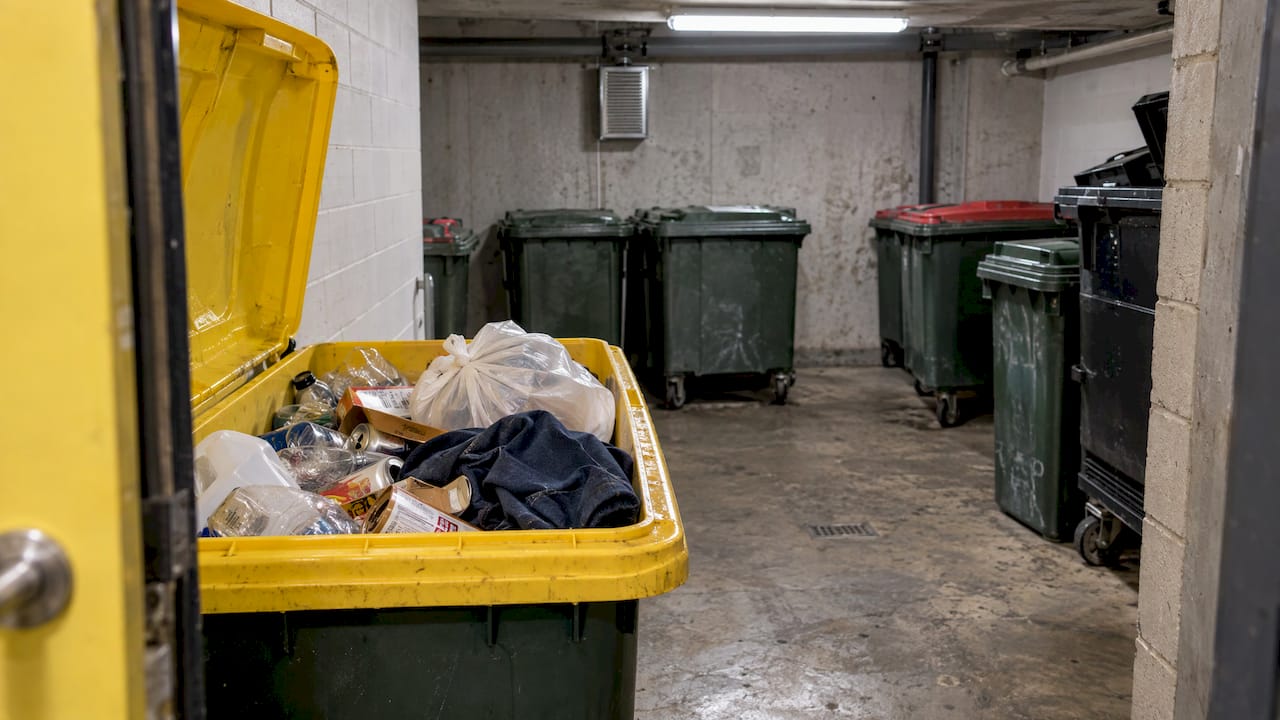
Yarra City Council’s apartment toolkit describes contamination as the wrong items being placed in the recycling bin, with plastic bags, clothing, non-recyclable plastics and broken glass given as examples. A research study of multi-unit dwellings in the ACT defines it as the unintentional inclusion of non-recyclable materials in loads of recyclables. That study also reports that the National Waste Report 2018 recorded contamination rates of four to sixteen per cent across Australia.
The problem runs both ways. Contamination can also mean recyclables or food scraps in the general waste bin, or the wrong material in a food and garden organics bin. Each stream has its own rules, so “contaminated” always depends on which bin you are looking at.
What actually goes wrong in the bins
Audit data gives a far clearer picture than guesswork.
Recycling bins
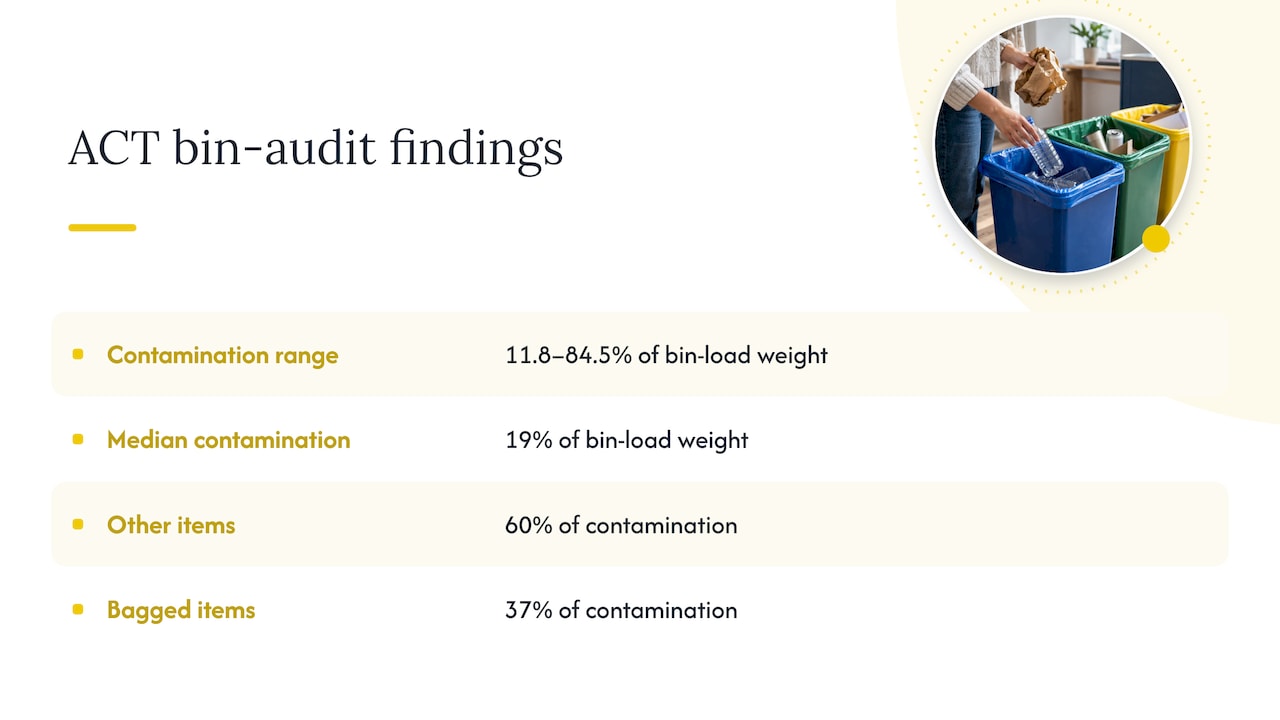
In the ACT bin audits, contamination ranged from 11.8% to 84.5% of bin-load weight, with a median of 19%. Almost all of it fell into two categories: “other” items such as textiles and bulky multi-material objects (60%) and bagged items (37%).
Yarra’s audits of three large developments found the recycling stream held 5% other contamination and 5% bagged recycling. The rest was mostly glass, cardboard, paper and bottles that belonged there.
A Victorian industry body statement reported in 2020 that contamination in apartment buildings can be as high as 71 per cent, against 13.5 per cent for general households. That is the upper end of what has been recorded, not a typical building, but it shows how far a poorly run bin room can drift.
General waste bins
The same Yarra audits found the rubbish stream was 50% food waste and 27% recyclables, with soft plastic, textiles, garden waste and nappies making up most of the rest. Hard rubbish and e-waste were each about 1%, small by weight but a regular source of illegal dumping and bin-room clutter.
Food and garden organics bins
North Sydney Council’s food waste trial found that food in non-compostable bags, contaminated paper and textiles made up 86% of contamination by weight in food organics bins. Contamination also climbed from 7% midway through the trial to 13% afterwards, a sign that early enthusiasm fades without reminders.
Why shared bin rooms are prone to contamination
The ACT study says contamination often comes from unsophisticated recycling systems, differing rules between regions and a lack of effective education. Several features of apartment living make each of those worse.
- Anonymity. Nobody sees who put what in the bin, so there is little feedback and little social pressure.
- Turnover. The Victorian industry body noted that apartments have highly transient residents, so every new tenant has to learn the system.
- Mixed service arrangements. Some blocks use a council service, some a private operator, and some a hybrid, so the rules differ from building to building.
- Inconvenience. Sustainability Victoria’s guide says low participation most often occurs when the system is not convenient, and that one accessible spot for both waste and recycling is likely to improve recycling rates.
- Cleaning can hide the problem. In the ACT study, contamination measured without a recent clean was on average 37% higher than after cleaning. The authors describe that as a lower bound, so a tidy bin room does not prove residents are sorting well.
If you share a flat with housemates, this starts at home. Agreeing who empties the kitchen bin, what goes in which bin and who tells new housemates is far easier when it is written down. A roommate agreement checklist is a handy place to settle bin duties alongside cleaning and guest rules, before a contaminated bin becomes a building-wide issue.
What contamination costs
Collection problems and extra charges
Yarra says it will not empty a contaminated bin until the contamination is removed. Contractors place a sticker on the lid marking the wrong item, and after the third issue there may be compliance action, which can mean bin removal or withdrawal of service. The owners corporation is responsible for keeping bins free of contamination. The council notes that losing the service can mean ongoing private collection at increased cost to residents.
Other councils apply similar rules. City of Clarence in Tasmania says bins may be rejected or stickered if they are contaminated with other materials, overfull or overweight, with limits of 80kg for residential waste and recycling.
Lost recycling
The NSW EPA says high contamination in recycling or organics bins is likely to result in material being rejected at the recycling facility and ending up in landfill. A Senate committee report notes that in 2022-23 only 39 per cent of the 9.9 Mt collected from kerbside services was recovered, and that contamination contributes to lower recovery because the material is lower quality or cannot be recycled.
Apartments lag behind houses. Sustainability Victoria’s guide says kerbside-style services can divert more than 50 per cent of household waste from landfill, while recovery from multi-unit developments is often significantly less.
Safety
Batteries and disposable vapes are a particular hazard. City of Gold Coast warns they can ignite and set fire to garbage trucks when crushed, and asks residents to take them to a retailer or collection point rather than the bin.
How building managers can reduce contamination
The NSW EPA’s better practice guide lists the measures that matter most. It says ongoing education is one of the most important factors, and that systems must be convenient and simple to use. Its practical list includes:
- Placing recycling and organics bins next to the general waste bins.
- Giving each dwelling enough storage space to sort waste inside the unit.
- Using standard, consistent signage and colour coding.
- Displaying information signs in common areas.
- Contacting the council before the building is occupied, so the service is ready and education resources are identified.
Georges River Council’s guidance for strata managers adds detail on layout and upkeep: red-lidded general waste bins closest to the entrance of the bin storage area, bins cleaned at least monthly and the area swept weekly.
Signs that work
Many councils supply them free or cheaply. City of Port Phillip offers downloadable bin-room posters and Corflute signs to help residents sort correctly. Glen Eira provides signs for general waste, recycling, green bins, cardboard only, hard rubbish, e-waste, clothing and glass, plus chute signs. Penrith’s complex service tells residents to follow “Know it, Empty it, Rinse it, Sort it” and not to use plastic bags in the recycling bin.
What the results look like
Sustainability Victoria’s case studies report that at one building, after new bin types and signage, the share of waste recycled rose from 31% to 56%, with more recycled (51kg) than landfilled (33kg).
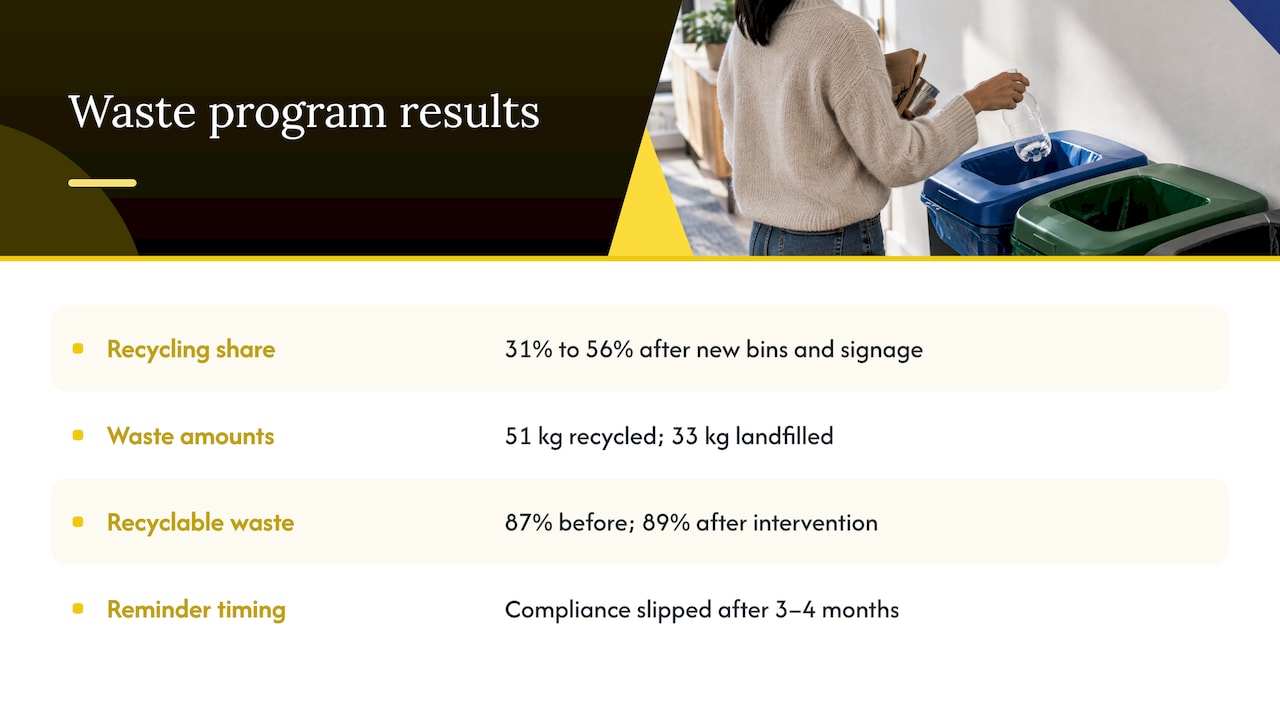
Results are not automatic, though. In a larger Victorian project across 60 buildings, 89% of general waste was still considered recyclable after the intervention, up from 87% before, and contamination in mixed recycling and food and garden organics rose slightly. Residents did report fewer problems such as overflowing bins and neighbours misusing them. The lesson is to treat signage as the start of a program, not the end. North Sydney’s trial found compliance slipped three or four months in, which points to the need for regular reminders.
A simple routine for the bin room
- Walk the bin room weekly and note what is in the wrong bin.
- Photograph repeat problems and share them in the building newsletter or noticeboard, without naming anyone.
- Re-send the sorting guide to every new tenant and owner at move-in.
- Refresh worn or faded signs, and keep the wording the same as the council’s.
- Keep bins and the room clean, because dirty bin rooms invite poor behaviour.
What residents can do
Most contamination is accidental. These habits cover the biggest audit findings:
- Never bag your recycling. Tip items in loose. Bagged items were 37% of contamination in the ACT audits.
- Keep textiles out of every bin. Clothing and fabric turned up in recycling, organics and rubbish audits. Use a charity bin or textile collection.
- Empty and rinse containers. A quick rinse keeps food residue out of the paper and cardboard.
- Flatten cardboard boxes. Uncollapsed boxes fill a bin quickly and block others from using it.
- Use compostable bags only where your organics service accepts them. Food in the wrong bags was a major contaminant in North Sydney.
- Keep batteries, vapes and e-waste out of bins. Use a retailer or collection point.
If you are unsure what your building offers, Port Phillip suggests asking the building manager or owners corporation who provides the service, which bins and collections are available and whether extra services can be requested.
Bulky waste, e-waste and renovation debris
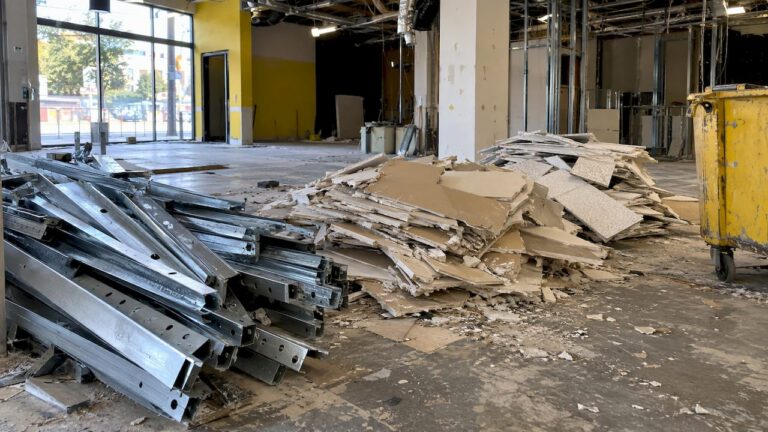
Sorting rules cover everyday household waste. Mattresses, broken furniture, old appliances and renovation offcuts are different: they do not fit any bin, and when they are left in the bin room they become an illegal dumping problem for the whole building. Take them out of the bin system altogether.
This is where we help. Melbourne City Rubbish provides general bulk rubbish removal and other services across Melbourne, for residential and commercial clients, including electronic waste, construction debris and green waste. Owners corporations and strata managers can read about strata rubbish removal or our apartment building rubbish removal service. We offer a carbon-neutral option, and we promise to beat any written quote by 5%. For old furniture, our guide on whether to donate or recycle first can save you a booking. When you are ready, request a quick quote.
Check your local rules first
Sorting rules differ by council and by who services your building. Port Phillip says many apartment residents receive a council service that typically includes a three-bin system for garbage, mixed recycling and food and garden organics, but some blocks use private operators or a hybrid arrangement.
Victoria is also changing its bins. The state government announced a four-bin system covering rubbish, recycling, glass, and food and green waste, rolled out between 2021 and 2030. Signs that were correct a few years ago may now be wrong in your council area, so confirm the current bin lineup with your council before you reprint anything.
FAQ
What is classed as contaminated waste in an apartment?
In recycling, it is any item that does not belong, such as plastic bags, clothing, non-recyclable plastics or broken glass. It also covers the whole load of recycling if it is bagged. In general waste or organics bins, it means items placed in the wrong stream.
Who is responsible when a shared bin is contaminated?
It depends on the service, but in Yarra the owners corporation is responsible for keeping bins free of contamination. The council can sticker a bin, refuse to empty it and, after repeated issues, remove the service. Your building manager can tell you who services your bins and what the rules are.
Does a contaminated bin always end up in landfill?
Not always, but it is a real risk. The NSW EPA says high contamination is likely to see materials rejected at the recycling facility and sent to landfill. A bin that is only slightly contaminated may still be collected, though some councils will leave it until the wrong items are removed.
How can a strata committee cut contamination fast?
Start with the basics: put recycling bins beside general waste bins, install council-issued signs and brief all residents. Then audit the bin room weekly and repeat the message to new tenants. Sustained follow-up matters, because audits show contamination can creep back.
Sources
- Waste & Recycling Toolkit for Apartment Buildings, Yarra City Council
- Understanding drivers of recycling behaviour in the ACT, DCCEEW
- MWRRG releases new multi-unit development recycling resources, Waste Management Review
- Food Waste Trial, North Sydney Council
- Waste Management and Recycling in Multi-unit Developments, Sustainability Victoria
- Waste FAQs, City of Clarence
- Better practice guide for resource recovery in residential developments, NSW EPA
- Residential bins, City of Gold Coast
- Strata Managers and Unit Development, Georges River Council
- Waste and recycling in apartments, City of Port Phillip
- Recycling and waste resources, Glen Eira City Council
- Collect and Return Waste Service, Penrith City Council
- Five case studies in multi-unit developments, Sustainability Victoria
- Best waste practices in multi-unit dwellings final report, Sustainability Victoria