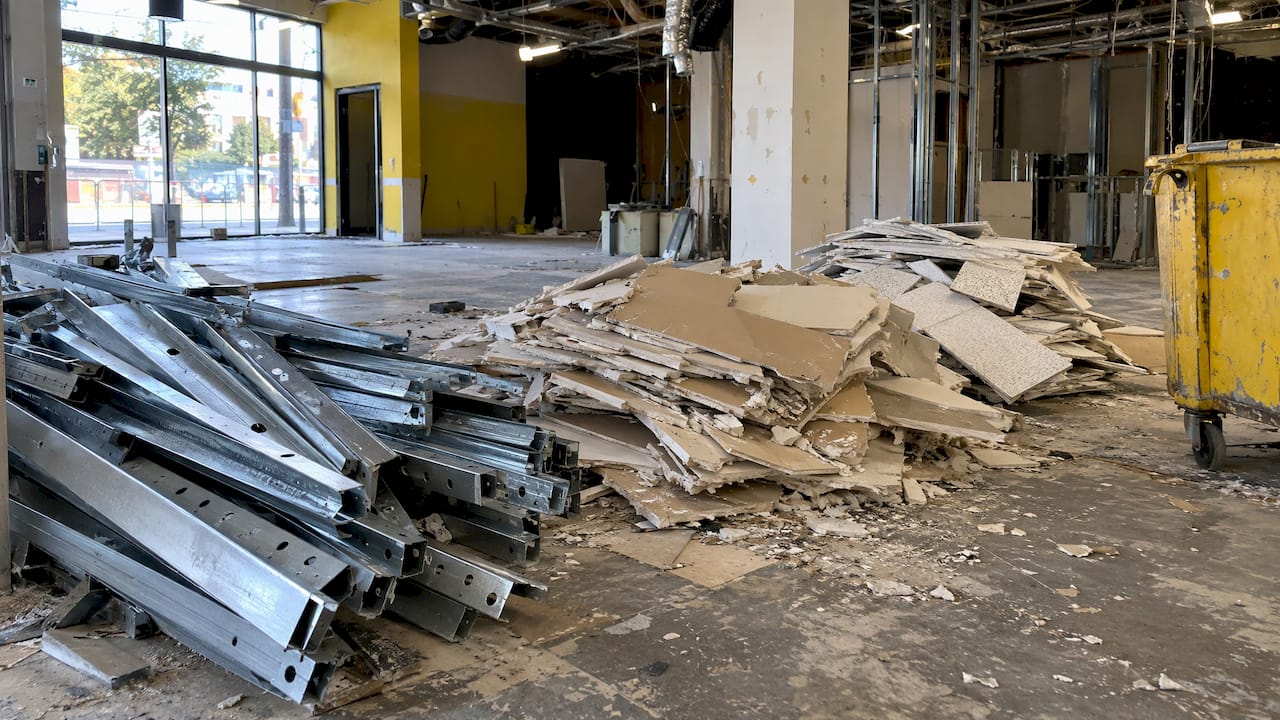
Fitout demolition waste is everything a tenancy produces when its interior is stripped back: plasterboard, steel studs, ceiling grid, carpet, glass, joinery, cabling and lighting. Most of it can be diverted from landfill only if it is sorted on the floor during the strip-out, not afterwards. In Victoria, the person who produces the waste also has legal duties about where it goes. This guide covers what you are dealing with, what can be recycled, the rules, and how to plan the job.
TL;DR
- A typical office defit produces plasterboard, steel studs, glass, ceiling grid, carpet tiles, timber joinery, cabling and lighting, and plasterboard is usually the largest stream by volume.
- Sorting happens during strip-out. Mixed skips cannot be unmixed at the tip, so separate streams (metals, timber, plasterboard) before demolition starts.
- Test for asbestos before work begins. In Victoria, the manager of a workplace must identify it, review the register and have it removed before demolition where reasonably practicable.
- Waste producers must take reasonable steps to make sure waste reaches a lawful place, even when someone else carts it.
- Recycling decisions turn on separation labour, transport, storage and landfill costs, and tonnage matters.
Table of Contents
- What counts as fitout demolition waste
- What can be recycled, and what usually cannot
- How to sort waste during a strip-out
- Check for asbestos before anything is demolished
- Your legal duties as the waste producer
- How sorting affects cost
- Planning a fitout demolition job in Melbourne
- How we help with fitout and make-good waste
- FAQ
- Sources
What counts as fitout demolition waste
A fitout is the interior built inside a commercial shell: partitions, ceilings, floors, joinery, services and furniture. When a tenant leaves, renovates or reconfigures, that interior is removed in a strip-out, defit or make-good. Everything that comes out is fitout demolition waste.
The volume is large because commercial interiors turn over quickly. Academic research on Australian commercial fit-outs notes that interiors are typically renovated every 7 to 10 years, and sometimes every 3 to 5. The same research reports that around 78% of commercial fit-out waste in Australia ends up in landfill.
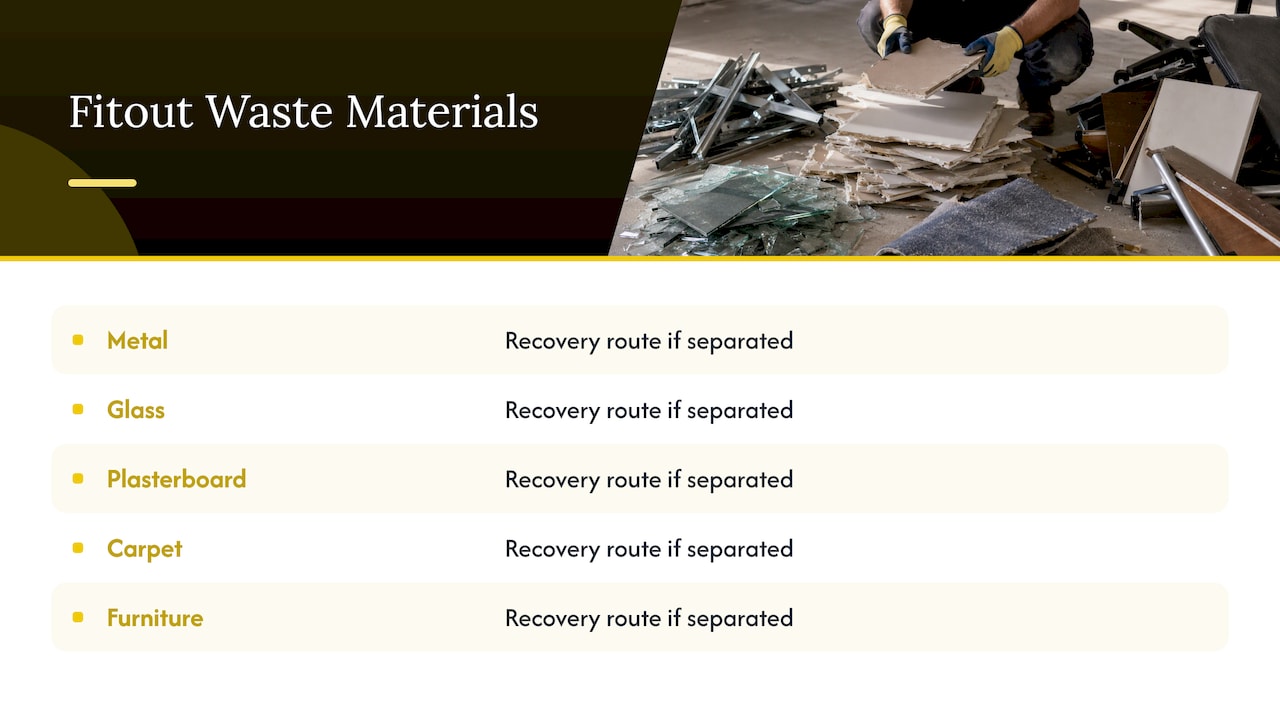
That figure is the opportunity. Much of what is landfilled is metal, glass, plasterboard, carpet and furniture that has a recovery route if it is kept separate.
The usual materials
When we clear a floor, the material mix is predictable:
- Plasterboard from partitions and bulkheads, plus the steel studs and tracks that frame them.
- Ceiling grid and tiles, along with lighting and air-conditioning components.
- Glass from internal screens and meeting-room frontages.
- Carpet tiles and other floor finishes, sometimes bonded to the slab.
- Timber joinery, doors and workstations.
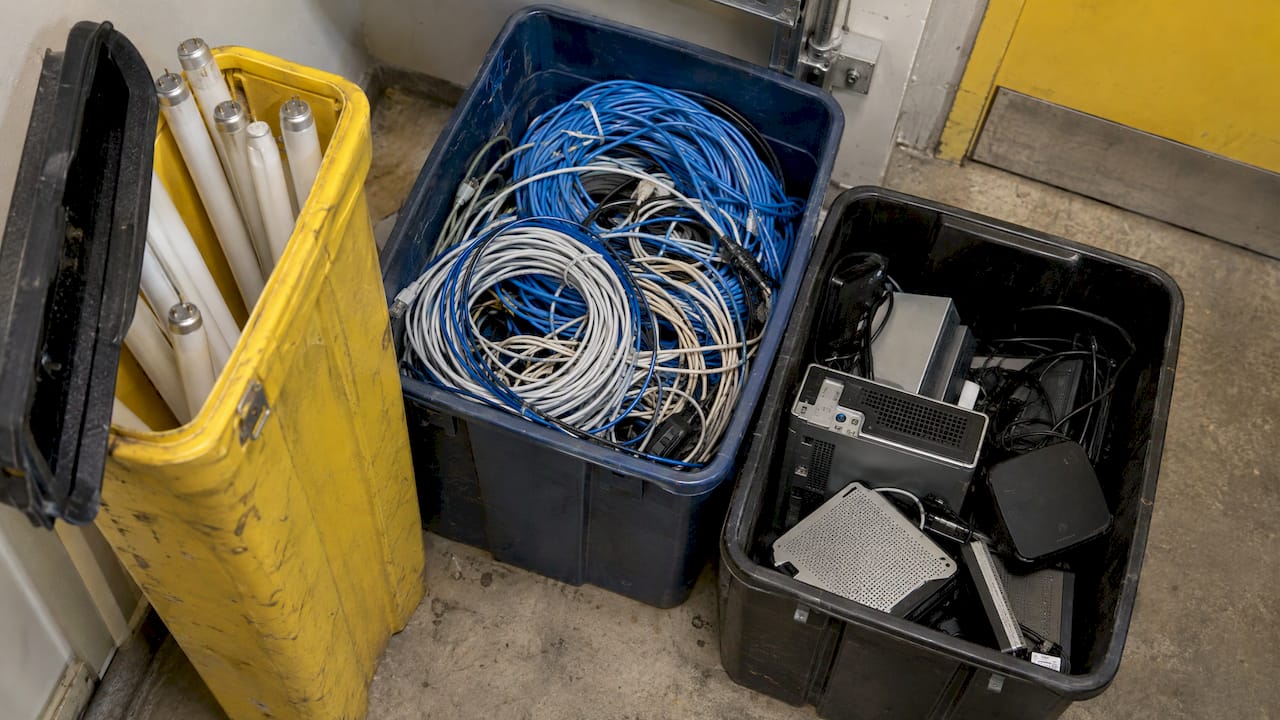
- Cabling, data equipment and fluorescent lighting, which are electrical waste.
- Furniture, from desks and chairs to storage and kitchen fit-out.
- Concrete where the job extends to cutting, coring or grinding.
Not everything on this list is equal. Some streams carry value, some carry cost, and a few carry legal obligations. The sections below take them in that order.
What can be recycled, and what usually cannot
The short version: metals are almost always recovered, glass and clean plasterboard and timber can be, and ceiling tiles and mixed-up materials mostly end up in landfill.
Metals
An Australian fitout study from the University of Technology Sydney reports that metals are almost universally recovered because they have recognised value and accessible recycling merchants. The federal environment department adds that ferrous metals such as steel are readily recovered with magnets, while non-ferrous fitout metals commonly include aluminium, stainless steel and copper. It also notes that quality hardwood has a higher-value reuse market.
Practically, that means steel studs, aluminium frames and copper cable should never go into a general skip. Pulled out first, they are the easiest win on any strip-out.
Plasterboard, glass and timber
An Australian study of office-fitout demolition found that metals, glass and, to a lesser degree, ceramic and plasterboard may have recycling value. Plasterboard, glass and wooden panels are particularly worthwhile when they are uncontaminated and available in sufficient quantity.
Plasterboard needs care. The UTS research says it is theoretically recyclable into new plasterboard, but commercial-fitout recovery is rare because of site contamination, labour-intensive sorting and the difficulty of removing the paper face. Keeping it dry, clean and free of insulation, tiles and fixings is what gives it a chance. We explain what happens next in our guide to plasterboard recycling, and our plaster waste disposal page covers booking a collection.
Ceiling tiles and carpet
Ceiling tiles are the awkward one. The same UTS study reports they are usually landfilled, because low new-product prices, transport costs and limited recycling opportunities make recovery uneconomic. If the tiles are in good condition, reuse in another tenancy is a better route than recycling, which is why the soft-strip stage matters (see below).
Electrical waste and lighting
Fluorescent tubes, data cabling and electronic equipment should not go in a general skip. They need dedicated recyclers: fluorescent lighting needs a specialist lamp recycler, and cabling and e-waste need an e-waste recycler. The Australian Standard AS 5377:2022 covers the collection, storage, transport and treatment of electrical and electronic equipment. Ask whoever collects your waste where these items will end up and keep them in their own container.
How much is actually diverted
The Better Buildings Partnership reported that only 21% of Sydney fitout waste was diverted from landfill at the time of its guidance, despite an estimated 25,000 tonnes a year of potentially reusable or recyclable glass, metals, plasterboard, ceiling tiles, carpet and furniture. Melbourne CBD buildings are similar in design and tenancy turnover, so the same gap is there for the taking.
How to sort waste during a strip-out
The recycling decision is made on the floor. A mixed skip cannot be unmixed at the tip, so what you separate during the work is what gets recovered.
Step 1: Soft-strip first
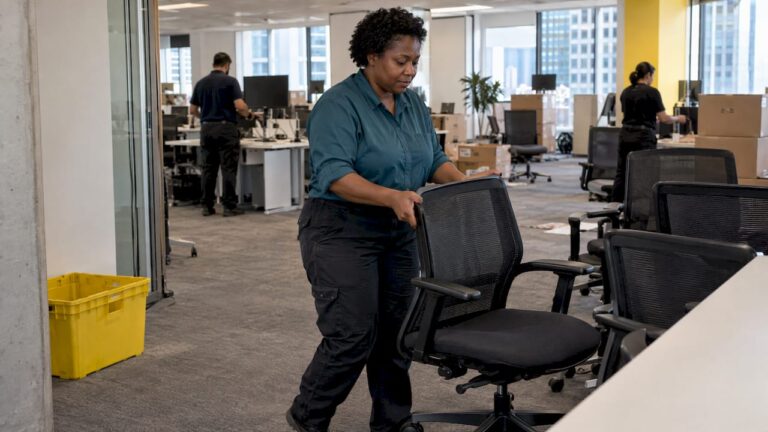
Best practice is to remove loose items and salvageable assets before any demolition starts. The UNSW construction and demolition waste guideline describes soft-stripping loose items and salvageable assets first, then keeping materials clean to prevent contamination. In an office that means furniture, monitors, whiteboards, kitchen appliances, good ceiling tiles and lighting. Furniture in sound condition can be resold or donated, and we handle the rest through furniture disposal and recycling and office furniture removal.
Step 2: Set up separate streams
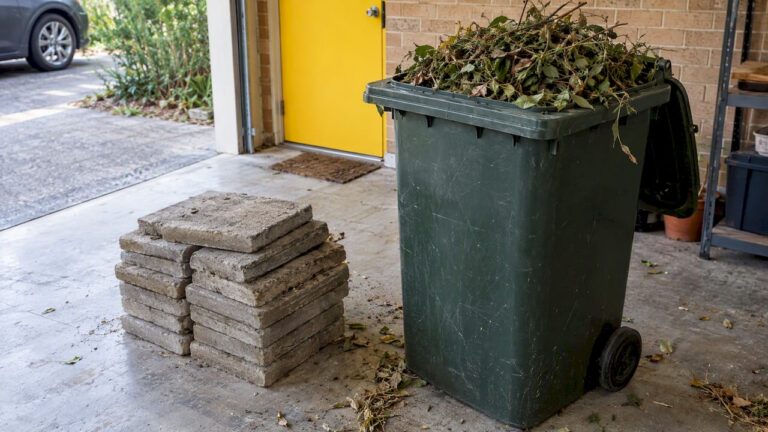
Before demolition begins, designate bins or areas for metals, timber, plasterboard and general waste. EPA Victoria’s construction guidance gives the example of a builder who plans waste locations, assesses risks to neighbours, and stores waste in designated stockpiles or clearly labelled bins. In a multi-tenant tower, the equivalent is booking the loading dock and goods lift for the right times and keeping bins out of shared corridors.
For a wider view of planning waste locations, bins and risk controls, this construction waste management guide is a helpful companion.
Step 3: When space is tight
Floors in the CBD rarely have room for six bins. The UNSW guideline says that where on-site space is limited, waste may be separated off-site by specialised contractors, although separating at the source is preferred because it limits damage and keeps salvage value. A sensible compromise is to pull out metals and salvage items first, then use scheduled collections so each bin is taken away as it fills.
Step 4: Keep it clean
Contamination is what turns recyclable material into landfill. Do not tip food waste, liquids or general rubbish into plasterboard or timber bins, and keep cabling out of the metals pile until it has been stripped or sent separately.
Check for asbestos before anything is demolished
This is the step that cannot be skipped. Older Melbourne buildings may contain asbestos in ceiling tiles, lagging, vinyl backing, adhesives and wall sheeting, and a fitout demolition can disturb it.
Under the Victorian OHS regulations, the person managing a workplace must identify asbestos that could be disturbed by demolition or refurbishment, review the asbestos register, and ensure so far as is reasonably practicable that it is removed before demolition starts. EPA Victoria’s guidance adds that asbestos requires authorised transport and disposal at a licensed facility, and that higher-risk or friable material calls for licensed removalists.
In practice:
- Ask the building owner or manager for the asbestos register and any survey before you start planning the strip-out.
- If the register is missing or out of date, have an asbestos assessor inspect the areas to be disturbed.
- Have any asbestos removed by a licensed removalist before demolition.
- Do not put suspect material in a general skip. We cannot take it, and our prohibited items list sets out what stays out of a standard collection.
Your legal duties as the waste producer
The person who generates the waste cannot hand over responsibility completely. EPA Victoria states that waste producers must take reasonable steps to ensure industrial waste is transported to a lawful place, even when transferring it to another person. Masonry and other solid materials that cannot be reused or accepted by a recycler must go to a site lawfully able to receive them.
The same guidance explains that priority waste needs classification and controls, and reportable priority waste such as asbestos needs permission for transport and tracking. For tenants and property managers, the practical rule is to use a collector that can tell you where each load goes and give you a record of it.
This is a general summary, not legal advice. For a specific classification question, speak to EPA Victoria or an environmental consultant.
If you also work across the border, rules differ. In NSW, for example, both the waste owner and the transporter may be guilty of an offence if waste goes to an unlawful facility, and the EPA recommends keeping records and monitoring.
Waste management plans
Many councils ask for a waste management plan with development applications, and larger building owners often require one from contractors for strip-outs. The NSW EPA suggests a plan covers waste classification, estimated quantities, reuse options, suitable receival sites, and how waste will be managed from generation to disposal. That structure works well for any Melbourne fitout, whether or not a plan is formally required. Check your lease make-good clause and your building’s contractor requirements, as many specify waste reporting.
Our article on demolition debris disposal goes further into plans and recycling rates, and how to dispose of building waste covers the basics for smaller jobs.
How sorting affects cost
Sorting is not free, and it is worth being clear about why it pays off in some cases and not in others.
The Australian office-fitout study found that recycling decisions weigh separation costs, transport fees and recycling benefits against landfill costs. Demolishers commonly regard around ten tonnes as the critical mass for economical recycling, though the threshold varies by material.
What that means for your job:
- Metals usually earn their way. Steel, aluminium and copper that are separated are usually paid for by scrap merchants.
- Plasterboard pays off when you have enough clean volume. A whole floor strip-out is more likely to reach that than a single meeting room.
- Reuse is generally preferable to recycling in the waste hierarchy, but the UTS research cautions that careful dismantling can be uneconomic where labour, handling and storage costs exceed the value of the recovered item. Reserve it for items that are easy to lift out and have an obvious buyer.
- Retaining existing walls, ceilings and furniture where the new design allows it can reduce disposal and transport costs and unlock resale value. The cheapest waste is the waste you never create.
The point is to decide early. A designer or project manager who knows which partitions stay can cut tonnage before a single bin is ordered.
Planning a fitout demolition job in Melbourne
A workable sequence for a tenant, property manager or builder:
- Read the lease and building rules. Note make-good obligations, loading dock hours, lift access, insurance and any waste reporting the building requires.
- Get the asbestos register and arrange any survey or removal.
- Walk the floor and list the streams. Estimate quantities by material, even roughly.
- Decide what is retained, resold or donated. Soft-strip these items first.
- Book collections to match the work. Staged pickups beat a single skip when space is tight.
- Keep records. Ask for details of where each load went, particularly for anything classified or regulated.
- Clean after the strip-out. Handover usually needs a clean floor. For what post-construction cleaning involves, see this construction cleaning cost guide.
How we help with fitout and make-good waste
We remove waste from commercial strip-outs, defits and make-good jobs across Melbourne, including the CBD, South Melbourne, Port Melbourne and West Melbourne. Our services cover building strip-out, make-good and de-fit, construction waste removal and commercial demolition, with concrete cutting, grinding and concrete removal when the job needs it.
We have experience working in all types of Melbourne commercial buildings, and we aim to leave no mess and no damage to property. Punctuality matters in a building with a booked dock, so we send real-time notifications and apply a lateness credit. A carbon-neutral disposal option is available if you want it, and we will beat any written quote by 5%.
For a quote, send us the address, the floor area and a list of what is coming out through the quick quote page.
FAQ
What is fitout demolition waste?
It is the material removed when a commercial interior is stripped out: plasterboard, steel studs, glass, ceiling grid, carpet, timber joinery, cabling, lighting and furniture. It arises in defits, make-goods and refurbishments.
Can fitout demolition waste be recycled?
Much of it can. Metals are almost always recovered, and glass, uncontaminated plasterboard and timber can be too. Ceiling tiles and mixed loads are the most likely to end up in landfill, so separate streams on the floor.
Do I need to check for asbestos before a strip-out?
Yes. In Victoria the person managing a workplace must identify asbestos that could be disturbed, review the register and have it removed before demolition where reasonably practicable. Use a licensed removalist for higher-risk or friable material.
Who is responsible for where the waste goes?
The producer shares responsibility. EPA Victoria says waste producers must take reasonable steps to ensure industrial waste goes to a lawful place, even if another person transports it. Choose a collector that can show where loads are taken.
Sources
- Construction (EPA Victoria)
- Managing asbestos in workplaces (WorkSafe Victoria)
- Construction and demolition waste: A management toolkit (NSW EPA)
- Construction and Demolition Waste Management Guideline (UNSW)
- Construction and Demolition Waste Guide: Recycling and Reuse (DCCEEW)
- BBP Stripout Waste Guidelines (Better Buildings Partnership)
- Barriers to reusing and recycling office fit out (UTS)
- Market research: tenancy fitout material procurement (UTS)
- Commercial interior fit-outs and the circular economy
- Sydney Retail & Hospitality circular fitout
- Construction waste management guide
- Construction cleaning cost guide