There is no single weight limit for junk removal in Melbourne. The limit depends on what is being lifted: a council wheelie bin, a council hard-waste item, a ute or trailer at the tip, or a truck load collected by a private removal crew. Council bins in Victoria are capped somewhere between 30 kg and 75 kg depending on the council. Council hard-waste items are capped per item. Heavy materials such as concrete, bricks and soil reach a truck’s safe load far faster than furniture or green waste does. This guide explains each limit, shows you how to estimate your own load, and tells you what to do when the job is heavy.
TL;DR
- Wheelie bin limits are set by each council. Recent council guidance in Victoria ranges from 30 kg in Merri-bek to 70 kg in Whitehorse and 75 kg in Glen Eira.
- City of Melbourne’s free hard-waste collection takes up to 1 cubic metre a financial year, and no single item can exceed 30 kg.
- Weight, not volume, is what catches people out. A cubic metre of concrete is roughly 2,000 kg, while a cubic metre of green waste is roughly 200 kg.
- An overweight bin can be left uncollected with a note from the driver, so lighten it or book a removal for the heavy part.
- For concrete, bricks, soil, strip-outs and demolition debris, get a quote based on the material, because it is the weight that drives the job.
Table of Contents
- Why weight matters as much as volume
- Wheelie bin weight limits in Victoria
- Council hard-waste limits
- Utes, trailers and the tip
- Commercial and construction loads
- What is not allowed, regardless of weight
- How to prepare a heavy load
- When to book a removal instead
- FAQ
- Sources
Why weight matters as much as volume
Most people size a clean-out by eye: how many bins, how many trailers, how much of the truck. But trucks, lifting arms, tip fees and safe manual handling all run on kilograms. Two piles that look identical can differ by a factor of ten once you weigh them.
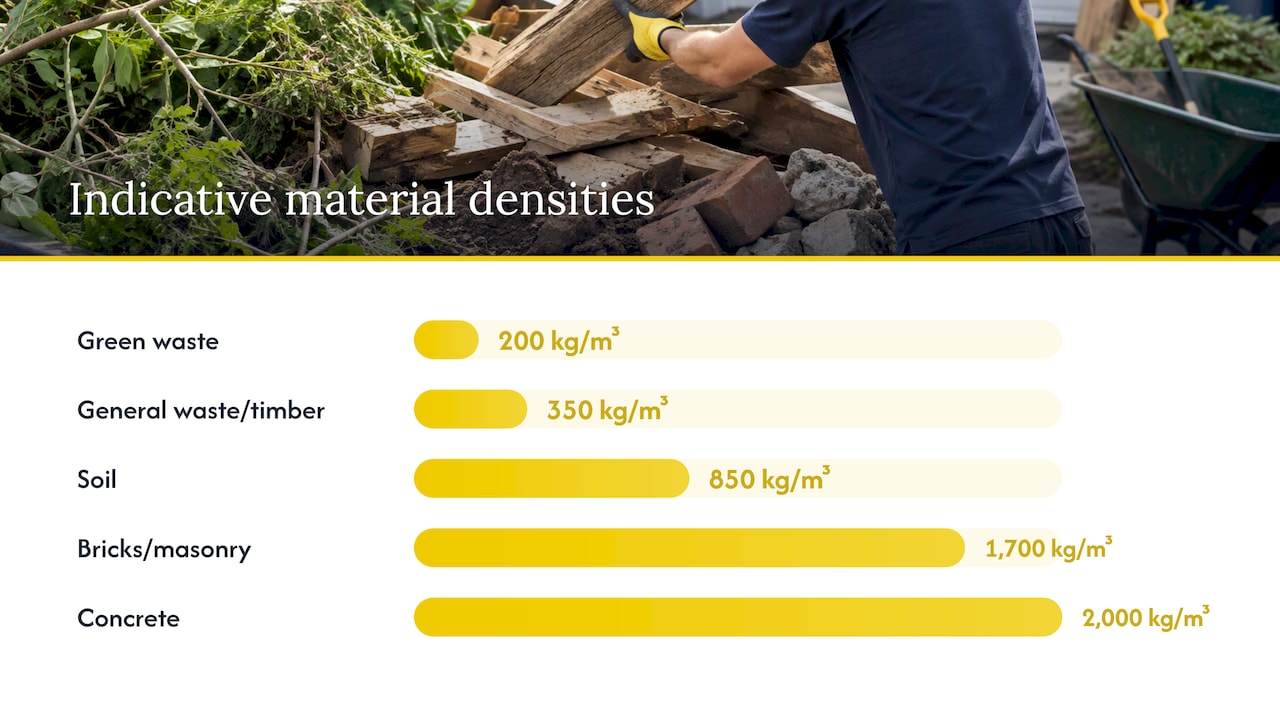
Queensland Government guidance on loading vehicles and trailers gives a useful set of indicative densities. It puts concrete at about 2,000 kg per cubic metre, bricks and masonry at about 1,700 kg, soil at about 850 kg, general waste and timber at about 350 kg, and green waste at about 200 kg. These are Queensland figures and are indicative only, but the physics is the same in Melbourne. Heavy materials fill a truck’s weight allowance long before they fill its tray.
Here is what that means in practice:
| Material | Indicative weight per m³ | What 1 m³ looks like in weight terms |
|---|---|---|
| Green waste | about 200 kg | Light, fills space quickly |
| General waste and timber | about 350 kg | A typical house clean-out |
| Soil | about 850 kg | Heavy, a small pile is a big load |
| Bricks and masonry | about 1,700 kg | Close to two tonnes in a single cubic metre |
| Concrete | about 2,000 kg | Two tonnes in a space about the size of a washing machine |
Source for all figures: Queensland Government loading guidance, indicative densities only.
The same guidance ties domestic ute and trailer fees at tips to a 400 kg per-trip threshold. At the general-waste density above, that is little more than one cubic metre. Anyone loading a trailer with bricks can pass that figure with a few buckets.
Wheelie bin weight limits in Victoria
The question “what is the maximum weight for a wheelie bin?” has no state-wide answer, because each council sets its own. The current limits published by Victorian councils show how wide the range is:
| Council | Published limit | What happens if exceeded |
|---|---|---|
| Glen Eira | 75 kg per household bin | Driver may leave a note |
| Whitehorse | 70 kg for all bins, lids must close | Overfilled bins are outside the service rules |
| Merri-bek | 30 kg, with shared bins over 30 kg at risk | May not be collected |
Glen Eira’s guidance covers the green food and garden bin too, so yes, a green bin can be too heavy. Wet lawn clippings, soil clinging to roots and branch offcuts add up quickly. Outside Victoria the numbers move again: City of Clarence in Tasmania allows 80 kg for general and recycling bins and 110 kg for green-waste bins, Townsville says its trucks cannot lift bins over 50 kg, and Wentworth Shire sets 100 kg.
The lesson is to read your own council’s page rather than trust a figure from another suburb. If you are not sure which rule applies, assume the lowest one you can find and keep the bin well under it.
What happens when a bin is too heavy
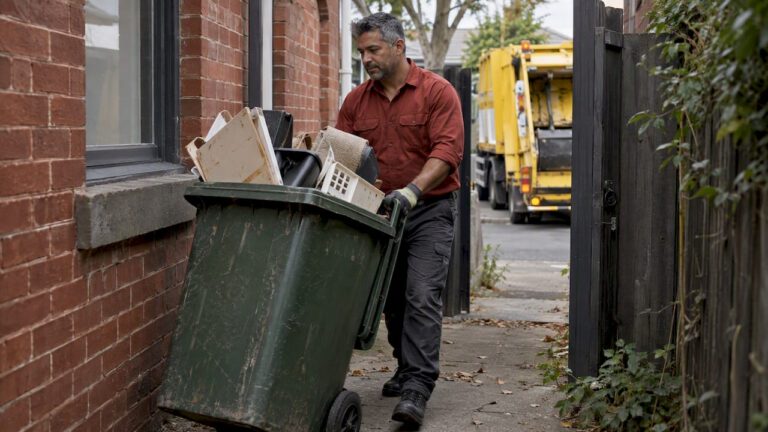
The consequences are consistent across councils. The truck’s lifting arm is built for a maximum load, so a driver will skip a bin that is over it. Glen Eira says drivers may leave a note if a bin is too heavy or highly contaminated. Townsville says overweight bins may be recorded as missed collections. You then wait for the next cycle with a full bin, and any mess you made is still on the nature strip.
A few habits keep bins collectable:
- Split heavy loads across several collections rather than packing one bin to the brim.
- Keep the lid closing. Whitehorse requires it, and a lid that sits open is a quick sign of an overweight bin.
- Keep wet materials, soil and rubble out of kerbside bins altogether. They are the usual cause of overweight bins, and many are not accepted in them anyway.
- Sort your kitchen scraps from general waste. If you want ideas for doing that at home, these kitchen waste solutions compare a few setups.
Council hard-waste limits
Hard rubbish collections work on a different logic. They limit the amount and the weight of each item, because crews lift items by hand onto a truck.
The City of Melbourne hard-waste service offers one free collection of up to 1 cubic metre per financial year. Individual items must not exceed 30 kg. The service excludes bricks, concrete, rubble, dirt, chemicals, paint, oils, asbestos and other hazardous waste. That list matters: the heaviest things people want gone are the very things the free service will not take.
Other councils set different caps. Yarra Ranges Council allows up to 3 cubic metres each of hard waste, metals and bundled branches. Individual metals, whitegoods and equipment there must be no longer than 1.5 metres and no heavier than 50 kg.
So a typical council limit comes in three layers: a total volume, a per-item weight and a list of banned materials. A fridge, a solid timber wardrobe, a pool table or a commercial printer can all go over 30 or 50 kg. A wardrobe can often be taken apart into panels that pass the per-item limit, but a safe disassembly is not always possible, and a heavy appliance should not be carried by one person.
If you are in the City of Melbourne area and the council allowance is not enough, or your items are over the item limit, our hard waste collection solutions in the City of Melbourne cover the gap.
Utes, trailers and the tip
If you take the load yourself, the weight limit is partly the vehicle’s and partly the tip’s. Your vehicle has its own payload rating, listed on its compliance plate and in the owner’s manual. That figure is what you can legally and safely carry, and it includes passengers and anything already in the tray. Rubble and soil can exceed it with surprisingly small piles.
Tip fees add a second layer. Queensland’s 400 kg per-trip threshold for domestic ute and trailer loads is one example of how fees step up with weight. Victorian tips and transfer stations publish their own gate fees and rules, and many charge by weight or by vehicle size. Check your local transfer station’s page before you load.
A worked example
Say you are clearing a garage and a backyard:
- Old furniture and general junk, about 2 m³. At roughly 350 kg per m³, that is about 700 kg.
- A broken concrete path, about 0.5 m³. At roughly 2,000 kg per m³, that is about 1,000 kg.
- Green waste from pruning, about 1.5 m³. At roughly 200 kg per m³, that is about 300 kg.
The concrete is a quarter of the volume but about half of the total weight, which is around 2,000 kg. The numbers are estimates based on the Queensland densities above, but they show why the small pile of concrete is the part that decides what truck you need, and why it is best kept apart from the rest. A trailer loaded with the concrete alone would be well beyond the 400 kg domestic threshold.
Commercial and construction loads
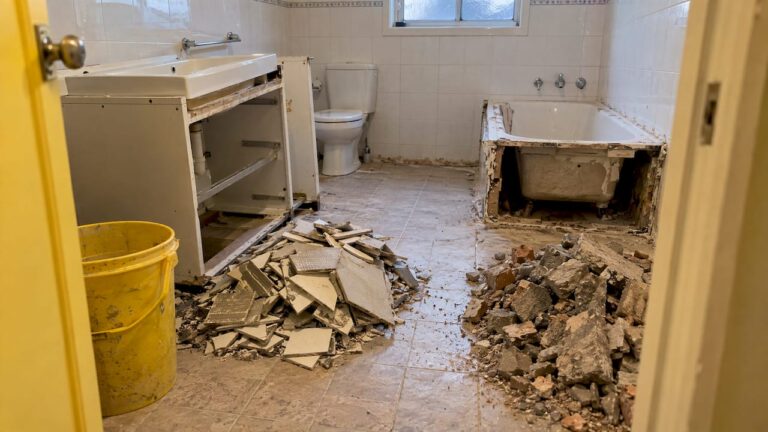
On commercial jobs, weight limits become a planning issue rather than a nuisance. A fit-out strip-out generates plasterboard, ceiling tiles, carpet, timber partitions, steel framing and sometimes concrete or screed. Each has a different density, and the access route adds limits of its own: lift capacity, floor loading, loading dock height and how far materials must be carried.
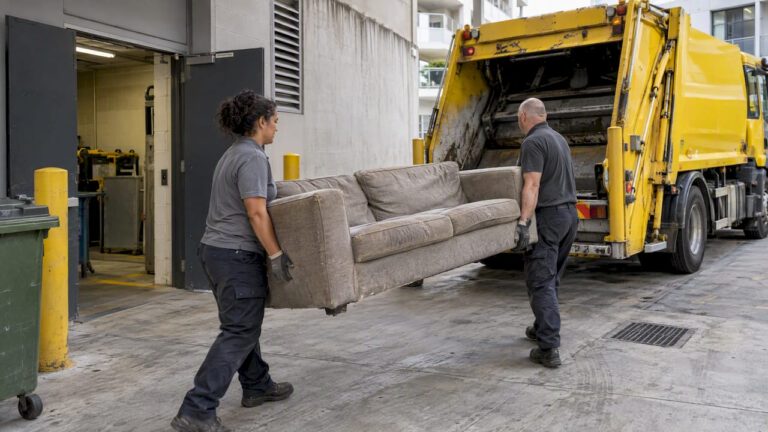
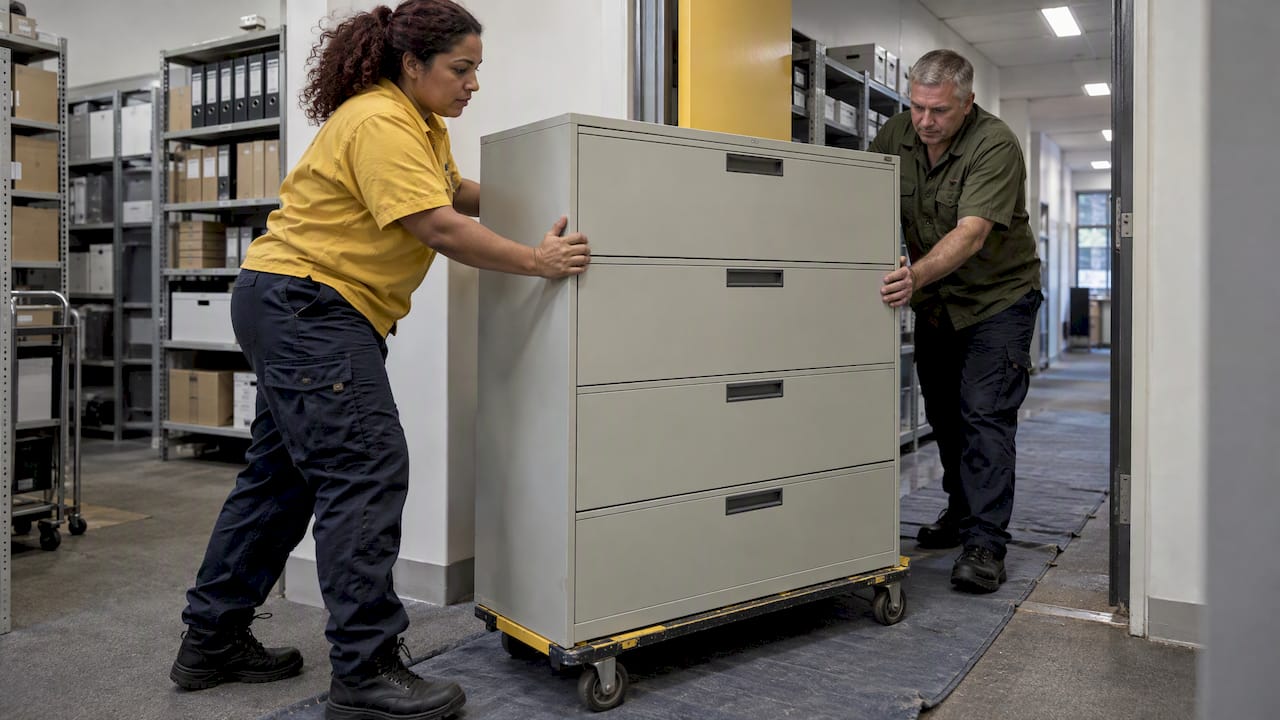
For office clear-outs the weight issue is usually furniture and filing. A full lateral filing cabinet, a boardroom table or a safe can weigh well beyond what two people should lift. Items like these are best handled by a crew that carries them with the right equipment and protects the building. See our office junk removal and office cleanout services for the common cases, and relocating heavy and bulky items if something needs to move rather than go.
For demolition and building waste, the materials are heavy and often mixed, so quote accuracy depends on describing them well. Our construction waste removal and commercial demolition pages explain how these jobs are handled. If you are weighing up strip-out against demolition, read about the difference for property managers, including the asbestos question.
Concrete, bricks and soil
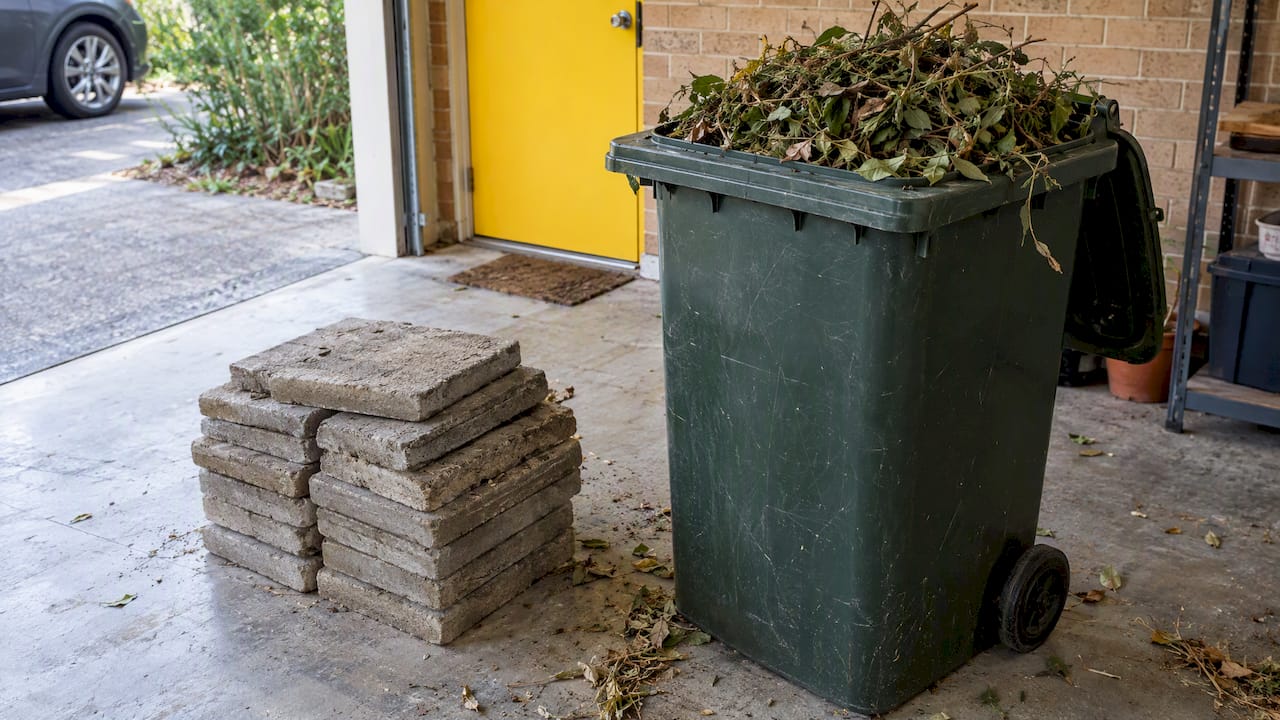
These three are the reason most heavy-load surprises happen. They are dense, they are usually excluded from council hard-waste services and kerbside bins, and they are normally collected separately from general waste. The City of Melbourne hard-waste rules, for example, exclude bricks, concrete, rubble and dirt.
If you have a slab, path or footing to remove, keep it separate from everything else. Mixed loads are harder to dispose of and can cost more. Our pages on concrete removal and disposal and choosing a concrete disposal option go through the choices, and concrete cutting and concrete grinding are available when the job starts with breaking or reducing the slab.
Green waste
Green waste is light by volume, about 200 kg per cubic metre by the Queensland figure, but it gets heavy when wet or when it includes stumps, soil and thick branches. A trailer of fresh, wet hedge trimmings can weigh much more than a dry one. If you have a large garden job, our garden waste removal service is set up for it.
What is not allowed, regardless of weight
Some items are excluded not because of weight but because of what they are. Council lists name chemicals, paint, oils and asbestos as excluded from hard-waste collections. Private operators have their own restrictions too. Before you book, check our list of prohibited items in junk removal so you know what Melbourne crews will not take. If you suspect asbestos in old sheeting, ceiling or flooring materials, do not break it up or load it yourself.
How to prepare a heavy load
A few steps make the job safer and the quote more accurate.
- Separate by material. Keep concrete, brick and soil in one pile, timber and general junk in another, and green waste in a third.
- Estimate the volume. Measure each pile in length, width and height, and multiply for cubic metres.
- Estimate the weight. Multiply each volume by the density in the table above. It will be a rough figure, but it flags what is heavy.
- Check access. Note stairs, lifts, narrow doors, long carries and loading dock rules. A 60 kg item on three flights of stairs is a different job to the same item at ground level.
- Take photos. Clear photos of each pile let a removal crew give a more accurate quote and send the right truck.
- Lift safely. Do not carry heavy items alone. Use trolleys, ask for a second person, or have a crew do it.
When to book a removal instead
Book a removal when:
- The load includes concrete, bricks, soil or rubble.
- Items are over your council’s per-item limit, such as large appliances, safes or solid furniture.
- Your council bins have repeatedly been left uncollected for being too heavy.
- You are clearing an office, a make-good or a building site and need it done to a schedule.
- You do not own a vehicle or trailer suitable for the load.
We provide full-service rubbish removal across Melbourne for commercial and residential clients, including office junk, construction debris, green waste, strip-outs, demolition debris and make-good clearances. We quote per project, and we promise to beat any written quote by 5%. Describe the materials and the access when you ask, and we will tell you what is involved. Start with a quick quote, or see everything on our services page.
For old furniture that may still have life in it, donating or recycling first can reduce what needs to go, and our furniture disposal and recycling service handles the rest.
FAQ
What is the maximum weight for a wheelie bin in Melbourne?
It depends on your council. Recent published limits include 75 kg in Glen Eira, 70 kg in Whitehorse and 30 kg in Merri-bek. Check your council’s waste guide for the current figure, and keep the bin comfortably under it.
Can my green bin be too heavy?
Yes. Glen Eira’s 75 kg limit covers the green food and garden bin, and a driver may leave a note if it is too heavy. Wet clippings, soil and branches add weight quickly, so spread a big garden clean-up across several collections or book a green waste removal.
How much weight can a skip bin or truck load hold?
It varies by bin size and by provider, and most hire companies include a weight allowance in the price and charge for excess. Because concrete weighs around 2,000 kg per cubic metre and green waste around 200 kg, the same bin can be safely full of one and badly overloaded with the other. Ask for the allowance in writing and tell the provider what you are putting in.
What happens if my rubbish is over the weight limit?
For a council bin, it may be left uncollected with a note, or recorded as a missed collection, as Townsville does. For a hard-waste collection, items over the per-item limit may be refused. For a private removal, heavy materials can change the quote and the truck needed, which is why describing them upfront helps.
Does City of Melbourne hard waste take concrete or bricks?
No. The City of Melbourne service excludes bricks, concrete, rubble, dirt, chemicals, paint, oils and asbestos, and no single item can exceed 30 kg. Heavy building materials need a separate removal service.
Sources
- Bin collection questions, Glen Eira City Council
- Your recycling and waste guide 2026, Whitehorse City Council
- 4-bin waste service user guide, Merri-bek City Council
- Bin collections, Townsville City Council
- Waste collections, Wentworth Shire Council
- Waste FAQs, City of Clarence
- Hard waste, City of Melbourne
- Hard rubbish, Yarra Ranges Council
- Vehicle and trailer loading tips, Queensland Government
- Kitchen waste solutions, Kitchen Devotion