A proper rubbish removal service covers the whole job: a crew arrives, carries your waste out, loads it, transports it, sorts what can be recycled or reused, pays the disposal fees and leaves the space clean. What is usually left out is hazardous material such as chemicals, paint and motor oil, and anything that needs a licensed specialist. Because quotes differ on exactly where the job starts and stops, it pays to know what to ask for before you book.
This guide explains what is normally inside a removal quote, what is outside it, how Melbourne’s council services differ from private removal, and the checks that stop a job being rejected on the day.
TL;DR
- A full-service removal covers labour, carrying, loading, transport, sorting, tipping fees and a tidy-up. Check that each is written into your quote.
- Furniture, appliances, e-waste, mattresses, green waste, office fit-out and construction debris are routinely collected. Chemicals, liquids and hazardous waste are not.
- City of Melbourne hard waste collection is for residents only. Businesses must arrange private collection for bulky and hazardous waste.
- Charges are based on volume or weight, plus access, stairs and waste type. Ask for a written quote and compare like with like.
- Prepare the area, identify your materials and confirm access before the crew arrives.
Table of Contents
- What a rubbish removal service actually covers
- What types of rubbish can be collected
- What is usually not included
- Council collection or private removal
- How rubbish removal is charged
- What you get with Melbourne City Rubbish
- Checks before you book
- Three typical jobs and what they include
- FAQ
- Sources
What a rubbish removal service actually covers
The Australian Parliament’s Senate report on the waste and recycling industry lists the sector’s main activities as collection and transfer, sorting, recycling and reuse, and landfill disposal of waste that cannot be recycled or reused. A private removal job bundles those steps into one booking so you do not have to hire a skip, borrow a ute and queue at a transfer station.
In practice, a complete job has these parts.
Labour and carrying
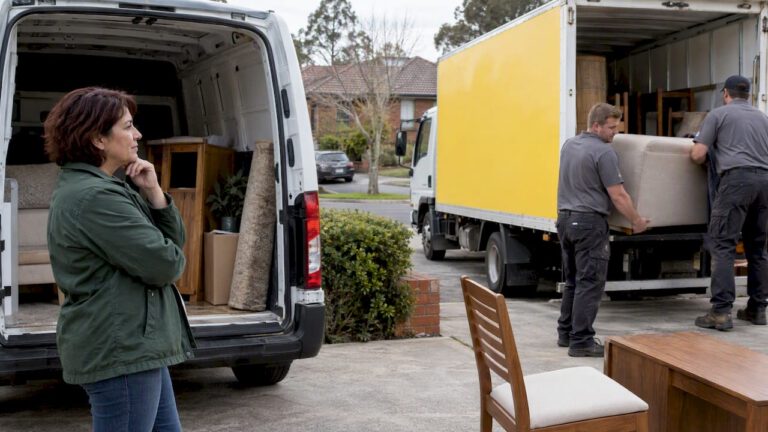
The crew does the lifting. That means taking items from where they sit, whether that is a garage, a fourth-floor office or a loading dock, to the truck. Distance, stairs and lifts all affect the time this takes, which is why they appear in quotes. Our guide to what sits behind a stair carry quote shows the details that move the price.
Loading and transport
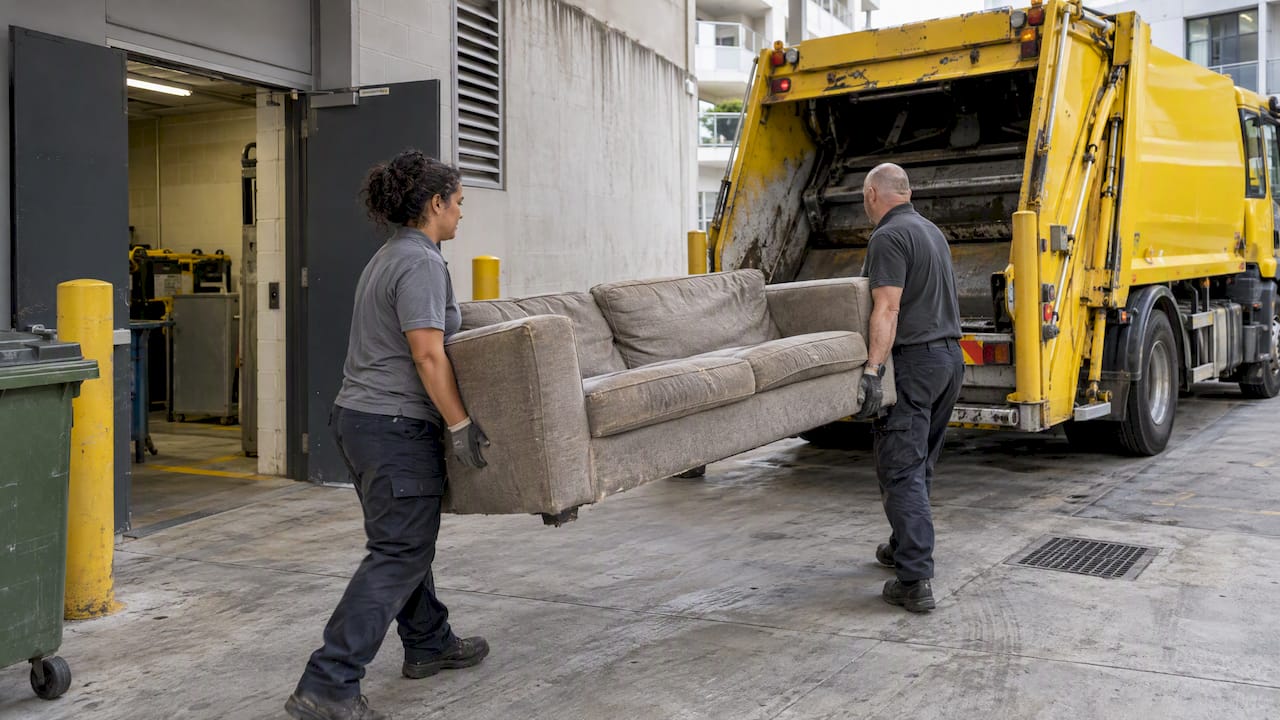
Loading is the most physical part of the job and is normally included in the price for a full-service removal. Transport covers the truck, the driver and the trip to a licensed facility. If you only need a vehicle and driver, with your own team doing the loading, that is a different service, often sold as truck and driver hire.
Sorting, recycling and disposal
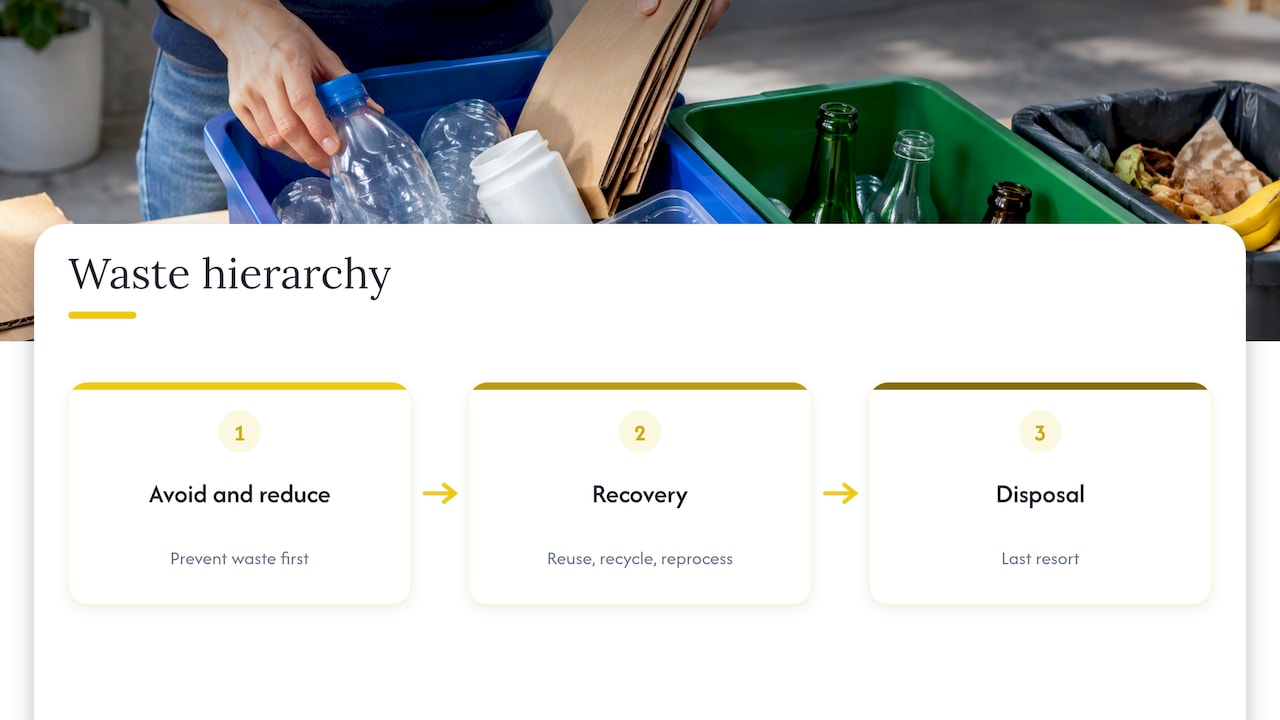
Collected waste does not all end up in the same place. The NSW EPA’s waste hierarchy puts avoiding and reducing waste first, then recovery through reuse, recycling and reprocessing, with disposal as the last resort. A good operator sorts at pickup or at the depot so metal, timber, cardboard, e-waste and furniture can be diverted where a processor exists.
Collection does not automatically mean recycling. EPA Victoria’s 2026 Circular Economy Market Report puts Victoria’s municipal solid waste recovery rate at 62% in 2023-24, so a substantial share still goes to landfill. What is recovered depends on the material and the processing available. If recycling matters to you, ask what the operator does with each material type and whether they offer a carbon-neutral option.
Tipping fees and the clean-up
Disposal fees at transfer stations and landfills are a real cost, and in a full-service quote they are usually rolled into the price. The final item is leaving the site broom-clean, with no debris on the floor and no damage to walls, lifts or floors. Ask about it directly, because it is the line that cheap quotes most often skip.
What types of rubbish can be collected
Private operators take a wider range than councils. Typical categories include:
- Household items: furniture, mattresses, whitegoods, bikes, boxes, general clutter.
- Office waste: desks, chairs, partitions, filing cabinets, old computers and cabling. See our commercial office rubbish removal and office cleanout services.
- Green waste: branches, hedge clippings, leaves, palm fronds and lawn offcuts. More on garden and green waste removal.
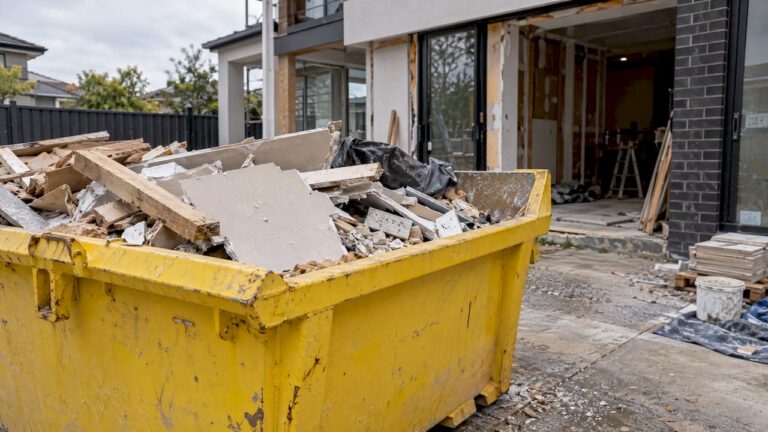
- Construction and renovation debris: plasterboard, timber, bricks, tiles, concrete, flooring. See construction waste removal.
- Fit-out and strip-out waste: ceilings, joinery, carpet, partitions, make-good and de-fit clearances at the end of a commercial lease.
- Electronic waste: computers, monitors, printers and appliances.
For comparison, the City of Melbourne’s hard waste collection accepts household furniture, appliances with doors removed, e-waste, mattresses and scrap metal. It also takes small rugs that are rolled and taped and timber under one metre long. That is a useful benchmark for household clear-outs, and it shows the gap private removal fills for anything bigger or more complicated.
What is usually not included
Every removal service has exclusions, and they exist for safety and legal reasons rather than convenience. The City of Melbourne’s hard waste service excludes liquid waste such as chemicals, paint and motor oil, hazardous or offensive waste, building, renovation or demolition waste, car bodies and tyres, and general garbage and recyclables.
Private operators are more flexible on building and demolition waste, but hazardous items are still a no for most general crews. The City of Melbourne tells businesses they must arrange private collection for bulky rubbish and hazardous or dangerous waste, including chemicals, motor fluids, sharps, pharmaceuticals, medical waste and batteries. It also says chemicals should never go into landfill or recycling bins, and it lists separate chemical disposal options.
In short, expect to arrange separate disposal for:
- Paint, solvents, fuel, oil and other liquids.
- Gas bottles, batteries and sharps.
- Medical and pharmaceutical waste.
- Asbestos or anything suspected of containing it, which needs a licensed removalist.
- Tyres and car bodies, unless the operator says otherwise.
Our prohibited items guide goes through the full list so you can sort your pile before the truck arrives.
Council collection or private removal
Council services and private removal solve different problems.
| Council hard waste | Private rubbish removal | |
|---|---|---|
| Who can use it | City of Melbourne residents only. Commercial and retail addresses are not entitled. | Homes, offices, builders, strata and property managers |
| Allowance | One free collection of one cubic metre per financial year | As much as you book |
| Who carries it | You place items on the kerbside or an accessible location the day before. Crews do not enter private property. | The crew enters, carries and loads |
| Building and demolition waste | Excluded | Normally accepted |
| Hazardous waste | Excluded | Usually excluded or quoted separately |
| Timing | Scheduled by the council | Booked to suit you |
The allowance and eligibility details come from the City of Melbourne’s hard waste page. The same page notes that residents can also drop off hard waste at the Dynon Road centre, where charges may apply.
The drop-off route is cheap only if you have a vehicle and the time. The Dynon Road Waste and Recycling Centre fee schedule of 5 May 2026 lists $285 for a standard utility load that is heaped or caged, and $88 per mattress. You still load, drive, queue and unload yourself.
If your waste is mostly furniture and you want to give it a second life first, read our guide on whether to donate or recycle before booking removal.
How rubbish removal is charged
Most private quotes are built from the same few factors:
- Volume or weight. Many operators price by cubic metres of waste or by truck load. Heavy material such as concrete, soil and bricks is often charged by weight because of tipping fees.
- Waste type. Mixed general waste, green waste, clean timber and construction debris are processed differently and cost different amounts to dispose of.
- Access. Stairs, long carries, tight loading docks and lift bookings add time.
- Timing. After-hours or short-notice work can change the price.
- Disposal fees. These are the operator’s costs at the tip or transfer station.
It helps to understand how facilities charge, because those costs flow into your quote. Cleanaway’s waste charges brochure explains that vehicles are weighed on arrival and departure, the net weight is rounded to the nearest 20 kg, and a minimum charge applies to all chargeable loads. The same document notes that higher charges apply for bulky, special and difficult-to-handle wastes. So a small load of awkward material can cost more than you expect.
Volume is the other half of the quote. If you want to see how load size is described when trucks are measured, this explanation of dump truck capacity in cubic yards shows how volume and weight limits interact. Australian operators quote in cubic metres, so ask for your quote in that unit and for the estimated number of loads.
For council fees at the household end, Maribyrnong, for example, charges $104.70 for additional hard rubbish collections beyond its allowance. For project-sized work, our pricing guides explain what drives the cost of construction waste removal and demolition waste removal in Melbourne.
Reading a quote line by line
A clear quote states, in writing:
- The scope: which rooms, floors or items are covered.
- Whether labour, loading and carrying are included.
- Whether tipping and disposal fees are included.
- How access issues such as stairs are priced.
- What happens if the load is bigger than estimated.
- What is excluded.
- How long the job should take and the arrival window.
If two quotes differ widely, the difference is usually in lines 2, 3 or 5.
What you get with Melbourne City Rubbish
We handle commercial and residential removals across Melbourne, including the CBD, South Melbourne, Port Melbourne and West Melbourne. Our services include general bulk rubbish removal, office junk and cleanouts, construction waste, building strip-outs, make-good and de-fit, demolition, furniture disposal and recycling, and related work such as floor finish removal, concrete cutting and core drilling. Collections can be one-off or regular.
A few things set our service apart:
- A quote that gets beaten. We promise to beat any written quote by 5%.
- Punctuality you can track. You get real-time notifications, and a lateness credit applies if we are late.
- Carbon-neutral option. You can opt in to eco-friendly, carbon-neutral disposal.
- A clean finish. We leave no mess and no damage to your property, and we have worked in all types of Melbourne commercial buildings.
We price per project, so there is no published rate card. For a written quote, use our quick quote page or browse everything we do.
Checks before you book
Most rejected items and surprise charges come from the same few oversights. Our six-point preparation guide covers them, and this is the short version.
For tenants and households
- Confirm whether you are eligible for council collection. If you are not, or your pile is too big, private removal is the route.
- If you are using council collection, items must be at the kerbside or an accessible location the day before, and crews will not come onto private property. This kind of requirement is explained in general terms in what kerbside delivery means, and the point is the same: the crew can only collect from where they can reach.
- Take doors off fridges and freezers if the service asks for it.
- At the end of a lease, photograph the finished space and confirm your agent’s requirements first.
For businesses and property managers
- Check that your address is not excluded from council services. The City of Melbourne states that commercial and retail addresses are not entitled to hard waste collection.
- Book lift access and loading dock times with building management.
- Ask about certificates or records of disposal if your lease or compliance process needs them.
- For make-good work, confirm which items the lease requires removed and what level of finish is expected.
For builders and construction firms
- Separate hazardous or unknown materials before the crew arrives.
- Tell the operator what you are removing: concrete, timber, plasterboard, mixed debris. Weight-based disposal makes this central to pricing.
- If you drop off yourself, remember facilities have rules. Redland City Council describes its centres as like busy construction sites, where visitors wear enclosed shoes and follow staff instructions. Wingecarribee’s centre asks customers to identify all materials, with visual inspections by staff and video monitoring. A full-service crew handles these requirements for you.
Three typical jobs and what they include
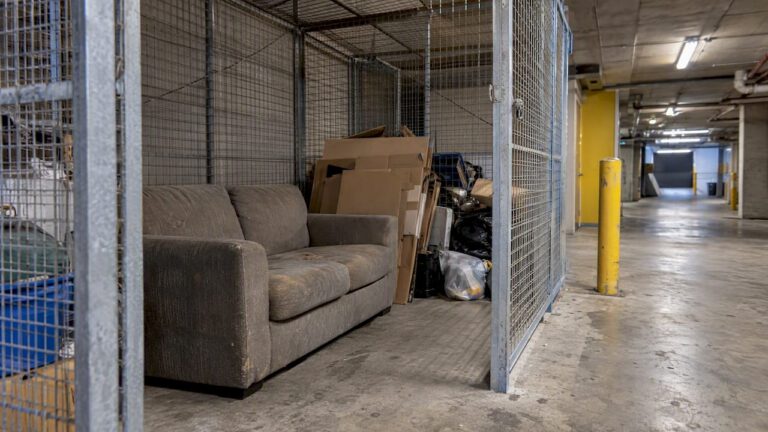
A tenant leaving a small apartment. Old couch, a mattress, a few boxes and a broken desk. A full-service removal collects from inside the apartment, carries it down, loads and disposes. Paint tins left in the storage cage need separate disposal.
An office relocation. Twenty workstations, filing cabinets and a pile of old IT equipment. The job includes dismantling where agreed, carrying through the lift, loading, e-waste handling and furniture recycling. Our office furniture removal and furniture disposal and recycling services are built for this.
A commercial fit-out strip-out. Ceilings, partitions, carpet and joinery cleared to a bare shell. This is where quotes vary most, since the scope includes demolition, waste volumes and building access. Larger demolition work is covered on our commercial demolition page.
FAQ
Is loading included in rubbish removal?
In a full-service removal, yes. The crew carries items out, loads the truck and transports the waste. Always confirm this in the quote, because some cheaper offers are truck-only and expect you to do the lifting.
Are tip fees included in the price?
Usually, when you book a full-service removal, the disposal fees are part of the quoted price. Facilities charge by load or weight and apply minimum charges, so ask whether your quote is fixed or may change if the load is larger than estimated.
What items will a removalist not take?
Hazardous waste is the main exclusion: chemicals, paint, motor oil, gas bottles, batteries, sharps and medical waste. Asbestos needs a licensed specialist. See our prohibited items guide for the full list.
Can a business use the City of Melbourne hard waste collection?
No. The City of Melbourne says commercial and retail addresses are not entitled to its hard waste service, and businesses must arrange private collection for bulky and hazardous waste. Private removal covers offices, shops and building sites.
Sources
- Report: Waste and recycling industry in Australia, Australian Senate
- The waste hierarchy, NSW EPA
- Circular Economy Market Report 2026, EPA Victoria
- Hard waste, City of Melbourne
- Other business waste services, City of Melbourne
- E-waste and chemicals, City of Melbourne
- Dynon Road Waste and Recycling Centre, City of Melbourne
- Waste charges and services brochure, Cleanaway
- Hard rubbish collections, Maribyrnong City Council
- Safety advice for visitors, Redland City Council
- Resource Recovery Centre, Wingecarribee Shire Council
- Dump truck capacity in cubic yards
- Kerbside delivery explained