A business waste audit is a structured count of what your business throws away, broken down by volume, material type and source. It gives you a baseline, a shortlist of quick wins and a clear case for cutting disposal costs. Business and the Bin Trim tool both offer free ways to start one.
TL;DR:
- Conducting a waste audit typically takes one to two hours for a quick site inspection or half a day for a full bag audit, depending on site size and complexity.
- Focusing on recoverable materials such as paper, cardboard, and food organics can yield immediate improvements with relatively simple sorting and contamination checks.
- A quarterly spot check and an annual comprehensive audit are generally sufficient to monitor progress without overburdening staff time or resources.
- Using free tools like the Bin Trim app or basic spreadsheets can help track waste streams, set targets, and evaluate the impact of waste reduction measures over time.
- Outsourcing waste removal to specialists such as Melbourne City Rubbish can streamline action plan execution, especially in cases of multi-tenant sites or large-scale demolition projects.
Table of Contents
- What a business waste audit measures and why it matters
- Step-by-step waste audit checklist you can run yourself
- Tools, templates and apps for recording your results
- Turning your results into a sustainability action plan
- What audits commonly find and where the recovery opportunity sits
- How often to audit and what it costs a small or medium business
- Where Melbourne City Rubbish fits into your action plan
- FAQ
- Sources
What a business waste audit measures and why it matters
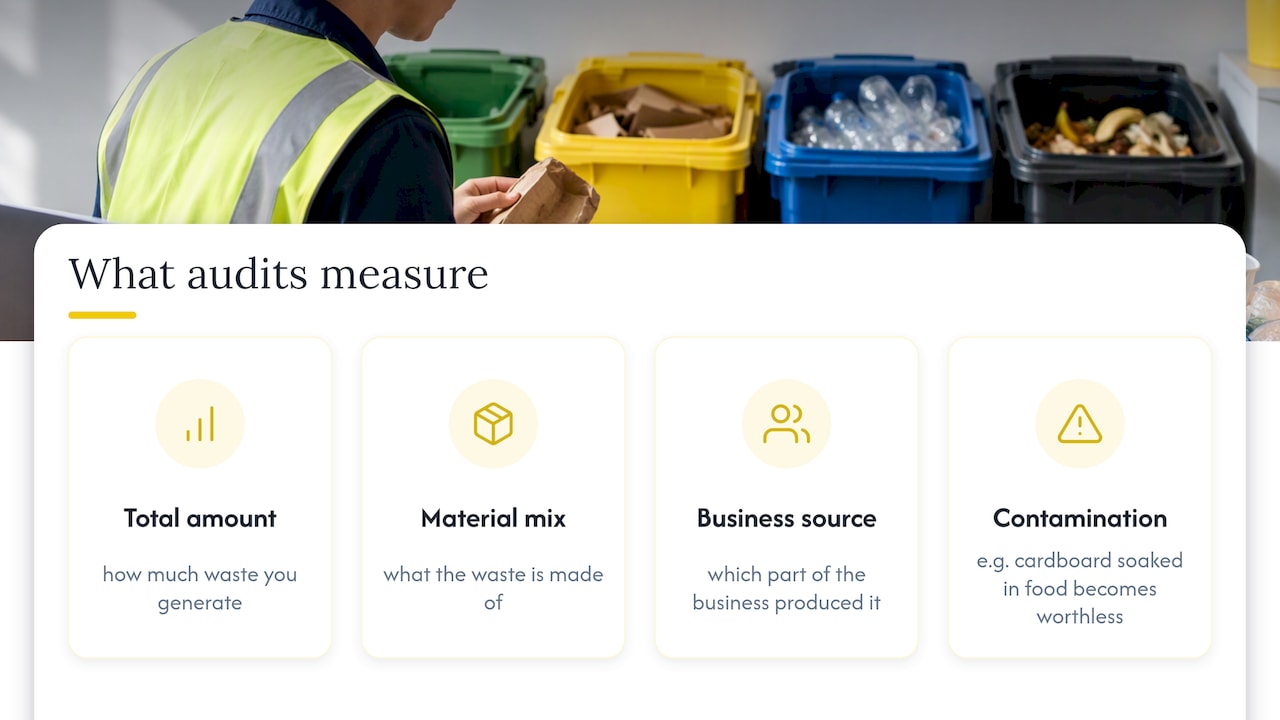
A waste audit looks at four things: how much waste you generate, what it is made of, which part of the business produced it and how contaminated each stream is. That last point matters more than most managers expect. A recycling bin full of good cardboard is worthless if it is soaked in food waste, and you will not know that without physically checking.
The point of all this measurement is not the spreadsheet. It is deciding what to do next. business.gov.au frames auditing as a tool for prioritising action, whether that means switching disposal contractors, changing packaging, retraining staff or reviewing a supplier relationship. Done properly, an audit also flags work health and safety issues such as overflowing bins, sharp waste mixed into general rubbish, or liquids stored incorrectly, and it gives you a defensible number when a landlord, board or client asks what you are doing about sustainability.
Step-by-step waste audit checklist you can run yourself
You do not need specialist equipment to get a useful result. A half-day exercise with a small team will tell you more than most businesses currently know about their own waste.
- Define the scope. Pick one site, one week and the bins or skips that matter most (general waste, recycling, organics).
- Assemble a small team. Two or three people is enough: one to sort, one to record, one to supervise safety.
- Gather PPE and materials. Gloves, tarps, a tape measure or bathroom scale, a camera, and a simple recording sheet or spreadsheet.
- Sample representatively. Audit bins from at least two or three different days, including a typical business day and a busy one.
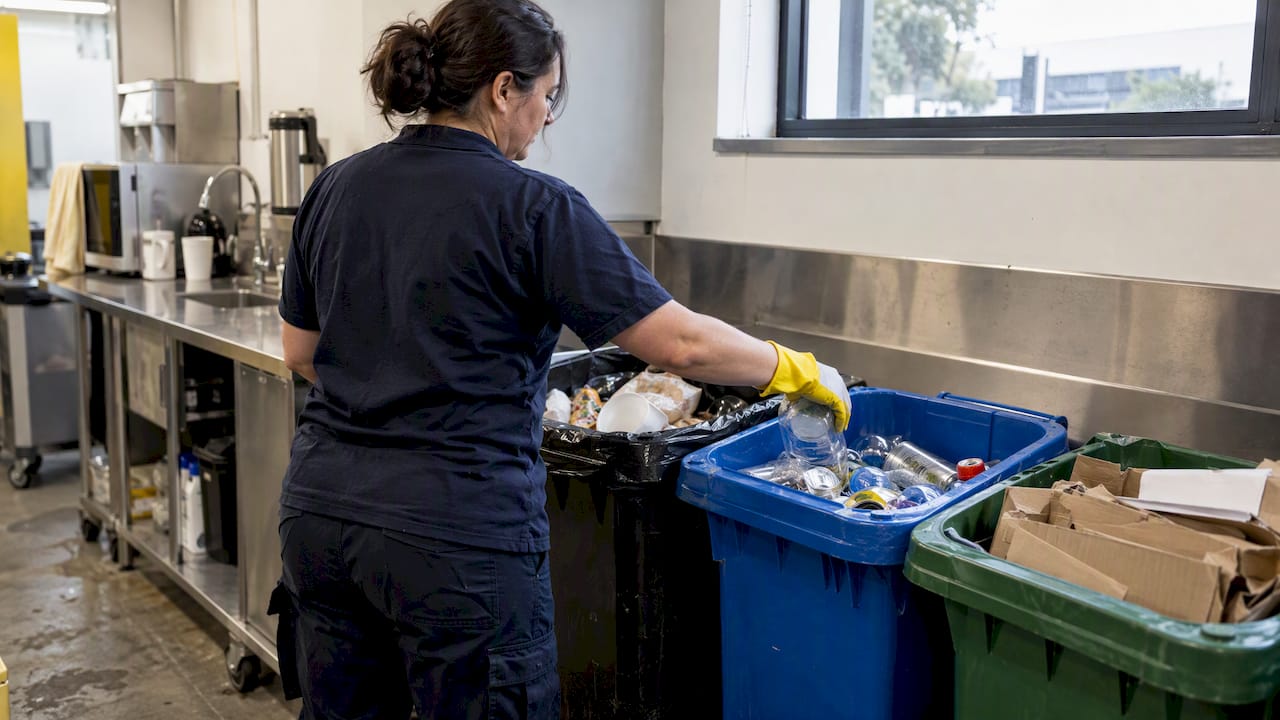
- Sort and record. Tip out a sample bag or bin onto a tarp and sort into categories: paper and cardboard, food organics, plastics, e-waste, general waste.
- Weigh or estimate volume. Use a scale where you can, or estimate by bag count and bin fill level when weighing is not practical.
- Note the source. Record which department, kitchen or work area the waste came from, not just the bin it ended up in.
- Photograph contamination. A photo of a recycling bin full of coffee cups is more persuasive to management than a number on a page.
- Total and convert to proportions. Turn raw counts or weights into percentages of the total waste stream.
Record each sample with a few core fields: source area, material category, contamination level, weight or count, and a photo reference. Once you have totals, look for the obvious wins first, the single material or source area making up the biggest share of recoverable waste, and consider a free waste audit to help identify practical compaction solutions.
Pro Tip: Run a two-week pilot on one change, such as a dedicated organics bin in one kitchen, before rolling anything out building-wide. A small, measured trial is cheaper to justify than a full-site overhaul and gives you real before-and-after numbers.
Tools, templates and apps for recording your results
You do not need bespoke software to track an audit, but a few free tools make the job faster and give you something to benchmark against.
- Bin Trim, a free tool and business app from the NSW EPA, lets you log a waste assessment, build an action plan and track progress over time, and its public reports draw on aggregated data from thousands of participating businesses.
- A basic spreadsheet template works fine for a single site: columns for date, source area, material category, weight or bag count, contamination notes and photo reference cover most needs.
- A smartphone photo log paired with a simple kitchen or bathroom scale is often all a small business needs; save a professional contractor for larger sites, multiple tenancies or where you need independently verified figures.
Turning your results into a sustainability action plan
Raw percentages do not change anything on their own. The value comes from ranking what you found and deciding what to do about each category. business.gov.au recommends linking audit findings directly to an action plan with objectives, owners and review dates.
- Rank by recoverable volume. Tackle the material taking up the biggest share of your general waste stream first, not the one that feels most urgent.
- Set SMART targets. For example, cut contaminated recycling by a fixed proportion within a set number of months, with a named owner.
- Estimate cost and payback. Compare the price of new bins, signage or training against the disposal fees you expect to avoid.
- Assign responsibility. One person should own each action, even if it is a shared task across a team.
Pro Tip: Check progress weekly during the first month of any new system, then shift to monthly spot checks and a full annual review once the change has settled in.
What audits commonly find and where the recovery opportunity sits
The NSW EPA’s commercial and industrial waste audit, based on 2023 data, sorts business waste into materials that are recoverable now and materials that are only recoverable in future as technology or markets improve. That distinction is useful because it tells you where effort pays off immediately versus where you are better off just reducing volume for now.
- Organics (food scraps, garden waste) are typically one of the largest recoverable streams once separated properly.
- Paper and cardboard are usually straightforward to recover if kept dry and free of food contamination.
- Plastics are more mixed: some grades recycle easily, others currently have limited local markets.
Your own site will not match state-level figures exactly. Sector, location and tenancy type all shift the mix, so treat your own audit results as the primary evidence and the EPA data as a sense check.
How often to audit and what it costs a small or medium business
A full audit every month is overkill for most businesses. A lighter cadence keeps the data useful without burning staff time.
- Quarterly spot check: a one to two hour bin inspection to catch drift back into bad habits.
- Annual full audit: a half-day to full-day bag audit, scaled to site size, repeated whenever operations change significantly.
- Self-run cost: mostly staff time, plus a scale, gloves and tarps you likely already have.
- Contracted audit: a fixed-fee engagement where a contractor handles sorting, weighing and reporting, useful for larger or multi-tenant sites.
Where Melbourne City Rubbish fits into your action plan
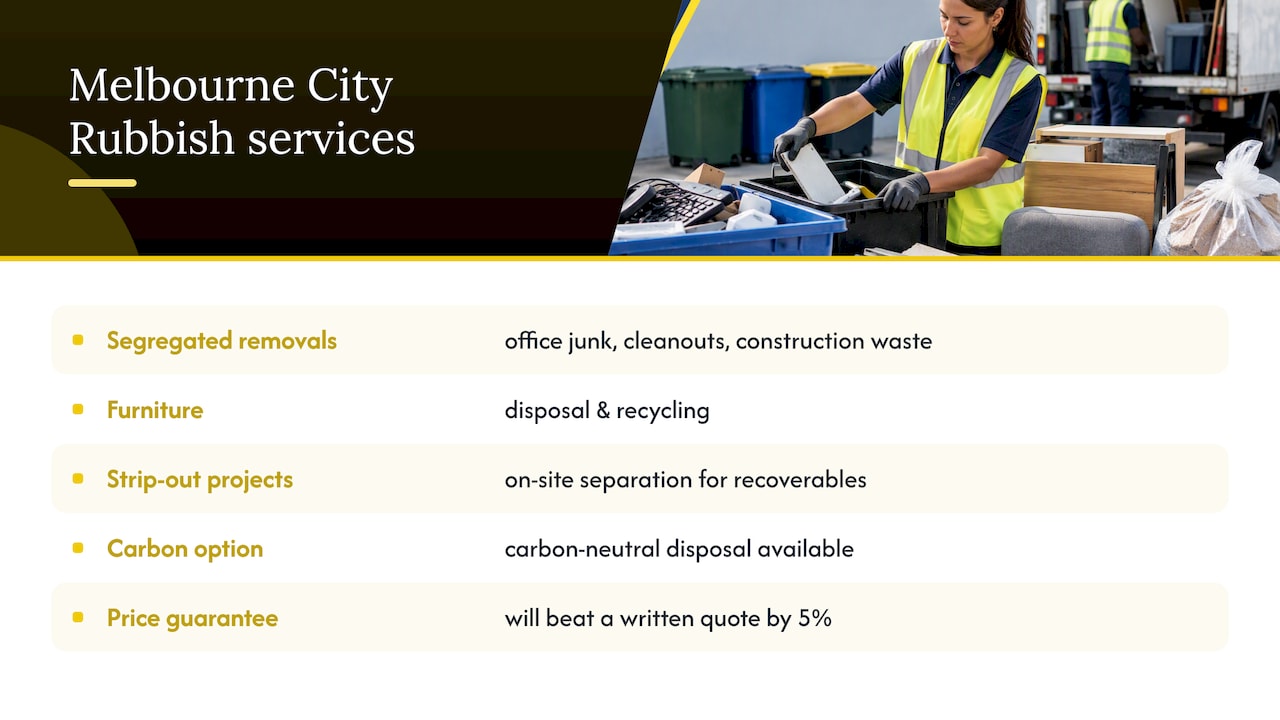
An audit tells you what to fix. Acting on it is the part most businesses run out of time for, which is where outsourcing the physical work makes sense. Melbourne City Rubbish handles the segregated removals an audit plan usually calls for, from routine office junk removal and office cleanouts to construction waste and furniture disposal and recycling when an audit uncovers recoverable materials sitting in general waste.
For sites moving into a strip-out, commercial demolition or make-good project, the same audit findings can shape a waste management plan that separates recoverable materials on-site rather than sending mixed loads to landfill. The business works across commercial sites with options for carbon-neutral disposal for clients who want their action plan to show measurable environmental progress, not just a cost saving. If a contractor has already quoted your job, Melbourne City Rubbish will beat a written quote by 5%.
Request a quick quote to scope the removal side of your action plan once your audit findings are in.
FAQ
How long does a basic business waste audit take?
A quick bin inspection takes one to two hours, while a full bag audit typically runs from half a day to a full day depending on site size. Businesses with multiple waste streams or tenancies should budget closer to a full day.
What is the difference between a waste audit and a waste management assessment?
A waste audit is the physical measurement step, sorting and weighing what you actually throw away. A broader waste management assessment usually includes the audit plus a review of contracts, bin placement, signage and staff practices.
Do I need government approval to run a waste audit?
No approval is needed to audit your own waste, but any changes to how you store or dispose of waste should follow the rules for your state or territory, which business.gov.au outlines for businesses checking their obligations.
Which materials are usually the easiest to recover first?
Paper, cardboard and food organics tend to be the most straightforward materials to separate and recover, based on the NSW EPA’s 2023 commercial and industrial waste audit. Plastics recovery varies more depending on grade and local recycling markets.
Can I get help running a waste audit if I don’t have time?
Yes, contractors and free government tools such as Bin Trim can support or run the measurement step for you. Once you have results, Melbourne City Rubbish can carry out the removal, recycling and disposal actions the audit recommends.