The fastest, cheapest and most eco-friendly concrete disposal options are recycler drop-off, a licensed rubbish removal service, or a skip bin sized for weight, not volume. On-site crushing wins for big demolition jobs. Landfill should be your last resort. Which route makes sense comes down to two things: how contaminated the concrete is, and how much of it you’ve got. The checklist further down sorts out the rest.
TL;DR:
- Recycling or transfer station drop-off is the most cost-effective option for clean concrete, especially reinforced slabs, when paid by weight.
- On-site crushing is ideal for large demolition projects, converting concrete into usable base material and reducing haulage costs.
- Contaminated concrete with soil, timber, plastics, or hazardous residues should be separated and assessed before disposal to avoid rejection or extra fees.
- Disposal costs are heavily influenced by haul distance, tipping fees, and waste levies, with landfill becoming the most expensive choice.
- Professional waste services ensure proper recycling, compliance, and evidence of disposal, reducing risks of regulatory issues and environmental harm.
Table of Contents
- Concrete disposal options: what each route involves and when to use it
- How to tell clean concrete from contaminated material
- Managing washout water and on-site effluent
- Handling large volumes: mobile crushing, transport and timelines
- Where recycled concrete aggregate gets used, and its limits
- A checklist for choosing the right disposal route
- Who to contact for approvals: council, EPA and sewerage authorities
- Health and safety during concrete demolition and disposal
- New technology changing how concrete gets recycled and reused
- Comparing the real costs of each disposal method
- How Melbourne City Rubbish handles concrete and construction debris
- Sources
Concrete disposal options: what each route involves and when to use it
Most people default to “just chuck it in a skip,” but that’s often the most expensive and least sustainable choice. Here’s what’s actually on the table.
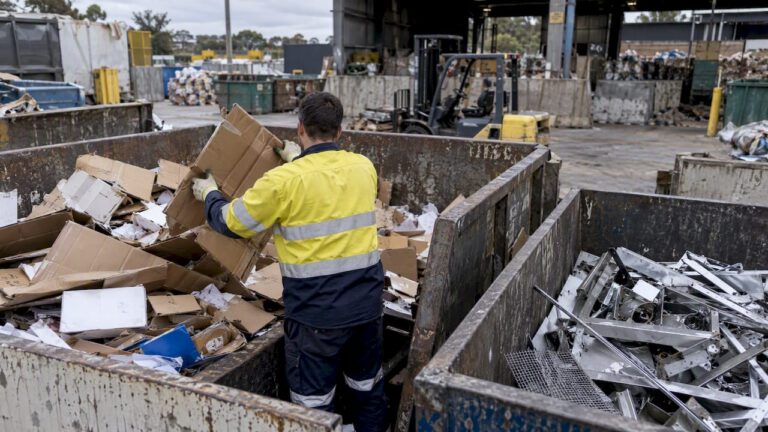
- Recycler or transfer station drop-off: the cheapest per-tonne option for clean concrete, including reinforced slabs. Most facilities accept crushed and reinforced concrete provided it’s free of contaminants, and fees are charged by weight rather than a flat rate.
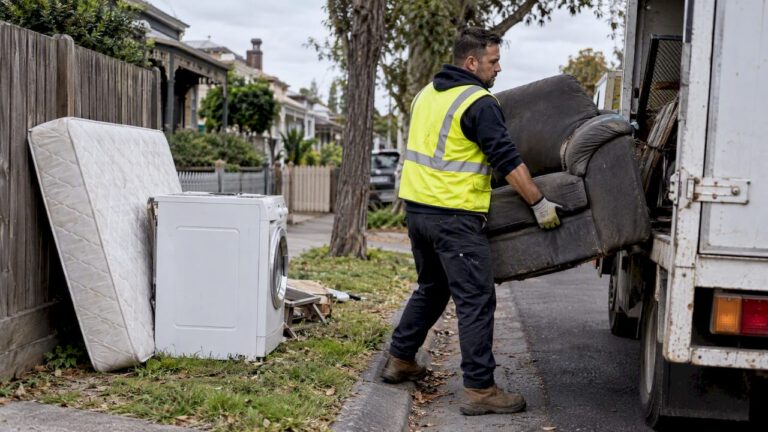
- Licensed rubbish removal: worth it for smaller jobs, tight access, or when you don’t have a trailer or the time to sort loads yourself. A managed service handles loading, sorting and the drop-off paperwork.
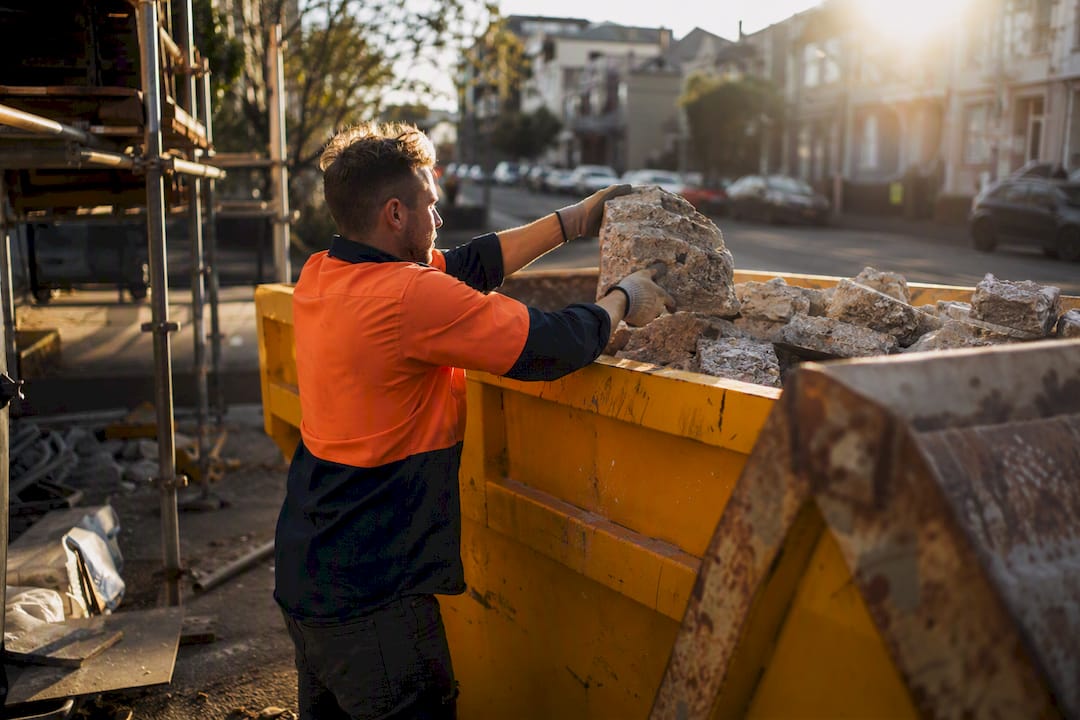
- Skip bins: fine for small to mid-sized pours, but concrete is dense. A bin that looks “half full” can already be at its weight limit, and overloaded bins attract extra fees or get refused at the tip. Check the weight allowance before you order, not after it’s full.
- Return to batching plant: applies mainly to wet, unused, or off-spec concrete. Suppliers will often take back excess batch rather than have it dumped, particularly on larger commercial pours.
- On-site crushing: for demolition volumes worth measuring in truckloads rather than wheelbarrows. A mobile crusher turns broken slabs into usable base material on the spot, cutting haulage almost entirely.
- Landfill: legal, but it’s the most expensive and least defensible option. Waste levies push tipping fees higher, and Australia’s construction and demolition sector already sends around 80% of its material to recycling. Landfilling clean concrete throws away material that has a ready market.
How to tell clean concrete from contaminated material
“Clean” concrete means plain concrete or reinforced concrete with steel mesh or rebar still attached. It does not mean concrete with soil, timber offcuts, plastic sheeting, insulation, tile adhesive, or paint residue mixed through it.
Contamination isn’t cosmetic. It affects whether a recycler will take the load, how much they’ll charge to process it, and what the resulting recycled aggregate can be used for downstream.
- Knock off loose soil and vegetation before loading.
- Pull out visible timber, plastic, or packaging.
- Separate anything with asbestos suspicion completely and get it assessed. Never mix it with general concrete waste.
- Keep painted or adhesive-coated slabs in a separate pile if you’re unsure about acceptance.
Pro Tip: Photograph the pile before you call a recycler or removalist. A quick photo gets you an accurate quote first go, instead of a price that jumps once the truck arrives and finds contamination you didn’t mention.
Managing washout water and on-site effluent
Wet concrete residue and washout water aren’t just messy. They’re alkaline enough to damage waterways, stormwater systems and soil if they run off unchecked, and most councils treat this as a compliance issue, not a housekeeping one.
- Set up a designated washout area before the pour starts, not after. A lined pit or a removable, leakproof bin stops slurry soaking into the ground or running into stormwater drains.
- Use a vapour barrier or heavy plastic lining to collect solids, and cover the area when it’s not in use.
- Never tip washout water into a stormwater drain or onto open ground. If you’re proposing to discharge treated wastewater to sewer, you need approval from your local sewerage authority first, and the pH needs to sit within their accepted range.
- Send collected washout solids to a batching plant or an approved recycler rather than general waste, and keep the paperwork.
The NSW EPA’s concrete wastes guidance sets out exactly this kind of on-site control, and it’s a useful reference even outside NSW because most state EPAs apply similar principles around containment and discharge approval.
Handling large volumes: mobile crushing, transport and timelines
Once you’re dealing with a full demolition rather than a driveway, the maths changes. Haulage becomes the biggest line item, not disposal itself.
Mobile crushing earns its cost when the volume is genuinely large, typically a full slab or building demolition rather than a few cubic metres, and when the site has room for the crusher and truck access. It converts broken concrete into usable base material without trucking it anywhere, which slashes transport costs. The trade off is noise, dust and the local permits that come with running heavy equipment on site.
- Haul distance to the nearest recycler or landfill, since fuel and time both scale with kilometres.
- Tipping or processing fees, which vary by facility and by how clean the load is.
- Equipment hire if you’re crushing on site, plus operator time.
- Waste levies, which have been rising in most states and increasingly tip the economics toward recycling over landfill.
Research modelling concrete recycling decisions in Sydney found that haulage and tipping costs are the strongest single factor in whether material ends up recycled or landfilled, more than any environmental preference. Booking a mobile crusher usually needs a week or two of lead time, with throughput fast enough to process a typical house demolition’s concrete in a day once it’s on site.
Where recycled concrete aggregate gets used, and its limits
Recycled concrete aggregate (RCA) has a genuine market. It’s not a downgrade product, but it isn’t a drop-in replacement for virgin aggregate either.
- Road base and sub-base for driveways, car parks and lower-traffic roads.
- General backfill and drainage layers.
- Selected low-strength or non-structural concrete mixes.
RCA typically has higher water absorption and lower density than virgin aggregate, which means mix designs need adjusting rather than a straight swap. For structural uses, that often means increasing cementitious content, adding supplementary cementitious materials, or using two-stage mixing to manage the variability that comes with recycled material.
Specification barriers are still the biggest handbrake on wider RCA adoption. Industry groups have pushed for policy changes and incentives to get RCA written into more project specifications, and getting it accepted on your job usually means asking your engineer early rather than after the mix design is locked in. The climate benefit of using RCA scales with quality, not just volume: a well processed batch that substitutes at a high ratio delivers more genuine carbon saving than simply recycling more low grade material.
A checklist for choosing the right disposal route
Work through these five questions before you book anything:
- Volume: a few wheelbarrows, a skip load, or a full demolition? This decides whether crushing on site is even worth considering.
- Contamination: is it clean concrete, or mixed with soil, timber, or hazardous residue?
- Access: can a truck reach the pile, or does it need to be broken down and carried out?
- Timeline: is this urgent, or can you wait a week or two for the better price?
- Budget: does the quote include tipping fees, or is that an add-on you’ll discover later?
When you’re comparing suppliers, ask directly: where does the concrete actually go, are they licensed to transport construction waste, can they provide evidence of recycling, and what are their weight or size limits? A quote that’s suspiciously low with no paperwork attached is the biggest red flag in the industry.
Pro Tip: Ask for a recycling certificate or a disposal docket, not just a verbal assurance. If a supplier can’t produce one, they probably aren’t sending your load where they say they are.
Who to contact for approvals: council, EPA and sewerage authorities
Getting concrete disposal wrong isn’t usually about breaking a big rule. It’s about skipping a small approval step that a council officer will ask about later.
For most residential and small commercial jobs, your local council is the first point of contact. They set kerbside and hard waste rules, and they can confirm whether your load needs a permit for skip placement on a nature strip or road. For anything involving washout water discharge, a separate approval from your local sewerage authority is needed before you tip treated wastewater to sewer, and that approval typically specifies an acceptable pH range.
Larger demolition or commercial jobs may also need to notify or seek approval from your state EPA, particularly where volumes are significant or where there’s any risk of contaminated material (asbestos, hazardous residues) being present. The NSW EPA’s concrete wastes guidance is a solid template for what regulators expect: documented on-site controls, proper containment, and disposal only through approved channels.
If you’re unsure which body applies to your job, start with council. They’ll point you to the EPA or sewerage authority if your project needs it. Getting this wrong after the fact, rather than before, is what turns a straightforward demolition into a compliance headache. For businesses managing this regularly, understanding your waste regulation obligations upfront saves a lot of back and forth later.
Health and safety during concrete demolition and disposal
Concrete demolition carries risks that are easy to underestimate because the material feels inert compared to, say, chemical waste.
Dust is the biggest ongoing hazard. Cutting or crushing concrete releases silica dust, and repeated exposure without proper respiratory protection is a genuine long-term health risk, not just a nuisance. Wet cutting methods and P2 rated masks reduce exposure significantly on smaller jobs.
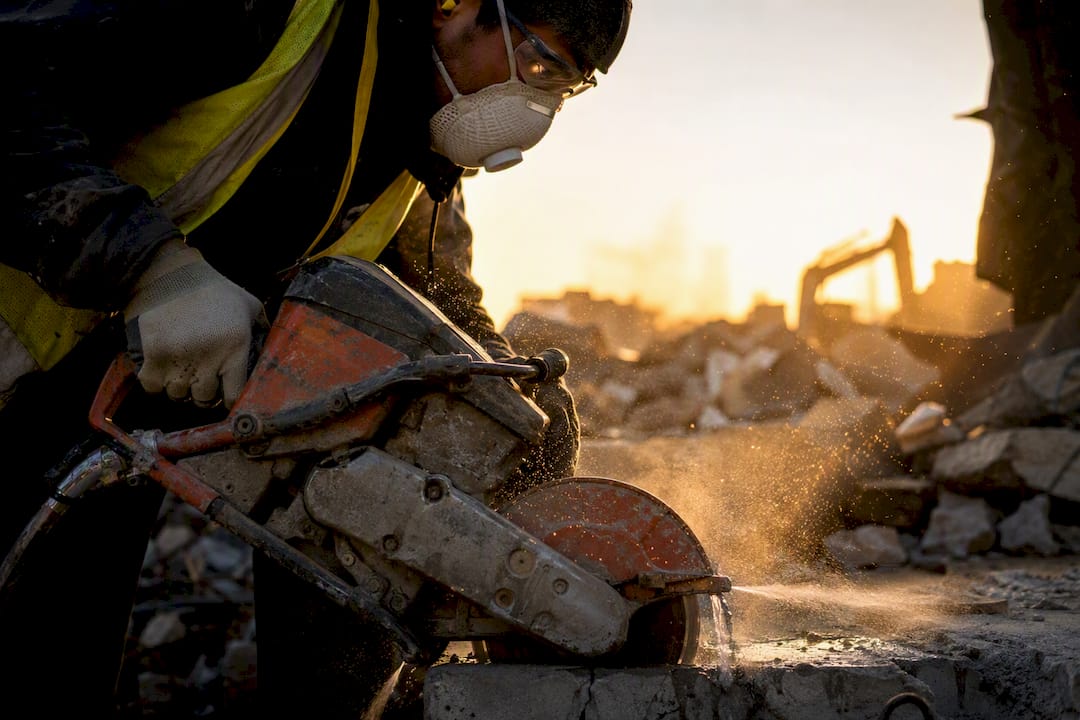
Manual handling injuries are common with broken slabs, especially reinforced concrete where jagged steel mesh is exposed. Gloves, sturdy footwear and mechanical lifting aids (rather than lifting by hand) cut down on cuts and back injuries considerably.
Older concrete, particularly in structures built before the 1990s, can contain asbestos in adjacent materials like fibro sheeting or old pipe lagging. If there’s any doubt, get it assessed before demolition starts rather than after you’ve already generated a mixed pile that’s harder to sort and dispose of safely.
Noise and vibration from crushing or jackhammering also need managing, both for worker safety and for neighbours if you’re in a residential area with council noise restrictions on construction hours.
New technology changing how concrete gets recycled and reused
Concrete recycling isn’t static. Mobile crushing units have become smaller, quieter and more common on mid-sized residential jobs, not just major demolitions, which is shifting more work away from haul-and-dump toward on-site processing.
On the material science side, techniques for improving RCA quality, like two-stage mixing and adjusted cementitious content, are letting recycled aggregate be used in a wider range of structural applications than a decade ago. Research into concrete waste management has also looked closely at how mobile crushing reduces haulage costs on large sites, provided dust, noise and approvals are planned for in advance rather than treated as an afterthought.
There’s also growing attention on carbon accounting in concrete recycling. Because the climate benefit of RCA scales with the quality of the processed material rather than just the tonnage diverted from landfill, producers are investing more in screening and grading recycled aggregate to higher specifications, which opens doors to structural reuse that lower grade RCA can’t access.
Comparing the real costs of each disposal method
Cost comparisons for concrete disposal rarely come down to a single number, because tipping fees, haulage distance and contamination all move the price independently.
Recycler drop-off is usually the cheapest per-tonne option for clean concrete, particularly for smaller loads a trailer can handle, since you’re paying processing fees rather than landfill levies. A skip bin sits in the middle: convenient, but you’re paying for a fixed size regardless of how efficiently you fill it, and overweight loads attract penalty fees that can erase any convenience saving.
Licensed rubbish removal costs more per job than a straight drop-off, but it folds in labour, sorting and transport, which matters when a DIY trip would eat half a day. For large demolition volumes, on-site crushing has the highest upfront equipment cost but the lowest cost per tonne once volume clears a certain threshold, because you’re eliminating most of the haulage bill entirely.
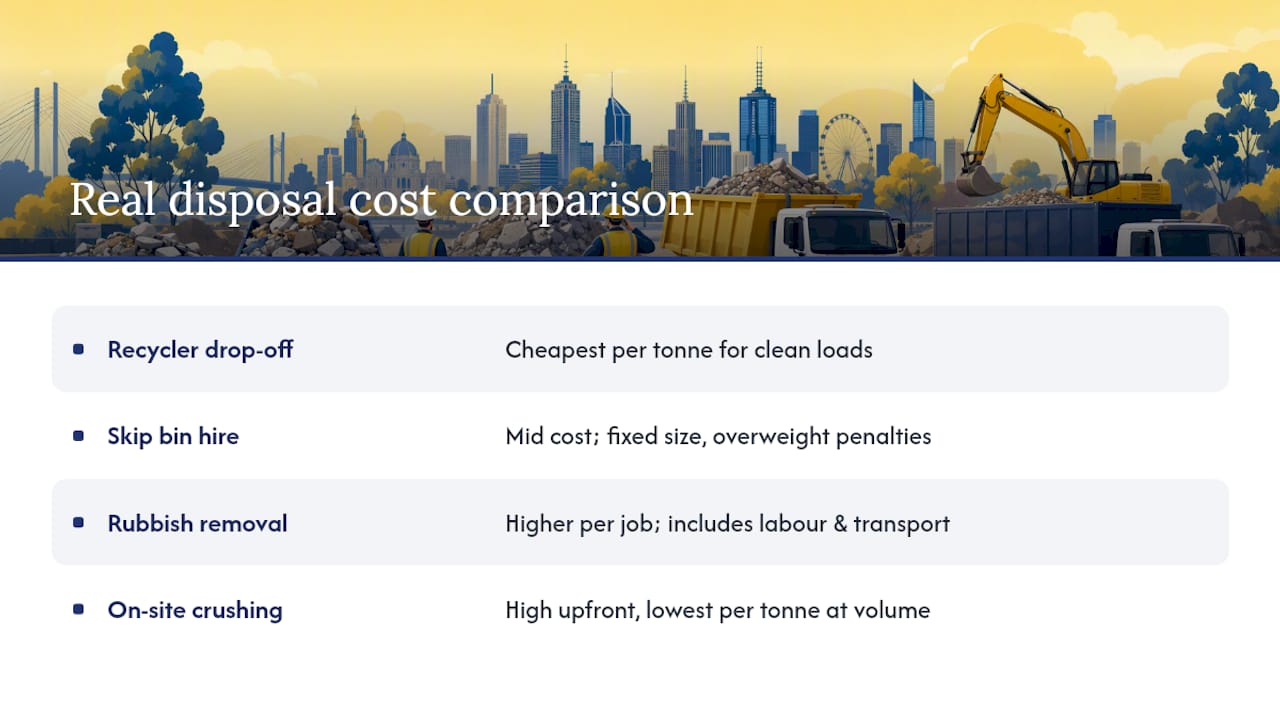
Landfill is consistently the most expensive route once waste levies are factored in, and that gap is widening as levies rise across most states. It’s also the outcome that returns nothing to the material’s onward use, which is a real cost even if it doesn’t show up on the invoice. For businesses managing frequent construction waste, comparing methods over a full project rather than a single load usually reveals where the real savings sit.
How Melbourne City Rubbish handles concrete and construction debris
There are other routes to sorting your concrete, drop it at a recycler yourself, hire a skip and manage the weight limits, or book a mobile crusher for a big demolition. All of them work, but all of them ask you to become the project manager for your own waste.
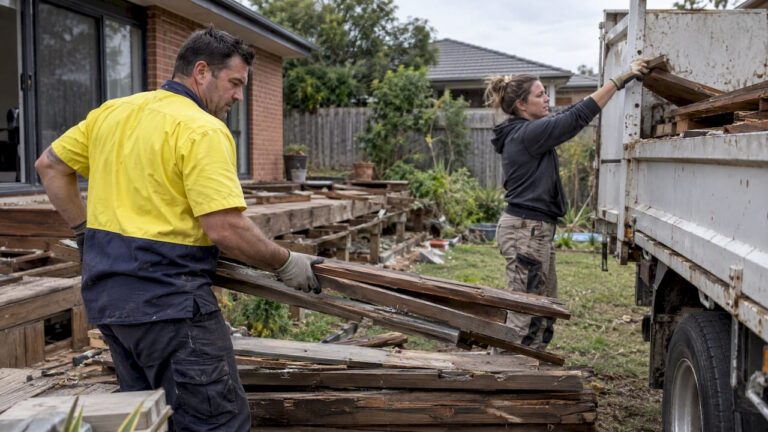
Melbournecityrubbish takes that job off your hands. We handle commercial and residential concrete and construction debris removal across Melbourne, including onsite labour for loading and sorting, so you’re not the one breaking your back separating clean concrete from contaminated material. Every load goes through a proper recycling pathway where possible, with carbon-neutral disposal available for clients who want it, and we can supply evidence of where your waste actually ends up, not just a verbal promise.
The advantage over doing it yourself isn’t just convenience. It’s certainty: a licensed operator, a guaranteed disposal destination, and no surprise tipping fees once the truck’s already loaded. Before you request a quote, have your volume estimate, site access details and a rough idea of contamination on hand. It speeds up pricing and means the quote you get is the price you pay. If you’d like to compare your options properly first, our guide to choosing a rubbish removal service walks through what to ask any provider, then get in touch for a straight quote on your job.
Sources
- Concrete wastes — NSW Environment Protection Authority
- Recycled concrete aggregate — MECLA (fact sheet)
- The dynamics of concrete recycling in circular construction: a system-dynamics approach in Sydney, Australia — MDPI Sustainability
- Recycling concrete — RecyclingNearYou