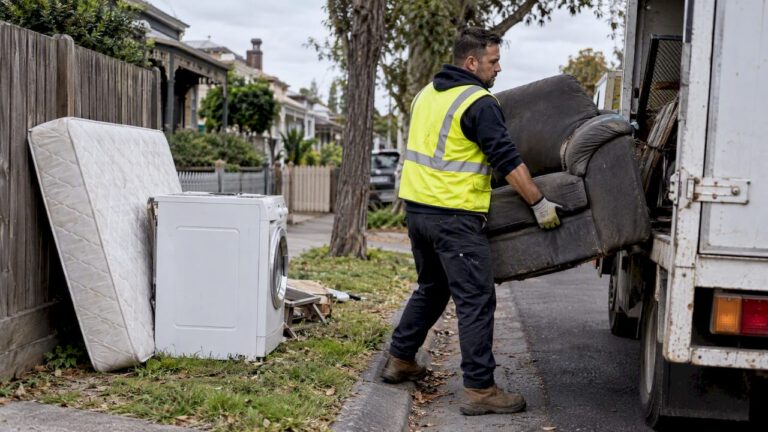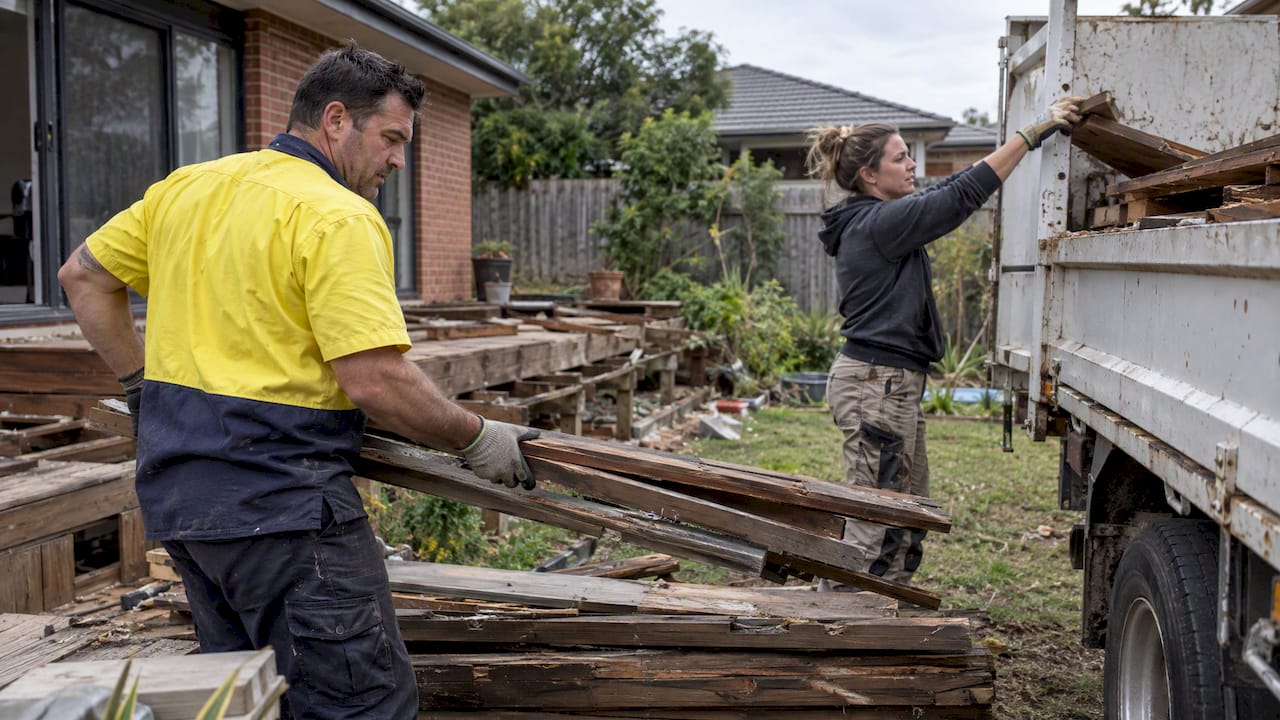
A practical lawful route for deck demolition disposal is a full-service rubbish removal service that accepts construction and demolition debris. Confirm it segregates treated timber, manages any asbestos risk and hands you disposal paperwork afterwards. Council hard-waste collections usually exclude deck demolition waste, so a private service is normally the answer.
TL;DR:
- Treat unknown older deck timber as CCA treated: keep it separate from clean wood, never burn or bury it, and tell the crew.
- Suspect sheeting should remain undisturbed; friable asbestos or more than 10 square metres of nonfriable asbestos requires licensed removal and a clearance certificate.
- Send pile and access photos, list materials and access limits, and request a written quote covering loading, sorting, disposal fees, and return trips.
- Keep the facility’s receival docket or weighbridge slip and invoice, and verify the site is authorized; you may remain liable if the waste is dumped illegally.
Table of Contents
- Quick checklist: what to do before you book collection
- What professional deck removal services typically include
- How to treat old deck timber and asbestos risk before removal
- How to prepare the site and what drives the price
- Your legal duty of care and the paperwork to demand
- How to get a reliable quote and the right questions to ask removal services
- How we handle deck demolition disposal for you
- FAQ
- Sources
Quick checklist: what to do before you book collection
A few minutes of preparation gets you an accurate quote and a smooth pickup. Councils generally treat deck timber as building waste, not hard waste. The City of Melbourne hard waste service excludes building and construction waste, including timber decking, so you will need a private removal service or a licensed facility.
Work through this list before you call:
- Estimate the volume and list the material types: untreated timber, treated timber, nails and screws, concrete footings, soil.
- Flag any suspect asbestos, such as old cement sheeting under or beside the deck, and tell the removal company before they arrive.
- Clear access to the pile and, where it is safe, separate timber from metal and concrete.
- Photograph the whole pile from two or three angles, plus the driveway or path the crew will use.
- Decide whether you want reusable boards set aside, and whether you want a carbon-neutral disposal option.
- Have your postcode, access notes (steps, gates, parking) and preferred date ready.
Pro Tip: Place a tape measure or a standard pallet beside the pile when you photograph it. A scale reference lets an estimator judge volume far more accurately than a photo of a loose heap.
Do not start breaking up unknown sheeting or cladding while you tidy. If you think it might contain asbestos, stop, leave it undisturbed and mention it when you book. Disturbing it yourself creates a bigger and more expensive problem than the one you set out to solve.
It also helps to note how the deck came apart. Boards pulled up whole stack neatly and take up less truck space than boards smashed into short lengths. If you have not finished demolition yet, pull boards rather than snapping them, and keep fixings in a bucket instead of scattered through the pile. Loose nails slow down loading and are a safety hazard for whoever lifts the timber.
If the deck had a roof, balustrade or pergola, include those in your materials list. They often involve different timber, metal brackets or polycarbonate sheeting, and a crew sorts them differently from decking boards.
What professional deck removal services typically include
A reputable service does more than throw timber on a truck. Knowing the usual scope lets you compare quotes on equal terms. Typically the job runs in this order:
- The crew inspects the pile and sorts it on site into timber, metals, concrete and general demolition waste.
- Suspect materials, such as unknown old timber or anything that looks like asbestos cement, are set aside and handled separately.
- The load is carried out and secured, with treated timber kept apart from clean timber.
- The truck goes to a licensed transfer station, resource recovery facility or licensed landfill, depending on what is on board.
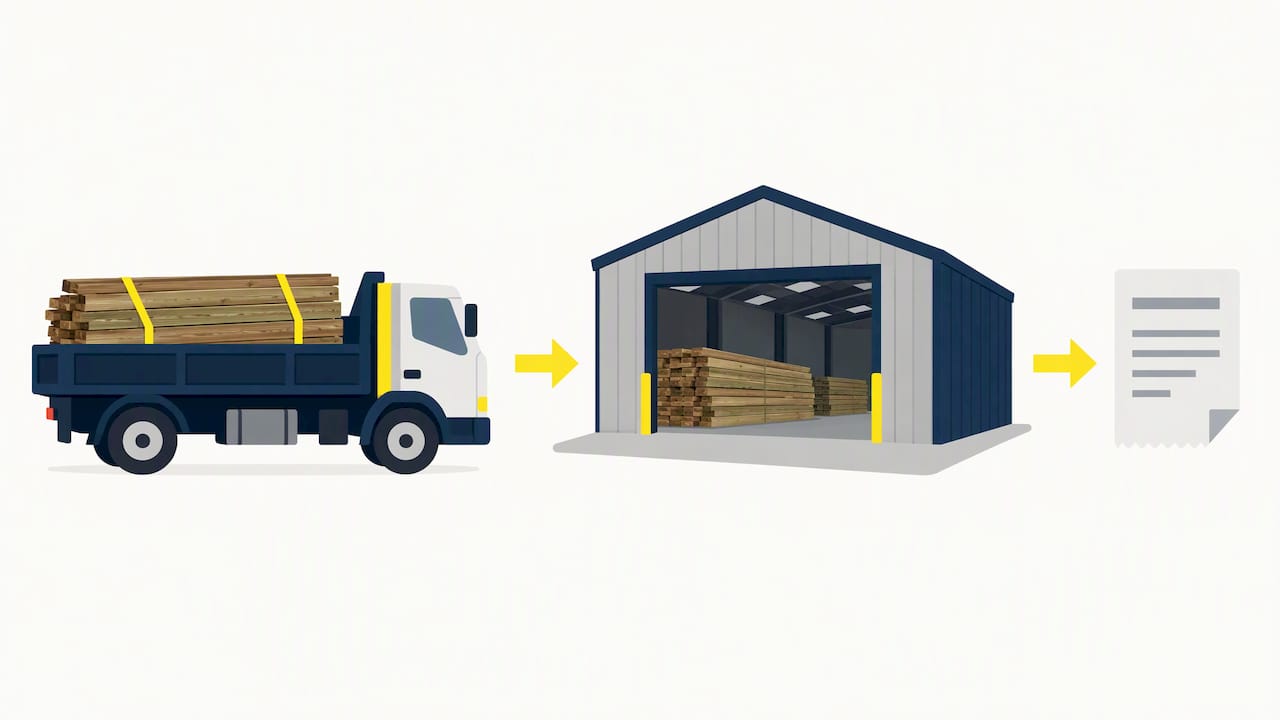
- You receive evidence of lawful disposal, such as a receival docket or weighbridge slip.
National reporting shows that building and demolition materials as a category have a strong recovery record, with an 84% resource recovery rate in 2022–23. That figure covers the whole category, including heavy materials like concrete and bricks, not deck timber alone. Still, it explains why good operators sort loads instead of sending everything to landfill: clean timber, metal and concrete often have somewhere better to go.
Treated timber is the exception. Preservatives contaminate recycling streams, so it cannot simply join the clean wood pile. A competent crew knows this and will keep it separate, with arrangements for anything that cannot be recycled.
Beyond the core service, many providers offer extras:
- Labour to carry debris from the backyard to the truck.
- Small-scale demolition if part of the deck is still standing.
- Furniture or other junk removal in the same visit.
- A carbon-neutral disposal option.
We offer construction waste removal through our construction waste removal service, and our hard waste collection page explains where council services stop and private removal starts.
When you compare quotes, check that each one includes sorting, transport, disposal and paperwork. A low price that leaves out loading labour or tipping fees often ends up costing more once the extras are added. Ask each company to confirm in writing which of these steps are covered, so you are comparing like with like.
Also ask who handles anything unexpected. If the crew finds a suspect sheet or a buried footing mid-job, you want to know in advance whether they will stop and reassess, or quietly add it to the load. The answer tells you a lot about how seriously they take compliance.
How to treat old deck timber and asbestos risk before removal
Old timber is the biggest unknown on most deck jobs. Older boards, posts and bearers may contain copper chrome arsenate, known as CCA. The NSW EPA notes that older timber may be CCA-treated, that labelling can fade, and that you should treat unknown old timber as if it contains CCA.
In practice, that means:
- Never burn old deck timber, and never bury it.
- Do not mix it with clean timber destined for mulching or recycling.
- Wear gloves, a dust mask and eye protection when cutting or handling it.
- Wet down dusty surfaces, then collect sawdust and small offcuts in double bags.
- Keep treated and untreated piles apart so the crew can classify the load properly.
South Australia’s EPA gives the same advice: treated timber must not be burned, buried or mixed into standard wood recycling. The NSW EPA adds that treated timber from larger building or demolition jobs should go to a licensed landfill, and that small treated offcuts may only go in regular rubbish bins in limited amounts. A deck demolition is a larger job, so plan on separate handling.
Asbestos needs its own caution. Decks attached to older houses sometimes sit against fibre cement sheeting, eaves or fences that may contain it. Government guidance for householders states that asbestos waste must go to a licensed landfill, and that any friable asbestos, or more than 10 square metres of non-friable asbestos, requires a licensed removalist and a clearance certificate. Packaging, labelling and transport rules apply as well, including double-wrapping.
Asbestos threshold: any friable asbestos, or more than 10 square metres of non-friable asbestos, needs a licensed removalist and a clearance certificate, according to Australian asbestos safety guidance for householders.
Reputable removal crews inspect loads and will refuse or reclassify anything they suspect is contaminated. That is a good sign, not an inconvenience. Waste recycling facilities also follow auditable procedures to verify asbestos removal before recycling, which is why a crew that skips the inspection step is a red flag.
How to prepare the site and what drives the price
Good preparation saves labour time, and labour is one of the biggest parts of any removal quote. If it is safe to do so, clear a path from the pile to where the truck can park, separate timber from metal and concrete, and cut or break down oversized pieces. Keep the pile dry where you can, because wet timber is heavier and harder to lift.
Several factors drive the final price:
- Access: steps, narrow side gates, long carries and tight streets all add time.
- Volume: operators usually measure in truck loads or cubic metres, which is why photos matter so much.
- Material mix: clean timber is simpler to handle than a pile of timber, concrete, soil and metal.
- Specialised handling: treated timber and any asbestos-suspect material need separate treatment.
- Tipping fees and waste levies: these are charged by the facility that receives your waste, and they vary by material and site.
On volume, estimators work from your photos and the pile’s footprint. A pile the size of a small car boot is a very different job from several metres of stacked bearers and joists. Send a wide shot plus a close-up of any unusual material, and you reduce the chance of a surprise on the day.
Common hidden costs are worth asking about before you accept a quote:
- Travel time, if you are far from the crew’s base.
- Extra labour for sorting, if the pile arrives mixed.
- Disposal levies, if they are listed separately from the job price.
- Reloading or return trips, if the first truck cannot take everything.
Ask for a written quote that states what is included. If a price looks well below the rest, find out why. A very cheap quote can mean unlicensed dumping, which leaves you holding the legal risk. Our renovation waste guidance walks through how local jobs are typically scoped if you want more detail.
If you are planning a replacement deck or new boundary work afterwards, think about the materials now. A partner resource on front fence ideas for Melbourne covers climate, heritage and council considerations that may also shape what you build next.
Your legal duty of care and the paperwork to demand
Hiring a remover does not remove your responsibility. Under waste rules, waste must go to a place lawfully authorised to receive it, and the producer and the transporter can both be held liable if it is dumped illegally. The Victorian EPA stresses that waste must be classified and sent to a lawfully authorised place, and recommends written evidence of facility permissions and weighbridge receipts. NSW guidance echoes this, explaining that records such as facility licences, weighbridge receipts and invoices support compliance and that customers should require evidence of lawful disposal.
Here is the paperwork to ask for, in order of importance:
- A receival docket or weighbridge slip from the facility that accepted your waste, showing the date, the weight or volume, and the site name.
- Written confirmation that the facility is permitted to receive that waste, such as its licence details where applicable.
- For asbestos work, the clearance certificate from the licensed removalist, plus any transport consignment number the rules require.
- The invoice from the removal company, itemising collection, labour and disposal.
- Where possible, receipts for any facility fees you paid directly, so the paper trail shows the money going to the receiving site.
Keep all of this for as long as you reasonably can. If a neighbour reports dumped timber or a council officer asks where your demolition waste went, a docket in a folder ends the conversation quickly. Without one, you carry the burden of proving where the load ended up.
If a remover cannot or will not produce receival evidence, treat that as a reason to find someone else. Vague answers such as “we take it to the tip” without naming the site are not good enough for treated timber or anything that might be contaminated. A transparent operator names the facility without fuss.
How to get a reliable quote and the right questions to ask removal services
A good quote starts with good information. Send photos of the pile and the access route, a short materials list, your postcode and any access notes. The more specific you are, the less likely the price changes on the day.
Then put these questions to every company you are considering:
- Where will the waste be taken, and will you name the facility?
- Is segregation of treated timber included in the price?
- How do you handle suspected asbestos found during loading?
- Will you give me receival dockets or weighbridge slips after the job?
- Who pays the tipping fees, and is loading labour included?
- Do you offer a carbon-neutral or eco disposal option?
- Are you insured, and what happens if something on my property is damaged during loading?
Compare answers, not just prices. A company that answers clearly and offers paperwork up front is usually the safer pick. One that dodges the facility question or is vague about asbestos is not.
Pro Tip: Ask for the quote in writing, with the disposal paperwork listed as an included item. If paperwork is a paid extra or an afterthought, you are likely dealing with someone who treats it as optional.
If you want a fast starting point, our quick quote page takes the same details and gets you a price without a long back-and-forth.
How we handle deck demolition disposal for you
We run full-service rubbish removal and construction waste removal across Melbourne, and deck demolition debris is exactly the kind of job we take on. Our crews handle the waste and take it for disposal. You can ask about disposal documentation.
If you want a lower-impact option, we offer carbon-neutral disposal as an opt-in. We can discuss your quote with you before booking. Booking is simple: send your photos and details, we confirm the scope and give you a written quote, and after the job you receive your disposal receipts. Start with our construction waste removal service or request a price through our quick quote page.
FAQ
How do I dispose of an old deck legally?
Send the waste to a place lawfully authorised to receive it, and keep the paperwork. A licensed removal service can do this for you and provide receival dockets. Council hard-waste collections generally do not take deck demolition debris.
Can old deck timber go in with recycled wood?
Not if it may be treated. Older timber can contain CCA preservative, and guidance says unknown old timber should be treated as if it contains CCA. Keep it separate from clean timber and let the remover classify it.
What if I find asbestos while demolishing my deck?
Stop work, leave the material undisturbed and contact a licensed asbestos removalist. Any friable asbestos, or more than 10 square metres of non-friable asbestos, needs a licensed removalist and a clearance certificate under householder guidance.
What paperwork should I keep after a removal?
Keep the receival docket or weighbridge slip, the removal company’s invoice and any facility receipts. For asbestos jobs, also keep the clearance certificate. These records show the waste reached a lawful site.
Sources
- Hard waste | City of Melbourne
- RECYCLING CONSTRUCTION
- Householders and home renovators
- Resource recovery and waste materials analysis – DCCEEW