Sort what you can on site, lock in a waste management plan before works start, route hazardous material to licensed handlers only, and keep every weighbridge docket. That single sequence covers the legal minimum for demolition debris disposal in Australia. The waste owner carries liability even after a contractor takes the load away, so paperwork isn’t optional. It’s the proof that keeps you out of trouble.
TL;DR:
- Proper disposal requires on-site segregation, licensed transport, and thorough record-keeping, including weighbridge receipts and disposal dockets for legal liability.
- Both waste generators and transporters can be held responsible if demolition debris ends up at unlawfully accepted sites, emphasizing the need for verified receivers and documented proof.
- Hazardous waste materials such as asbestos, contaminated soil, and treated timber demand licensed handling, with surveys done before demolition to prevent costly mistakes.
- Recycling options vary by material, with concrete, metals, and salvageable fixtures offering cost-effective recovery routes, while mixed rubble and e-waste require regional sorting and certified handlers.
- Accurate waste management plans and contractor vetting ensure compliance, cut costs through recycling, and prevent legal issues by demanding clear evidence of lawful receival and proper paperwork.
Table of Contents
- How do you dispose of demolition debris step by step?
- Who is legally liable for unlawful demolition waste disposal?
- Which demolition materials count as hazardous waste?
- What are the best recycling routes for each demolition material?
- What should a demolition waste management plan include?
- How do you choose a contractor who handles debris lawfully?
- What does demolition debris disposal cost, and how do levies change that?
- Where can you find a licensed receival site for demolition waste?
- Managed demolition debris removal that keeps you compliant
- Sources
How do you dispose of demolition debris step by step?
Demolition debris disposal works best as a sequence, not a scramble. Skip a step and you either pay more at the tip or end up on the wrong end of a compliance notice.
- Audit before you swing a hammer. Walk the site and identify hazardous streams, asbestos sheeting, treated timber, contaminated soil, before any works begin.
- Estimate volumes. Work out tonnes and cubic metres by material type, then decide what gets reused on site versus sent off for recycling.
- Nominate receivers. Pick licensed facilities for each material stream before the first truck loads up.
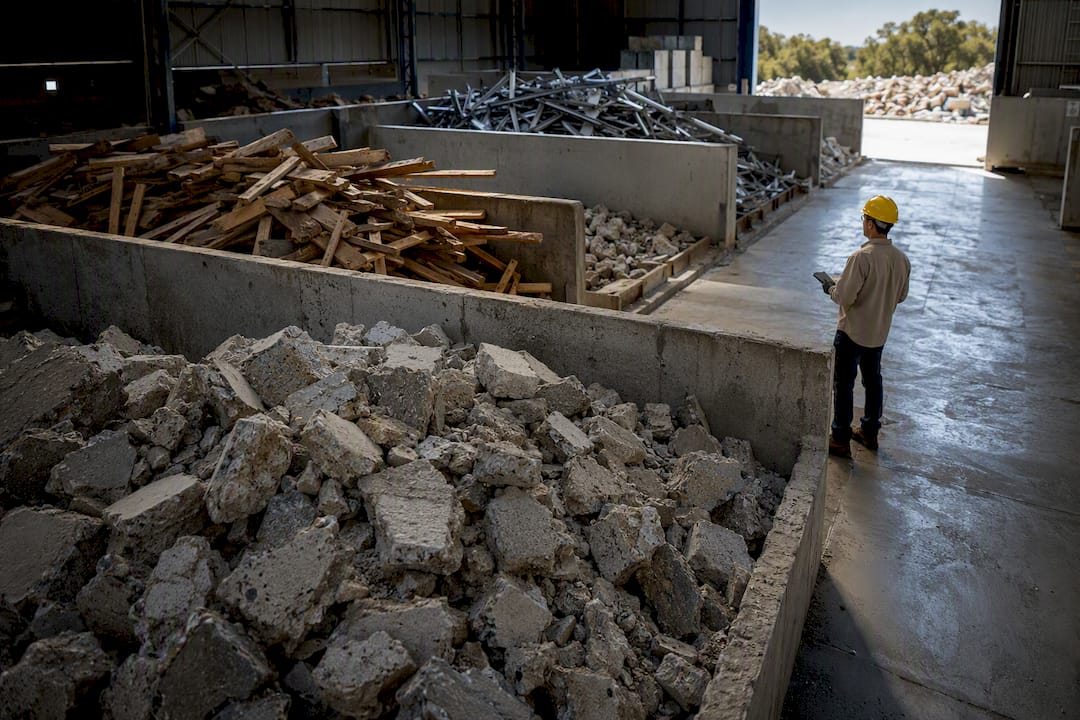
- Segregate on site. Keep concrete, timber, metal, and plasterboard in separate piles or bins rather than one mixed skip.
- Book licensed transport. Confirm the transporter and receiver both hold the right approvals for what you’re moving.
- Collect the paperwork. Get disposal dockets and weighbridge receipts for every load, matched to the receiving facility.
Pro Tip: Photograph each load before it leaves site, then match that photo to its docket number later. It takes ten seconds and it’s the fastest way to settle a dispute if a receiver claims they never got your material.
Who is legally liable for unlawful demolition waste disposal?
The waste owner doesn’t hand off liability just because a contractor is doing the physical work. Under the Protection of the Environment Operations Act 1997, both the person who generated the waste and the transporter carrying it can be held responsible if that load ends up at a site with no lawful authority to accept it. That’s a real exposure, not a technicality, and it’s why vetting your receiver matters as much as vetting your demolition crew.
- Insist on disposal dockets and named receivers for every load, regardless of who arranged transport.
- Check the receiving facility’s environment protection licence or development consent before, not after, the truck arrives.
- Ask your contractor for a copy of the waste management plan and confirm it matches what’s actually happening on site.
- Expect variable landfill levies between states and regions to influence where waste ends up, which is exactly why the proximity principle (using the nearest lawful facility rather than the cheapest distant one) matters for both cost and compliance.
Hiring someone to manage the job doesn’t remove your own obligations as the waste generator. Keep records regardless.
Which demolition materials count as hazardous waste?
Not every material on a demolition site is straightforward rubble. Asbestos sheeting, contaminated soil, and certain treated timbers fall into regulated categories that need licensed handlers, not general waste transporters.
- Get a hazardous materials survey done before demolition starts, not once debris is already in a pile.
- Engage a licensed asbestos removalist for any suspected asbestos containing material, and keep the clearance certificate on file.
- Request consignment documentation for any regulated waste leaving site, since this is your evidence trail if questions come up later.
- Apply on-site controls throughout: dust suppression, covered loads on transport, erosion controls around stockpiles, and a safe work method statement covering demolition activities.
Pro Tip: If your site was built before the 1990s, assume asbestos is present until a survey proves otherwise. Guessing wrong here is the single most expensive mistake on a demolition job.
What are the best recycling routes for each demolition material?
Different materials have wildly different recovery economics, and knowing which ones to prioritise saves money and landfill space.
- Concrete and brick: these crush readily into recycled aggregate for sub-base and pavement work. Levies on landfill disposal often make crushing and reprocessing the cheaper option once you factor in avoided levy costs, and choosing the right receiver matters more than distance.
- Metals: steel, copper, and aluminium hold genuine scrap value. Segregate these from mixed rubble early, because contaminated metal loads get discounted hard at the scrap yard.
- Timber: hardwood in good condition has a salvage market worth chasing, though manual deconstruction to recover it costs more labour time than knocking a wall down with an excavator. Treated timber is a different story: it typically needs separate, licensed timber waste disposal rather than general recycling.
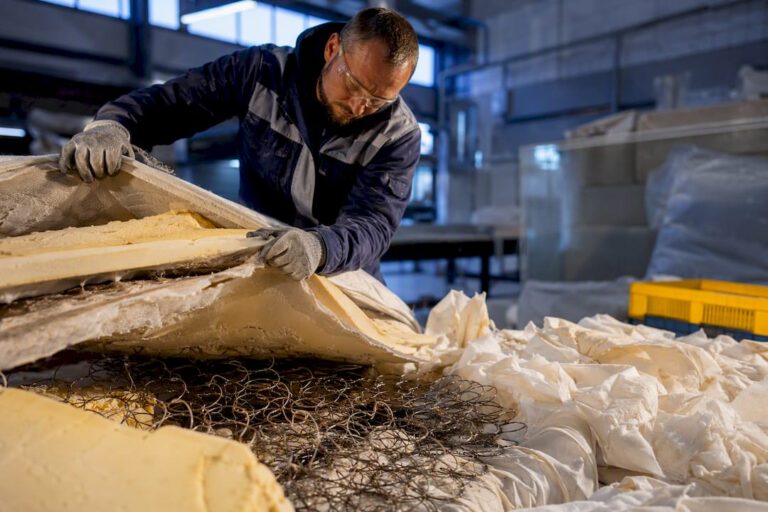
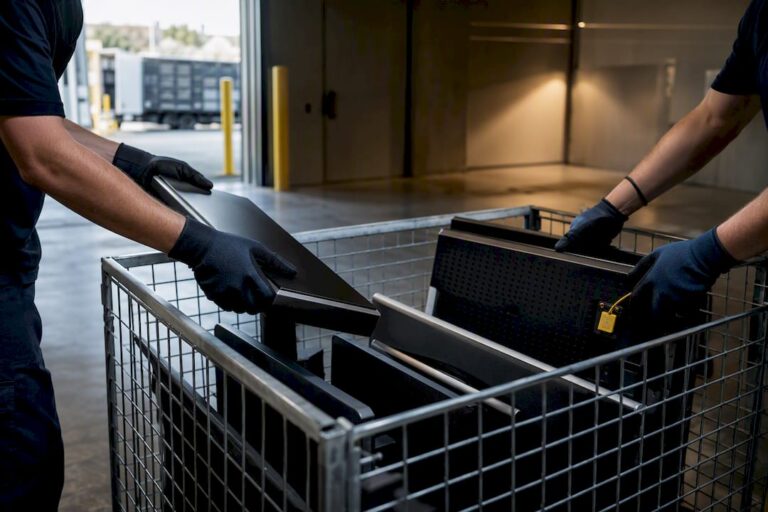
- Plasterboard, mixed rubble and e-waste: plasterboard recycling exists but capacity is patchy regionally. Mixed rubble usually needs sorting at a transfer station rather than kerbside separation, and e-waste always needs a certified electronic waste handler.
Salvageable fixtures, doors, and fittings that still have life left in them are worth diverting through community reuse networks before they hit any waste stream at all.
What should a demolition waste management plan include?
A waste management plan (WMP) is the document that turns good intentions into an enforceable, checkable process. Councils and principal contractors increasingly expect one before approving demolition works, and a properly built plan is what lets a project hit 70 to 90 percent recycling rates instead of the national average.
- Classify the waste by type, quantity in tonnes and cubic metres, and destination for each stream.
- Set recovery targets for reuse and recycling against each material category, not just an aggregate figure.
- Name your receivers and transport arrangements for every stream, hazardous and general alike.
- Detail on-site controls: segregation areas, stockpile limits, dust and erosion management.
- Build in verification: how receipts, consignment numbers, and payment milestones will confirm the plan was actually followed, not just written.
How do you choose a contractor who handles debris lawfully?
Picking the right contractor is where most demolition debris disposal problems either get solved or get created. Contractual incentives for providing receival evidence tend to matter more than any piece of technology in lifting recovery rates, so build the checks into the contract itself.
- Verify the contractor’s licences, ABN, and public liability insurance before signing anything.
- Ask for evidence of the receiving facility’s environmental licence, not just the contractor’s own credentials.
- Write WMP compliance and named receival sites into the contract, with payment milestones tied to producing dockets.
- Where possible, pay the receival facility directly rather than routing everything through the contractor.
Pro Tip: Hold back the final payment instalment until you’ve received original weighbridge dockets and a copy of the receiving facility’s licence, not just a photo of a printout. That single clause has saved plenty of site managers a very awkward conversation with a regulator months later.
What does demolition debris disposal cost, and how do levies change that?
Cost per tonne is driven by weight, the applicable landfill levy, and how much sorting the load needs before it can be accepted. Contaminated or mixed loads attract higher gate fees because someone still has to separate them, whether that’s you now or the facility later at a markup.
Recycling tends to beat landfill on cost once a levy applies, but only if your material is clean enough to accept without a sorting surcharge. Construction and demolition waste made up a large proportion of all solid waste generated in Australia in recent years, and that scale is exactly why levies exist: they’re designed to push volume away from landfill and toward recovery.
- Budget a contingency of 10 to 15% above your initial estimate for unexpected contamination or reclassification.
- Compare quoted rates per tonne, not per load, since load sizes vary wildly between transporters.
- Prefer paying the receival site directly where your contract allows it, so you know exactly where the fee landed.
Where can you find a licensed receival site for demolition waste?
Start with your state EPA’s facility listings and your local council’s recycling directory. Both typically list which materials a site accepts and current gate fees, which saves a wasted trip with a loaded truck.
- Confirm the facility’s environmental protection licence or development consent covers the specific material you’re bringing.
- Call ahead and ask for a weighbridge receipt at drop off, every time, even for small loads.
- Don’t assume the nearest tip is automatically cheapest. An extra 50 kilometres of transport typically adds only about $10 per tonne to your cost, while a facility with a genuinely higher recovery rate can save you far more on levy exposure.
Overall, around 60% of the 27 million tonnes of construction and demolition waste Australia generated in 2018 to 2019 was recovered rather than landfilled, so a well-chosen receiver puts you well above that baseline rather than dragging the average down.
Managed demolition debris removal that keeps you compliant
Running the checks above on top of an actual demolition project is a lot to juggle, and that’s exactly the gap Melbournecityrubbish fills for site managers and property owners across CBD & South Melbourne, Melbourne, Melbourne Airport, Melbourne City, Port Melbourne, and West Melbourne. Our teams handle residential demolition and structural jobs with the sorting, transport, and paperwork built into the service, not billed as an afterthought.
We assist with waste management plan requirements, segregate materials on site, transport to licensed receivers, and hand over weighbridge receipts and disposal dockets as standard, so you’ve got the evidence on file without chasing it down yourself weeks later. If you’re planning a demolition job and want the compliance side handled properly from the first skip bin to the final docket, get a quick quote and we’ll scope it against your site.
Sources
- Sustainability (MDPI) — life-cycle analysis of C&DW
- Protection of the Environment Operations Act 1997 — NSW legislation