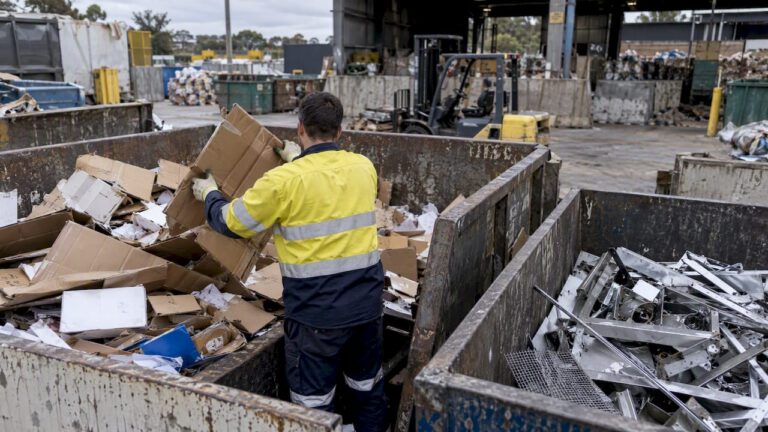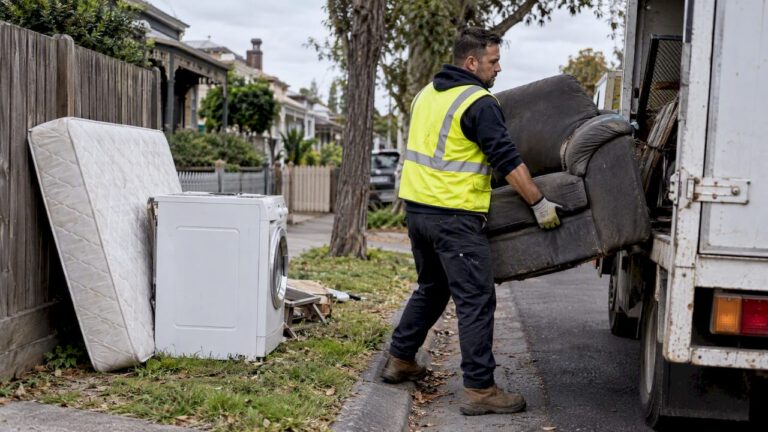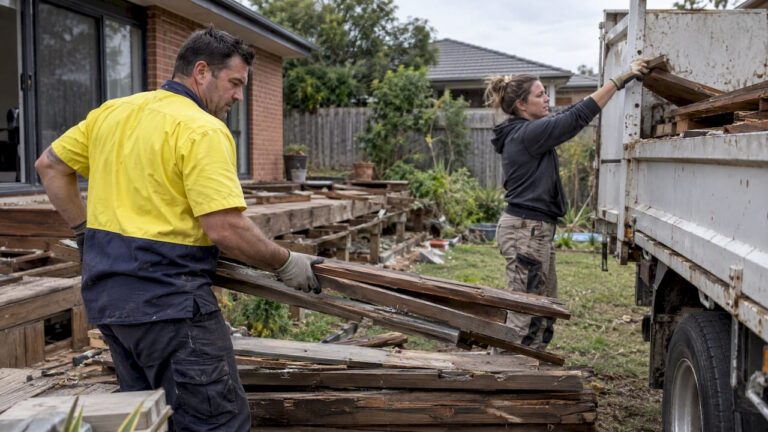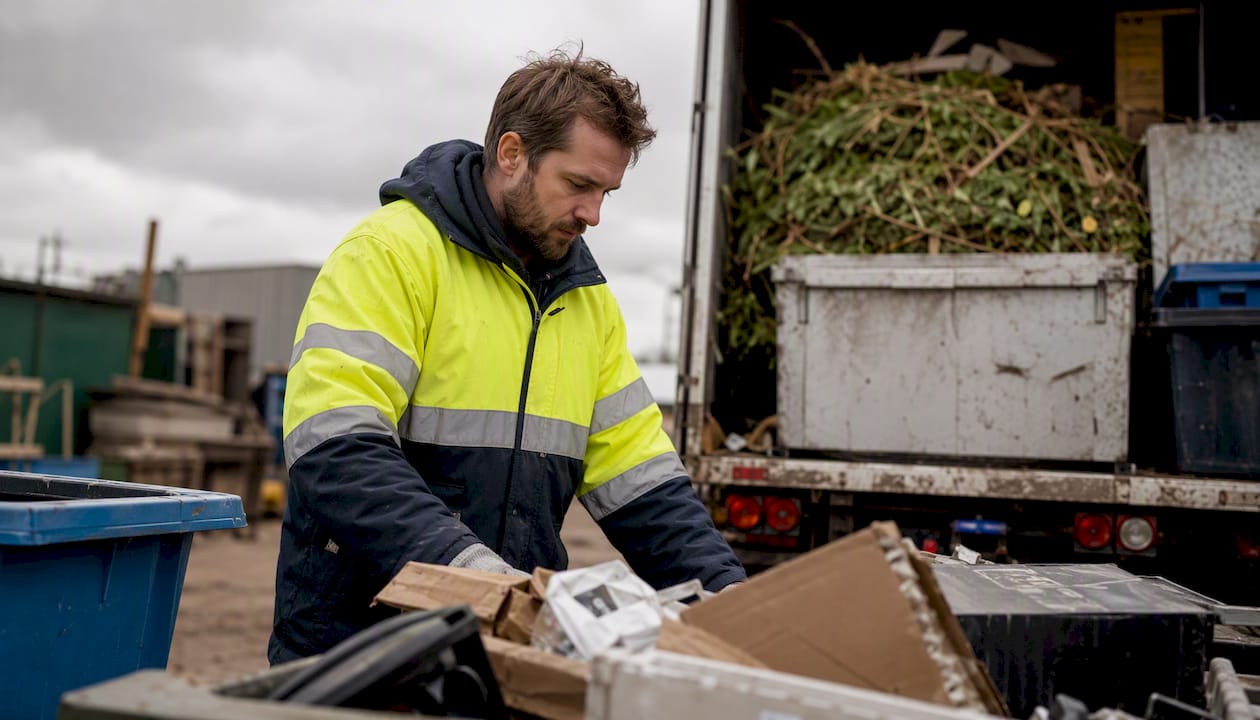
Pick a provider that can show you where your rubbish actually ends up, not just promise to take it away. Genuine eco friendly junk removal means diversion rates you can check, e-waste handled to NTCRS standards, and a paper trail proving your old couch didn’t just get dumped. Businesses carry a legal duty here too: EPA Victoria requires waste to be managed responsibly after it leaves your premises, and commercial and industrial operators in Victoria generate a substantial amount of waste annually. Melbourne City Rubbish is a solid starting point if you want that accountability without chasing it yourself.
Before you call anyone, spend ten minutes doing this:
- Photograph the pile so quotes are accurate, not guesswork.
- List anything tricky (paint, batteries, asbestos sheeting, e-waste).
- Ask upfront what percentage gets diverted from landfill.
- Request disposal receipts or facility documentation as part of the deal.
Once you’ve got that sorted, book a written quote and move on with your day.
Key Takeaways
Genuinely eco friendly junk removal comes down to verified diversion reporting, correct handling of regulated streams like e-waste and green waste, and transparent, itemised pricing.
| Point | Details |
|---|---|
| Verify diversion, don’t assume it | Ask for diversion rates by material stream and facility receipts before booking. |
| Match pricing to job type | Expect per-cubic-metre or per-job quotes, and get an itemised breakdown to avoid hidden surcharges. |
| Separate regulated streams | Green waste and e-waste need dedicated handling; mixing them into general waste risks contamination fees. |
| Businesses carry compliance risk | Confirm EPA licences and insurance, and request audit-ready reporting on tonnes diverted and carbon data. |
| Melbourne City Rubbish covers the checklist | Offers diversion reporting, carbon-neutral options, secure e-waste handling, and a 5% price-beat guarantee. |
Table of Contents
- What eco friendly junk removal actually covers
- How do eco-conscious providers handle disposal?
- What happens between booking and pickup?
- Why Melbourne City Rubbish fits the eco-conscious brief
- What should businesses check for compliance?
- Book Melbourne City Rubbish for a job that’s actually accounted for
- Frequently asked questions
- Sources
What eco friendly junk removal actually covers
Most professional operators sort jobs into recognisable categories, and understanding them helps you get an accurate quote instead of a guess. Industry breakdowns typically list ten core service types: residential clean-outs, green and garden waste, commercial and office clearances, construction and demolition debris, e-waste, white goods, furniture removal, hazardous materials, specialist clearances, and general bulk hard rubbish. Each stream gets handled differently once it leaves your property, which is exactly why a provider who treats everything as “general rubbish” is a red flag.
Pricing usually works one of three ways. Load-and-haul services charge by volume, typically per cubic metre, which suits smaller residential jobs. Larger commercial or construction jobs often get a flat per-job quote based on an on-site or photo assessment. Skip bin hire is a separate model entirely: you pay for the bin and its capacity, regardless of how full it ends up. Sample price bands vary a lot by city and access difficulty, but industry guides generally show smaller jobs starting in the low hundreds, with larger loads running into several hundred dollars or more once volume and material type are factored in.
Getting an itemised quote protects you from bill shock. Ask for a breakdown that separates the base collection fee from anything added later.
Pro Tip: Ask specifically about contamination surcharges, bin rental fees, and fuel levies before you accept a quote. These three line items cause more disputed invoices than anything else in the industry, and a transparent provider will list them upfront rather than adding them after the truck arrives.
To get an accurate quote fast, have these ready:
- Clear photos from a couple of angles, including anything bulky or awkward.
- Rough measurements if it’s a large volume (a spare room, a garage, a construction skip’s worth).
- Access notes: stairs, narrow driveways, gate codes, parking restrictions.
- A separate list of hazardous or regulated items so the provider can plan for them properly.
How do eco-conscious providers handle disposal?
A genuinely sustainable junk removal outfit follows a rough hierarchy: avoid waste in the first place, reuse or donate what still has life, recycle by material stream, recover energy where nothing else works, and send to landfill only as the last resort. That order matters because it’s the difference between a provider that separates your load at the truck and one that tips everything into a single bin regardless of what’s in it.
Some streams need dedicated handling. Green waste can’t go into general rubbish in most states, because it breaks down anaerobically in landfill and produces methane; it needs to go to composting or organic processing facilities instead. E-waste is even more tightly regulated. It’s banned from landfill in several jurisdictions, and credible providers process it through NTCRS-compliant channels with verified receipts, not a generic “recycling centre” claim with no paperwork behind it.
Before booking, ask these questions:
- What’s your diversion rate, and can you break it down by material stream?
- Which recycling and donation facilities do you partner with, by name?
- Can you provide facility receipts or disposal documentation after the job?
- How do you handle e-waste specifically, and is it NTCRS-compliant?
The real signal isn’t a vague “we recycle” line on a website. It’s a provider willing to name their partner facilities and hand over paperwork proving where your fridge or your office chairs actually ended up. Waste audits are the foundation for this kind of transparency: research on evidence-based waste management shows that measuring what’s actually in the waste stream is what lets operators design systems that lift diversion rates, rather than running the same blanket collection process regardless of contents.
What happens between booking and pickup?
The process is straightforward once you know the steps, and most reputable operators follow roughly the same sequence.
- Enquiry. You contact the provider by phone or online form with a rough description of the job.
- Quote. They assess remotely from photos or, for larger jobs, visit on-site.
- Written acceptance. You get an itemised quote and confirm before anything is scheduled.
- Scheduling. A pickup window is locked in, same-day or next-day depending on availability and job size.
- Pickup and sorting. The crew loads, sorts on-site or at a facility, and separates streams as needed.
- Paperwork. You receive confirmation and, where requested, disposal or diversion receipts.
A handful of items sit outside standard collection entirely: asbestos, clinical waste, certain battery types, and old paint tins usually need a specialist handler or council drop-off point, not a general rubbish truck.
Pro Tip: Photos work fine for most quotes, but if your job involves a full house clearance or a demolition site, push for an on-site survey. Remote quotes on complex jobs are where price disputes usually start.
Why Melbourne City Rubbish fits the eco-conscious brief
Melbourne City Rubbish is built around the same checklist an eco-conscious buyer should be running anyway. The service covers office junk, construction debris, green waste, and e-waste, with carbon-neutral disposal available as an opt-in rather than a marketing afterthought.
- Diversion and disposal reporting so you can see where your load went, not just a promise that it “got recycled”.
- Carbon-neutral operations for clients who want that option built into their job.
- Secure e-waste handling for old electronics and office equipment.
- A price-beat guarantee: any written quote gets matched and beaten by 5%.
- Punctual, no-mess service with a clear satisfaction commitment.
If you’re comparing quotes, that price-beat guarantee is worth testing directly. Send Melbourne City Rubbish your best written quote from another provider and see what comes back. For anyone weighing up how to choose a rubbish removal service in the first place, that’s a practical way to benchmark cost against everything else on this list.
What should businesses check for compliance?
Businesses carry more exposure here than households do. Victoria’s Environment Protection Act 2017 places a general environmental duty on anyone generating or handling waste, meaning the responsibility doesn’t end the moment a truck drives off with your rubbish. Use an unlicensed transporter or mix regulated streams like e-waste into general bins, and the liability can land back on you, not just the driver.
That makes supplier vetting a procurement task, not an afterthought. A basic checklist should cover:
- Confirm the provider holds current EPA licences for the waste categories they collect.
- Ask for the names of the disposal and recycling facilities they use, not just a general assurance.
- Check for public liability and environmental insurance certificates.
- Request audit-ready reporting, not a one-line email confirming “job done.”
Reporting metrics worth requesting on an ongoing basis:
| Metric | Why it matters |
|---|---|
| Tonnes diverted per period | Shows real diversion volume, not just a percentage claim |
| Diversion rate by stream | Separates recycling, reuse and landfill so you can spot gaps |
| Facility receipts | Confirms where waste physically ended up |
| Carbon data tied to disposal | Feeds directly into ESG and sustainability reporting |
| Reporting frequency | Monthly or quarterly cadence keeps procurement audit-ready |
A proper waste audit underpins all of this. It gives you a baseline for what’s actually in your waste stream before you commit to a supplier, which makes the diversion numbers they report back both meaningful and verifiable. Choosing an accredited recycling partner with this kind of reporting in place also tends to deliver stronger measurable outcomes for ESG purposes than defaulting to whichever quote lands first.
Book Melbourne City Rubbish for a job that’s actually accounted for
If you’ve read this far, you already know the gap between a cheap collection and a genuinely accountable one. For strata managers juggling multiple sites, the strata rubbish removal service handles recurring collections without you having to re-quote every job. For anyone mid-renovation, the guidance on managing renovation waste covers what typically gets missed on a construction site clean-out. Whatever the job, get a quote through Melbourne City Rubbish and put that price-beat guarantee to work before you commit to anyone else.
Frequently asked questions
What’s the cheapest option for eco friendly junk removal?
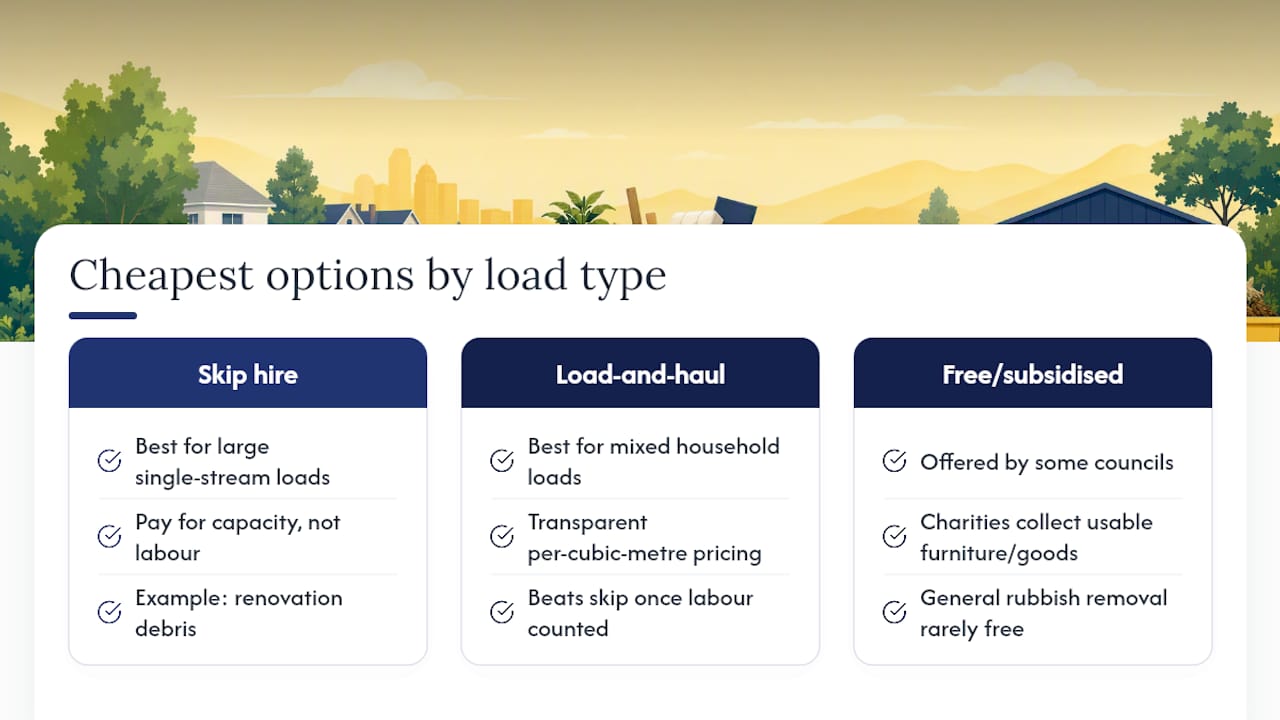
Skip bin hire is usually cheapest for large, single-stream loads like renovation debris, since you’re paying for capacity rather than labour. For mixed household loads, a load-and-haul quote from a provider with transparent per-cubic-metre pricing tends to beat a skip once you factor in the labour of loading it yourself.
Is there such a thing as free junk removal?
Some councils offer free or subsidised hard rubbish collection a few times a year, and charities like the Endeavour Foundation will collect usable furniture and goods at no cost as donations. Genuinely free removal for general rubbish loads is rare, since disposal and transport costs still apply somewhere in the chain.
How do I know if a provider’s recycling claims are real?
Ask for facility names and disposal receipts, not just a general statement that they recycle. A provider who can’t name where your waste physically goes, or who won’t provide documentation after the job, is one to avoid.
What are the red flags when choosing a junk removal service?
Vague recycling language with no facility names, no written quote before the job starts, unclear insurance or licensing status, and pricing that changes significantly once the truck arrives. A transparent, itemised quote upfront is the clearest sign of a legitimate operator.
How long does it take from booking to completion?
Most residential jobs can be scheduled same-day or next-day depending on availability. Larger commercial or construction jobs, especially those needing an on-site quote first, usually run on a scheduled window of a few days once the written quote is accepted.
Can businesses get sustainability reporting from their junk removal provider?
Yes, and it’s worth requesting as standard. Ask for monthly or quarterly reports covering tonnes diverted, diversion rate by stream, and carbon emissions data tied to disposal, which feeds directly into ESG reporting obligations.
Sources
- Understand your waste obligations and duties
- Waste audits in Fiji and Sri Lanka provide foundation for evidence-based waste management
- How to Choose a Commercial Recycling Partner
- How to Choose a Waste Management Provider in Melbourne | Bundle Waste