Hiring a professional end-of-lease rubbish removal service is the fastest way to clear a rental property, protect your bond, and meet checkout deadlines without the stress of multiple council bookings or DIY trips to the tip. The single most important step you can take right now: get a written quote, confirm the crew collects from inside the property if you have bulky items, and ask for a Waste Transfer Note or itemized receipt before the job is done.
- Get a written quote that lists exactly what is included, the volume or truck size, and any access fees.
- Request inside-property pickup if you have furniture, mattresses, or whitegoods that cannot be moved to the curb.
- Ask for a Waste Transfer Note and keep it with your bond paperwork. This is your proof that waste was disposed of legally.
- Book same-day or next-day if your inspection is close. Many Melbourne providers offer urgent slots, though they cost slightly more.
- Photograph everything before and after collection. Those photos are your first line of defense in any bond dispute.
The fastest way to protect your bond is documentation, not just a clean property. A Waste Transfer Note and before/after photos give you evidence that rubbish was removed legally and completely, which is exactly what a property manager or a VCAT hearing will ask for.
Key Takeaways
Hiring a licensed, documented end-of-lease rubbish removal service is the fastest and most reliable way to clear a rental property, protect your bond, and meet inspection deadlines without last-minute stress.
| Point | Details |
|---|---|
| Book 3–7 days out | Standard slots are cheaper and more available than same-day or next-day urgent bookings. |
| Get everything in writing | A written quote listing inclusions, access fees, and disposal costs prevents surprise charges. |
| Secure a Waste Transfer Note | This document proves legal disposal and is your primary evidence in any bond dispute. |
| Photograph before and after | Timestamped photos alongside your invoice form the complete evidence set for bond claims. |
| Melbournecityrubbish | Offers same-day clearouts, inside pickup, eco disposal, and a 5% price-beat guarantee across Melbourne. |
Table of Contents
- What does end-of-lease rubbish removal actually collect?
- How the end-of-lease removal process works, step by step
- How pricing works and when to schedule your clearout
- How to choose a reliable end-of-lease rubbish removal provider
- When to schedule and how to prepare the property
- Responsible disposal, duty of care, and what the law expects
- Why Melbournecityrubbish is a strong choice for end-of-lease clearouts
- Book your clearout with Melbournecityrubbish
- Sources
What does end-of-lease rubbish removal actually collect?
Most professional services handle a wider range of items than tenants expect, but there are firm exclusions that can catch you off guard if you do not ask upfront.
Typically accepted items:
- Furniture: sofas, beds, wardrobes, dining sets, office chairs
- Mattresses and bed bases
- Whitegoods: fridges, washing machines, dryers, dishwashers
- General bagged household rubbish
- Carpets and underlay (rolled and tied where possible)
- Garden waste: branches, soil bags, lawn clippings
- Shed and garage contents: tools, shelving, old paint tins (check hazardous rules below)
- E-waste: TVs, computers, monitors (handled separately at certified recyclers)
Common exclusions or items needing prior notice:
- Asbestos-containing materials (requires a licensed asbestos removalist)
- Gas bottles and LPG cylinders
- Hazardous chemicals, solvents, and pesticides
- Liquid waste and paints in unsealed containers
- Medical or biological waste
Landlords should also note that items a departing tenant leaves behind may not all be “rubbish” in the legal sense. Goods left behind that appear to have value often require a notice period and recordkeeping before disposal, not immediate removal. Clearly perishable or obviously worthless items can go straight away, but anything that might be claimed later needs documentation.
Inside-property collection versus curbside pickup is worth confirming at booking. Most reputable operators will carry items from inside the property, but some quote only for curbside. If you have a second-floor flat or a property with a narrow staircase, confirm access fees before you commit.
Personal documents found during a clearout are not ordinary rubbish. NSW Government guidance on the destruction of records makes clear that certain documents require lawful handling procedures. Set aside any paperwork, ID, or financial records found during the clearout and handle them separately.
Pro Tip: Photograph high-volume or mixed-load items before the crew arrives and ask for an itemized receipt listing what was removed. If a bond dispute arises later, that receipt is far more useful than a general “rubbish removed” invoice.
How the end-of-lease removal process works, step by step
The process is straightforward once you know what to expect at each stage. Here is the typical flow from first contact to cleared property.
- Request a quote. Send photos of the items or describe the volume (number of rooms, approximate cubic meters, or truck-load estimate). A reputable operator will give you a written quote within hours, not days.
- Review the written quote carefully. It should state the price, what is included, any access fees (stairs, lifts, long carry), labor costs, disposal fees, insurance confirmation, and where the waste is taken. If any of those are missing, ask before you sign.
- Book and schedule. Confirm the date and arrival window. Same-day and next-day slots are available from many Melbourne operators, though private rubbish removal companies generally offer faster turnaround than council bulky-waste services, which often have longer waits and item limits.
- Prepare access. Leave keys or foyer instructions with the operator. Clear pathways to the items where possible. If pets are in the property, secure them before the crew arrives.
- Crew arrives and loads. The team will confirm what is being removed, load the truck, and note any items that fall outside the original quote (extra charges should be agreed before loading, not after).
- Receive your paperwork. Before the crew leaves, collect your Waste Transfer Note or disposal receipt and any final invoice. Take photos of the cleared space immediately after.
What to prepare on collection day:
- Keys or access codes ready for the crew
- Pathways clear from items to the exit
- Large items disassembled if the operator requested it
- Pets secured
- Perishable food waste already bagged and separated
- A list of any items you want excluded from the load
How pricing works and when to schedule your clearout
Pricing for moving out rubbish clearance is almost always calculated on volume, access, and urgency. Understanding the main cost drivers helps you avoid surprise fees.
Primary pricing models:
| Cost Driver | What Affects the Price |
|---|---|
| Volume / truck load | More cubic meters means a higher base price; most operators quote by half-load or full-load increments |
| Access difficulty | Stairs, narrow corridors, lifts, and long carries from upper floors add labor time and cost |
| Inside vs. curbside pickup | Inside collection costs more than curbside; confirm which is quoted |
| Hazardous or regulated items | Asbestos, gas bottles, and chemicals require specialist handling at a higher rate |
| Same-day or urgent booking | Urgent slots carry a premium over standard bookings |
| Disposal / tip fees | Licensed tip fees are often passed through; ask if they are included in the quote or added at the end |
How to keep costs down:
- Consolidate everything into one booking rather than calling back for a second load.
- Donate reusable furniture and appliances to local charities before the crew arrives, which reduces volume.
- Use your council’s bulky-waste collection for non-urgent, low-volume items, and hire a private operator for the rest.
- Book at least several days before your final inspection to access standard-rate slots. Same-day and next-day bookings are available but usually cost more.
For large-volume landlord clearouts, a skip bin is sometimes more practical than a truck pickup, particularly when the job spans several days. Hiring a skip bin sized to match the job scope gives predictable pricing and keeps transfer documentation straightforward. For single-day clearouts or properties with access restrictions, a truck-and-crew service is usually faster and simpler.
How to choose a reliable end-of-lease rubbish removal provider
Not every operator quoting cheap rates is worth hiring. A few targeted questions before you book will separate the reliable services from the ones that cut corners on disposal.
Decision checklist:
- Waste carrier registration. Ask if the operator is licensed to transport and dispose of waste. In Victoria, this falls under EPA licensing requirements.
- Waste Transfer Note policy. Will they provide one? If the answer is vague, walk away.
- Insurance and WHS compliance. Crews working inside your property should be covered by public liability insurance. Ask for confirmation.
- Written quote with clear inclusions. A verbal price is not a quote. Get it in writing with a breakdown.
- Recycling and destination disclosure. Where does the waste actually go? A good operator will tell you which items go to recycling, donation, or landfill.
- Customer reviews and local references. Check Google reviews and look for patterns in the feedback, not just the star rating.
Questions to ask when you call:
- Do you collect from inside the property, or curbside only?
- Are stairs or lifts included in the quote, or charged separately?
- Do you provide a Waste Transfer Note after collection?
- What is your cancellation or rescheduling policy?
- Are there any access fees not shown in the quote?
Red flags to watch for:
- Cash-only operators with no paperwork trail
- Vague answers about where waste is taken (“we sort it out”)
- Pressure to dispose of items at unofficial or unlicensed sites
- No ability to provide receipts, invoices, or transfer notes
For a deeper look at how to compare rubbish removal providers on licensing, documentation, and quote structure, that resource covers the key evaluation criteria in detail.
When comparing quotes, make sure they are genuinely comparable. Two quotes for the same property can differ significantly if one assumes curbside pickup and the other includes inside collection, or if one includes tip fees and the other does not. Ask each operator to confirm the same access assumptions before you compare prices.
When to schedule and how to prepare the property
Timing your booking correctly is the difference between a smooth checkout and a last-minute scramble that costs more and risks your inspection date.
Recommended scheduling windows:
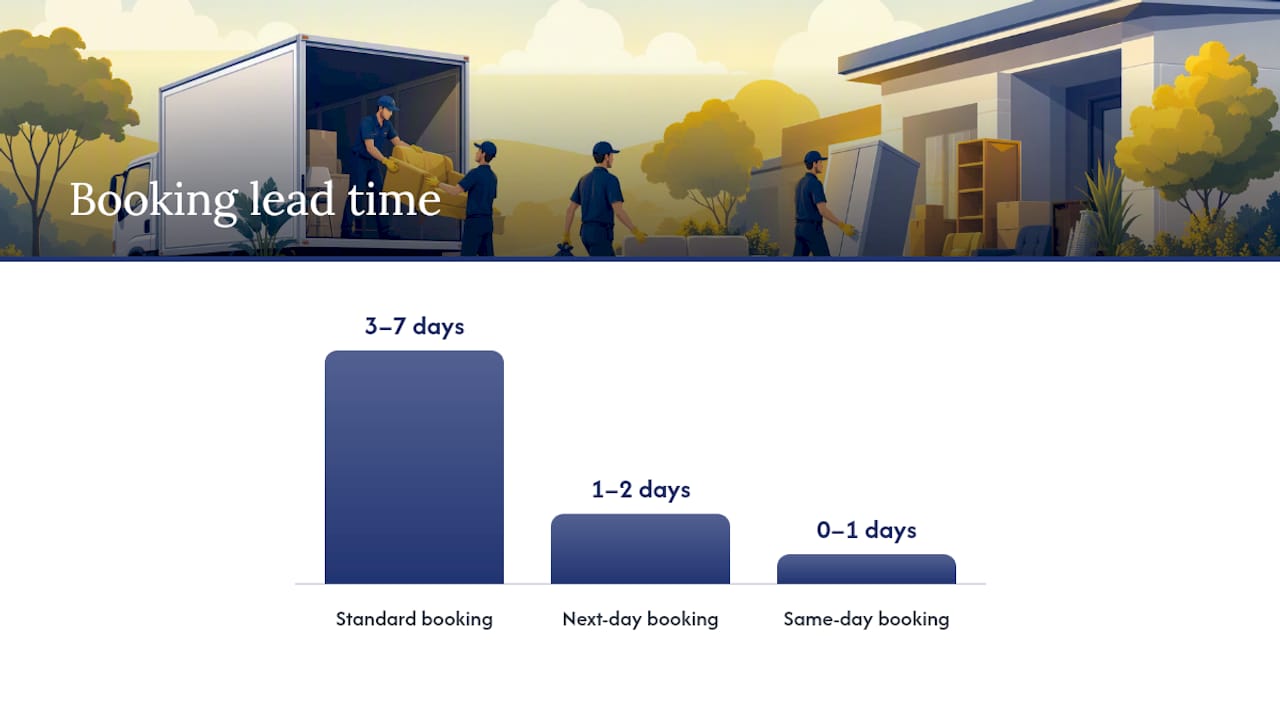
- Standard booking: 3–7 days before your final inspection. This gives you the best rate and the most flexibility on timing.
- Next-day booking: 1–2 days out. Available from most Melbourne operators, with a modest premium.
- Same-day booking: The day of or the day before inspection. Possible but costs more and depends on crew availability. Do not rely on this as your primary plan.
Property prep checklist before the crew arrives:
- Check lofts, sheds, under-stair cupboards, and storage cages for forgotten items.
- Clear parking near the property entrance for the truck.
- Disassemble large flat-pack furniture if the operator has requested it.
- Secure pets in a separate room or arrange for them to be elsewhere.
- Remove perishable food waste yourself and bag it separately.
- Confirm with your property manager whether communal bin rooms are accessible and whether you need permission to use them.
Tenant vs. landlord responsibilities:
Tenants are responsible for rubbish they brought into the property, and leaving it behind can lead to bond deductions. Landlords, on the other hand, must follow a notice process for goods left behind that may have value before disposing of them. Photograph abandoned items, send written notice listing what was found and a collection deadline, then keep invoices and transfer notes to justify any bond deductions if a dispute arises.
Pro Tip: Take timestamped photos of every room before the crew arrives and again immediately after they leave. Store those photos alongside your Waste Transfer Note and invoice. If a bond dispute reaches a tribunal, that evidence set is what resolves it quickly.
Responsible disposal, duty of care, and what the law expects
The person arranging waste disposal, usually the landlord or the tenant organizing the clearout, carries a legal duty of care for how that waste is handled. This is not just paperwork formality.
Australia’s national waste policy emphasizes licensed waste management, proper sorting for recycling, and the producer’s duty of care for waste handling. In practice, that means you are responsible for ensuring your waste goes to a licensed carrier and ends up at a legitimate disposal facility, not fly-tipped on a roadside or dumped at an unlicensed site.
Practical compliance steps:
- Ask for the operator’s carrier licence details before booking.
- Request a Waste Transfer Note for every load removed.
- Keep receipts and transfer notes for a relevant period as advised by local waste regulations.
- Declare hazardous items at booking, not on collection day.
- Separate e-waste and ensure it goes to a certified e-waste recycler, not general landfill.
Disposal destinations you should expect:
- Reuse and donation centers for furniture and appliances in good condition
- Certified e-waste recyclers for electronics
- Green-waste composting facilities for garden material
- Licensed transfer stations and landfills for residual waste
Health and safety on collection day:
Manual handling of bulky items significantly increases the risk of back injury. If you are moving items yourself before the crew arrives, use proper lifting technique: bend at the knees, keep the load close to your body, and avoid twisting while carrying. For anything heavy or awkward, let the professional crew handle it.

Asbestos and hazardous chemicals are a separate category entirely. Do not attempt to move or bag these yourself. Licensed specialists are required, and attempting casual handling creates serious health and legal risk.
Pro Tip: For larger landlord clearouts that involve renovation or make-good work, managing renovation waste alongside the rubbish removal in a single booking often reduces total cost and simplifies the paperwork trail.
Why Melbournecityrubbish is a strong choice for end-of-lease clearouts
Melbournecityrubbish handles the full range of post-lease cleanup services across Melbourne, from single-room clearouts to full-property strip-outs, with the documentation and operational guarantees that matter most at lease end.
What sets the service apart for tenants and landlords:
- Same-day and next-day availability across Melbourne, including CBD, South Melbourne, Port Melbourne, West Melbourne, and Melbourne Airport
- Inside-property pickup for furniture, whitegoods, and bulky items, not just curbside collection
- Waste Transfer Notes and itemized invoices provided after every job, ready for bond records
- Insured crews and WHS compliance for work inside residential and commercial properties
- Carbon-neutral and eco-friendly disposal options, including diversion to recycling, donation, and composting where possible
- Price-beat guarantee: Melbournecityrubbish will beat any written quote by 5%
The recycling and donation-first approach means less of your clearout ends up in landfill, which matters both environmentally and for operators who need to demonstrate responsible disposal to property managers.
Bond protection starts with the right paperwork. A Waste Transfer Note from a licensed operator, combined with before-and-after photos, gives tenants and landlords the documented evidence trail that resolves disputes quickly and cleanly.
The case for hiring a pro instead of going it alone
The instinct to handle a clearout yourself is understandable, especially when you are already managing moving costs. But the math rarely works out in favor of DIY at lease end. Hiring a truck, making multiple tip runs, and managing the paperwork yourself takes a full day or more, and if you miss something or dispose of waste incorrectly, the bond deduction or compliance issue costs far more than the removal fee would have.
The bigger risk is timing. Tenants who leave rubbish removal until the last few days before inspection often find council bulky-waste slots are full, private operators are booked out on standard rates, and same-day premiums push the cost well above what a planned booking would have been. A professional service booked 3–7 days out, with a written quote and a confirmed Waste Transfer Note, removes that risk entirely.
Book your clearout with Melbournecityrubbish
Skip the back-and-forth of multiple quotes and council waitlists.
To get a quote, contact Melbournecityrubbish with photos of the items to be removed, access notes (stairs, lifts, parking), and your preferred date. The team confirms pricing quickly, and after collection you receive a Waste Transfer Note and itemized invoice, both ready for your bond file. For multi-unit properties or strata buildings, the strata rubbish removal service covers communal area clearances with the same documentation standards. Visit Melbournecityrubbish to request your quote now.
Sources
The following sources informed the guidance on duty of care, safe lifting, and tenancy responsibilities throughout this article.
- Back pain – Better Health Channel (Victoria)
- National waste reports — policies and governance | Department of Climate Change, Energy, the Environment and Water
- Destruction of records — NSW Government