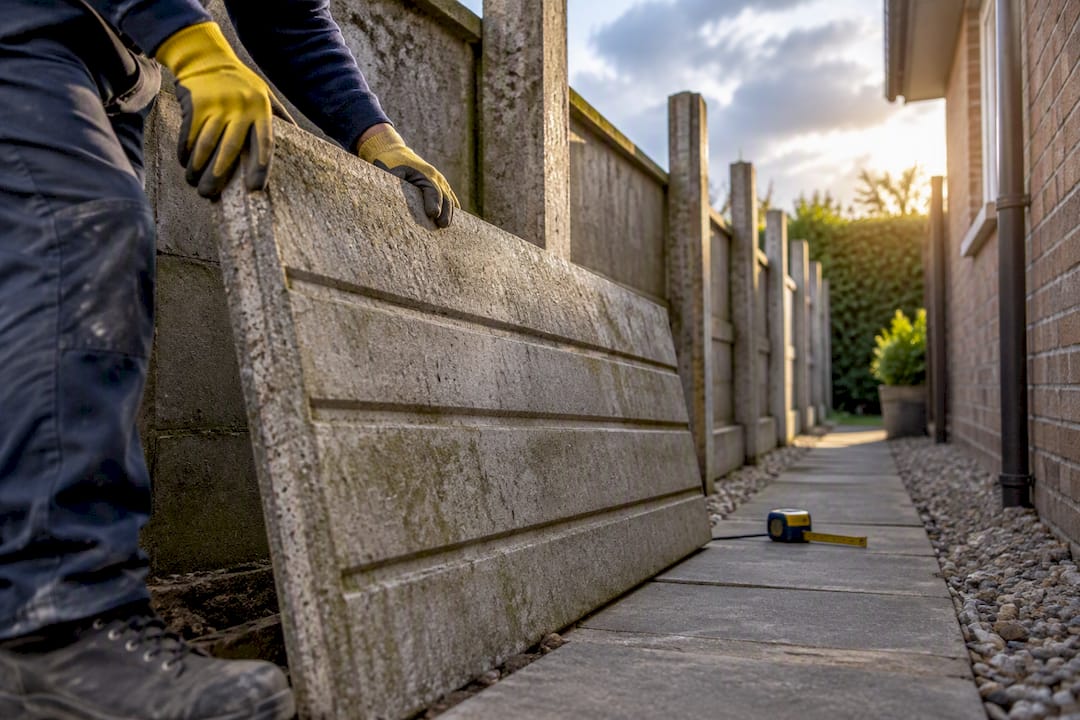
For a small, non-hazardous timber or metal fence, DIY works fine if you have the tools and a car load or trailer for the tip. Anything larger, awkward, or built before the mid-1980s calls for a rubbish-removal service or licensed contractor, because that’s when asbestos cement sheeting was common in fencing. Lawful disposal means scrap metal buyers, your council’s resource recovery centre, or a licensed asbestos facility if contamination is confirmed. Costs swing wildly depending on which of those routes you need.
TL;DR:
- Removing asbestos cement sheeting from fences almost always requires a licensed contractor due to legal and safety requirements, with costs significantly higher than non-hazardous materials.
- DIY removal is only safe and legal for small areas under 10 square meters of non-friable asbestos, with strict guidelines on protective gear, wet methods, and disposal at licensed facilities.
- Disposing of metal fences at resource recovery centers or through scrap buyers is often free if metal is separated and uncontaminated, while treated timber must go through proper disposal channels.
- When demolishing fences, it is crucial to check boundary rules, notify neighbors, separate materials during dismantling, and keep waste receipts to prove proper disposal.
- Booking a licensed removalist or waste service that provides full transparency on waste management can save time, ensure safety, and reduce environmental impact.
Table of Contents
- Your removal options: DIY, skip bin, rubbish-removal service or licensed asbestos removalist
- Step-by-step safe removal checklist for timber, metal and Colorbond fences
- Asbestos: identification, legal thresholds and safe disposal rules
- Disposal and recycling routes by material
- Typical costs: per-metre ranges, tip fees and hidden charges
- Checklist for hiring: licences, SWMS and disposal receipts
- How our service can help: removal and disposal, sorted in one booking
- Sources
- FAQ
Your removal options: DIY, skip bin, rubbish-removal service or licensed asbestos removalist
Not every fence job needs the same approach, and picking the wrong one wastes money or breaks the law.
- DIY: Fine for short timber or wire fences with easy access. Watch the hidden costs: tip fees, trailer hire, and the hours it takes to pull posts set in concrete.
- Skip or bin hire: Good for volume, but most councils won’t let you put asbestos sheeting in a general skip, and undersized bins get overloaded fast on a full fence tear down.
- Rubbish-removal service: Handles labour and disposal together, sorts recyclables from landfill waste, and suits mixed-material jobs where you’ve got timber, metal fittings, and old concrete footings in one pile.
- Licensed asbestos removalist: Mandatory once a job crosses legal thresholds or involves damaged sheeting. Costs more, but you’re paying for a licence, correct handling, and disposal that won’t land you a fine.
Step-by-step safe removal checklist for timber, metal and Colorbond fences
This sequence works for standard non-asbestos jobs and keeps you on the right side of both safety and your neighbours.
- Check boundaries and services first. Confirm the fence line, call for underground service locations before digging near posts, and check your council’s local rules on fence removal near shared boundaries.
- Tell your neighbour. A shared fence is shared property in most cases, so a quick conversation avoids disputes later.
- Set up the site. Barricade the work area, put on gloves, boots, eye protection, and lay down a tarp or clean drop zone for materials.
- Gather your gear. A crowbar, reciprocating saw, post digger or jackhammer for concrete footings, and a mate to help lift heavy sections.
- Dismantle top down. Remove panels or infill first, then rails, then posts. Concrete-set posts often need to be dug out or broken free rather than yanked, which can crack paving or damage cabling nearby.
- Separate materials as you go. Metal in one pile, timber in another, concrete rubble separate again. This step alone often halves your tip bill.
- Clean up and stage for collection. Sweep the site, stack materials neatly for a skip or removalist pickup, and check for stray nails or screws left in the ground.
Pro Tip: Sort metal from timber before you even finish the job, not after. Scrap buyers pay for clean metal loads, and mixed piles usually get rejected or priced as general waste.
Asbestos: identification, legal thresholds and safe disposal rules
Fences built before the mid-1980s using flat cement sheeting are the ones to treat with caution. Visual signs include a grey, slightly speckled surface with a fibrous edge where it’s chipped, but visual identification only gets you so far. A lab test is the only way to know for certain, and if a fence is rated poor or very poor condition, guidance from WA Health recommends removal sooner rather than later.
Many jurisdictions allow a homeowner to remove up to 10 square metres of non-friable asbestos themselves under strict controls, while larger amounts or damaged, friable material must go to a licensed removalist. The ACT prohibits homeowner removal outright, regardless of area.
The 10 m² rule, in practice: most suburban fence panels run well past that limit once you add up a full boundary line, so a lot of “small” asbestos fence jobs legally require a licensed contractor even when the homeowner assumes otherwise.
If you do qualify to remove it yourself, Safe Work Australia’s guidance sets out wet methods to stop fibres becoming airborne, full PPE, and decontamination steps before you leave site. Waste must be double-wrapped in thick plastic sheeting, clearly labelled, and taken to a facility licensed to accept it. It is an offence to put asbestos in household bins.
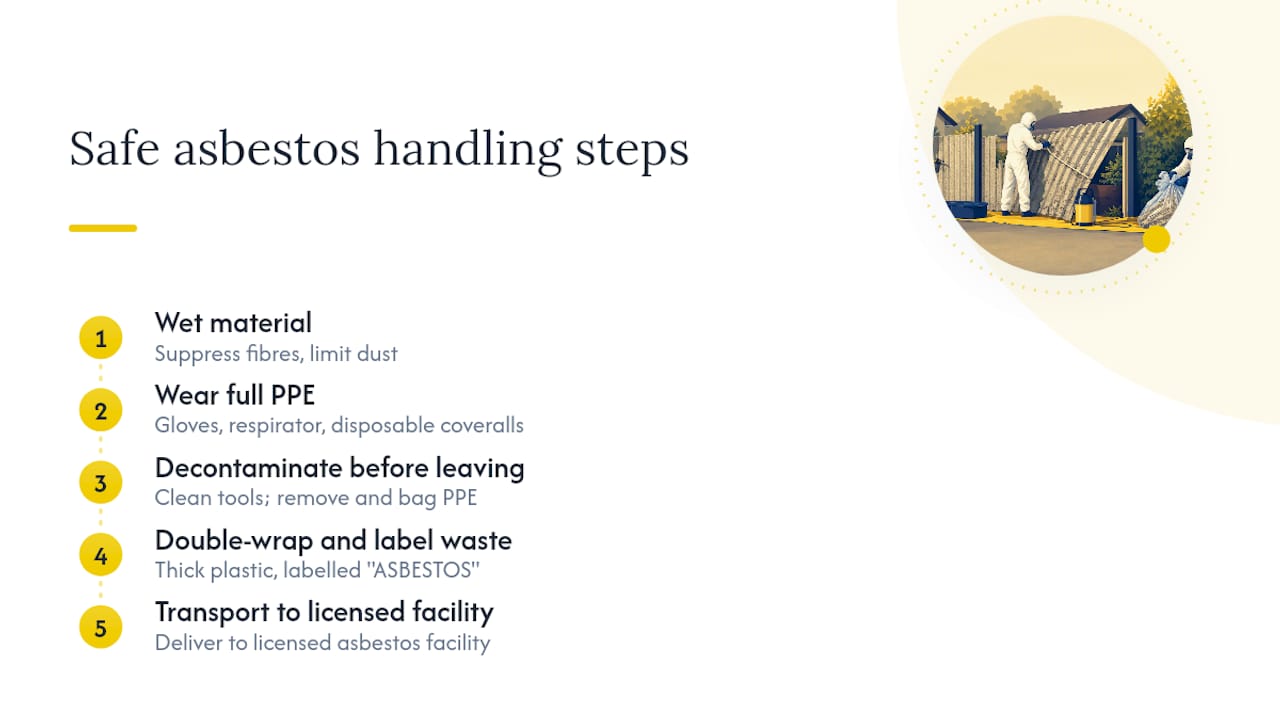
If you suspect asbestos mid-job: stop work immediately, wet the material down to limit dust, secure the area, and call a licensed removalist or your local environmental health officer before touching anything else.
Disposal and recycling routes by material
Where your fence materials end up affects both your wallet and your environmental footprint.
- Metal fencing: Strip off timber palings, latches, and other non-metal attachments first. Clean metal often gets accepted free at resource recovery centres or sold to scrap buyers, and separating it before transport is what makes it worth someone’s time to buy.
- Timber: Untreated timber is easier to reuse or mulch. Treated pine needs to go through proper hard-waste or council disposal channels rather than backyard burning, which is illegal in most areas anyway.
- Concrete footings and posts: Often require excavation before removal, and typically go to a separate rubble or masonry waste stream rather than a general skip.
- Soil and mixed loads: Keep soil out of your bin if you can. Mixed soil and rubbish loads often attract higher tip fees and some skip providers refuse them outright.
Recycle Mate and your council’s own A to Z waste page will tell you exactly what’s accepted locally, which saves a wasted trip to the tip.
Typical costs: per-metre ranges, tip fees and hidden charges
Price varies more than most homeowners expect, mostly because of access and material type rather than length alone.
| Job type | Typical price range | What drives the cost |
|---|---|---|
| Timber or Colorbond removal, labour only | Lower end per metre | Access, post removal, whether concrete footings stay in |
| Timber or Colorbond removal, with disposal included | Mid range per metre | Distance to tip, volume, material mix |
| Brick or masonry fence demolition | Higher per metre | Weight, breakage method, disposal weight fees |
| Asbestos fence removal | Significantly higher, often with a minimum job fee | Licensing, PPE, wet removal method, licensed disposal facility fees |
Cost guides for Melbourne show asbestos work consistently sits well above standard timber removal once licensing and disposal fees are added.
Worked example: a 20-metre timber fence with easy access and no footing removal might cost noticeably less than the same 20-metre run confirmed as asbestos sheeting, purely because the second job needs a licensed contractor, wet removal methods, PPE, and a trip to a facility that accepts asbestos waste. Access down a narrow laneway or leaving concrete posts in the ground pushes either quote higher.
Checklist for hiring: licences, SWMS and disposal receipts
Before you sign off on a quote, run through this list.
- Ask for their asbestos licence number if the job involves suspected ACM, and check it against your state’s regulator.
- Confirm public liability insurance covers the job, particularly if they’re working near fences, driveways or underground services.
- Request a safe work method statement (SWMS) outlining how they’ll handle demolition, plant, and waste segregation.
- Ask for tip or disposal receipts after the job. A legitimate operator can show where your waste actually went.
- Compare quotes line by line: labour, disposal, and any minimum job fee should be itemised, not bundled into one vague number.
Pro Tip: A quote with no mention of disposal receipts or waste tracking is a red flag. Anyone doing this properly can tell you exactly which facility your fence ended up at.
Choose a rubbish-removal service when your job is mixed timber, metal and general debris. Choose a licensed asbestos removalist when the law requires it, full stop, regardless of how small the section looks.
How our service can help: removal and disposal, sorted in one booking
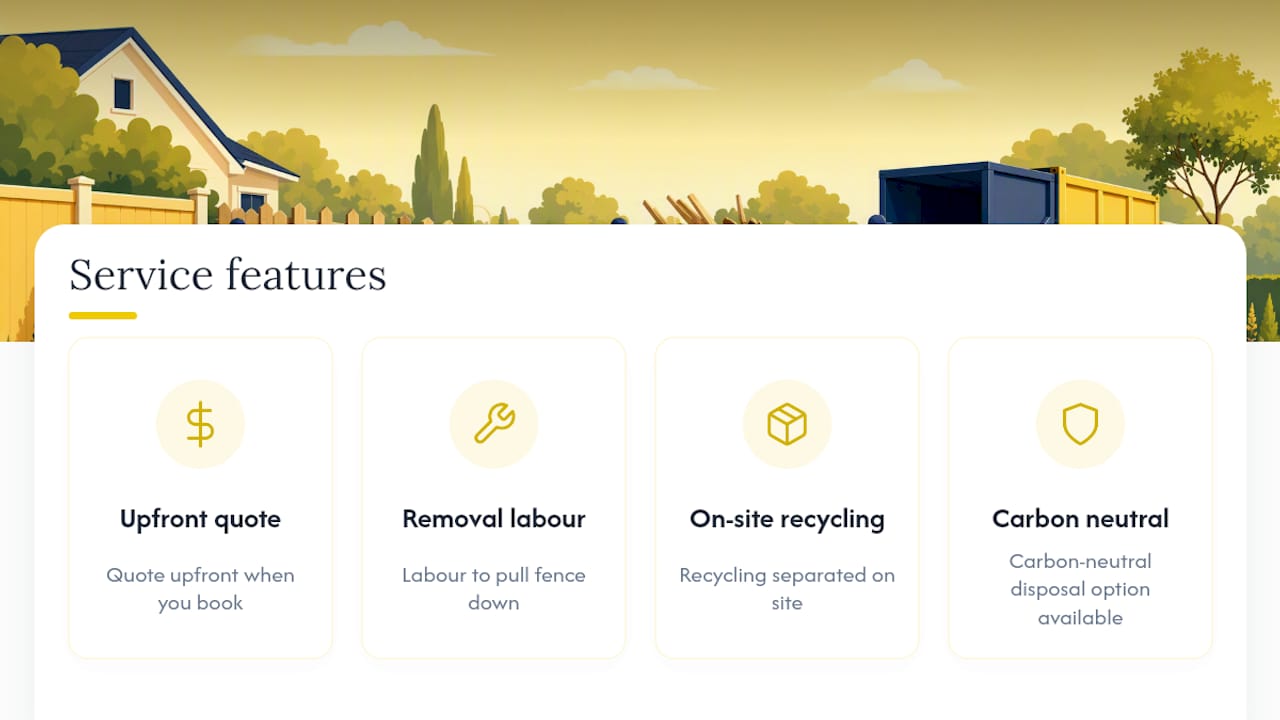
Melbournecityrubbish is the practical alternative to juggling a trailer, a tip run, and a scrap buyer yourself. Book a job and you get a quote upfront, labour to pull the fence down, recycling separated on site, and disposal receipts so you know exactly where the waste went. For timber-heavy jobs, our timber waste disposal service handles treated and untreated offcuts correctly, while general fence and yard debris falls under our construction waste removal work. Clients who want their old fence handled without the landfill guilt can opt into our carbon-neutral disposal option at no extra hassle.
If you’re staring at a pile of old palings and rusted posts wondering where to start, get a quick quote and we’ll take it from there.
Sources
- Householders and home renovators — Asbestos Safety and Eradication Agency
- How to safely remove asbestos — Safe Work Australia
- Asbestos and the law — WorkSafe WA
- Recycle Mate
FAQ
How much does it cost to remove an old fence?
Cost depends heavily on length, material and access, with timber and Colorbond removal typically priced per metre and rising sharply if concrete footings need digging out. Brick or masonry demolition sits higher again, and asbestos removal costs the most due to licensing and disposal fees. Rubbish-removal services typically provide job-specific quotes rather than flat rates, since access and material mix affect pricing.
How do you get rid of a fence?
For non-hazardous timber or metal, dismantle it panel by panel, separate metal from timber, and take each material to the right disposal stream, whether that’s a scrap buyer, council resource recovery centre, or a skip. If you suspect asbestos sheeting, stop and call a licensed removalist instead of attempting removal yourself.
What to do with old fences?
Clean metal often sells to scrap buyers or goes free into resource recovery, untreated timber can sometimes be reused or mulched, and concrete rubble usually needs its own disposal stream. A rubbish-removal service can sort all of this for you in one visit if you’d rather not run three separate trips.
How much does it cost to remove an asbestos fence?
Asbestos fence removal costs considerably more than standard removal because it requires a licensed contractor, wet removal methods, protective equipment, and disposal at a facility licensed to accept asbestos waste. Get a written quote from a licensed removalist rather than assuming standard fence-removal pricing applies, since minimum job fees are common for asbestos work.