Hire a licensed on-demand rubbish removal provider that documents lawful disposal and prioritises resource recovery for non-hazardous fire-damaged debris. That’s the whole answer in one line, but it’s worth unpacking what it actually means before you make a call.
This article covers non-hazardous fire damage debris removal: charred timber, damaged plasterboard, general rubble, and melted household plastics left after a fire. It does not cover soot remediation, asbestos handling, or contamination clean-up, which need a specialised restoration or hazardous-waste contractor.
- Hire a licensed transporter, not a general handyman with a trailer
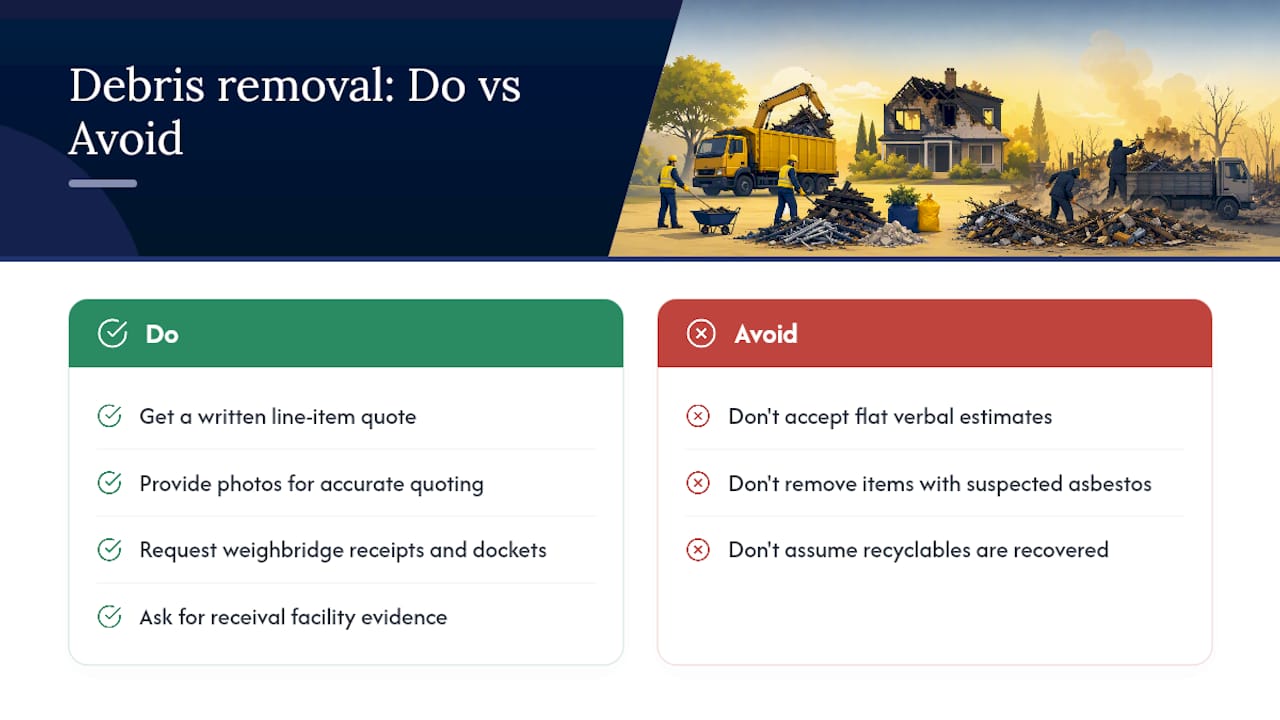
- Ask for weighbridge receipts and disposal dockets before you pay
- Separate anything you suspect is hazardous and get it assessed first
Melbourne City Rubbish handles this exact scope for property owners and businesses across the inner city, with documentation supplied on completion.
Key Takeaways
Compliant fire damage debris removal depends on hiring a licensed transporter, demanding disposal evidence, and separating recoverable material before the truck arrives.
| Point | Details |
|---|---|
| Confirm the scope | Non-hazardous debris only; pause and call a specialist if asbestos or contamination is suspected. |
| Demand documentation | Get weighbridge receipts, disposal dockets, and licence details before final payment. |
| Get an itemised quote | Photos and a rough volume estimate produce accurate, line-item pricing with fewer surprises. |
| Prepare the site | Clear access, mark hazards, and separate recyclables before the crew’s arrival window. |
| Prioritise recovery | Ask for receival facility evidence to confirm recycling and carbon-neutral claims. |
| Book with a documented provider | Melbourne City Rubbish supplies licensed transport, disposal dockets, and recovery options for non-hazardous fire debris. |
Table of Contents
- What fire damage debris removal covers, and what it doesn’t
- What licences and paperwork should you demand?
- How do quotes and appointment timing work?
- How should you prepare the site before the crew arrives?
- Can fire debris be recycled instead of landfilled?
- What questions should you ask before you sign?
- Book fire damage debris removal with Melbourne City Rubbish
- Where to read more on waste classification and disposal rules
- Frequently asked questions
- Sources
What fire damage debris removal covers, and what it doesn’t
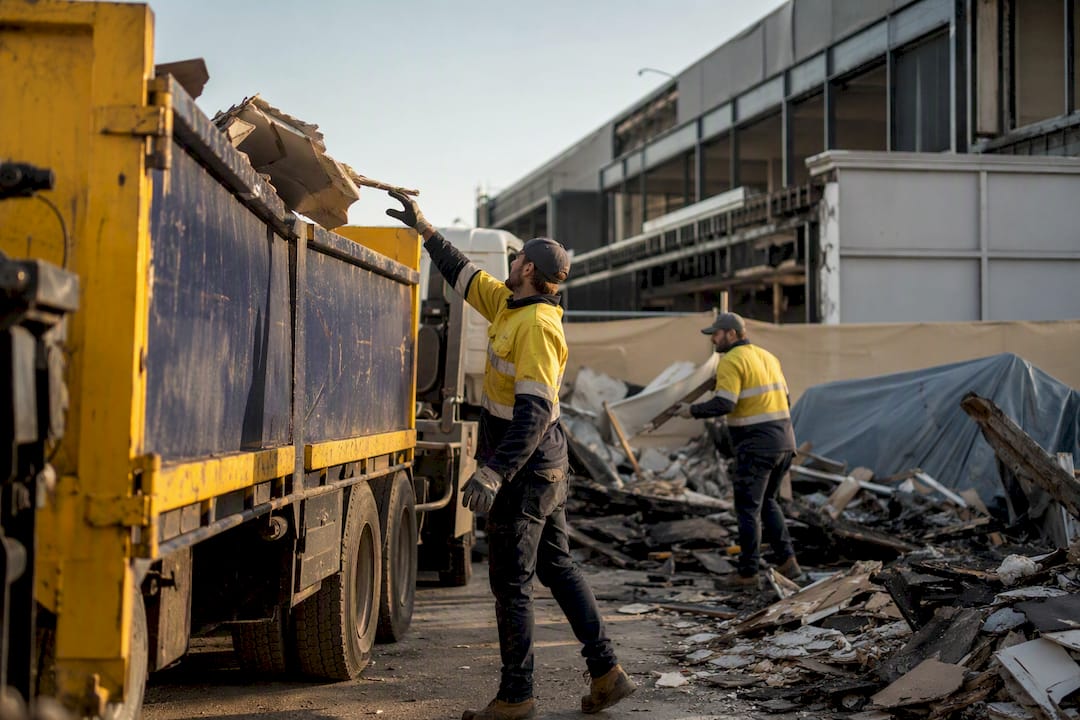
A standard on-demand job clears the general wreckage left behind once a fire’s out and the property’s been signed off as safe to enter. It’s rubble removal, not restoration.
Typically included:
- Charred and water-damaged timber framing, flooring, and furniture
- Softened or collapsed plasterboard and ceiling material
- General building rubble, brick, and masonry fragments
- Melted plastics and non-hazardous synthetic materials
- Green waste and garden material burnt or damaged in the fire
Excluded, every time:
- Suspected asbestos sheeting, insulation, or cement products
- Contaminated soil or ash from chemical storage areas
- Any liquids, drums, gas bottles, or unidentified containers
- Confirmed hazardous materials flagged by fire authorities or an assessor
Pro Tip: If a property was built before 1990, treat any broken sheeting or old insulation as suspect asbestos until a licensed assessor says otherwise. Pausing the job for one phone call is far cheaper than a contamination claim later.
What licences and paperwork should you demand?
This is where most disputes start, and it’s entirely avoidable. In Australia, commercial waste has to be handled by a licensed waste transporter, and property owners or managers carry responsibility for making sure that classification and transport happen correctly. If it doesn’t, the liability doesn’t stop with the truck driver. It follows the person who signed the job.
Before any truck leaves your site, ask for:
- The transporter’s waste licence and business registration details
- A waste classification report or statement confirming the debris is non-hazardous
- Weighbridge receipts showing the load’s weight on arrival at the receival facility
- Disposal or recycling dockets naming the facility and date
- Receival facility approvals or an Environment Protection Licence (EPL) reference
- A WasteLocate or consignment number, where the load requires tracking
Building and demolition waste has to be properly classified and documented under the construction and demolition waste management toolkit, which recommends exactly this kind of paper trail: classification reports, EPL references, and weighbridge receipts, all linked to payment.
Skipping this step isn’t just sloppy. And every waste decision on a site should follow the waste hierarchy: avoid, reduce, reuse, recycle, recover, and only then dispose. Classification has to happen before anything moves off-site.
In practice, these documents aren’t just filing cabinet fodder. Reputable operators tie the final invoice or job sign-off to proof the load reached an approved facility, not a vague promise that it did.
How do quotes and appointment timing work?
Pricing for fire debris removal usually comes down to volume, not guesswork, though a few extra line items can catch people out.
Common pricing structures:
- Volume-based (per cubic metre, ute load, or truckload)
- Per-item rates for large or awkward pieces like burnt furniture
- Separate labour, transport, and disposal charges, itemised individually
- Landfill levies or facility surcharges added where applicable
A tight brief with photos gets you a far more accurate number. Industry guides consistently point to line-item quotes as the way to avoid mid-job surprises, since labour, transport, and disposal costs behave differently depending on volume and access.
Before you call for a quote, do this:
- Photograph each affected room or area from two angles
- Estimate rough volume (how many trailer loads or cubic metres)
- Note any large single items that will need separate handling
- Flag anything you suspect might be hazardous, in writing, before the visit
Most on-demand providers work within a two-hour arrival window, with same-day or next-day slots often available for straightforward non-hazardous jobs. Larger volumes, restricted access, or heavy traffic on the day can push that out, so build in some buffer if the job’s substantial.
How should you prepare the site before the crew arrives?
A few minutes of prep on your end saves real time and money once the truck’s parked out front.
- Secure any remaining hazards (loose structural elements, exposed wiring, unstable flooring)
- Clear a straight-line access path from the debris to the collection point
- Mark off any no-go areas the assessor has flagged
- Move fragile or salvageable items well clear of the work zone
- Confirm parking and loading zone details, including any lift or stair access
- Leave a contact number on-site or reachable by phone during the window
Photos and a brief written inventory, even a one-page list, help the crew work fast and give you a record against the final quote. Simple details like stair count, lift bookings, or loading dock access materially affect labour and transport costs, so include them upfront rather than letting the crew discover them on arrival.
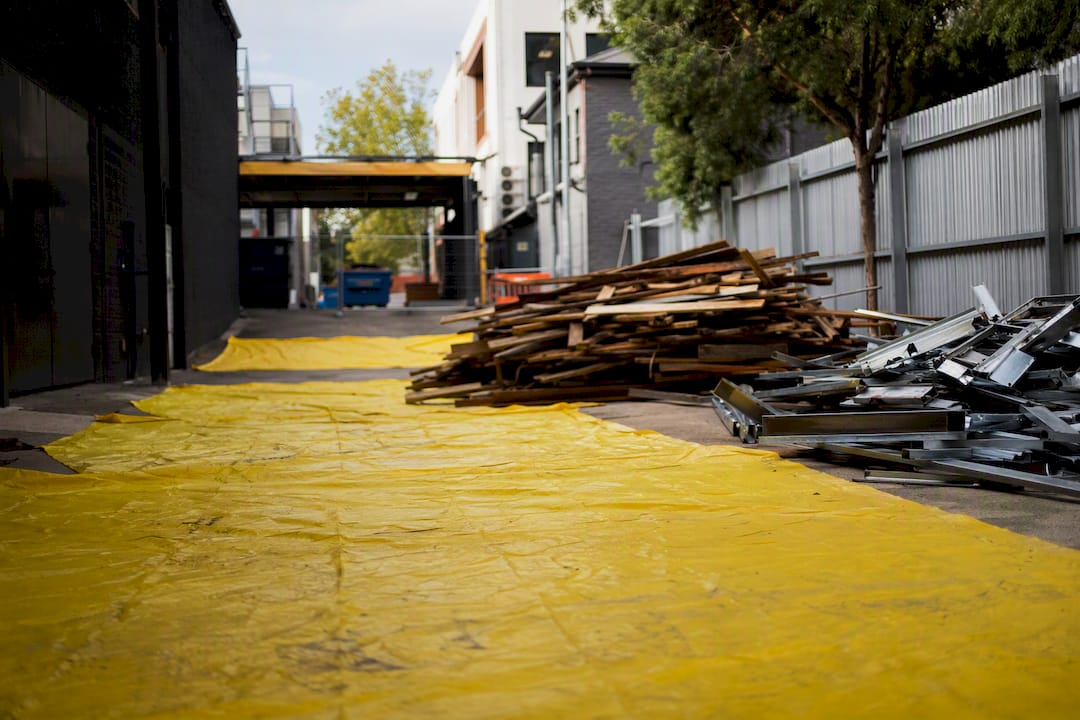
Pro Tip: Lay tarps or floor coverings along the access route before the crew arrives, and pull recyclable materials, like clean metal or untreated timber, into a separate pile. It’s a small step that speeds up sorting and can shave dollars off the disposal line.
Can fire debris be recycled instead of landfilled?
More of it than most people expect. Fire-damaged material isn’t automatically rubbish; a good chunk of it has a second life if it’s separated properly.
Typical recovery pathways:
- Masonry and brick crushed for use as road base or aggregate
- Metal (roofing, fixtures, frames) sent for scrap recycling
- Untreated timber chipped or reused where condition allows
- Non-hazardous plastics sorted for recycling streams
- Green waste mixed in the debris sent to mulching facilities
National data show construction and demolition waste volumes are substantial, and jurisdictions with strong recycled-material markets have pushed recovery rates above 75%, proof that separation genuinely pays off rather than being a box-ticking exercise.
Pro Tip: Ask any provider claiming carbon-neutral or high-recovery service to back it up: a receival facility EPL reference, a weighbridge receipt, or a WasteLocate number is proof. A vague “we recycle most of it” with no paperwork is a claim, not evidence.
What questions should you ask before you sign?
Choosing on gut feel alone is how people end up with an unlicensed operator and no paperwork when it matters most.
Ask every provider:
- Can you show your waste transporter licence and ABN?
- Is the quote itemised (labour, transport, disposal, levies)?
- Which receival facility will the load go to, and can I get the docket?
- What happens if you find suspected hazardous material mid-job?
- Do you carry public liability insurance, and can you provide a certificate?
Contract safeguards worth insisting on:
- Link final payment to proof of disposal, not just job completion
- Get variation pricing in writing before extra work starts
- Request a short handback note confirming the site’s been left clear
Red flags include vague answers about where waste ends up, refusal to hand over dockets, demands for a large upfront deposit, or no written quote at all. If a provider won’t put pricing on paper, that’s a decision made for you. For businesses running recurring clean-ups, setting up a trade account with a provider can also unlock priority scheduling and steadier pricing over time.
Book fire damage debris removal with Melbourne City Rubbish
Melbourne City Rubbish runs on-demand collection for exactly this job: charred timber, rubble, damaged plasterboard, and general fire-affected waste, cleared fast with professional industrial cleaning services and disposed of the right way. Bookings run on tight appointment windows, crews work with licensed transporters, and every job comes with the paperwork that actually protects you, including weighbridge receipts and disposal dockets on completion.
Where materials can be recovered rather than landfilled, that’s the default, with carbon-neutral disposal available for clients who want it. For strata buildings and shared-access sites, the team also handles scheduling and access logistics through its strata rubbish removal service.
To get a fast, accurate quote, have photos of the affected area and a rough idea of access (stairs, parking, loading zones) ready before you call. Get a quote and book a collection directly through Melbourne City Rubbish, and if you’re weighing up providers first, the guide to choosing a rubbish removal service covers exactly what to check before you commit.
Where to read more on waste classification and disposal rules
For readers who want the source material behind these compliance requirements:
- Construction and demolition waste management toolkit — classification reports and payment-linked evidence
- EPA Victoria construction and demolition guide — state-level record-keeping expectations
- Construction and demolition waste status report — national recovery rate data
- Construction waste management guide for principal contractors — the waste hierarchy explained
Frequently asked questions
Is fire-damaged debris considered hazardous waste?
Not automatically. Charred timber, rubble, and damaged plasterboard are generally non-hazardous, but anything containing suspected asbestos, chemical residue, or unidentified containers needs assessment before removal begins.
How much does fire damage debris removal cost?
It depends on volume, access, and disposal fees, priced by truckload, cubic metre, or per item, with labour, transport, and disposal usually itemised separately. Get a written, line-item quote based on photos rather than a flat verbal estimate.
How quickly can debris be removed after a fire?
Same-day or next-day collection is often available for straightforward non-hazardous jobs, with providers typically working within a two-hour arrival window. Larger volumes or restricted access can extend the timeline.
Do I need proof the waste was disposed of legally?
Yes. Request weighbridge receipts and disposal or recycling dockets from your provider, and keep them on file. This protects you if disposal practices are ever questioned.
Can fire-damaged materials be recycled?
A good portion can, including metal, masonry, and untreated timber. Ask your provider for receival facility evidence to confirm what’s actually being recovered rather than landfilled.
Sources
- Construction and demolition waste: A management toolkit
- Construction and demolition waste status report (2021)
- Construction waste management in Australia: A complete guide for principal contractors (HSE Direct)