Wait for the official all clear before you go anywhere near the mess, then photograph every damaged item before it hits the kerb. Insurers want proof, not memory. Separate rubbish into rough piles as you go, and hand off anything hazardous, oversized, or asbestos-related to your council or a licensed professional rather than dragging it out yourself.
TL;DR:
- Only professionals should handle hazardous flood debris like asbestos, chemicals, or large contaminated items, with proper documentation and separation for faster disposal.
- Most councils offer free or subsidized extra kerbside collections and waive waste fees if you request them, provided you bring proof of residency and follow their guidelines.
- For large or hazardous flood waste, hiring a licensed contractor ensures safe removal, lawful disposal, and proper documentation, especially for asbestos or mold issues.
- Immediate cleanup steps include photographing damage, removing small debris at once, and opening windows to dry out the property, while prioritizing safety checks first.
- Sorting flood rubbish into categories such as food, soft furnishings, hard bulk, green waste, whitegoods, and hazardous materials prevents contamination and rejection by council or recycling services.
Table of Contents
- What are the first safety steps for flood rubbish removal?
- How do you sort flood rubbish for disposal?
- Are there council programs or fee waivers for flood clean-up?
- When should you hire a professional rubbish removal or asbestos service?
- What’s the step-by-step plan for the first week after a flood?
- Get flood rubbish gone fast with This rubbish removal service
- Where to check official flood clean-up guidance
- Sources
- FAQ
What are the first safety steps for flood rubbish removal?
Don’t rush back in. Floodwater carries sewage, chemicals and bacteria you can’t see, and buildings weakened by water can collapse without warning.
Before you touch anything, run through this:
- Wait for emergency services or council confirmation that the property is safe to enter.
- Check for downed powerlines, leaning fences, and cracked walls or ceilings before stepping inside.
- Don’t switch on mains power if water has entered the building. Get an electrician to check it first.
- Wear sturdy enclosed boots, heavy-duty gloves, long sleeves and trousers, and at minimum a P2 respirator to filter fine particles and possible asbestos fibres, as SafeWork NSW’s guidance on flood property hazards sets out.
- Add eye protection for anything dusty. Broken plaster and insulation throw up more than you’d expect.
- Photograph damaged furniture, appliances and belongings, and note brand, model and condition before you dispose of anything, exactly as the Insurance Council of Australia recommends for claims.
- Skip the high-pressure hose on muddy or contaminated surfaces. It aerosolises whatever’s in that mud, and you’ll breathe it in.
Pro Tip: Take wide shots of each room before you move a single item, then close-ups of anything valuable or damaged. A five-minute video walkthrough on your phone is often more useful for an insurer than twenty separate photos.
If you’re unsure whether floodwater has contaminated food, medicine or anything you’d normally clean and keep, the safer call is usually to throw it out.
How do you sort flood rubbish for disposal?
Flood debris isn’t one pile. It’s several, and mixing them causes problems, from rejected council collections to contaminated recycling loads.
The categories that matter most:
- Food and perishables. Anything that touched floodwater goes in general or organic waste immediately. Contaminated food and medicine should be discarded rather than kept, per Department of Health guidance on flood recovery.
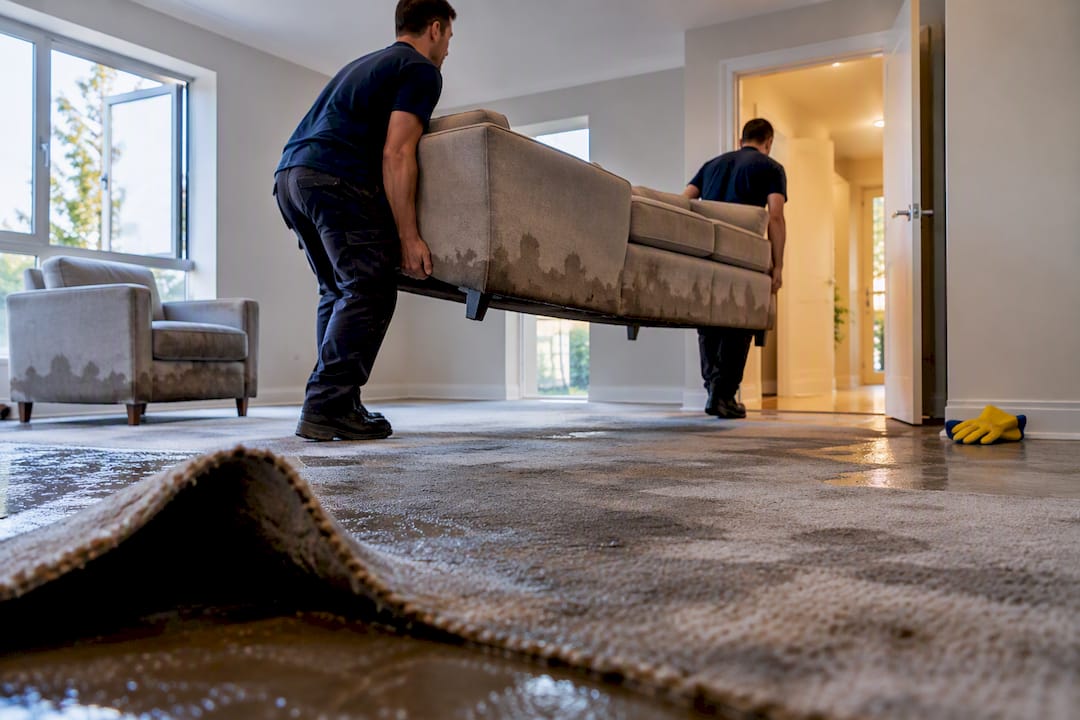
- Soft furnishings and carpets. Wet carpet, mattresses and upholstered furniture soak up contamination and grow mould fast. These usually go to bulk kerbside collection.
- Hard bulk items. Damaged furniture, cabinetry and timber generally head to a council transfer station or a hard waste collection service.
- Green waste. Fallen branches, mud-covered garden debris and uprooted plants are kept separate from household rubbish.
- Whitegoods and e-waste. Fridges, washing machines and electronics need specialist e-waste disposal rather than the general pile, partly because of refrigerants and circuit boards.
- Scrap metal. Often collected separately and sometimes recycled for value.
- Chemicals and suspected asbestos. Never bag these with regular rubbish.
Double-bag anything hazardous, label it clearly, and keep a written record for your insurer. If you suspect asbestos, sheeting laid before 1990 is the usual red flag, stop and call a licensed removalist rather than handling it yourself, since state asbestos guidance makes clear this material can’t go in kerbside bins. Labelled, separated piles also move through council collections faster, according to NSW’s flood clean-up advice.
Are there council programs or fee waivers for flood clean-up?
Most councils in flood-declared areas run extra kerbside collections and waive landfill or waste-levy fees for a limited window after the event, but you usually have to ask.
What to check and bring:
- Your council’s emergency or recovery page for local collection dates and drop-off points.
- Proof of address, typically a driver’s licence or a rates notice, since councils commonly require this before waiving fees, as Central Coast Council’s recovery guidance notes.
- State EPA or disaster recovery portals, which sometimes fund removal of large or hazardous debris on private land in declared disaster zones. NSW EPA’s clean-up program guidelines spell out eligibility.
- Vehicle access limits. Councils often stage collections street by street as roads reopen, so your pickup might come later than a neighbour’s.
Keep every disposal receipt. If you end up applying for reimbursement or a levy waiver later, a paper trail beats trying to reconstruct one from memory.
When should you hire a professional rubbish removal or asbestos service?
Some flood clean-ups are a weekend job. Others aren’t, and knowing which is which saves you from a health risk or a wasted afternoon.
Call in professionals when:
- The debris pile is large enough that kerbside collection can’t handle it in one go.
- There’s visible mould, sewage contamination, or a smell that suggests bacterial growth.
- You suspect asbestos in sheeting, insulation or old flooring.
- Access is restricted, blocked driveways, tight laneways, apartment loading docks.
- You need it gone fast, before secondary damage sets in.
A reputable contractor will assess the site, give you a fixed quote, contain the waste safely, and provide proof of lawful disposal, not just “take it away.” Before you book, ask about insurance cover, licensing for asbestos or hazardous waste, and how they document disposal. Pricing is usually based on volume, access difficulty and disposal fees, so get the quote itemised rather than a single lump figure.
Pro Tip: Ask any contractor how they prove lawful disposal. A legitimate operator can produce a tip receipt or waste transfer note, not just a verbal assurance.
What’s the step-by-step plan for the first week after a flood?
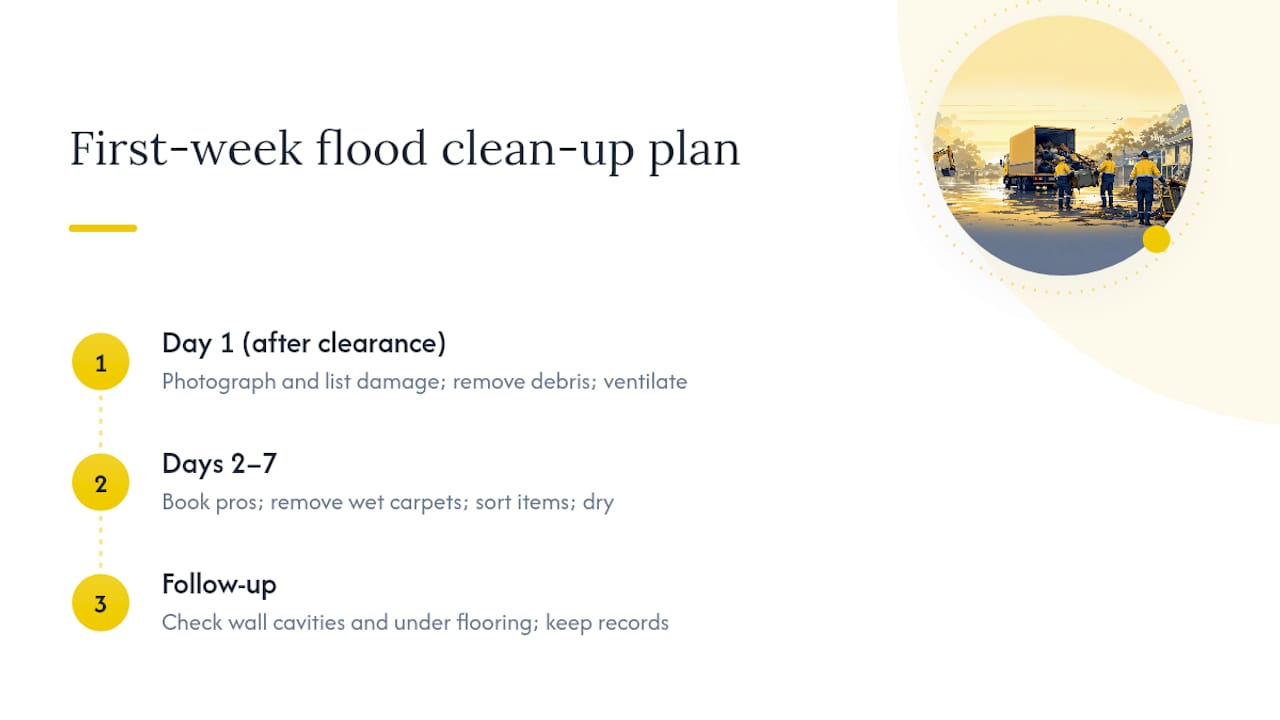
Day one, once you’ve had official clearance: photograph and list every damaged item, remove small loose debris if it’s safe to do so, and open windows and doors to start drying the place out.
Days two to seven: sort items into the categories above, book professional removal for anything large or contaminated, and start drying and mould prevention in earnest. Wet carpets, bedding and upholstery should come out as soon as it’s safe. Mould can begin taking hold within half an hour of exposure to moisture and become visible within days, according to the Australian Red Cross’s flood clean-up guidance.
Lodge your insurance claim early rather than waiting until the clean-up is finished. Keep every receipt, inventory and photo, and follow your insurer’s instructions before making repairs. Acting without their sign-off can put the claim at risk.
Follow-up: keep checking for mould in wall cavities and under flooring for weeks after things look dry on the surface, and hold onto every cost record until the claim is closed.
Get flood rubbish gone fast with This rubbish removal service
Sorting through a flood-damaged property is slow, physical work, and most homeowners are doing it once, under pressure, with no idea what a fair price looks like.
Booking works the same way whether it’s a flooded lounge room or a full strip-out: you get an on-site assessment, a fixed quote before anything’s touched, and proof of lawful disposal once the job’s done, with carbon-neutral disposal available if you want it. For furniture specifically, the furniture disposal and recycling service diverts what can be recycled rather than sending it straight to landfill.
If you’re staring at a flood-damaged room right now, the fastest next step is a quick quote or a look at the full range of services to see what fits your situation.
Where to check official flood clean-up guidance
For rules that change by location, go to the primary sources: your council’s emergency and recovery page, SafeWork guidance on PPE, and the Insurance Council of Australia for claims documentation. For contaminated mud and cleaning risks, WorkSafe Queensland’s infection guidance and Nationwide Maintenance’s storm damage cleanup guide are worth a read too.
Sources
- SafeWork NSW – Property hazards after storms and floods
- Department of Health – Look after yourself as floodwaters recede
- NSW Government – Storm and flood clean-up advice
FAQ
How do I get rid of a large amount of flood rubbish?
Sort it first into food waste, soft furnishings, hard bulk, green waste, whitegoods and hazardous materials, then match each category to the right disposal route. Councils often run extra kerbside collections after a flood, and for volumes too large for that, a professional rubbish removal service can collect, contain and dispose of it in one visit.
How much does rubbish removal cost in Australia?
Pricing usually depends on volume, access and what needs special disposal handling, so costs vary job to job rather than sitting at one flat rate. This rubbish removal service provides a fixed quote after assessing the job through its quick quote service, and current pricing is available directly through that page.
What happens to your rubbish after it’s collected?
Reputable removal services sort collected waste for recycling, resale or landfill depending on the material, and provide disposal proof so you have a record. Whitegoods and e-waste typically go through specialist recycling streams rather than general landfill because of the materials they contain.
Can I put flood-damaged items straight in my kerbside bin?
Only if they’re not hazardous. Chemicals, gas bottles and suspected asbestos must never go in general kerbside collection. Contact your council or a licensed asbestos removalist for those, since handling them incorrectly carries real health risks.
Do I need to document items before throwing them out?
Yes. Photograph each damaged item and note its brand, model and condition before disposal, because insurers generally require this evidence to process a claim. Skipping this step is one of the most common reasons claims get delayed or knocked back.