Update your waste by-laws if they’re outdated, confirm your council’s collection model and bin allocations, then fix contamination and bin access before anything else. Start with the EPA NSW resource recovery guide and your local council’s toolkit, and consider engaging a professional rubbish removal service for bulky overflow while you sort the rest out.
TL;DR:
- Confirm your council’s collection model and bin allocations to ensure proper waste separation and access in your building.
- Conduct a site audit for contamination, damaged bins, and OH&S risks before updating signage or implementing new waste procedures.
- Draft and register a comprehensive waste by-law to address issues like tampering and overflow, ensuring it has legal weight and enforcement.
- Design bin rooms with proper lighting, accessibility within 30 meters of collection points, and suitable infrastructure for recycling and organics.
- Pre-book private bulky waste and renovation debris removals to prevent common complaints and maintain a safe, hazard-free environment.
Table of Contents
- 30 to 60 day checklist for strata waste management
- Seven steps to run an effective strata waste system
- Who’s responsible for strata waste by-laws?
- How should bin rooms and chutes be designed?
- What actually reduces contamination in apartment bins?
- How do you handle bulky waste and renovation debris?
- How Melbournecityrubbish supports strata waste management
- Where to check the rules for your building
- Sources
- FAQ
30 to 60 day checklist for strata waste management
You don’t need a five-year strategy to fix most strata waste problems. You need the right actions in the right order, starting this month.
- Confirm with your council whether your scheme gets kerbside, wheel-out-wheel-back (WOWB), or onsite collection, and check the bin allocation per unit.
- Walk the bin room or bay and note contamination levels, damaged bins, and any access blockages.
- Draft or update a waste by-law if tampering, dumping, or move-out mess keeps recurring.
- Order clear signage, hand out kitchen caddies, and appoint a resident “building champion” to keep momentum going.
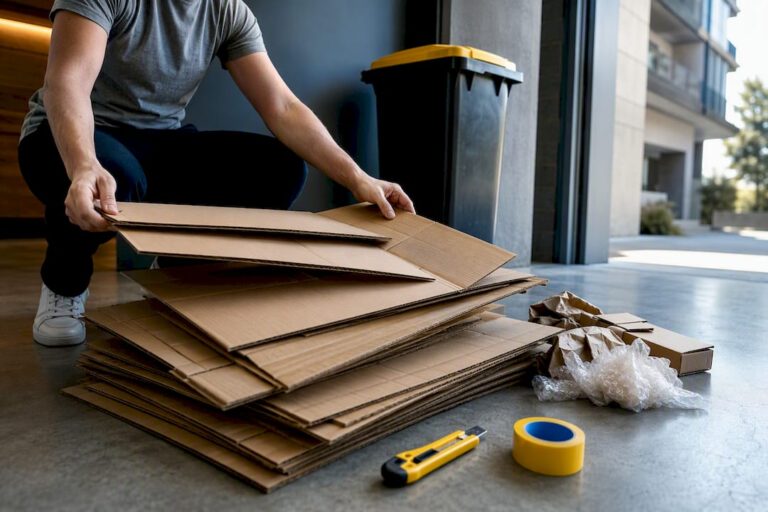
- Book a one-off private collection for bulky items sitting in common areas before they become a fire or trip hazard.
Pro Tip: Photograph your bin room before and after any council or contractor visit. It’s the quickest way to settle disputes about missed services or damage, and it costs nothing.
Seven steps to run an effective strata waste system
Getting strata waste right isn’t complicated, but it does need sequence. Skip the audit and jump straight to signage, and you’ll be reprinting posters in six months.
- Audit the site. Check bin room space, chute condition, bay access for trucks, and any obvious OH&S risks like poor lighting or slippery floors.
- Confirm your council’s service model. Some councils only offer kerbside for small schemes, others mandate WOWB, and larger developments often run onsite collection with a private contractor.
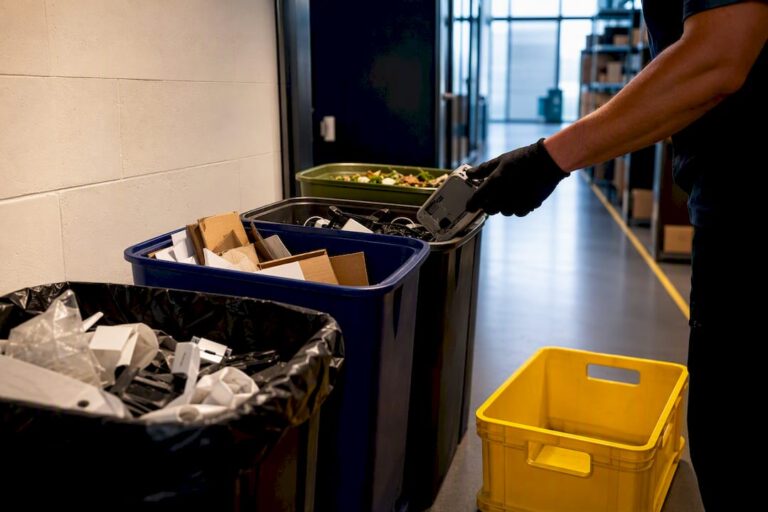
- Set your bin mix. Most schemes now run four streams: general rubbish, commingled recycling, glass, and FOGO where the council has rolled it out.
- Fix signage and induction. New tenants get a welcome pack, existing residents get a caddy, and everyone sees the same colour-coded signs.
- Schedule bin cleaning and maintenance. Grease, food waste, and standing liquid in bins create odour and pest problems fast, and contractors need a safe, clean bay to work in.
- Plan for renovations and bulky waste. Anyone doing a kitchen reno or moving out books a skip or private pickup in advance, not after the pile appears in the corridor.
- Measure and review. Track contamination rates, missed collections, and complaint volume, then run a quarterly review with your contractor or council contact.
Councils typically list bin repair requests, WOWB applications, and bulky waste forms on their multi-unit development pages, and strata managers are usually the ones who have to lodge them. Missing this step is the single biggest reason schemes end up storing waste they didn’t plan for.
Who’s responsible for strata waste by-laws?
The owners corporation carries the legal responsibility for common property, including the bin room, chute, and any communal waste equipment. That includes WHS obligations if a contractor or resident is injured in a poorly lit or badly maintained bin area.
Changing or adopting a new by-law in NSW follows a fixed process: the owners corporation votes by special resolution, then registers the change with the Registrar-General within six months. Skip the registration step and the by-law has no legal weight, no matter how many owners voted for it.
- Draft the by-law using a template rather than starting from scratch. Waverley Council’s waste by-law guide covers waste disposal and moving-in/moving-out clauses that owners corporations can adapt directly.
- A registered by-law lets you recover cleanup costs from the responsible owner or tenant, not just issue a warning.
- Bin tampering, or what’s sometimes called “rubbish raiding,” is one of the most common strata disputes, and a properly registered by-law backed by resident education is the standard fix, escalating to council or police only when it persists.
FOGO mandates are also changing the picture. Where organics separation becomes compulsory, strata schemes need to review existing waste contracts and by-laws well before the rollout date, not after the first contamination fine arrives.
How should bin rooms and chutes be designed?
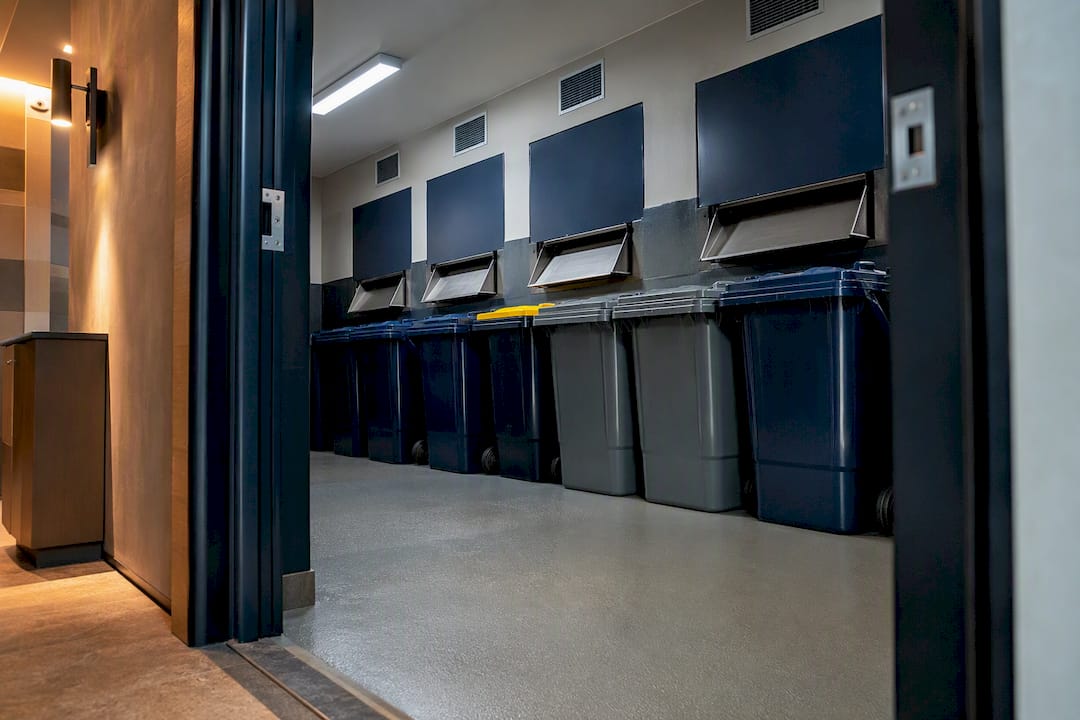
Poor bin room design causes more contamination than lazy residents ever will. If the bin bay sits 80 metres from the loading dock, don’t be surprised when rubbish piles up in the corridor instead.
EPA NSW’s better-practice guidance recommends early consultation with council on collection models before a design is locked in, because retrofitting an onsite system into a building designed for kerbside collection is expensive and sometimes impossible.
- Keep bin storage within roughly 30 metres of a point trucks can safely access. Longer than that and manual haulage becomes a daily chore someone eventually stops doing properly.
- Match the collection type to the building: kerbside works for small schemes, WOWB suits mid-size developments without truck access, and onsite collection suits larger complexes with dedicated docks.
- Chutes work well for general waste but struggle with recycling streams. Many newer buildings pair chutes with separate floor collection points for recycling and organics instead.
- Good lighting, slip-resistant flooring, and clear sightlines aren’t cosmetic. They’re the difference between a contractor finishing a round safely and an injury claim landing on the owners corporation’s desk.
New developments also need to satisfy DA conditions, and City of Sydney’s waste management guidelines spell out exactly what a Waste Management Plan needs to cover, from space allocation to access paths.
What actually reduces contamination in apartment bins?
Signage alone rarely fixes contamination. What works is signage paired with consistent colour coding, real photos of what belongs in each bin, and a clear consequence for getting it wrong repeatedly.
Yarra City Council’s apartment toolkit recommends running four core streams with unit-based allocation examples, and leaning hard on caddies and building champions rather than posters alone.
- Use photo-based signage rather than text lists. People scan images faster than they read rules.
- Give every unit a kitchen caddy at move-in, and include one in every new tenant’s welcome pack.
- Run an enforcement ladder: education first, then a written warning, then by-law penalties, then cost recovery for repeat offenders.
- Report contamination rates to council when asked, and use that data to work out which floor or stream needs attention next.
Pro Tip: If one floor consistently contaminates the recycling bin, don’t reprint signs for the whole building. A short, targeted letter to that floor usually fixes it faster and cheaper.
How do you handle bulky waste and renovation debris?
Bulky items and renovation waste cause most of the “why is there a mattress in the corridor?” complaints strata managers deal with. Councils generally offer limited bulky waste collections, and anything beyond that limit needs a private booking.
- Check your council’s bulky waste allowance before assuming it covers a full unit clean-out.
- Build pre-booking into your move-out and renovation approval process, so skips or pickups are arranged before, not after, the mess appears.
- Demolition and larger renovation jobs may need a Waste Management Plan and specific asbestos disposal handling, particularly in older buildings.
- When vetting contractors, check for proper certification, insurance, transparent reporting, and a genuine recycling outcome, not just a truck that turns up and disappears with the load.
How Melbournecityrubbish supports strata waste management
Councils and by-laws cover the framework, but someone still has to shift the bulky items, renovation debris, and overflow that build up between scheduled collections. That’s where a service like strata rubbish removal from Melbournecityrubbish fits into the picture, handling one-off and scheduled jobs across apartment buildings in the Melbourne CBD and beyond without disrupting residents or common areas.
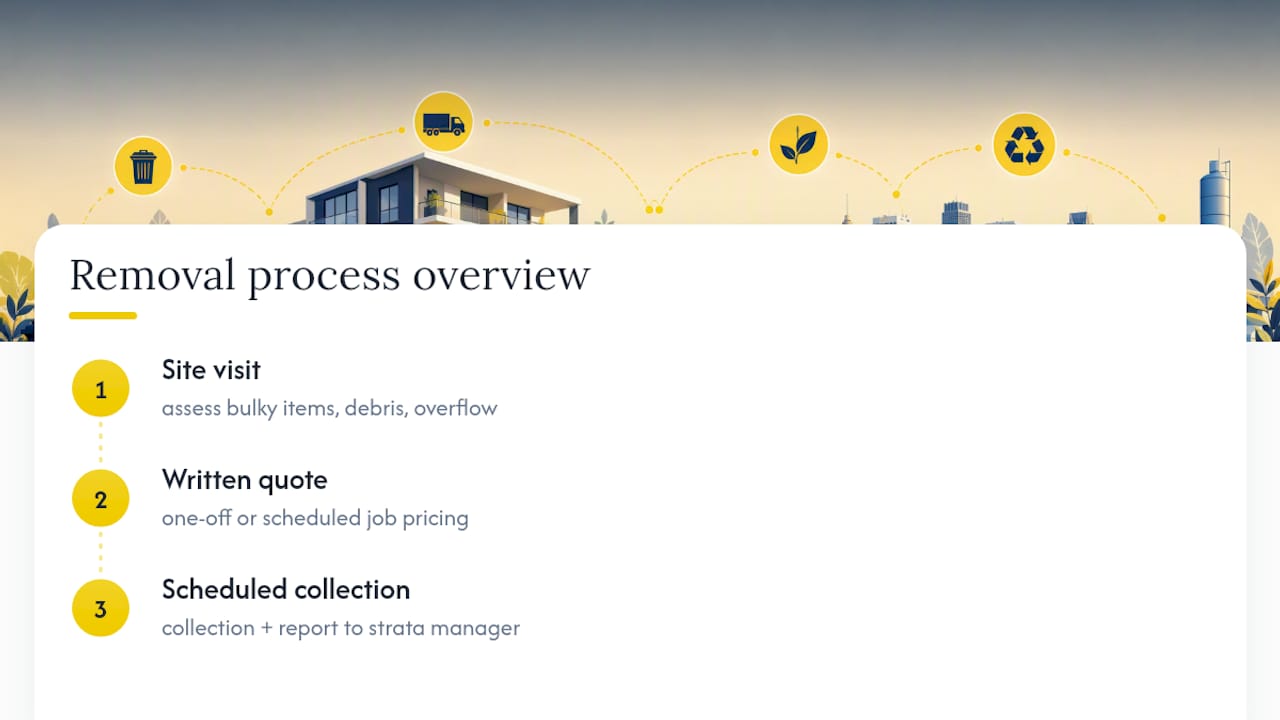
The process is simple: a site visit, a written quote, then scheduled collection with reporting back to the strata manager or committee.
If your bin room is overflowing or a renovation has left common property blocked, get a quick quote and book a collection before it becomes a bigger problem for the whole building.
Where to check the rules for your building
- EPA NSW’s resource recovery guide for collection model options.
- Your local council’s multi-unit development page for bin allocations, WOWB applications, and bulky collection forms.
- Waverley Council’s by-law templates for drafting or updating waste rules.
This article is general information, not a substitute for advice from a qualified lawyer. Consult a qualified legal professional about your own circumstances before acting on anything here.
Sources
- NSW Government — Strata by-laws
- EPA NSW — Better practice guide for resource recovery in residential developments
- Yarra City Council — Waste & Recycling Toolkit for Apartment Buildings
- Waverley Council — Guide for creating by-laws to manage waste
FAQ
Who is the biggest waste management company in Australia?
Australia’s largest waste management operators are national players handling municipal contracts and large-scale recycling infrastructure across multiple states. For strata-specific jobs like bulky removal, bin room clean-outs, and renovation debris, local operators such as Melbournecityrubbish typically offer faster turnaround and more flexible scheduling than the national contractors councils use for kerbside collection.
What are the guidelines for waste management in Australia?
Guidelines vary by state and council, but most multi-unit developments follow a similar pattern: confirm your collection model with council, meet any Waste Management Plan requirements at development approval stage, and follow EPA guidance on resource recovery in residential developments. Strata schemes also need registered by-laws for anything beyond basic bin use, particularly around cost recovery and enforcement.
What are four types of waste management?
Most strata schemes now separate waste into four streams: general rubbish, commingled recycling, glass, and organics (FOGO) where councils have rolled it out. This four-stream model is what Yarra City Council’s apartment toolkit recommends for reducing contamination in multi-unit buildings.
Which strata management company is considered the best in Sydney?
There’s no single official ranking of strata management companies in Sydney, and the right fit depends on the size and needs of your scheme. What matters more for waste outcomes is whether your strata manager actively liaises with council on bin allocations, keeps by-laws current, and engages a reliable contractor for overflow and bulky collections when council services fall short.