Hire a professional office rubbish removal team and book an on-site fixed quote. That’s the fastest, safest way to run an office decluttering plan without disrupting operations. Flag any access constraints or regulated items (e-waste, hazardous materials) at enquiry, and require a written scope with disposal receipts before the crew leaves site.
TL;DR:
- Pricing is primarily based on volume, item type, and access constraints, so an on-site fixed quote is essential for accurate budgeting.
- Contractors should provide disposal receipts confirming lawful disposal, particularly for e-waste and hazardous materials, to ensure compliance.
- A site route plan before collection minimizes delays and safety risks by identifying lift access, parking, and load zones.
- Proper classification of waste streams before pickup helps avoid illegal disposal and supports requirements like FOGO mandates and council regulations.
- Asking detailed questions about waste destinations, licensing, fixed pricing, and documentation helps differentiate reliable contractors from those offering vague estimates.
Table of Contents
- How do I book an office decluttering service?
- What does a professional clearance crew actually do?
- How much does an office cleanout cost?
- What compliance rules apply to office waste disposal?
- How is site access managed safely during a clearance?
- What should you ask before hiring a contractor?
- Get your office cleanout sorted with Melbourne City Rubbish
- Where to check the fine print
- Sources
- FAQ
How do I book an office decluttering service?
Getting a professional office cleanout moving takes less effort than most facility managers expect. Follow this sequence and you’ll have a crew on site within days, not weeks.
- Scope the job in one call or form. Tell the contractor roughly how many desks, chairs, partitions and cubic metres of waste you’re dealing with, plus any e-waste or fit-out debris.
- Share access details upfront. Mention lifts, stairs, loading docks, parking restrictions and whether the building requires after-hours work.
- Book the on-site visit. Most operators can inspect and issue a fixed quote within 24 to 48 hours of first contact, based on standard industry workflow.
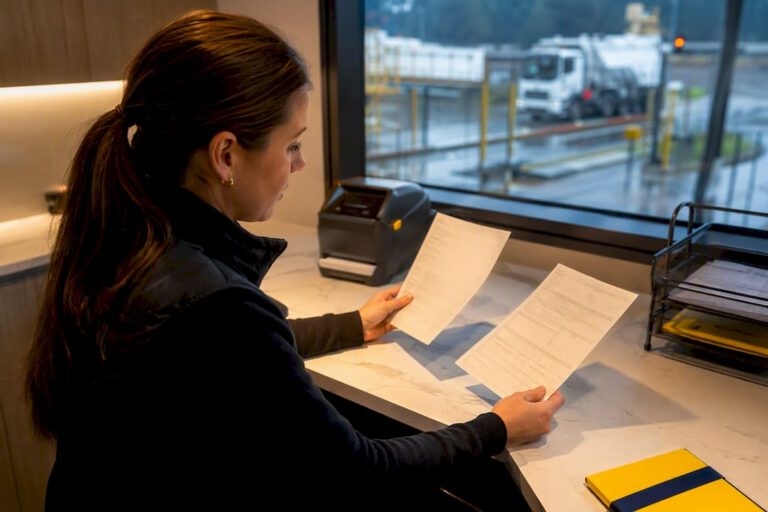
- Confirm the written scope. Get the quote, inclusions and disposal plan in writing before pickup day.
- Sign off on completion. On the day, walk the space with the crew lead and collect your disposal receipts before they leave.
Small jobs (a single office suite) often wrap up same day. Larger fit-out clearances may need a second visit.
What does a professional clearance crew actually do?
A proper office cleanout starts with someone walking the floor, not a phone estimate. The crew lead inspects volume, item types and access, then issues a fixed price on the spot rather than adjusting it after arrival.
From there, the work usually breaks down like this:
- Sort items on site for donation, recycling or landfill diversion where practical.
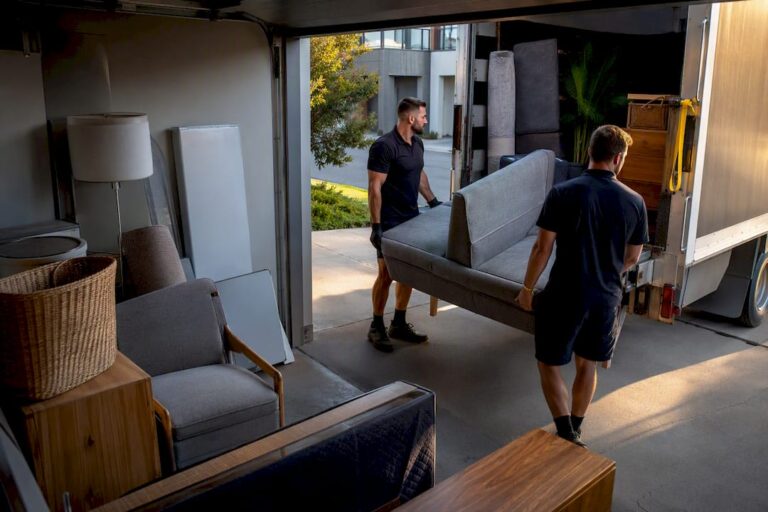
- Dismantle and remove office furniture, workstations and partitions.
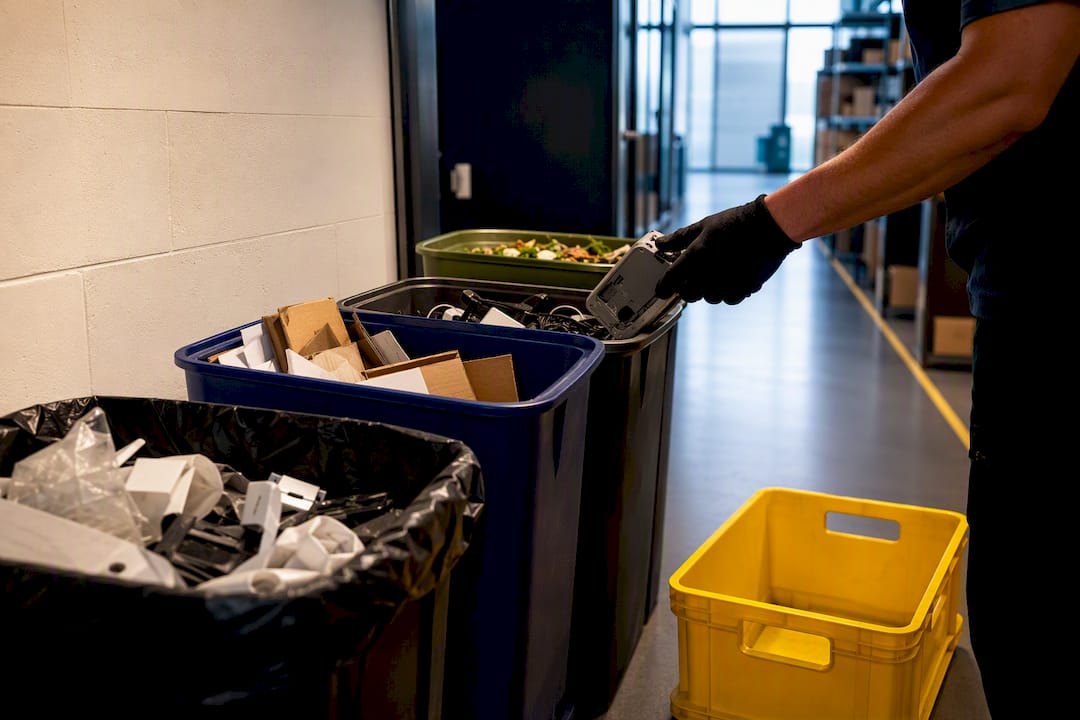
- Collect e-waste (monitors, servers, printers) separately for authorised recycling.
- Clear fit-out and make-good debris including carpet tiles, ceiling grid and stud walls.
- Load, sweep and leave the space broom-clean.
Timings vary with scale. A single-office cleanout (a handful of desks and chairs) typically takes two to three hours. A full floor with partitions and e-waste can run a full day, and multi-floor strip-outs sometimes span two to three days depending on lift access.
Pro Tip: Ask the crew to separate e-waste and confidential document bins from general office junk before loading. It speeds up the truck run and keeps your compliance paperwork clean.
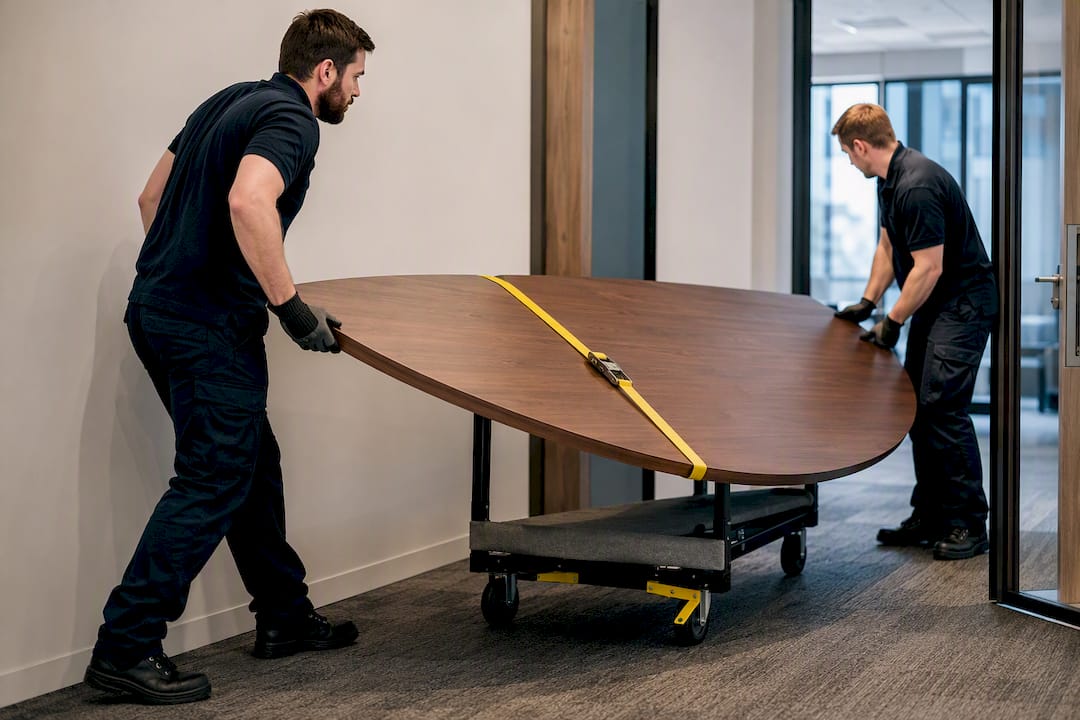
If you’re planning heavy furniture removal specifically, office furniture removal crews bring the right trolleys and rigging for oversized desks and boardroom tables that a general clean-up team might struggle with.
How much does an office cleanout cost?
Pricing is driven by three variables: volume, item type and access. Get these wrong in your head and your budget will be wrong too.
- Volume (cubic metres). Most operators price by the load, so a quarter-truck of general office junk costs less than a full truck of partition walls and carpet tiles.
- Item classification. E-waste, hazardous materials and construction debris often carry separate handling and disposal fees compared with general waste.
- Access constraints. Stairs, long carries, restricted loading zones or no lift access all add labour time, and labour time adds cost.
A phone estimate is a guess. An on-site fixed quote is the only number worth budgeting against, because the inspector has actually seen the volume and the carry distance.
You can trim the bill before the crew arrives. Pre-sort anything staff want to keep or donate, flag e-waste separately so it’s not mixed with general junk, and clear a path to the loading area if you can. None of that is difficult, but it saves the crew time, and time is what you’re paying for.
What compliance rules apply to office waste disposal?
Waste from an office cleanout isn’t just “rubbish.” Councils and the EPA classify it, and you’re on the hook for where it ends up even after a contractor takes it away.
Start with classification. Office waste typically splits into general waste, recyclables, e-waste and organics, and each stream has a lawful destination. Ask your contractor for disposal receipts showing where the load was taken. Businesses must take reasonable steps to confirm lawful disposal, and a receipt is your evidence trail if anyone asks.
If you’re refurbishing or fitting out a tenancy, check whether your council needs a Waste Management Plan (WMP) or Waste and Recycling Management Plan (WRMP). These documents typically ask for bin sizes, collection frequency, storage area and transfer routes, and some council WRMP templates even specify maximum gradients for manually moving 240L bins.
Organics are the next thing to watch. NSW has introduced a business FOGO mandate requiring many businesses to have source-separated food and garden organics collected weekly from 1 July 2026, where premises meet the size thresholds. It’s worth confirming with your council whether your site is in scope well before that date.
- Classify waste streams before pickup, not after.
- Confirm whether your site needs a WMP/WRMP.
- Check FOGO obligations if you run a kitchen or break room.
- Route e-waste and any suspected hazardous material (old fluorescent tubes, asbestos-lined ceiling tiles) through authorised e-waste handling rather than general waste.
How is site access managed safely during a clearance?
A clearance job lives or dies on the route from your office to the truck. Plan that route before the crew shows up and you avoid half the delays facility managers complain about; for more detailed guidance, see this complete room-by-room checklist for office cleaning in Canberra.
Good planning covers gradients, manoeuvring space and where the truck can stand without blocking a fire exit or a public footpath. Waste collection standards call for route planning, shift briefings and site-specific unloading controls to keep both workers and the public safe, and a competent contractor should be doing this as a matter of course, not as an afterthought.
Manual handling is the other side of the safety equation. Office furniture, especially filing cabinets and boardroom tables, causes a disproportionate share of workplace injuries when moved without proper technique or equipment. Professional crews use lifting practices and equipment that materially cut that risk compared with untrained staff attempting it themselves.
- Confirm parking, clearway restrictions and loading dock booking windows before the day.
- Check whether lift access needs to be booked with building management.
- Ask if after-hours or weekend collection avoids peak building traffic (it often changes price).
- Keep collection points clear of fire exits and public thoroughfares.
Pro Tip: If your building has a single small lift, ask the contractor whether they can stage items on your floor and run continuous trips rather than one big load. It’s usually faster and cheaper than fighting lift bookings all day.
What should you ask before hiring a contractor?
The quoting conversation is where you separate a reliable operator from a risky one. Ask a handful of direct questions and you’ll know within minutes who’s worth booking.
- Where does the waste actually go, and can you name the disposal or recycling facility?
- Are you licensed and insured for commercial removal and transport?
- Will you provide a fixed price on-site, or only a phone estimate?
- What’s the realistic timeframe from quote to pickup?
- Can you supply disposal receipts or dump tickets after the job?
Before the crew leaves, get a written scope, the fixed quote, and disposal receipts showing the destination facility. That paperwork protects you if a council or the EPA ever asks how your office waste was handled, since you remain responsible for reasonable steps toward lawful disposal even after a contractor takes it away.
If a company won’t do an on-site inspection, or gets vague when you ask where the waste ends up, treat that as a reason to keep looking. Clear allocation of responsibility between building owner, tenant and contractor also avoids most of the disputes that crop up after a job, according to research on waste management arrangements.
Get your office cleanout sorted with Melbourne City Rubbish
Melbourne City Rubbish runs the plan above end to end, so you’re not stitching together a WMP, a contractor and a disposal check yourself. The crew handles office cleanouts, furniture and junk removal, e-waste, and construction or make-good debris under one booking, with a written quick-quote issued on-site rather than guessed over the phone. Every job includes disposal receipts, and clients can opt into carbon-neutral disposal if sustainability reporting matters to your business. Crews turn up on time and leave the space broom-clean, with no mess left for your staff to deal with. Request a Quick Quote or arrange an on-site visit, and you’ll have a fixed number and a booked date before the week’s out.
Where to check the fine print
For council-specific requirements, start with your local government’s waste management plan guidance and any WRMP template it publishes. For organics obligations, the EPA’s FOGO mandate page sets out thresholds and dates. For collection safety standards, SafeWork’s collection and transport code of practice covers what a compliant contractor should already be doing.
Sources
- FOGO business mandate advice for councils | EPA
- Waste and recycling management plan – commercial and industrial (Inner West Council WRMP template)
- Collection and transport of waste Code of Practice (NSW SafeWork)
- Hazardous manual tasks and manual handling guidance (WorkSafe Queensland)
- Waste management for businesses (Service NSW)
FAQ
How Long Does An Office Cleanout Take?
A single office suite usually takes two to three hours once the crew arrives, while a full-floor fit-out clearance can run a full day or longer depending on lift access and volume.
Do I Need A Waste Management Plan For An Office Clean-Up?
You generally need a WMP or WRMP for refurbishments, fit-outs and new developments, but a routine one-off office declutter for an existing tenancy usually doesn’t trigger this requirement. Check with your council if you’re unsure.
What Happens To E-Waste From An Office Clearance?
E-waste such as monitors, servers and printers should be collected separately and routed through authorised recycling rather than general waste, and a compliant contractor will confirm this destination on request.
How Much Does Melbourne City Rubbish Charge For An Office Cleanout?
Pricing depends on volume, item type and site access, so Melbourne City Rubbish provides a fixed on-site quote rather than a flat rate. Current pricing is available through the Quick Quote page.
What Documents Should I Get After The Job?
Ask for a written scope, the fixed quote, and disposal receipts or dump tickets showing where the waste was taken, since you remain responsible for confirming lawful disposal even after a contractor removes it.