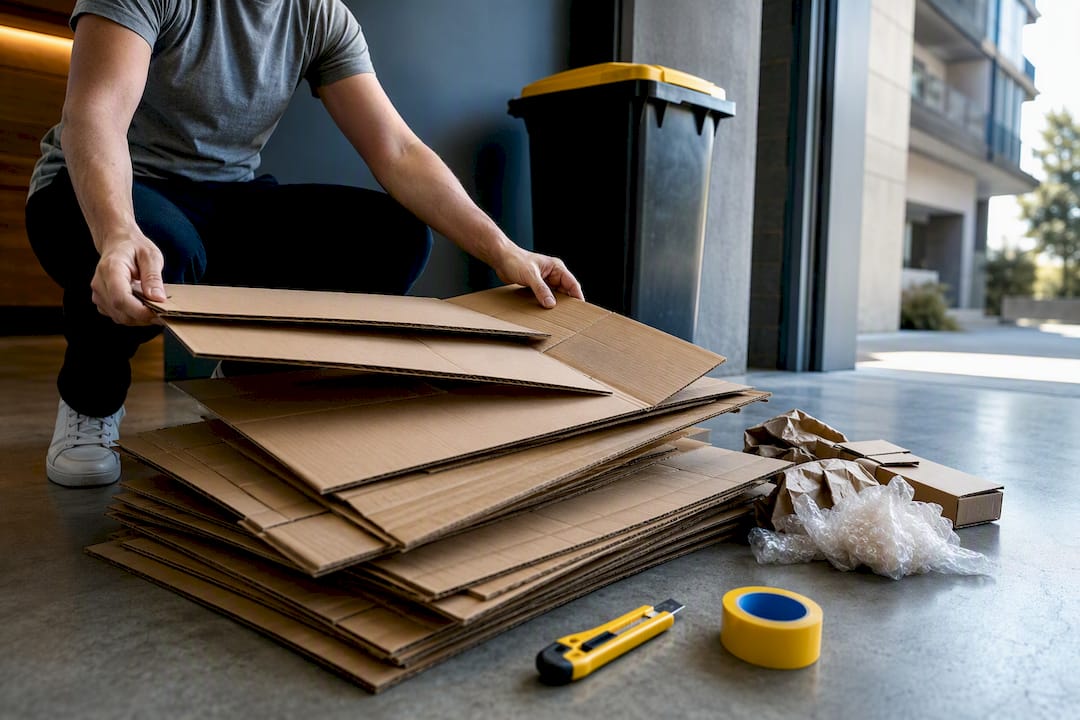
If your boxes are clean, dry and free of tape or coating, flatten them and put them straight in the yellow-lid recycling bin. Got more than a bin load? Take them to a council transfer station or book a bulk pickup. Never bin anything greasy, waxed or lined with plastic. Sort that pile separately for general waste.
TL;DR:
- Moving boxes should be sorted into reusable, recyclable, and non-recyclable categories immediately after unpacking to prevent contamination and streamline disposal.
- Only clean, dry, uncoated corrugated and boxboard boxes go into kerbside recycling, and they must be placed loose and flattened, not bagged or wet.
- Flattening, stripping tape, and removing staples before recycling ensures boxes are processed efficiently and reduces rejection rates at sorting facilities.
- Large volumes of cardboard from moves can be taken to council transfer stations, booked bulk pickups, or upgraded to a bigger bin to avoid overflow and multiple trips.
- Waxed, foil-lined, and grease-soiled boxes should always be disposed of as general waste, not recycled, due to the coatings blocking the pulping process.
Table of Contents
- How to sort moving boxes for recycling right away
- What actually goes in the yellow-lid bin?
- Prepping boxes so they’re actually recyclable
- Where to take large volumes of moving boxes
- Should you donate or repurpose your boxes instead?
- Boxes you should never put in the recycling bin
- Apps and council tools that make the rules clearer
- How Melbourne City Rubbish handles bulk cardboard pickup
- Sources
- FAQ
How to sort moving boxes for recycling right away
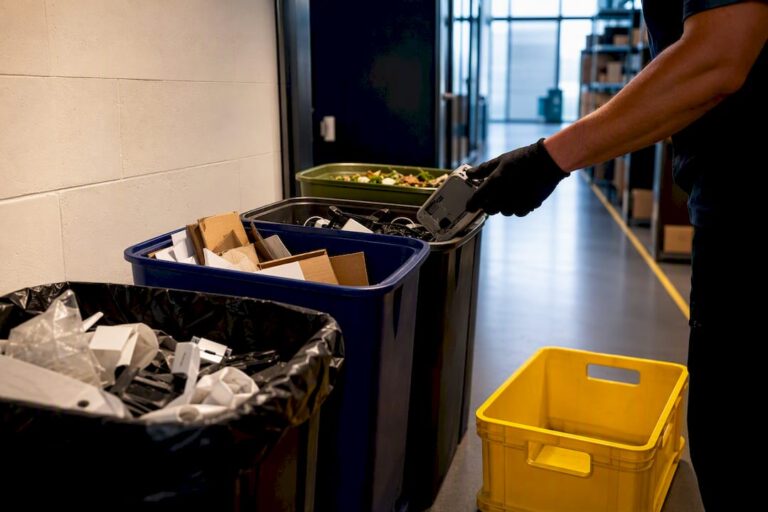
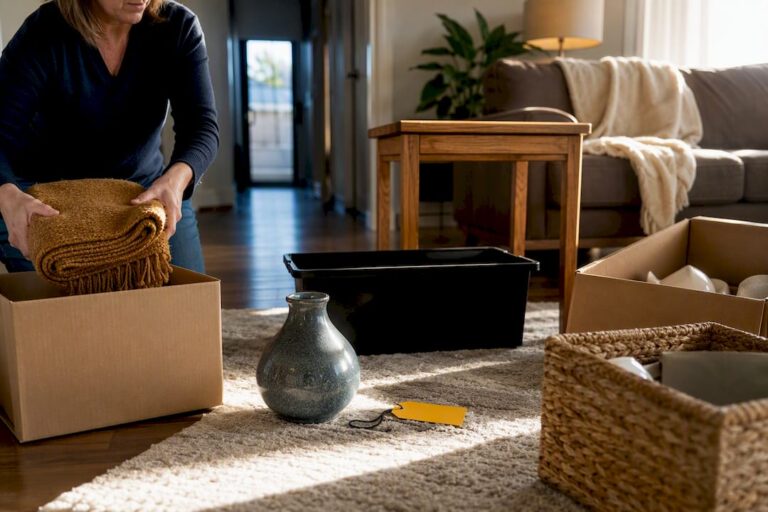
Before you touch the bin, sort your pile into three groups: reusable, recyclable and not recyclable. This takes ten minutes and saves you a wasted trip.
- Reusable — sturdy boxes with no tears, still in decent shape, go aside for reuse or donation.
- Recyclable — clean, dry, uncoated cardboard gets flattened, with tape, foam and staples stripped out.
- Not recyclable — greasy, waxed or plastic-lined boxes go to general waste or an alternative disposal path.
Once sorted, flatten every recyclable box, remove all packing foam and tape, and keep the pile dry until collection day. Place them loose in the yellow-lid bin rather than stacking whole boxes on top, since a bin lid that won’t close means the truck may skip it entirely.
Pro Tip: Do this sorting the same day you unpack, not a week later. Cardboard left in a garage or shed for a fortnight often picks up damp or dust, which can tip a perfectly recyclable box into the contaminated pile.
What actually goes in the yellow-lid bin?
Corrugated moving boxes and most uncoated boxboard belong in kerbside recycling, provided they’re clean and dry. Brisbane City Council confirms cereal boxes, corrugated cartons and even pizza boxes qualify, as long as they aren’t drenched in grease.
The rule that trips people up is bagging. Material recovery facilities (MRFs) sort recyclables on conveyor belts and optical scanners, and a garbage bag full of flattened boxes just gets pulled out and binned as contamination. Cardboard needs to go in loose and flat.
- Accepted: clean, dry corrugated cardboard and boxboard
- Not accepted: bagged cardboard, wet board, food-soiled boxes
- Watch for: plastic-lined or foil-laminated cartons, which look like cardboard but aren’t
Australia sends over 300,000 tonnes of paper and packaging to recyclers each year, much of it turned back into toilet rolls and new packaging. That whole loop depends on the cardboard arriving clean. One contaminated load can see an entire truckload rejected at the sorting facility.
Prepping boxes so they’re actually recyclable
Preparation is the difference between a box that gets recycled and one that gets landfilled at the sorting stage. Get it right and you’re doing the MRF’s job for it.
- Strip out tape, bubble wrap, polystyrene inserts and any staples before flattening.
- Fold boxes flat rather than crushing them into a ball, this is what lets the sorting machinery grip and read them.
- Cut oversized cartons down to fit your bin without forcing the lid, and keep everything under cover if rain’s forecast.
- If a box is soggy, torn beyond use, or held together with packing tape on every seam, it’s easier to recycle it flat than try to reuse it.
Shoalhaven City Council notes that automated sorting lines need flat, loose cardboard to run properly. Bulky or foam-filled boxes can jam the machinery, which is exactly why flattening isn’t optional busywork.
Pro Tip: Keep a box cutter in your moving kit specifically for flattening. Trying to fold stiff double-walled cartons by hand after a house move is how people hurt their fingers.
Where to take large volumes of moving boxes
A house move can generate more cardboard than a fortnightly bin can hold. When that happens, you’ve got three realistic paths.
- Council transfer stations and resource recovery centres take household cardboard drop-offs, and Shoalhaven City Council notes many don’t charge for standard household quantities.
- A bigger recycling bin is worth asking about. Brisbane City Council lets residents swap to a larger bin at no extra cost, which suits anyone generating extra recyclables for a few weeks around a move.
- Booked commercial collection suits large volumes or awkward access, particularly apartment moves where multiple transfer-station trips aren’t practical.
Before you load the car, check the transfer station’s opening hours, whether trailers are allowed onsite, and if there’s a weight or volume cap on free drop-offs. Guides like MissionDemolition’s rubbish removal advice cover the same drop-off logistics if you’re dealing with a mixed load beyond just cardboard.
Should you donate or repurpose your boxes instead?
Recycling isn’t always the best first move. A sturdy box that still has life in it is worth more reused than pulped. Local buy-nothing groups, primary schools and charities regularly want moving boxes, and most online marketplaces have a “free to a good home” category built for exactly this.
- List the size, condition, whether tape is still attached, and your pickup suburb.
- Charities and community halls often want boxes ahead of their own bulk moves or fundraiser sorting days.
- Repurpose sturdy boxes for garage storage, kids’ craft projects, or as temporary floor protection during a renovation.
If you’re stuck with excess packing paper or bubble wrap as well as boxes, resources like OrangeMover’s guide to moving supplies run through other materials worth keeping rather than binning.
Boxes you should never put in the recycling bin
Wax-coated boxes (think fruit and veg cartons), foil-laminated cartons and anything soaked through with grease or oil aren’t accepted in kerbside recycling. The coating stops the pulping process from working, and industry guidance on cardboard types confirms these need to go to general waste or a specialist channel instead.
- Wax or foil-lined boxes → general waste
- Clean, uncoated offcuts → can be shredded for garden mulch, never if greasy
- Partly soiled boxes → cut off the soiled section, recycle the rest
Greasy cardboard should never go on the compost heap either. The oils slow decomposition right down and tend to attract pests you don’t want near your veggie patch.
Apps and council tools that make the rules clearer
Every council writes its own acceptance list, so what works in one postcode can be wrong two suburbs over. Recycle Mate is built for exactly this, letting you search an item and get a postcode-specific answer instead of guessing.
- Check your council’s own waste page for collection days and yellow-lid bin rules before moving day.
- Planet Ark publishes general contamination guidance that applies Australia-wide, useful if your council page is vague.
- Most councils let you request a bigger recycling bin or a one-off bulk collection online, worth doing a week ahead of a move rather than after.
How Melbourne City Rubbish handles bulk cardboard pickup
If a transfer station run isn’t practical, and your moving pile has spilled well past what the yellow-lid bin can take, Melbourne City Rubbish is the option that skips the multiple car trips altogether. Where a DIY drop-off means loading, driving, unloading and repeating, a booked pickup takes the whole pile in one go, with the added benefit of an eco-friendly disposal option for households and businesses that want their cardboard actually diverted from landfill rather than just gone from the driveway.
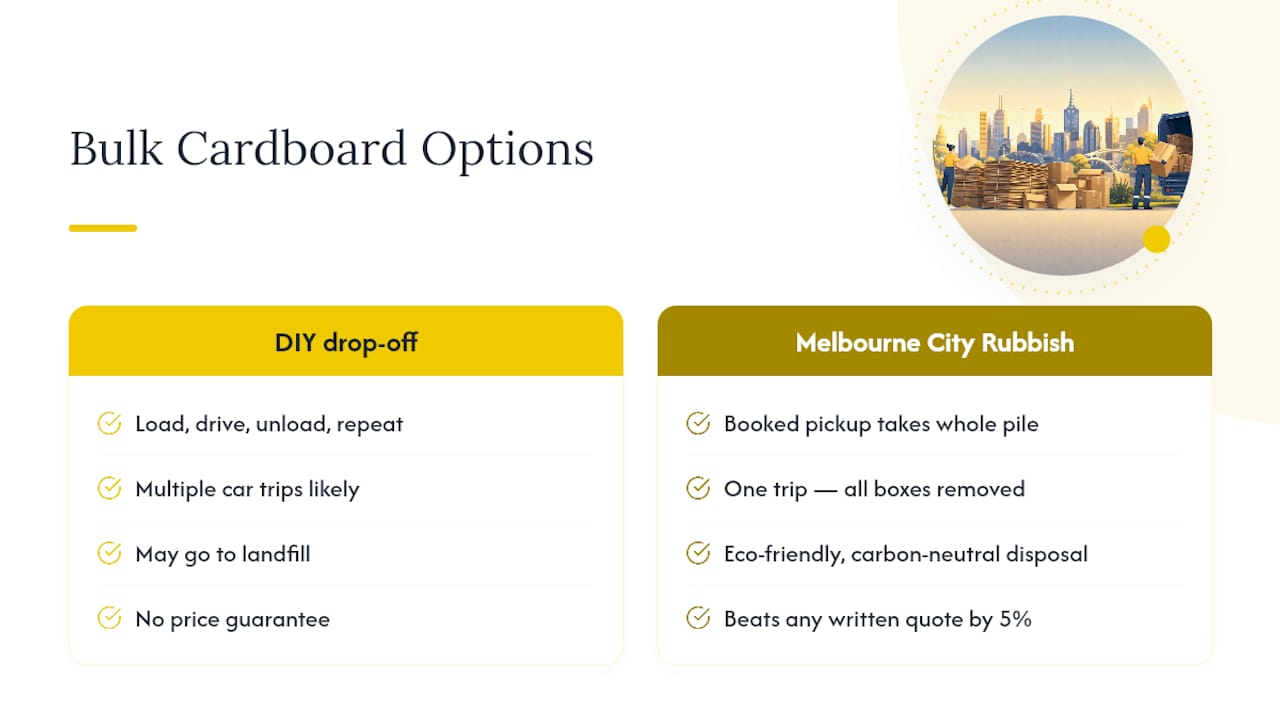
Melbourne City Rubbish offers carbon-neutral disposal choices and promises to beat any written quote by 5%. For a full rundown of services, from bulk cardboard through to office cleanouts and construction waste, or if you’d rather just get a number, request a quick quote and get your pickup booked before the boxes take over the garage.
Sources
- Get your paper and cardboard sorted (Queensland Government)
- Cardboard (Shoalhaven City Council)
- Recycling paper and cardboard in Brisbane (Brisbane City Council)
- Planet Ark
FAQ
What can you do with old moving boxes?
Reuse sturdy ones for storage or donate them to schools, charities or local marketplace groups. Flatten and recycle any that are too worn, and bin any that are wax-coated or grease-stained.
How do I dispose of large cardboard boxes if my bin’s full?
Take them to your nearest council transfer station, which typically accepts household cardboard drop-offs, or book a bulk pickup through a service like Melbourne City Rubbish if you’ve got more than a car load.
Where can I get free cardboard disposal for a house move?
Council transfer stations and resource recovery centres generally accept standard household quantities of cardboard at no cost. Check your specific council’s page for any volume limits before you go.
What should I do with used cardboard moving boxes?
Sort them first: keep the sturdy ones for reuse or donation, flatten the clean and dry ones for kerbside recycling, and separate out anything greasy or wax-coated for general waste.
Does Melbourne City Rubbish collect moving boxes and cardboard?
Yes, Melbourne City Rubbish handles bulk cardboard and rubbish pickups for households and businesses, with eco-friendly disposal options. Current pricing is available through a quick quote request on their site.