If you need fridge disposal in Melbourne sorted, book a licensed full-service collector like Melbourne City Rubbish or use your council’s hard-waste or drop-off service. Both keep you on the right side of Victoria’s e-waste laws, since it’s been illegal since July 2019 to bin a fridge with household rubbish.
Two things to do right now:
- Call or request a quote for a licensed removal service if you want same-day or scheduled pickup with no lifting required.
- Check your council’s hard-waste eligibility or head to a drop-off centre if you’re happy to shift the fridge yourself.
TL;DR:
- Professional fridge removal in Melbourne typically costs more for multi-storey buildings, tight access, or complex loading situations.
- Council hard-waste pickup is suitable only for intact, non-leaking units within size limits and when self-transport is feasible.
- Legally, all plugged or battery-operated fridges are classified as e-waste, and disposal in household bins has been banned since July 2019.
- Proper preparation requires fully emptying, defrosting, and removing doors to prevent refusals or safety hazards during collection.
- Melbourne City Rubbish guarantees EPA-compliant disposal, offers a 5% quote match, and provides quick, eco-friendly fridge removal for all client types.
Table of Contents
- How does professional fridge removal work in Melbourne?
- Can you use council hard-waste collection instead?
- What are the legal obligations for disposing of a fridge in Victoria?
- How do you prepare a fridge for collection or drop-off?
- How much does fridge disposal cost in Melbourne?
- Are there greener alternatives to standard fridge removal?
- Why choose Melbourne City Rubbish for fridge and appliance removal?
- Key Takeaways
- Sources
How does professional fridge removal work in Melbourne?
Most providers quote off photos or a quick phone description: fridge type, size, location in the property, and access (stairs, lifts, narrow hallways). A site visit only happens for tricky commercial jobs or when the quote needs firming up before the day.
On collection day, the process runs in a fairly fixed order:
- The unit is unplugged and any remaining food or ice is cleared.
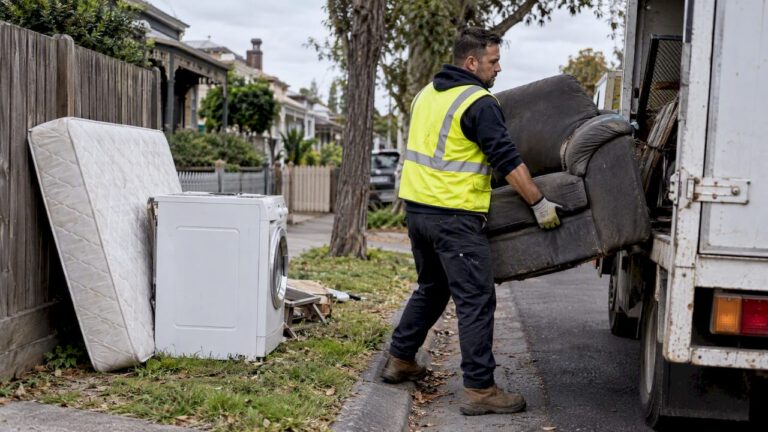
- It’s carried out, with doors removed first if a stairwell or doorway demands it.
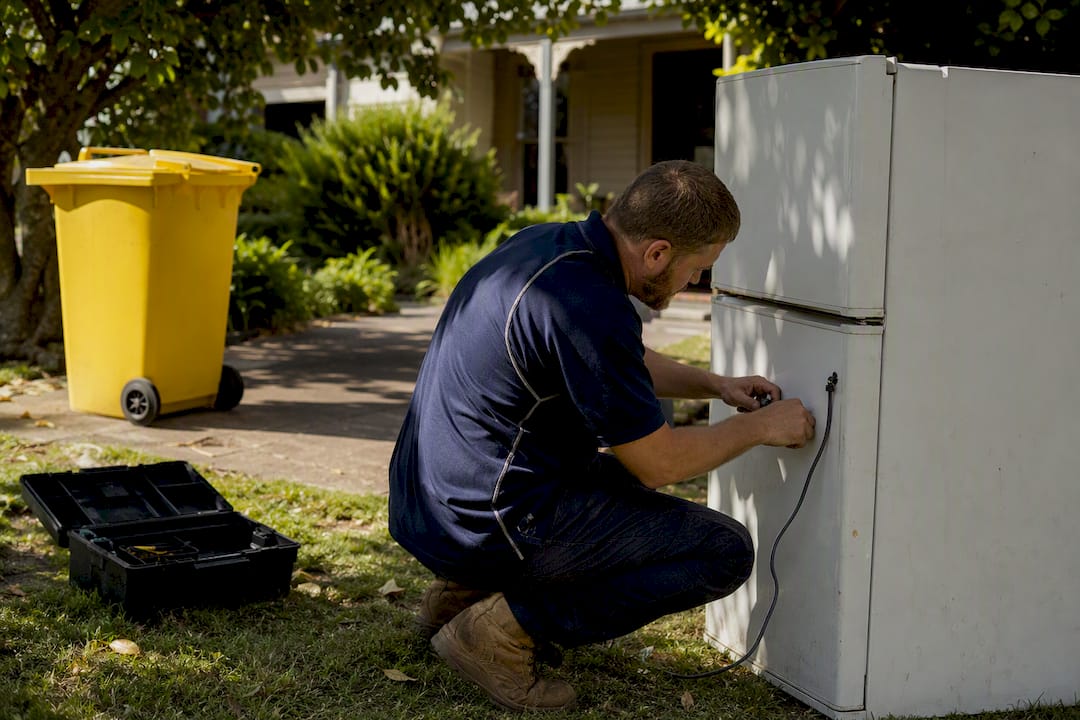
- Refrigerant gas is degassed by a licensed handler before the fridge goes anywhere near a truck.
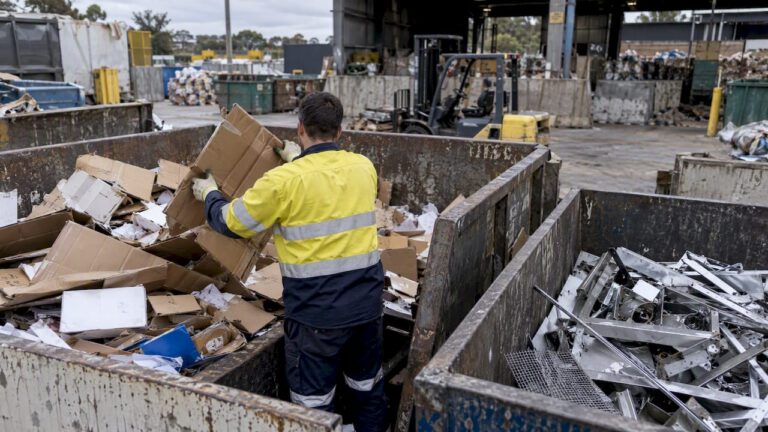
- The unit is transported to an accredited reprocessor or resource recovery centre for proper breakdown.
Same-day service is common for straightforward ground-floor jobs. Multi-storey apartments, tight loading docks, or a fridge wedged behind a benchtop all add time and usually cost.
Pro Tip: Snap photos of the fridge from three angles plus the access path (stairs, doorway width, distance to the street) before you call. It gets you a tighter quote on the first pass and avoids a price bump on the day.
Can you use council hard-waste collection instead?
City of Melbourne residents get one free hard-waste collection per financial year, with size limits set by the council, though eligibility and what’s accepted varies council by council. Some councils exclude fridges outright or insist doors are removed before pickup.
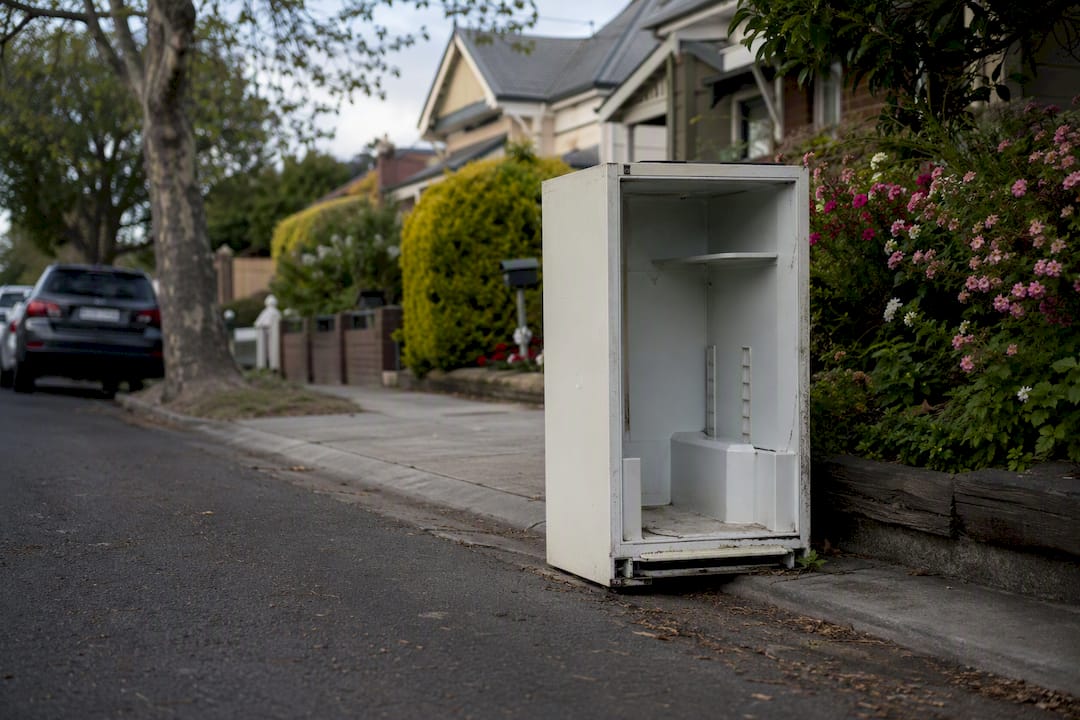
Booking usually means an online form or phone call, a scheduled date, and the item left kerbside the night before. Miss the door-removal rule and council crews will often leave it behind.
Drop-off is the other municipal route. The Port Phillip Resource Recovery Centre takes household e-waste and hard-waste items from local residents, and the Dynon Road Waste and Recycling Centre accepts similar drop-offs, though charges can apply depending on the item.
Council options make sense when:
- You can transport the fridge yourself and don’t mind the wait for a booked slot.
- The unit is intact, not leaking oil or refrigerant, and meets your council’s size rules.
They fall short fast for broken units, multiple appliances, or any commercial-scale clearance, where a licensed collector is the more practical call.
What are the legal obligations for disposing of a fridge in Victoria?
Every fridge with a plug, cord, or battery is legally e-waste in Victoria, and dumping it in a household bin or kerbside recycling has been banned statewide since 1 July 2019. That single date matters more than most people realise: it’s the line between a routine clean-out and a fine.
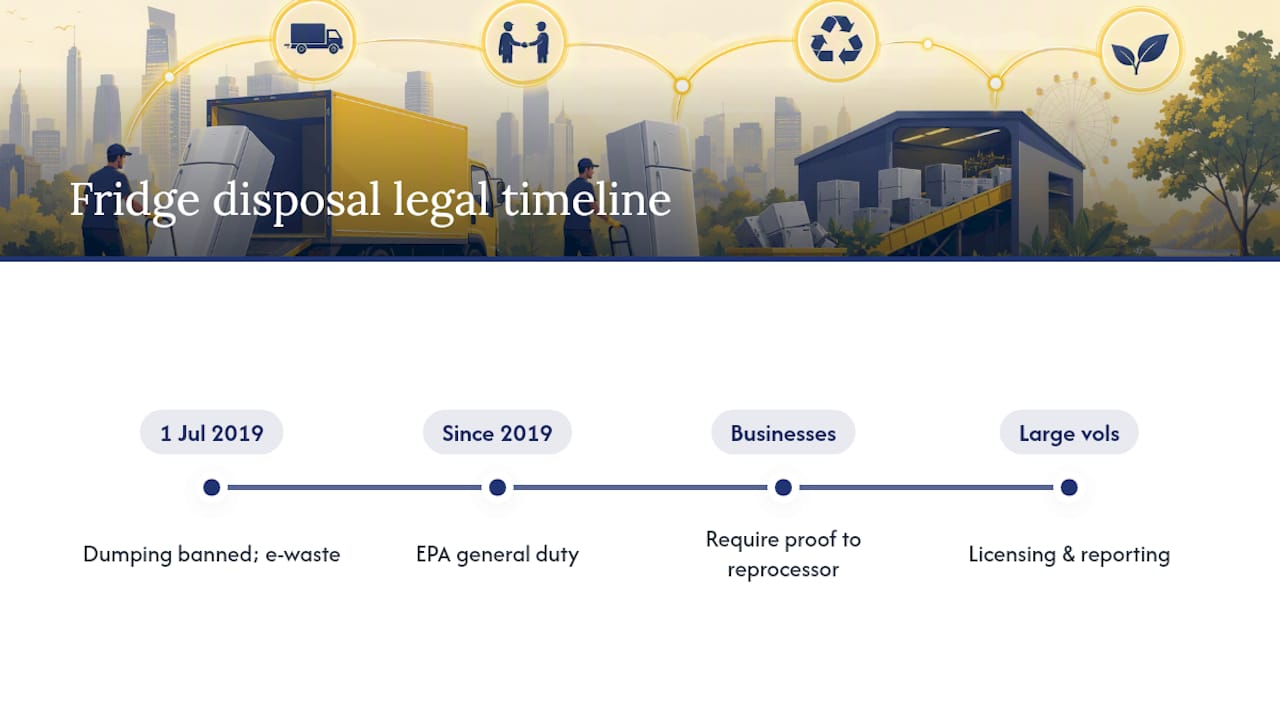
For businesses, the obligation runs deeper. EPA Victoria’s general environmental duty requires anyone who generates, transports, or receives waste to reduce the risk of environmental harm as far as reasonably practicable. That means a facility manager clearing out old bar fridges can’t just hand them to whoever’s cheapest, they need proof the units are going to an accredited reprocessor.
Businesses handling larger e-waste volumes may face additional licensing and reporting duties. Ask any removalist for documentation showing where the fridge actually ends up.
How do you prepare a fridge for collection or drop-off?
Getting this wrong is the number one reason collections get refused or quotes blow out on the day.
- Empty the fridge completely and defrost it if there’s ice buildup or a leak.
- Remove or secure the doors if your council or provider requires it, a rule that exists because enclosed fridges pose a real suffocation risk to children who climb in.
- Clear a straight path to the street or loading area, and note any stairs, lifts, or tight doorways when you request your quote.
- Take photos showing the fridge, the access route, and any obstacles.
Pro Tip: Photograph the narrowest point on the access path, not just the fridge. A quote based on the tightest doorway rarely gets revised upward once the crew arrives.
How much does fridge disposal cost in Melbourne?
Price comes down to four things: the size and type of unit (a chest freezer costs more to shift than a bar fridge), how hard it is to access, whether the refrigerant needs specialist degassing, and how fast you need it gone.
Most local providers charge one of a few ways:
- A flat per-item rate for a single standard fridge or freezer.
- A per-cubic-metre rate when the fridge is part of a bigger load, like a kitchen strip-out.
- A minimum job fee that applies even for one small appliance, since a truck and crew still need to turn up.
Always ask for an itemised quote that states clearly whether disposal and recycling fees are already included, not added afterwards. And before paying anyone, check whether your retailer offers take-back on delivery of a replacement fridge, or whether your council’s free allowance covers it. Both can bring the cost to zero.
Are there greener alternatives to standard fridge removal?
Recycling isn’t the only lower-waste option, and it’s worth ruling out the others first.
- Ask the retailer delivering your new fridge whether they’ll take the old one away as part of the delivery. Many will, and it skips a second logistics step entirely.
- A working fridge can often be sold or donated, provided it’s clean, cools properly, and doesn’t have a cracked seal or exposed wiring.
- Non-working units still have scrap value in the compressor and metal casing, which specialist parts recyclers will take separately from general e-waste streams.
- Once a fridge is broken, leaking, or simply not worth the hassle of rehoming, professional removal through an accredited reprocessor is the only route that guarantees it’s handled properly.
Why choose Melbourne City Rubbish for fridge and appliance removal?
Melbourne City Rubbish handles fridge disposal for residential, strata, and commercial clients across Melbourne, from a single bar fridge in an apartment to a full kitchen strip-out on a construction site. The point of difference isn’t complicated: you get a quick quote, a promise to beat any written quote by 5%, and the option to go carbon-neutral on the job, something a council booking or a DIY tip run simply can’t offer.
Every quote covers collection, licensed degassing where the unit needs it, and transfer to an accredited reprocessor or resource recovery centre, so you’re covered under EPA Victoria’s environmental duty without having to chase paperwork yourself. That matters most for strata and multi-unit clearances, where several old fridges might need removing in one visit, and for renovation jobs where old appliances are just one part of a bigger waste stream.
Booking is straightforward: get a quick quote through the Melbourne City Rubbish site, confirm access details and timing, and a crew turns up ready to disconnect, degas, and clear the unit the same visit.
Key Takeaways
Fridge disposal in Melbourne is fastest and safest through a licensed removal service or a compliant council drop-off, since Victorian law bans fridges from landfill and general recycling bins.
| Point | Details |
|---|---|
| Book early, act legally | Use a licensed collector or council hard-waste service, never a household bin, since Victoria’s e-waste ban has applied since July 2019. |
| Prep prevents refusals | Empty the fridge, remove doors if required, and clear the access path before collection day. |
| Compare quotes properly | Ask for an itemised quote confirming degassing and recycling fees are included, not added later. |
| Council isn’t always cheapest | Free hard-waste allowances help, but broken units or commercial volumes need a licensed provider. |
| Melbourne City Rubbish covers the gap | Offers quick quotes, a 5% written-quote beat, carbon-neutral options, and accredited reprocessing for residential and strata jobs. |
Sources
- E-waste — Sustainability Victoria
- Hard waste — City of Melbourne
- General environmental duty — EPA Victoria
- Port Phillip Resource Recovery Centre — City of Port Phillip