If your treadmill, power rack or spin bikes need to go, you have four real options: donate working gear to a matched charity request, sell or trade in commercial-grade machines, recycle the metal and electronic parts separately, or book a removal service for anything bulky or mixed. Powered equipment counts as e-waste under Victorian rules, so it cannot go in a kerbside bin. For multiple machines or a full gym clear-out, booking a local removal service is the fastest, most compliant route.
TL;DR:
- Any machine with a plug, battery, or power cord counts as electronic waste in Victoria and cannot enter landfill or kerbside hard waste collection.
- GIVIT matches donations to confirmed charity requests, so check for a recipient before arranging transport or making a drop off.
- Separate nonpowered steel frames and weight plates for metal recycling, while consoles and motors need an electronic waste collection or drop off point.
- For a removal quote, send an itemized list, photos, site type, and access details, including stairs, lifts, and narrow doorways.
Table of Contents
- Practical disposal options: donate, sell, recycle or arrange a removal
- Victoria and City of Melbourne e-waste rules and local drop-off options
- Preparing and moving heavy gym equipment safely
- How to get a quote and what to expect from a Melbourne rubbish-removal service
- How Melbourne City Rubbish helps with gym equipment disposal in Melbourne
- FAQ
- Sources
- Local authority and charity pages to confirm rules and drop-off locations
Practical disposal options: donate, sell, recycle or arrange a removal
The right pathway depends on the equipment’s condition and how much of it you have. A single working rowing machine suits a different route than ten dead treadmills from a closed studio.
- Donate: check a current request through GIVIT before moving anything; the charity matches high-quality second-hand goods to confirmed needs rather than accepting unsolicited drop-offs.
- Sell or trade in: commercial-grade machines sometimes hold resale value through specialist fitness equipment buyers, though many only accept certain brands or near-new condition.
- Recycle: separate non-powered steel frames and plates, which most metal recyclers accept, from powered consoles and motors, which need an e-waste pathway.
- Remove in bulk: a booked commercial removal or skip bin suits multiple machines, mixed conditions, or a short turnaround.
Photograph each item and note any faults before you contact a charity or buyer. GIVIT’s matching system works on actual requests, so a donor who confirms a recipient first avoids wasted trips and keeps usable equipment out of landfill.
Pro Tip: Weigh up time against value. A single home treadmill might fetch a modest resale price, but the hours spent listing, negotiating and arranging pickup often cost more than booking a removal service outright.
Victoria and City of Melbourne e-waste rules and local drop-off options
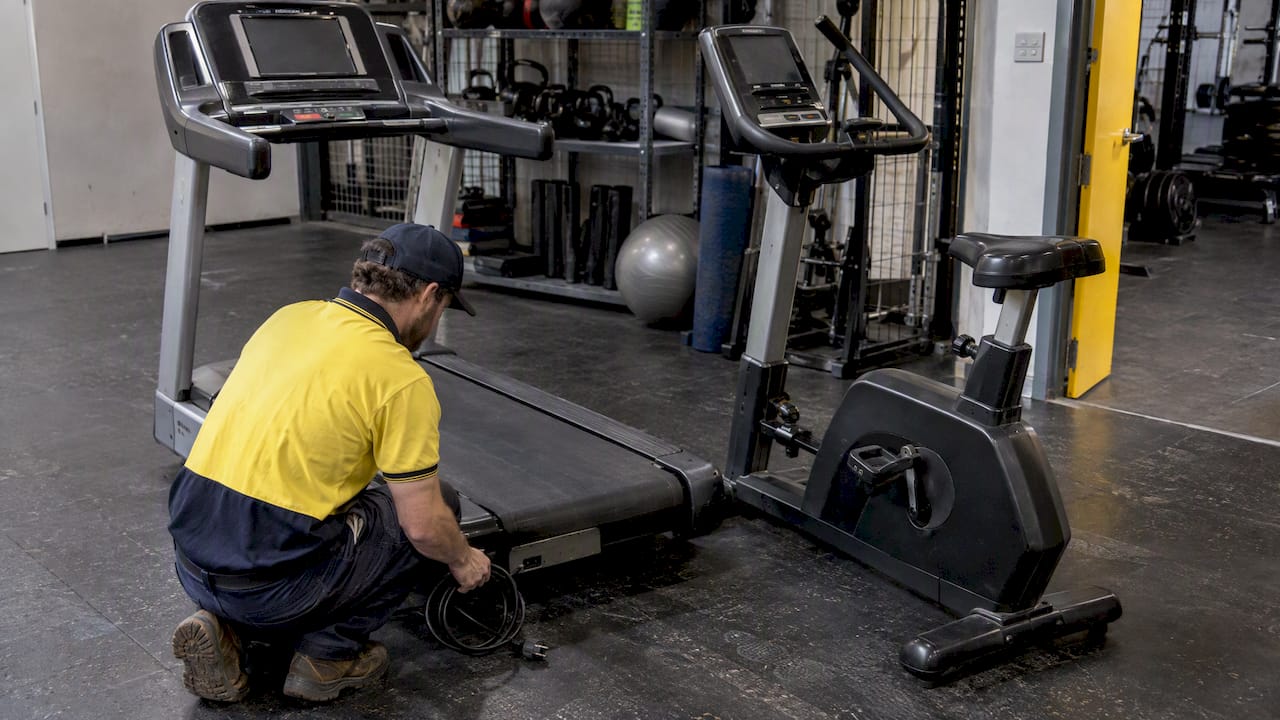
Any gym equipment with a plug, battery or power cord counts as e-waste in Victoria, and e-waste has been banned from landfill statewide since 1 July 2019, according to Sustainability Victoria. That rule covers treadmill consoles, exercise bike computers and anything with a battery pack, so these items cannot go in a general waste bin or a kerbside hard-waste collection.
Since 1 July 2019, Victoria has banned e-waste from landfill, which means powered gym machines need a dedicated collection or drop-off point rather than standard rubbish disposal, per Sustainability Victoria.
For residents and organisations in the municipality, the City of Melbourne lists local drop-off points for e-waste, including Dynon Road Waste and Recycling Centre.
- Residents may be eligible for a limited free hard-waste allowance, but commercial loads typically attract gate fees.
- Dynon Road accepts certain recyclables and e-waste, though proof of residency and charges can apply for larger or business-related loads.
- A quick sort before you arrive, separating metal, e-waste and general waste, tends to cut gate fees and speeds up processing.
Where you have several powered machines, a commercial strip-out, or no way to transport items yourself, it often makes more sense to ask a removal service to handle the e-waste stream directly rather than making multiple council trips.
Preparing and moving heavy gym equipment safely
Getting a treadmill or power rack out the door safely takes more planning than most people expect, whether you are moving it yourself or briefing a removal crew.
- Unplug every powered item and isolate any battery pack before you touch moving parts.
- Remove weight plates, resistance bands and other detachable accessories to cut the load weight.
- Measure each machine and the access route, including doorways, stairwells and lift dimensions.
- Photograph the equipment’s condition, useful for donation records or resale listings.
- Protect floors and walls along the route, and use furniture dollies, moving straps and enough people for the weight involved.
Heavier commercial machines, cable systems and multi-stack gym equipment often need specialist relocation handling rather than a DIY approach, particularly where disassembly is involved or the access route is tight.
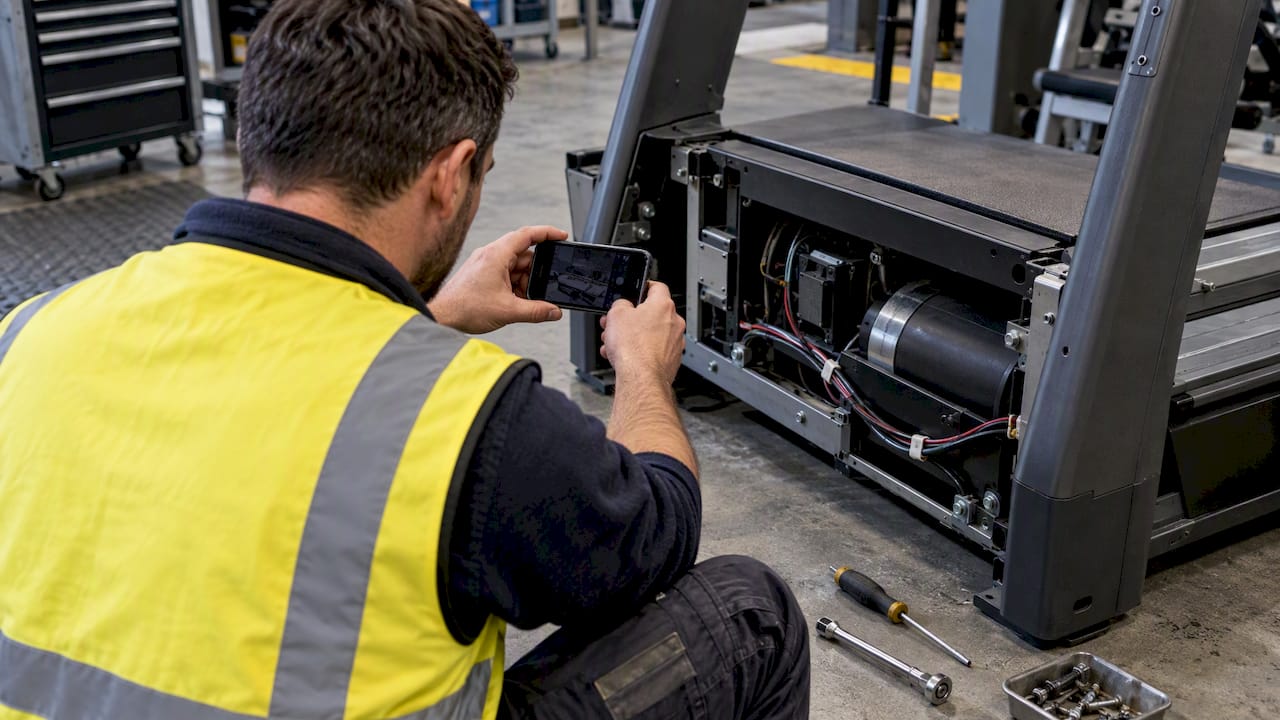
Pro Tip: Take a photo of cable routing and bolt positions before you dismantle anything. It saves guesswork if the equipment gets reassembled elsewhere, whether that’s a new owner’s garage or a different room in your facility.
How to get a quote and what to expect from a Melbourne rubbish-removal service
A fast, accurate quote depends on giving the provider enough detail up front rather than a vague description over the phone.
- List every item, noting which are powered (e-waste) and which are not.
- Include photos of the equipment and the access route, including stairs, lifts or narrow doorways.
- Confirm the site address and whether it is a residential property, office gym or commercial facility.
- Ask what happens to the waste: landfill, recycling, or donation, and whether e-waste is handled separately.
Most Melbourne removal jobs include labour, transport, sorting and disposal or recycling as standard, with eco-friendly handling available as an add-on with some providers. Quotes can usually be given from photos for straightforward jobs, with on-site assessment reserved for larger commercial clearances. Lead times vary by season, so booking a few days ahead gives more flexibility on timing. It is worth asking directly about carbon-neutral disposal options, where the waste actually ends up, and whether the provider will beat a competitor’s written quote, since not every operator offers the same transparency on pricing or destination.
How Melbourne City Rubbish helps with gym equipment disposal in Melbourne
We handle gym equipment clearances efficiently, with sorting done properly and no mess left behind. For a single treadmill or a full studio strip-out, we bring the right crew and truck size for the job.
- Bulk rubbish removal covers mixed loads of gym equipment, packaging and general waste from one booking.
- Heavy machinery removal suits power racks, multi-gyms and other awkward, heavy items that need careful handling.
- E-waste options mean powered treadmills, bikes and consoles are kept out of landfill and processed correctly.
- Eco-friendly disposal choices let you opt into carbon-neutral processing for the whole job.
- Furniture disposal and recycling covers change room benches, lockers and other gym fit-out items alongside the equipment itself.
For gym operators managing a fit-out change, we handle the broader strip-out alongside the equipment itself, coordinating efficiently with gym management and class software so you are not juggling multiple trades for one clearance.
To get a quick, accurate quote, have your item list, a few photos and any access notes (stairs, lifts, loading dock) ready. Head to our quick quote page to get a price and a booking time that suits your schedule.
FAQ
What do gyms do with old equipment?
Gyms typically donate working equipment to charities with a confirmed need, sell commercial-grade machines through specialist resellers, or book a bulk removal service for mixed or end-of-life equipment. Powered items such as treadmills and consoles need to go through an e-waste pathway rather than general waste, as outlined by Sustainability Victoria.
Where can I find treadmills for sale in Melbourne?
Second-hand treadmills turn up through specialist fitness equipment resellers, online marketplaces and gym liquidation sales when studios close or upgrade. Checking a reseller’s condition and warranty policy before buying is worthwhile, since ex-commercial machines vary widely in remaining lifespan.
Where can I find spare parts for my Total Gym?
Spare parts for home fitness brands like Total Gym are generally sourced through the manufacturer’s own parts service or authorised fitness equipment retailers rather than general hardware stores. It is worth confirming the model number first, since cables, pulleys and glide boards vary between versions.
How do I transport heavy gym equipment safely?
Unplug and isolate any powered components, remove detachable plates or accessories, and measure both the machine and your access route before moving day. Use furniture dollies, moving straps and enough people for the weight, or arrange specialist heavy-item relocation for larger commercial machines.
Can I put gym equipment in my council hard-waste collection?
Non-powered items like weight plates or a basic bench may be eligible for a council hard-waste collection, but powered equipment with a plug, battery or cord counts as e-waste and is banned from landfill in Victoria. Check your eligibility and local drop-off options, including Dynon Road Waste and Recycling Centre, through the City of Melbourne before putting anything out.
Sources
- E-waste and chemicals | City of Melbourne
- Recycle e-waste | Sustainability Victoria
- GIVIT – how to donate items
Local authority and charity pages to confirm rules and drop-off locations
- E-waste and chemicals | City of Melbourne
- Recycle e-waste | Sustainability Victoria
- GIVIT – how to donate items
- Melbourne City Rubbish