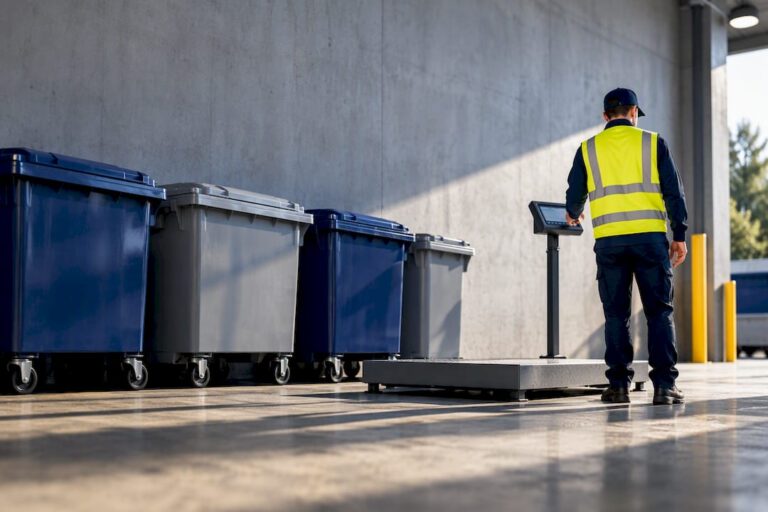
Most household junk removal jobs generally range from a small minimum call-out fee to several hundred dollars or more for a full truck load. The two biggest levers are how much you’re getting rid of and what it’s made of, since heavy or regulated waste carries higher tip fees, and access is the hidden cost that surprises most people. Send photos and a written item list before you book, and you’ll get a quote that actually holds.
TL;DR:
- Heavy or regulated waste like bricks, concrete, and tiles incur higher disposal levies, increasing the overall removal cost by up to 200 percent.
- Access issues such as stairs, long carries, or no lift significantly raise labor time and costs, especially for multi-story or manual carry jobs.
- Quotes should clearly itemize fees, including GST and disposal charges, and should be based on accurate photos and descriptions to prevent disputes.
- A full truck load of demolition debris generally costs more than general waste due to weight-based tipping fees, despite similar volume estimates.
- Choosing between skip bin hire and crewed removal depends on job size, with skips better for ongoing projects and crewed services suited for heavy or awkward items.
Table of Contents
- Quick cost bands: minimums, per-item examples and truck-load ranges
- How pricing models work: per item, per cubic metre and flat fees
- What changes the price: access, labour, waste type, levies and timing
- Worked examples: from a single item to a full clean-out
- Skip bin vs crewed rubbish removal: cost comparison and when to choose which
- How to get an accurate quote: checklist and consumer protection steps
- Operator notes and common real-world surprises
- Getting a fast, honest quote for your next clean-out
- Where to check levies, lawful disposal and your rights
- Sources
- FAQ
Quick cost bands: minimums, per-item examples and truck-load ranges
Every provider has a floor price, a minimum charge that applies even if you’ve only got one bulky item and a ute could handle it. That call-out fee typically covers the truck rolling up, a crew loading your item, and the trip to a disposal facility, and it exists because a job under fifteen minutes still costs the same in fuel and labour as one that takes an hour.
Single items tend to sit within fairly predictable bands. A mattress, an old fridge or a three-seater sofa each come with their own handling quirks, and providers price accordingly rather than treating every bulky object the same.
- Single item pickup: usually priced near the minimum call-out, with fridges and other whitegoods sometimes costing more due to refrigerant handling.
- Quarter truck load: enough for a small room clear-out or a handful of furniture pieces.
- Half truck load: typical for a garage clean-up, a single-room renovation clear-out or several pieces of furniture plus boxes.
- Full truck load: suited to whole-house clean-outs, deceased estate clearances or larger construction clean-ups.
Where you live changes these numbers. Metro areas generally see tighter competition and shorter travel times, which can keep prices down, while regional jobs often carry a travel surcharge because the crew has further to go before and after your job. Waste levies also differ between states and even between council areas, so the same load of bricks can cost noticeably more to tip in one region than another, a point worth checking on your state EPA’s waste levy page before you assume a quote is out of line.
How pricing models work: per item, per cubic metre and flat fees
Providers generally use one of three billing approaches, and understanding which one you’re being quoted under makes it much easier to compare two written quotes fairly.
- Per item pricing suits single bulky pieces like a mattress, a wardrobe or a washing machine, where the provider has a set rate because they’ve handled that exact object hundreds of times before.
- Per cubic metre or truck load pricing applies once you’ve got a mixed pile of rubbish that doesn’t break down neatly into countable items. Crews estimate the volume your junk will take up in the truck and charge quarter, half or full load rates accordingly.
- Flat minimum fees cover the smallest jobs and exist mainly to make call-outs viable, since a five-minute pickup still uses fuel, wages and truck time.
On top of whichever model applies, most written quotes should show GST separately, along with any fuel or travel loading for jobs outside a provider’s core service area. If a quote just shows one lump figure with no breakdown, that’s worth querying, because the Consumer Affairs Victoria guide to personal services under Australian Consumer Law points out that businesses need to be clear about exactly what a quote covers, and unclear inclusions are one of the most common sources of pricing disputes.
What changes the price: access, labour, waste type, levies and timing
Two identical piles of junk can cost very different amounts depending on how hard they are to reach and what they’re made of. Access is usually the biggest swing factor. A load sitting in a driveway with truck access takes a crew minutes to load, while the same load down two flights of stairs with no lift can take hours of manual carrying.
- Stairs and long carries: expect a noticeable surcharge when a crew has to hand-carry items a long distance from the truck.
- Heavy or weight-based materials: concrete, bricks, soil and tiles are billed differently to general household rubbish because they’re charged by weight at the tip, not just by volume.
- Hazardous or regulated items: mattresses, e-waste and refrigerant-containing appliances often need separate handling streams and can carry their own fees.
- Same-day or urgent bookings: expect a premium over jobs booked a few days ahead, since the provider has to slot you into an already-planned run.
- Crew size and travel distance: a bigger crew moves faster but costs more per hour, and jobs further from a provider’s base add travel time to the quote.
One of the clearest illustrations of waste type driving price is heavy construction debris. General household rubbish is usually the cheapest waste stream to dispose of, but heavy materials such as concrete, bricks and tiles attract higher landfill levies that can lift disposal costs by 50 to 200 per cent compared with a general waste load of the same volume.
Access multiplies labour time in a very direct way. Industry reporting on removal costs notes that crews budget time per flight of stairs and per large item, and a typical two-person crew charge can rise by 20 to 50 per cent when stairs or difficult access multiply the loading time beyond a straightforward ground-floor pickup. If your job involves a lift, a long corridor or a steep driveway, mention it upfront rather than letting the crew discover it on the day, since re-pricing on site is where most quote disputes start.
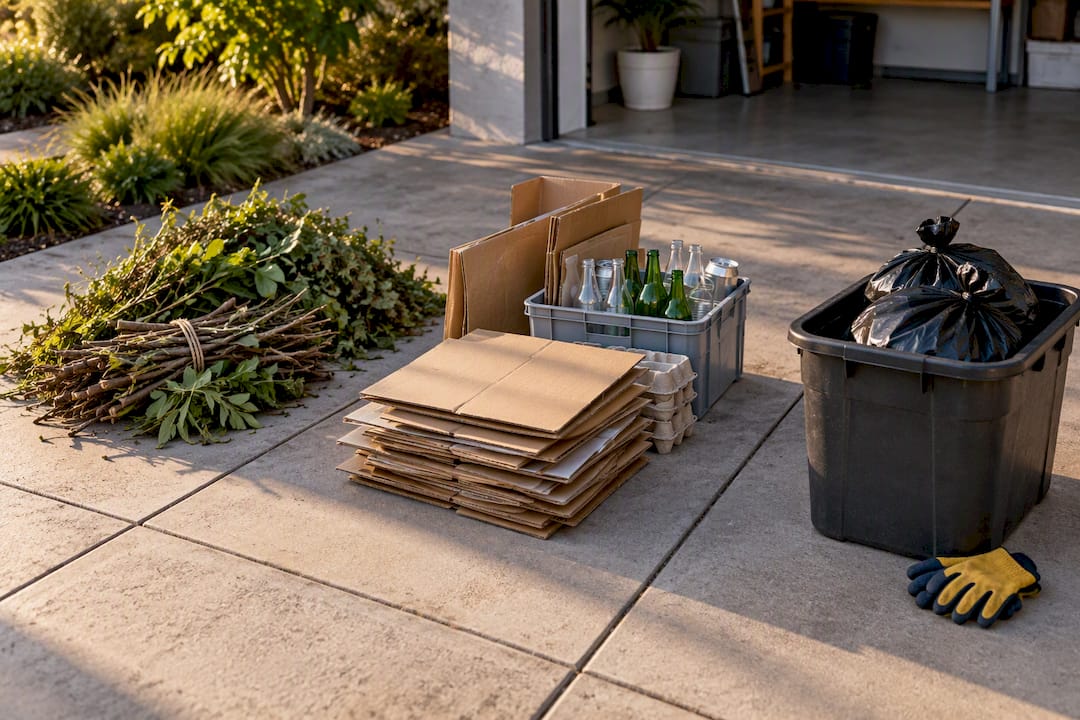
Timing matters too. Booking with a flexible time window rather than demanding same-day service tends to avoid urgency premiums, and separating green waste or recyclables from general rubbish before collection can sometimes qualify for a lower rate, since some facilities charge less for sorted waste streams than for mixed loads.
Worked examples: from a single item to a full clean-out
Seeing a few illustrative scenarios side by side makes the cost drivers above much easier to apply to your own job. These are indicative examples only, meant to show how the pricing logic stacks up rather than fixed rates.
- Single mattress, ground floor pickup: sits near the provider’s minimum call-out fee, since it’s one item with easy access and a well-established disposal fee.
- Small unit clean-out, third floor, no lift: the volume might only justify a quarter load rate, but the access surcharge for carrying furniture down three flights can push the total well above a comparable ground-floor job.
- Half truck load of mixed household rubbish with a driveway pickup: priced at the half-load rate, with GST and standard tipping fees included and no access surcharge since the truck can park close to the load.
- Renovation clean-up with a trailer load of bricks and concrete: even though the volume looks modest, the weight-based tipping fee for heavy demolition material can make this cost more than a full truck load of light general waste. Anyone planning renovation waste removal is better off asking for a weight estimate upfront rather than assuming volume alone sets the price.
The common thread across all four is that volume tells you roughly which pricing tier you’re in, but access and material type are what push the final number up or down within that tier.
Skip bin vs crewed rubbish removal: cost comparison and when to choose which
A skip bin and a crewed rubbish removal service solve the same problem in different ways, and the cheaper option depends on how much labour you’re willing to put in yourself. A skip is generally the lower cost per cubic metre if you and your household are doing all the loading, but that changes fast once you factor in your own time, plus any council permit needed to place a bin on a street or nature strip.
| Factor | Skip bin hire | Crewed rubbish removal |
|---|---|---|
| Who loads the waste | You and your household | The provider’s crew |
| Best for | Ongoing renovation projects with steady waste flow | One-off clean-outs, bulky or awkward items |
| Permit needed | Often, if placed on a public street | Rarely, since the truck parks briefly |
| Access to upper floors | Not applicable, waste must reach the bin | Included, crew carries items out |
Skip hire tends to suit longer renovation jobs where waste builds up gradually over days or weeks. Crewed removal wins for anything involving stairs, awkward furniture, or a tight timeframe where you don’t want to spend a weekend lugging debris to a bin yourself.
How to get an accurate quote: checklist and consumer protection steps
A quote is only as good as the information behind it, and most of the surprises that turn a quoted price into a higher final bill come from details the provider didn’t know about upfront.
- Take clear photos of everything, including any items tucked away in garages or spare rooms that are easy to forget when you’re estimating volume by eye.
- Write out an item list rather than relying on a rough description, especially for anything heavy, hazardous or requiring special handling like mattresses or e-waste.
- Describe your access honestly, including which floor you’re on, whether there’s a lift, and how far the truck can park from your door.
- Ask for a written quote that itemises GST, tipping or disposal fees, and any travel charge, rather than accepting a single lump figure with no breakdown.
- Request confirmation of lawful disposal, such as the name of the receiving facility or a disposal receipt, since you as the waste generator carry responsibility for ensuring your rubbish doesn’t end up illegally dumped.
- Get at least three quotes before booking, and check your state’s fair trading guidance if a final bill ends up differing from what was agreed.
Pro Tip: Ask specifically whether the quoted price already includes GST and tipping fees, since a “cheaper” quote that excludes both can end up costing more once the extras land.
Consumer protection guidance is clear that disputes usually arise when the final price differs from the quote, and comparing several written quotes with matching inclusions is the most reliable way to avoid that outcome, a point covered in detail in the Consumer Affairs Victoria guide. On the disposal side, EPA guidance on waste and recycling puts the duty on whoever generates the waste to make sure it’s managed lawfully, which is exactly why asking a provider where your rubbish ends up isn’t an awkward question, it’s a reasonable one. For a broader rundown on vetting an operator before you book, our guide to choosing a rubbish removal service covers what to look for beyond price alone. Providers also carry their own cost structures around fuel, permits and crew wages, which is part of why prices vary between operators even for similar jobs, as outlined in this waste management business guidance.
Operator notes and common real-world surprises
Crews price labour by estimating how long a job will physically take, not just how much stuff there is. A pile of boxes in a driveway and the same volume of boxes on a fourth floor with no lift are the same size on paper and completely different jobs in practice, which is why access questions come before volume questions on most booking calls.
Opting into carbon-neutral disposal, where offered, typically adds a modest amount to the base price rather than changing it dramatically, since it usually means routing waste through a specific processing stream rather than changing how the job is loaded or transported. It’s worth asking upfront whether that option is available and what it covers, since not every provider offers it.
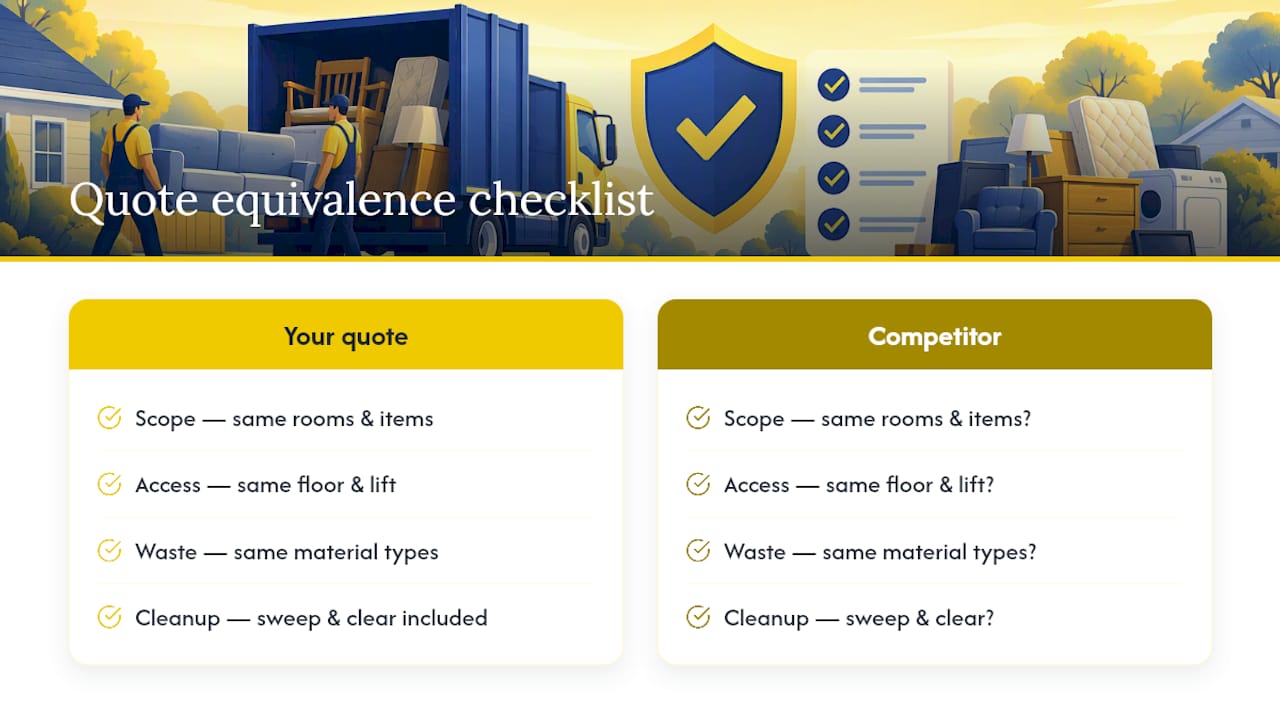
A beat-any-written-quote guarantee is only useful if you can validate it against something real. Send the provider your competing written quote and check that the comparison is genuine, meaning the same scope, the same access conditions and the same waste types, not a cheaper quote for a smaller or easier job. Before booking anyone, confirm what’s actually included: sweeping up after removal, sorting recyclable material out of the load, and proof of where the waste is disposed of are all reasonable things to ask for rather than assume.
Getting a fast, honest quote for your next clean-out
Once you know roughly where your job sits in the price bands above, getting an actual number is the next step, and that’s where a local rubbish removal service fits in. Services can range from single-item pickup through to full office cleanouts, construction waste removal and building strip-outs, covering jobs from spare room clear-outs to commercial fit-outs.
- Send photos and an item list through our quick quote page for a fast written price.
- Ask about options for carbon-neutral disposal if sustainability matters for your job or your workplace.
- Some providers offer to beat competitor written quotes by a set margin, so it’s worth asking before you decide.
Whether you’re clearing an office or planning a larger construction clean-up, get your written quote sorted before the job starts, not after the truck’s already on site.
Where to check levies, lawful disposal and your rights
If you want to verify a quote against official figures rather than take a provider’s word for it, a few government pages are worth bookmarking. EPA Victoria’s waste levy page sets out how levy rates work and why heavier or regulated waste streams cost more to tip. The EPA’s waste and recycling guide explains the duty of care around lawful disposal, which matters if you’re ever unsure whether an operator is doing the right thing with your rubbish. For pricing disputes, Consumer Affairs Victoria’s guide to personal services sets out what a fair quote should include and what to do if a final bill doesn’t match what you agreed to.
Sources
- Waste levy (EPA Victoria)
- Personal services: an industry guide to the Australian Consumer Law (Consumer Affairs Victoria)
FAQ
What is the minimum charge for junk removal?
Most providers charge a flat minimum call-out fee that applies even to a single small item, since the truck and crew cost the same whether the job takes ten minutes or an hour. The exact figure varies by provider and location, so it’s worth confirming this floor price before booking.
How much does junk removal typically cost?
Household jobs commonly range from a small minimum call-out fee up to $350 to $800 or more for a full truck load, depending on volume, access and waste type. Heavy materials like concrete or bricks usually cost more to dispose of than general household rubbish due to higher waste levies.
How much does it cost to remove junk?
The price depends mainly on how much you’re getting rid of and what it’s made of, with volume-based pricing typically running from a quarter load up to a full truck load. Access, such as stairs or a long carry distance, is one of the biggest factors that can push a quote above the base rate.
What is the cheapest way to remove junk?
Sorting your rubbish into general waste, recyclables and heavy materials before collection can lower your rate, since some facilities charge less for sorted loads than mixed ones. Booking ahead with a flexible time window instead of requesting same-day service also helps avoid urgency premiums.