The fastest lawful route is simple: separate treated timber from untreated stock, photograph and measure the load, then book a commercial collection or drop it at a licensed recovery facility. Never burn treated timber or send it to landfill as mulch feedstock. Get those basics right and quotes, compliance, and recovery rates all improve.
TL;DR:
- Treated timber must always be separated from untreated timber at the job site to ensure proper disposal and avoid contamination.
- Recyclers and waste facilities require clear evidence of treatment status, including photos and documentation, before accepting timber loads.
- High-grade hardwood and salvageable structural timber offer better reuse opportunities and can offset disposal costs, unlike heavily treated or manufactured boards.
- Burning treated timber or spreading it as mulch poses serious health and environmental risks and is illegal, with strict enforcement in Victoria.
- Proper sorting, documentation, and choosing licensed, transparent recycling partners maximize recovery rates and comply with waste regulations.
Table of Contents
- What are your timber waste recycling options for business?
- How do you sort and prepare timber for recycling?
- Is treated timber classified differently, and how do you dispose of it?
- What does recycled timber actually become?
- What drives the cost of disposing of timber waste?
- How do you choose the right recycling partner?
- Get your timber waste sorted, collected, and recovered properly
- Sources
- FAQ
What are your timber waste recycling options for business?
Most businesses land on one of four routes, and the right one depends on volume, timber condition, and whether anything on the load is worth saving.
Commercial collection suits ongoing volume. A tray truck or bin service works well when timber is stackable, offsite forklift handling isn’t needed, and you’d rather not organise transport yourself. Direct drop-off at a licensed resource recovery or transfer station makes sense for one-off clean-outs where you control the vehicle and want to skip the collection fee. Most stations accept untreated pallets, offcuts, and structural timber, though acceptance lists vary by site.
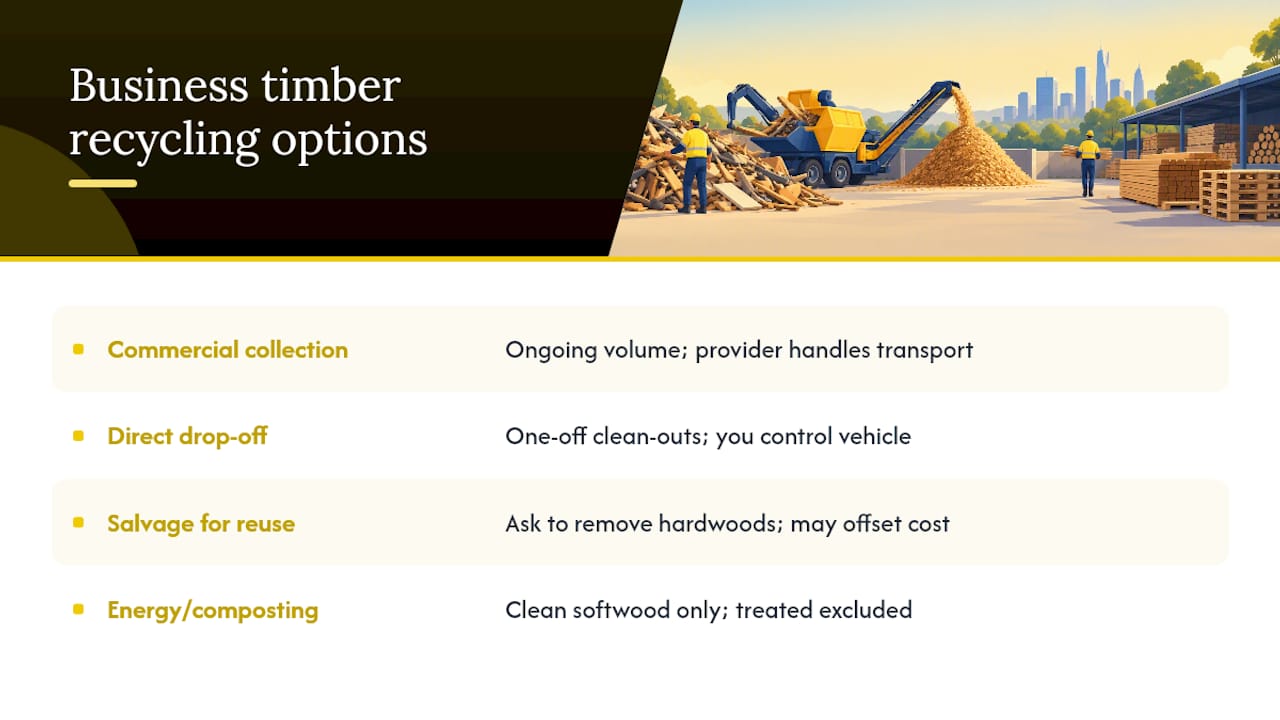
Salvage for reuse is worth requesting specifically. Recyclers will often grind everything to mulch by default unless you ask them to pull out reusable hardwood beams, posts, or joinery first. High-grade hardwood salvage can offset part of the disposal bill, and case studies on timber reuse show mechanised demolition tends to crush this opportunity unless it’s planned in advance.
Energy recovery or composting only applies to clean, uncontaminated softwood and offcuts. Anything painted, treated, or laminated is excluded.
Pro Tip: Ask for salvage before the demolition crew starts, not after. Once beams are cut into short lengths for the skip, the reuse value is gone.
How do you sort and prepare timber for recycling?
Recyclers charge more, or reject the load outright, when timber arrives mixed. A tight sorting routine at the source avoids both.
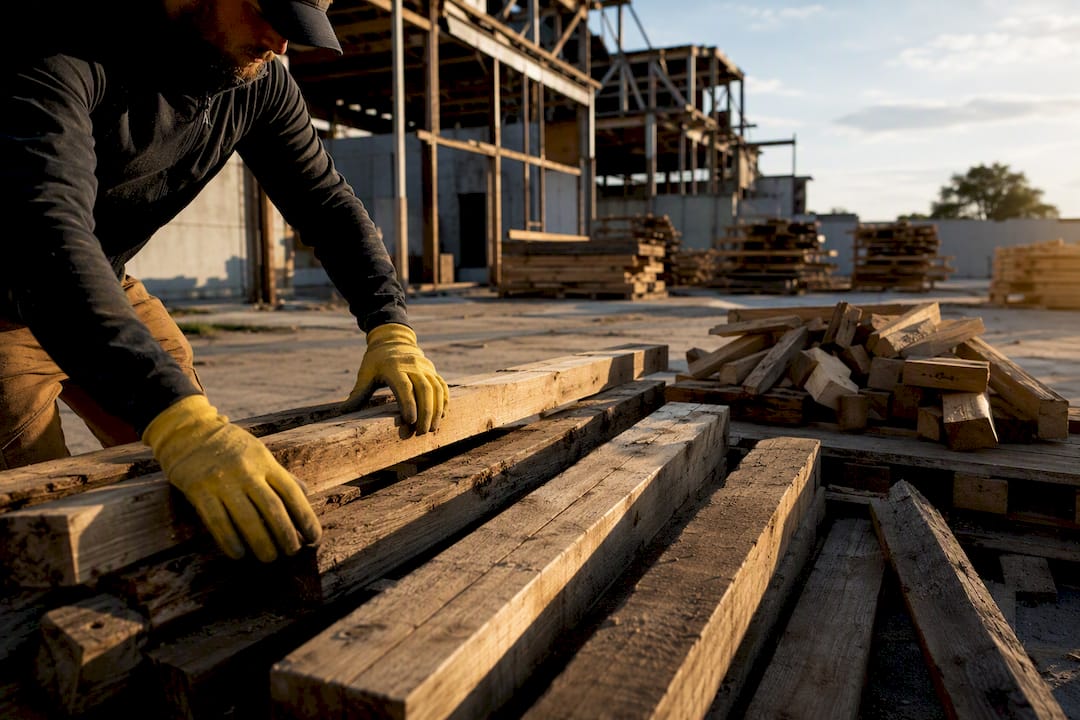
- Split treated from untreated at the point of removal. Keep separate piles or bins; treated timber usually shows a green or brown tinge from CCA treatment, or a slick, tarry surface if creosote was used.
- Strip metal fixings, brackets, and plastic edging before the load goes anywhere. Nails and screws are the single biggest cause of rejected pallet and offcut loads.
- Photograph each pile and estimate cubic metres before you call for a quote. This single habit, used by local salvage projects, speeds up accurate pricing and avoids disputes on arrival.
- Wear a P2 dust mask and gloves when handling sawdust, splintered pallets, or anything with visible surface coating. Treated timber dust is a genuine respiratory hazard.
Pro Tip: Keep a simple log: date, pile type, estimated volume. It turns a vague phone quote into an accurate written one in minutes.
Is treated timber classified differently, and how do you dispose of it?
Yes. In Victoria, timber treated with hazardous preservatives such as CCA or creosote is classified as priority industrial waste under mirror code K310-H, and it must be kept separate from general timber waste at every stage.
That classification exists for good reason. Burning treated timber releases arsenic and chromium compounds from CCA, or carcinogenic hydrocarbons from creosote, into the air and the ash. Spreading it as mulch or garden material contaminates soil directly. EPA Victoria has pursued enforcement action, including clean up notices, against operators who’ve burned industrial waste on site, so this isn’t a theoretical risk.
The lawful path is straightforward:
- Identify treated stock by colour, surface coating, or supplier documentation before you cut or handle it further.
- Route it to a licensed landfill or a facility specifically permitted to accept K310-H waste, never a general green-waste or mulch operation.
- Bag or contain any sawdust and ash generated during cutting, and dispose of it through the same treated-waste channel.
Australia’s timber waste recycling rate has actually dropped, from around 41% in 2016–17 to about 30% in 2022–23, even as the country generated roughly 2.1 million tonnes of timber waste that year. Getting treated timber correctly diverted is part of reversing that trend.
What does recycled timber actually become?
Sorted timber has a real second life, and knowing the end market helps you judge whether a recycler is genuinely processing your load or just landfilling it under a green label.
Clean, untreated softwood typically becomes coloured mulch, bark, or landscaping material, or gets chipped for particleboard manufacture and compost feedstock. Some resource recovery processors run screening, washing, and de-nailing lines that push recovery rates close to 99% on well-sorted loads, and facilities such as those operating in Dandenong South and Epping turn construction and demolition timber into exactly this kind of output, provided contaminants are stripped out beforehand.
High-grade hardwood, structural beams, and joinery are the exception worth chasing separately. Salvage buyers pay for reusable posts and beams rather than grinding them, and prioritising that reuse pathway tends to deliver bigger cost and sustainability wins than sending everything through the chipper.
The weak link is MDF, particleboard, and heavily treated timber. Adhesives and preservative chemicals limit what these can become, so expect lower recovery value, and sometimes no recycling option at all, once a load is dominated by manufactured board.
What drives the cost of disposing of timber waste?
Pricing usually comes down to four levers: volume, contamination, timber mix, and how much sorting the recycler has to do themselves.
- Minimum job fees apply on smaller loads regardless of actual tonnage, so a half-full skip often costs nearly as much as a full one.
- Per-tonne or per-cubic-metre rates scale with volume and are the standard model for larger commercial jobs.
- Transport and sorting surcharges get added when timber arrives mixed, when treated stock hasn’t been separated, or when de-nailing is required on-site rather than done by you beforehand.
- Salvage credits can offset part of the bill when reclaimable hardwood is pulled out and sold rather than binned with everything else.
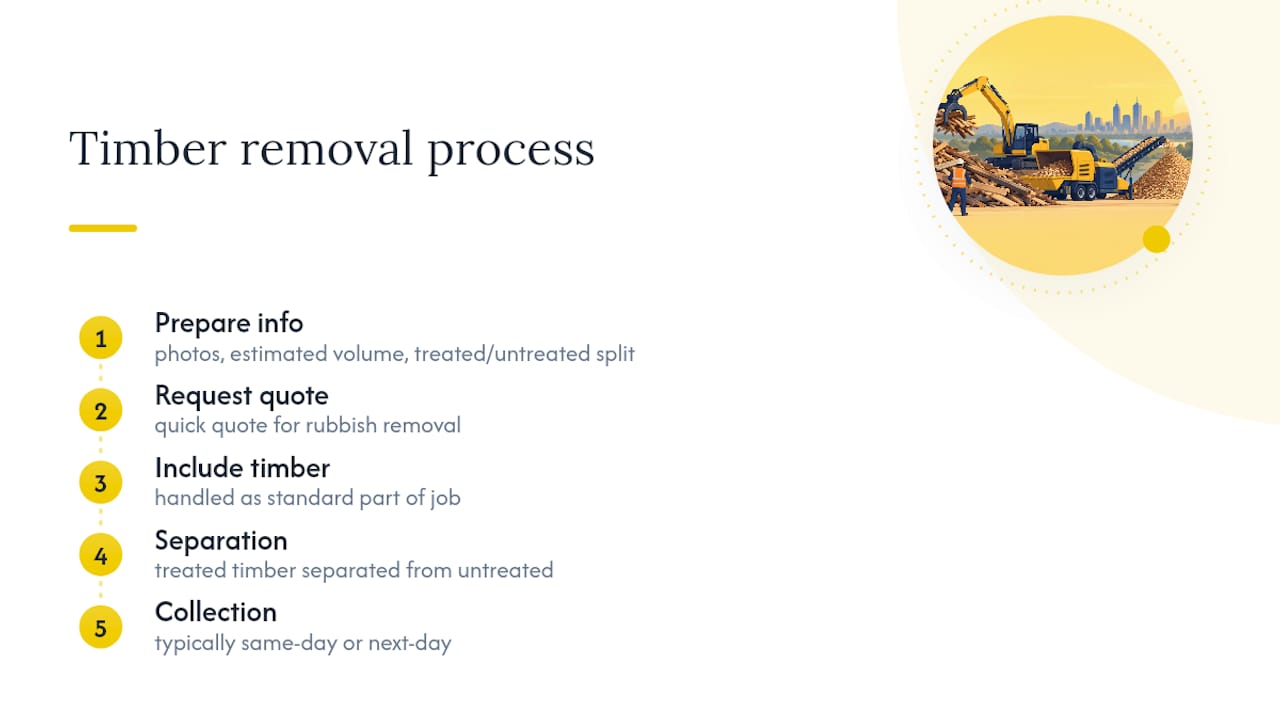
Before requesting quotes, gather estimated volume, a rough treated/untreated split, and photos. Recyclers price faster and more accurately with that information upfront.
How do you choose the right recycling partner?
A few pointed questions separate a genuine recovery operator from someone who’s just moving your problem down the road.
- Ask what’s on their acceptance list. A recycler who can’t tell you clearly what they take, and what triggers a rejection fee, hasn’t got a real sorting process behind them.
- Ask how they handle treated timber. If the answer is vague, or they suggest mixing it with general waste, walk away.
- Ask for evidence of recovery rates or end-market destinations. A credible operator can point to where the material actually goes.
- Check licensing and insured transport, particularly for larger commercial or demolition volumes.
- Ask about turnaround for both collection and documentation, since manifests and paperwork matter for waste compliance records on larger jobs.
Red flags are easy to spot once you know what to listen for: any suggestion of burning waste on site, refusal to separate treated material, or hand-wavy claims about “recycling everything” with no detail behind it. A written Waste Management Plan, the kind builders use to hit 70 to 90% demolition recovery, pushes accountability onto paper rather than a verbal promise.
Pro Tip: A recycler who asks you detailed questions about your load before quoting is usually the one actually sorting it, not the one guessing a flat rate and hoping the tip fee covers everything.
Get your timber waste sorted, collected, and recovered properly
This rubbish removal service takes timber waste as a standard part of commercial removal work, separating treated timber from untreated stock as a matter of course rather than an add-on request. A quote runs on the same information covered above: photos, an estimated volume, and a rough split between treated and untreated timber, with collection typically available same-day or next-day depending on the job.
If you’ve got a strip-out, office clean-out, or demolition load with timber in the mix, the wood and timber waste removal service handles it alongside the rest of the site clearance. Get a quick quote for rubbish removal and have your volume estimate and photos ready to speed up the pricing.
Sources
The rules and figures in this guide draw on:
- Manage and dispose of treated timber | EPA Victoria
- Indicator 6.1e: Degree of recycling of forest products (DAFF)
- Repurpose It — resource recovery supplier listing
Check your local council or state EPA site for site-specific landfill acceptances, since these vary by location.
FAQ
Where can businesses get free timber waste recycling?
Free options are limited and usually apply only to small volumes at council transfer stations, not commercial-scale loads. Most businesses will pay a collection or drop-off fee once volume moves beyond a car boot load, though salvaging reusable hardwood can offset part of that cost.
How can you recycle timber waste?
Separate treated timber from untreated stock, remove nails and fixings, then send it to a commercial collection service or a licensed resource recovery facility. Clean softwood typically becomes mulch, woodchip, or particleboard feedstock, while high-grade hardwood is better salvaged for reuse than ground down.
Can you put timber in general waste bins?
No. General waste bins aren’t designed for bulky timber, and treated timber specifically must never go to general landfill without following the priority industrial waste process required in Victoria. Untreated offcuts in small quantities may be accepted at some transfer stations, but commercial volumes need a proper collection or drop-off arrangement.
What types of wood can’t be recycled?
Heavily treated timber (CCA or creosote), and manufactured boards like MDF or particleboard, have low or no recycling value because of the chemicals and adhesives bonded into them. These streams typically go to licensed landfill rather than a recycling stream, which is part of why the national timber recycling rate sits at only around 30%.
Does Melbournecityrubbish take treated timber?
Melbournecityrubbish’s timber waste removal service covers timber from commercial strip-outs and demolition jobs, with treated and untreated stock separated as standard practice. Current pricing and acceptance details are available directly through the quote process on the site.