Recyclable material belongs at a recycling or resource recovery centre first, every time. Landfill exists for what’s left over once genuine recovery options are exhausted, or for waste no other facility is licensed to handle. The rule of thumb: if it’s clean, sorted, and on an accepted list, take it to recovery; if it’s contaminated, hazardous, or has no viable recovery pathway, landfill is the honest answer. Chemicals, asbestos, and gas bottles need a specialist authorised service, not either bin.
TL;DR:
- About 21% of materials received by recyclings are rejected and sent to landfill mainly due to contamination, small size, or damage.
- Landfills use engineered liners and gas capture systems to contain waste, but methane emissions from them account for 97% of waste-related CO2 equivalent emissions.
- Properly sorted and clean recyclables like cardboard, glass, plastics, and metals have a significantly higher chance of genuine recovery compared to mixed or contaminated loads.
- Large or complex wastes such as renovation debris, office junk, and demolition materials are best handled by professional rubbish removal services that separate recoverable materials on-site.
- Check local rules before disposal, as accepted materials and costs vary by site, and hazardous items like chemicals and asbestos must go to licensed specialist collection points.
Table of Contents
- What does a recycling centre actually do with your waste?
- How does a landfill work, and why do we still need them?
- Recycling centre or landfill: how do you decide for your load?
- How do you prepare a load so it actually gets recycled?
- What do the national numbers say about recycling and landfill emissions?
- When does hiring a rubbish removal service make sense?
- Where can you check the details and local rules?
- Sources
- FAQ
What does a recycling centre actually do with your waste?
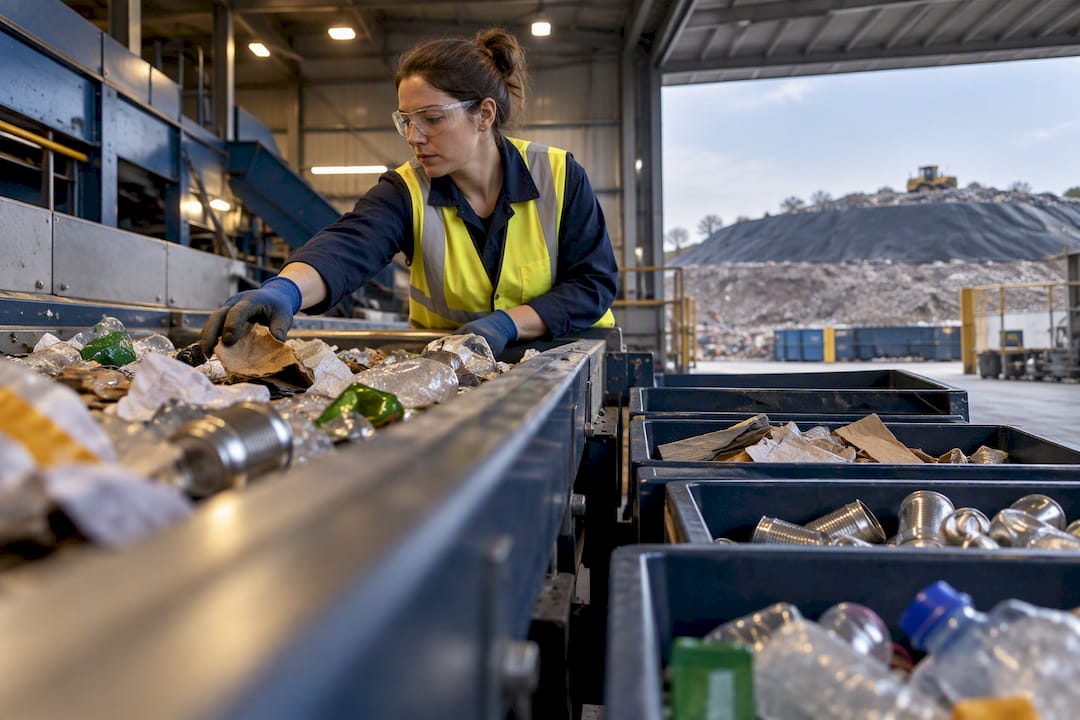
A community recycling centre (CRC) or material recovery facility (MRF) is a sorting and consolidation point, not a magic box. Trucks tip loads onto a floor or conveyor, workers and machines pull out what’s usable, and the rest gets bundled off to wherever it can be reprocessed, whether that’s a local reprocessor or an export contract. Some centres serve households dropping off small loads; others are industrial-scale MRFs built to handle kerbside collections at speed.
What gets accepted varies by site, but most CRCs and MRFs take a fairly predictable range of materials:
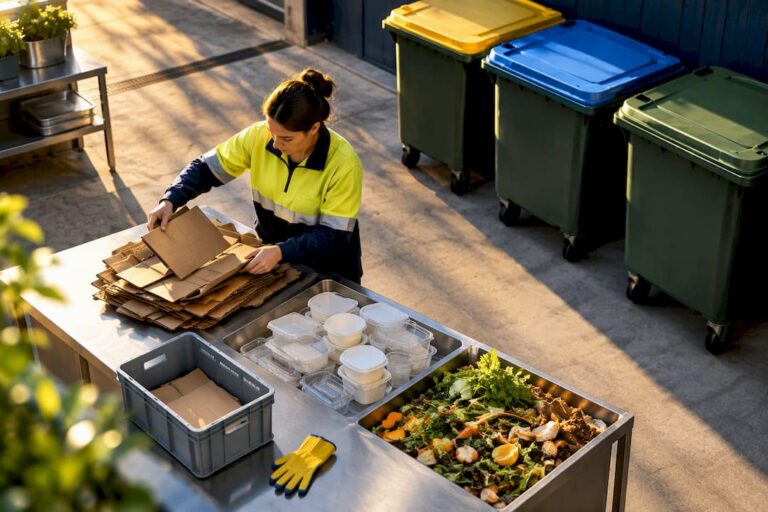
- Clean cardboard and paper, separated from food contamination
- Glass bottles and jars, ideally without lids
- Rigid plastics like bottles, containers, and tubs (soft plastics are usually excluded)
- Metals, including cans, scrap steel, and aluminium
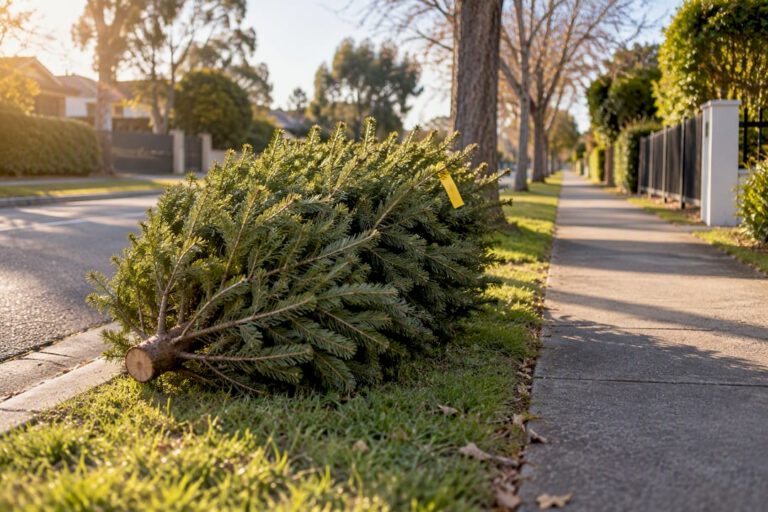
- Some green waste and untreated timber
Most centres explicitly exclude e-waste, household chemicals, gas cylinders, and asbestos, because these need licensed handling under separate regulations. If you’re clearing out old monitors or printers, a dedicated pathway for disposing of e-waste in Melbourne exists precisely because a standard recycling stream can’t take them safely.
Here’s the part most people don’t expect: recycling centres reject a real portion of what arrives. Roughly 21% of material received by MRFs in 2022-23 was sent straight to landfill, mostly because it was non-recyclable to begin with, bagged in plastic, too small for the sorting equipment to catch, or damaged beyond use. A recycling centre is a pathway, not a guarantee. What you hand over still needs to meet the site’s rules to actually get recovered.
How does a landfill work, and why do we still need them?
A modern landfill is engineered infrastructure, not a hole in the ground. Waste goes into lined cells designed to stop contaminants leaching into soil and groundwater, with drainage systems that collect leachate for treatment and gas wells that capture methane as the buried waste breaks down. EPA Victoria’s guidance on landfill design and operation sets out strict siting, construction, and monitoring requirements that apply for the site’s operating life and well beyond it.
That “well beyond” detail matters more than people realise:
- Rehabilitation and monitoring obligations can run for decades after a landfill stops accepting waste
- Captured landfill gas is often used to generate electricity, which is energy recovery, not recycling
- Liners and leachate systems reduce environmental risk but don’t eliminate it entirely
- Landfill remains the designated last resort under the waste hierarchy, used when higher-value recovery isn’t practicable
Landfill methane is the headline number to know here. In 2023-24, landfill, composting, and incineration together released about 10.8 million tonnes of CO2-equivalent emissions, with methane from landfills accounting for 97% of that total. That single figure explains why gas capture systems have become standard at engineered sites, and why avoiding landfill in the first place beats capturing the gas after the fact.
Energy recovery is worth separating from recycling in your own head, because they get conflated constantly. Turning landfill gas into electricity reduces emissions from waste that’s already buried, but it doesn’t turn a broken chair or a tonne of concrete back into a usable product. That transformation only happens through genuine material recycling.
Recycling centre or landfill: how do you decide for your load?
The comparison gets easier once you stop asking “which is better” and start asking “which is right for this specific material.” Recycling centres exist to extract value from clean, separated waste. Landfills exist to safely contain what has no viable recovery path. Cost and convenience often favour landfill in the short term, since mixed loads get accepted without sorting, but that convenience shifts the environmental cost onto the site’s air, land, and multi-decade monitoring obligations rather than removing it.
Run through these common scenarios to see how the decision actually plays out:
- Clean, flattened cardboard. This is a straightforward recycling centre win. It’s dry, uncontaminated, and one of the easiest materials to reprocess into new packaging stock.
- Mixed glass, various colours. Most centres still accept it, though some reprocessors sort by colour and pay less for mixed loads. It belongs at a recycling centre, not landfill.
- Food-contaminated organics mixed into general waste. If it hasn’t been source-separated, it’s a likely MRF reject and ends up as landfill residual, even though the raw material was recoverable.
- Clean building rubble (bricks, concrete). Construction and demolition material drives most of the recent growth in national recovery, and clean rubble is genuinely one of the better-performing streams. A step-by-step guide to building waste disposal covers how to keep loads clean enough to qualify.
- Old fridges, tyres, and paint tins. None of these belong at a standard recycling centre or in landfill. They need an authorised specialist collection point, and dropping them in the wrong bin risks fines and genuine environmental harm.
Australia recycled or reused about 47.6 million tonnes of material in 2022-23, up from 40.5 million tonnes in 2016-17. Most of that growth came from construction and demolition waste, which tells you exactly where the biggest recovery wins are actually happening.
How do you prepare a load so it actually gets recycled?
Sorting at home before you leave, or before a truck arrives, decides more about a load’s fate than almost anything that happens at the facility. A dirty, mixed load doesn’t get a second chance once it’s on the sorting floor. It gets rejected and landfilled, full stop.
Run through this checklist before you load the car or book a collection:
- Separate paper and cardboard from anything wet or food-soiled
- Rinse containers that held food or liquid, even a quick rinse helps
- Keep organics (food scraps, garden waste) out of general recycling entirely
- Never bag recyclables in plastic bags. Loose in the bin, always
- Pull out anything smaller than a golf ball; small items jam sorting machinery
- Check for mixed-material items (a glass jar with a metal lid) and separate the components if you can
The most common contamination mistakes are painfully simple: bagged recyclables, greasy pizza boxes, food scraps left in containers, and soft plastics tossed in with rigid ones. Fix those four habits and your recovery rate improves immediately, without spending a cent.
Pro Tip: Before anything goes anywhere, ask if it can be reused. A council hard-rubbish collection or a local charity will take a working appliance or solid furniture piece, and that’s a genuinely better outcome than even the best recycling process.

For renovation and building loads specifically, managing renovation waste properly from the start avoids the mixed-skip problem that turns recoverable timber and metal into landfill by default. And if you’re not sure what your local facility even accepts, checking recycling rules for your area before you load the ute saves a wasted trip.
What do the national numbers say about recycling and landfill emissions?
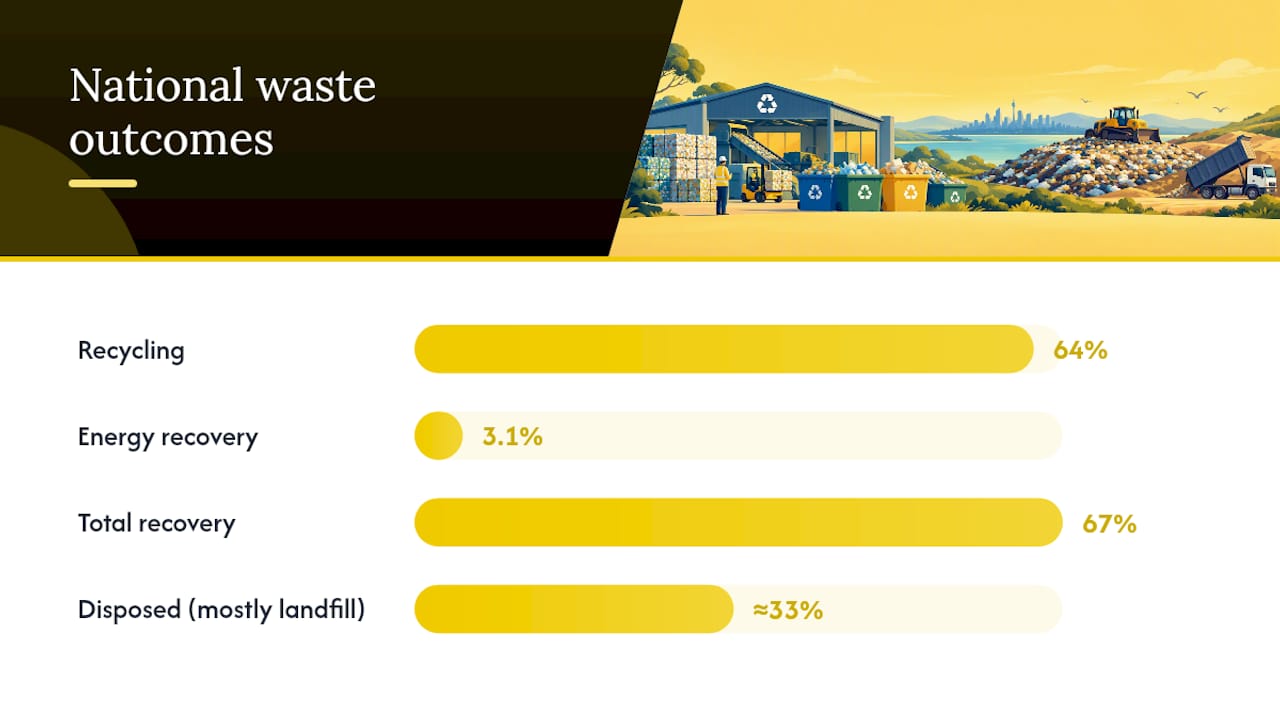
National reporting puts Australia’s core waste recovery at about 67%, split between 64% recycling and 3.1% energy recovery, with the remaining third disposed of, mostly to landfill. That’s a genuinely solid national average, but it hides enormous variation between material streams.
Plastics and textiles are the weak links. Both streams recover at rates well below the national average, largely because they’re prone to contamination and because reprocessing infrastructure for them is thinner than it is for glass, metal, or cardboard. Source separation makes an outsized difference for exactly these materials, since a clean plastic stream has a real market and a contaminated one usually doesn’t.
The emissions side of the ledger is where landfill’s cost becomes concrete. Methane accounts for the overwhelming majority of emissions from disposal, which is why gas capture at engineered sites matters, and why every tonne diverted from landfill in the first place avoids that emissions profile entirely rather than just managing it after burial.
When does hiring a rubbish removal service make sense?
Large loads, renovation debris, office clear-outs, and demolition waste rarely sort themselves neatly into “recycling centre” or “landfill.” Mixed loads like these are exactly where a booked service earns its keep, because sorting a ute-load of construction debris or a warehouse of old furniture yourself eats an entire weekend, and getting it wrong means paying twice.
A professional removal service should do more than just haul material away. Look for one that separates recoverable material from true waste on-site, can tell you roughly where different waste streams end up, and offers a genuine carbon-neutral disposal option rather than treating “eco-friendly” as a marketing line.
Some professional services handle exactly this kind of complex load, from office junk and construction debris to green waste and full demolition strip-outs, with options for carbon-neutral disposal.
If you’re clearing an office, managing a renovation, or handling a demolition, get a sense of the full range of services on offer, or head straight to a quick quote to see what a properly sorted, professionally handled removal actually costs.
Where can you check the details and local rules?
The figures in this article come from DCCEEW’s national waste and resource recovery reporting and EPA Victoria’s landfill guidance. Accepted materials and fees vary by site, so check your local council’s page before you load up a trailer.
Sources
FAQ
Does recycling in Australia actually end up in landfill?
Some of it does. About 21% of material arriving at MRFs in 2022-23 was rejected and sent to landfill because it was contaminated, bagged, too small, or damaged. Clean, properly separated material has a far better shot at genuine recovery.
Is there a real difference between a “dump” and a landfill?
Yes. A casual “dump” implies an unmanaged waste pile, while a licensed landfill is engineered infrastructure with liners, leachate treatment, and gas capture, regulated under frameworks like EPA Victoria’s landfill standards. Illegal dumping carries none of those environmental protections and is a separate, prosecutable problem.
Do landfills ever get emptied out once they’re full?
No. A landfill cell is permanently sealed once it reaches capacity, then capped, monitored, and rehabilitated, sometimes for decades. Waste isn’t dug back up and reprocessed; that’s the core difference between landfill and a recycling centre.
What should I do with items no recycling centre will take?
Items like e-waste, chemicals, gas bottles, and asbestos need an authorised specialist collection point, not a standard recycling bin or landfill skip. For electronics specifically, safe e-waste disposal options exist because standard sorting facilities aren’t licensed to handle them.
How much does it cost to book a rubbish removal service instead of sorting it yourself?
Pricing depends on the volume and type of waste involved, and current rates are available directly through Melbourne City Rubbish’s quote page.