
Start planning your office move 6 to 12 months out, appoint a single move manager to own every decision, and build a budget with contingency included before you sign anything new. Review your lease’s make-good clause early, get vendor quotes in writing, and lock in your IT lead times immediately. The phase-by-phase checklist below covers planning, preparation, the final week, moving day, and settling in.
TL;DR:
- Securing vendor quotes and finalizing logistics at least four weeks before moving day prevents delays caused by supplier availability.
- Conduct a detailed inventory and label all assets well in advance to avoid confusion and loss during the move.
- Prioritize reconnecting critical IT infrastructure first on moving day to minimize downtime and disruption.
- Start make-good planning early with proper documentation and clear scope to reduce dispute risks and control costs.
- Arrange waste removal, donation, and recycling services ahead of time to avoid last-minute scheduling conflicts and excess disposal costs.
Table of Contents
- Planning phase: 6 to 12 months before moving day
- Preparation phase: 3 to 6 months before moving day
- Final preparations: 1 to 3 months, and the last two weeks
- Moving day checklist: priorities and run sheet
- Settling in: snagging and reconciliation from week one to day 90
- How to choose removalists, IT movers, and fit-out contractors
- Make-good and lease exit checklist: what to check and when
- Sustainability and waste handling during an office move
- Sources
Planning phase: 6 to 12 months before moving day
The early months set the ceiling on your budget and the floor on your stress levels. Get governance and money sorted first, because every later decision hangs off them.
Appoint a move manager or small move committee with clear authority to sign off on vendors and timelines. Without one decision maker, small choices stall for weeks. Project management guidance for office moves consistently points to a single owner as the difference between a smooth relocation and a chaotic one.
Your to-do list for this phase:
- Define objectives and success metrics (target move date, acceptable downtime, budget ceiling).
- Build a budget covering rent delta, fit-out, IT, removalists, make-good, and a contingency line.
- Review the lease: notice periods, make-good wording, and the original schedule of condition.
- Start site surveys and confirm power, data, and HVAC needs against the new floor plan.
- Order long-lead furniture or specialised fit-out items now, before supplier queues blow out your timeline.
- Scope vendors for fit-out, removals, and IT, and confirm what insurance each will need to hold.
For the budget itself, work through these steps in order:
- Cost the known items: rent, fit-out, IT cabling, and removalist quotes.
- Add make-good reinstatement as a separate line, not an afterthought.
- Apply a 10 to 15% contingency across the whole project.
- Set a sign-off threshold so the move manager can approve minor overruns without a committee meeting.
Most successful relocations start planning at least 9 to 12 months in advance, and larger or more complex fit-outs often need longer.
Pro Tip: Photograph your current office’s condition now, room by room, dated and time stamped. You will not remember what “normal wear” looked like in ten months, and your landlord definitely won’t remember it in your favour.

Preparation phase: 3 to 6 months before moving day
This is where strategy turns into a schedule. Everything in this window is about locking commitments before supplier calendars fill up.
- Finalise the floor plan, seating chart, and power and data maps for every desk and meeting room.
- Run a Wi-Fi and mobile signal survey in the new space if it’s an unfamiliar building or has thick concrete floors.
- Order internet and phone services the day the lease is signed. Providers can take 4 to 12 or more weeks depending on building readiness, and this single step causes more move-day downtime than any other.
- Run a full asset inventory: tag every item as move, keep, donate, or dispose, and log leased equipment separately so it isn’t accidentally binned or relocated.
- Get written quotes from removalists, IT movers, and fit-out contractors after an in-person walkthrough, not a phone estimate.
- Confirm certificates of insurance from every vendor and note a dispute-resolution contact for each.
Alongside the logistics, start your internal communications plan:
- Decide who needs to know what, and when: staff first, then clients, suppliers, and any regulators tied to your registered address.
- Assign a point person per department to manage packing and questions.
- Set the tone early. A vague “we’re moving soon” memo creates more anxiety than a dated, phased announcement.
Final preparations: 1 to 3 months, and the last two weeks
This is where the plan gets physical. Deadlines matter more here than at any earlier stage, because there’s no slack left to absorb a missed booking.
- Distribute packing guides and colour-coded labels by department, with a firm packing deadline for each team.
- Confirm lift bookings, loading-dock slots, building access passes, and truck parking permits at both sites.
- Run an IT dry run: back up all data, label every cable and device, and finalise the server-room shutdown and setup sequence.
- Reconfirm every vendor’s arrival time and provide a single move-day contact list to everyone involved.
- Book waste removal for strip-out debris and recycling, and schedule any donation pick-ups for furniture you’re not taking.
A colour-coded, department-tagged labelling system is one of the simplest ways to cut down on lost items and unpacking chaos, and it costs nothing but a few hours with a label printer.
Pro Tip: Give each department a numbered box range (say, Marketing gets boxes 100 to 149) rather than just a colour. When two teams both grab green labels, colour alone won’t save you.
Moving day checklist: priorities and run sheet
- Set up a command point at both the old and new site, with the move manager and vendor supervisors physically present at each.
- Prioritise reconnecting critical services first: servers, routers, and phone lines, using call forwarding as a bridge if the new line isn’t live yet.
- Place furniture and equipment according to the floor plan, and staff a check-in station to log any damage as it happens, not after the fact.
- Keep a first-aid and essentials box on hand (tape, box cutters, spare labels, phone chargers) because something always goes missing on the day.
- Keep waste streams segregated on site: donation items, recyclables, and general waste in separate, clearly marked areas, with pick-ups confirmed for each.
- Photograph any damage immediately and note exceptions for insurance claims before the trucks leave.
A single move owner who can approve small on-the-spot calls, like reallocating a delayed shipment or approving overtime, resolves problems in minutes instead of days. That’s not a nice theory: it’s the recurring factor project management guides for office moves point to when comparing smooth relocations against chaotic ones.
Settling in: snagging and reconciliation from week one to day 90
The move isn’t finished when the last box is unpacked. It’s finished when the numbers add up and the building works properly.
- Run a post-move audit against your asset inventory and close high-priority snag items (broken locks, missing signage, non-working power points) within the first week.
- Update your official addresses everywhere: the ATO, ASIC, your bank, insurers, and every supplier on file.
- Reconcile every invoice against the original budget and document where you went over or under, and why.
- Survey staff in week one for urgent problems, then set a 30, 60, and 90-day plan to fix anything that surfaces later.
- Schedule any decommissioning or make-good works still owing at the old premises, ideally before the final handover date.
Post-move reconciliation and an early staff survey are what close project risk quickly, rather than letting small issues drag into next quarter’s budget meetings.
How to choose removalists, IT movers, and fit-out contractors
Get quotes only after an in-person site visit. A quote based on photos or a floor plan alone tends to miss loading dock quirks, narrow doorways, or lift size limits that blow out the final invoice.
- Collect at least two competitive written quotes for each vendor category.
- Require certificates of insurance and confirm transit coverage, liability limits, and workers’ compensation.
- Get the scope of work in writing: disassembly, reassembly, specialised handling, overtime rates, and cancellation terms.
- Set acceptance criteria and an IT service level agreement for reconnection time, with one named contact for disputes.
- Check that extra-hours pricing is transparent and that there’s a documented process for lodging damage claims.
Written quotes taken after a physical walkthrough protect you from the most common source of moving-day cost blowouts: scope disagreements discovered on the day.
Pro Tip: Ask each vendor for a written cancellation policy before you book, not after. Move dates shift more often than anyone plans for, and some removalists charge full rate for less than 48 hours’ notice.
Make-good and lease exit checklist: what to check and when
Read your make-good clause properly, not just the summary your leasing agent gave you. Obtain the original entry condition report and any side letters that varied the standard lease terms.
- Start make-good planning 6 to 12 months before lease end and get quotes for the reinstatement works.
- Photograph the current condition now, and keep dated records to support any negotiation later.
- Negotiate scope and cost caps early, and get legal advice if the clause is vague or unusually broad.
- Budget make-good as its own line item with a contingency, separate from your relocation budget.
- Schedule reinstatement works to avoid clashing with your new office’s critical opening dates.
Make-good is often the most underestimated cost in a lease exit, and dated photo evidence of the original condition is one of the few things that reliably reduces disputes with a landlord.
Sustainability and waste handling during an office move
A move is one of the few times you’ll physically touch every asset in the building, which makes it the easiest moment to sort what gets reused, donated, or scrapped.
- Catalogue furniture for reuse or donation and publish a simple pick-up schedule for local charities following practical guidance on organising giveaways.
- Segregate e-waste and route it through certified handlers, wiping or logging any data-bearing devices before they leave the building.
- Document recycled and reused tonnage for your ESG reporting; donating and recycling instead of landfilling also cuts your transported volume and removalist costs.
- Book commercial waste removal for strip-out debris well ahead of your final exit date, not the week before.
Pro Tip: Ask your furniture recipients to collect on a fixed date, not “sometime before we leave”. Open-ended donation offers are the number-one reason unwanted desks end up in a skip anyway.
If you’d rather hand the sorting and hauling to someone else, a local operator can manage the office junk removal and e-waste side of the move while you focus on the parts only your team can do.
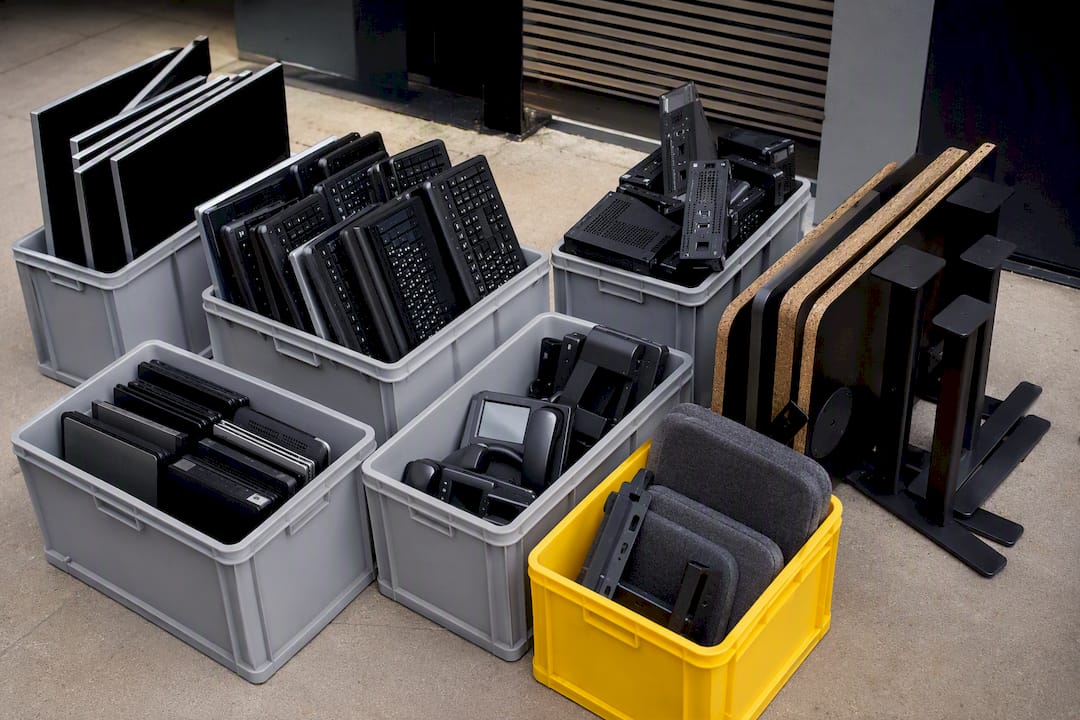
A local operator can handle the physical clear-out side of an office move: strip-out debris, old furniture, e-waste, and general office junk, with disposal options available for businesses tracking sustainability outcomes. If your relocation timeline has a decommissioning date attached to it, get a quick quote before that date locks in and removalist and waste-collection calendars fill up around you.
Sources
- Office Move Project Plan Template: Your Ultimate 2026 Guide
- Office Relocation Checklist: A Step-by-Step Guide
- Make good: Australia (RICS, 3rd edition, Oct 2023)
- Make-good clause commercial lease guide
- How to Project Manage an Office Move Step by Step – CLIMB