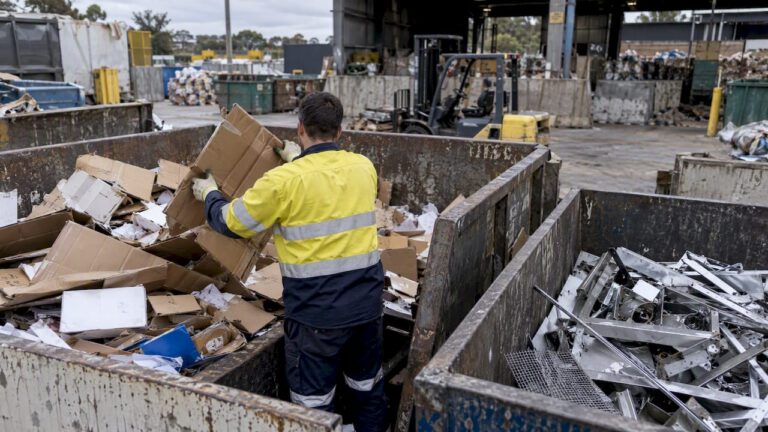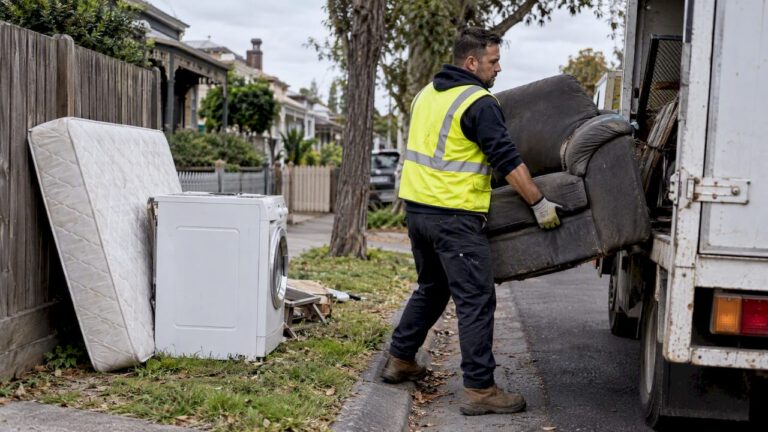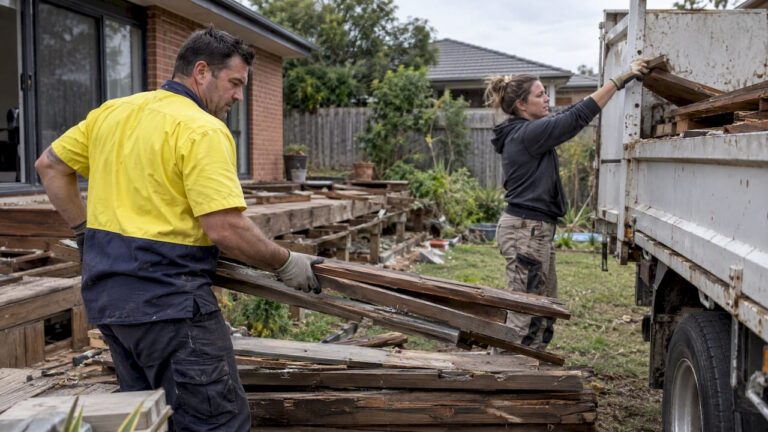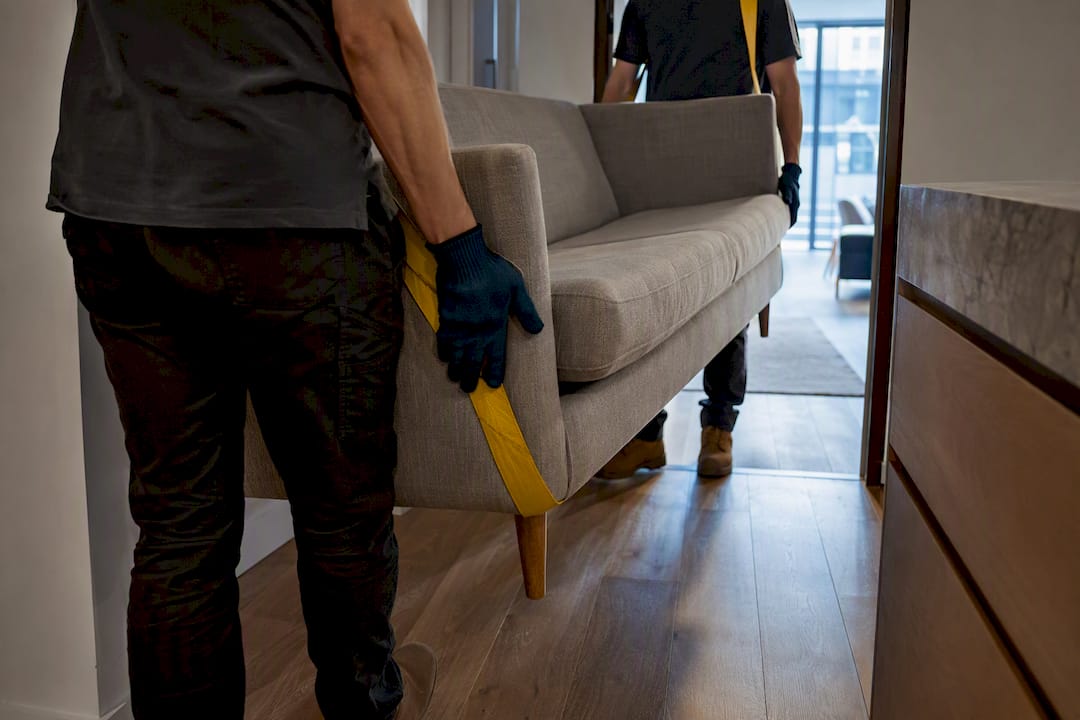
Four routes cover almost every situation: council hard waste collection for small, one off loads, charity donation for clean and functional pieces, selling or giving away furniture that still has value, and paid removal when you need speed, bulk clearance, or you’re stuck with something soiled or broken. Pick council hard waste if you’ve got one item and time to spare. Choose charity pickup if the piece is in good nick. Sell online if it’s worth something. Book a removal service like Melbournecityrubbish when you need it gone today.
TL;DR:
- Council hard waste collection is limited to one free pickup per year with a maximum volume of about one cubic meter, necessitating early booking.
- Charitable donations require items to be clean, intact, and booked seven to fourteen days in advance, with coverage depending on the charity’s routes.
- Selling furniture online offers the fastest clearance, especially with accurately measured listings, clear photos, and price under similar market rates.
- Paid removal services are ideal for urgent, bulk, or damaged furniture, providing quick quotes, eco-friendly sorting, and disposal receipts.
- Certain items like foam-backed or glass furniture, e-waste, and asbestos-containing pieces need special handling or professional disposal to comply with safety and environmental rules.
Table of Contents
- At-a-glance options: which route to choose now
- Council hard-waste collection: what Melbourne ratepayers get for free
- Donating to charities and op shops: condition rules and pickup windows
- Selling or giving away furniture fast online
- Paid removal services: when they’re worth it and what to expect
- Preparing furniture for collection or drop-off
- Costs and timelines: comparing your four options
- Legal regulations and environmental guidelines for furniture disposal
- Hazardous or special furniture items disposal protocols
- Melbourne City Rubbish: book a fast, local removal when you need one
- Where to book or check the rules
- Sources
At-a-glance options: which route to choose now
Every option below solves a different problem, and knowing which one fits your situation saves you a wasted phone call or a rejected booking.
- Free council collection — choose this if you’ve got one or two items, they’ll fit within a modest volume limit, and you can wait a couple of weeks for your scheduled slot. Red flag: City of Melbourne only allows one free collection per financial year.
- Charity donation — choose this if the furniture is clean, undamaged, and still useful to someone else. Red flag: most charities won’t touch stained, torn, or broken pieces, and some suburbs sit outside pickup zones.
- Sell or give away — choose this if the item has resale value or someone nearby wants it for free. Red flag: you’re managing the transaction yourself, including no shows and haggling.
- Paid removal — choose this if you need it gone fast, you’ve got a big volume, or it’s damaged and no charity will take it. Red flag: cost varies with volume and access, so get a quote before you commit.
Council hard-waste collection: what Melbourne ratepayers get for free
Melbourne ratepayers get one free hard-waste collection every financial year through the City of Melbourne, and it’s genuinely useful if you plan around its limits. The catch is volume: everything you put out has to fit within a modest volume suitable for typical household items like a large armchair or a couple of dining chairs.
- Book your collection online or by phone before you put anything on the kerb. Crews won’t collect unbooked piles, and they can’t enter your property to grab items from a backyard or garage.
- Place everything at the kerb the night before your scheduled date, not earlier. Councils fine residents for early dumping in some areas.
- If you’ve got more than one cubic metre, take the excess to Dynon Road Waste and Recycling Centre yourself. It’s open daily from 9am to 3pm, though charges apply depending on what you’re dropping off.
Donating to charities and op shops: condition rules and pickup windows
Charities will often collect large furniture for free, but they’re not a dumping ground for anything you don’t want anymore. Sacred Heart Mission runs a free collection service for bigger donations, and groups like Vinnies publish clear lists of what they’ll take and what they won’t.
- Items need to be clean, free of major stains, and structurally sound. A wobbly bookshelf or a couch with springs poking through won’t get picked up.
- Expect to book seven to fourteen days ahead. Charities schedule pickups in batches, not on demand.
- Coverage is patchy geographically. Some outer suburbs sit outside a charity’s regular run.
- Always check the specific shop’s acceptance list before you book. RIMERN’s donation guidance points out that unusable donations cost charities time and money, which is exactly why so many now enforce strict condition checks.
Pro Tip: Photograph the item and email it to the charity before booking. A quick photo check avoids the awkward moment where a volunteer arrives, takes one look, and drives off empty handed.
Selling or giving away furniture fast online
If your old dresser or dining table still has life in it, selling or giving it away online often beats every other option for speed and simplicity. Melbourne residents commonly use Gumtree, Facebook Marketplace, and Freecycle to move bulky furniture without paying a cent in fees.
- List clear measurements. A sofa that “looks big” in a photo but doesn’t fit through a stairwell wastes everyone’s time.
- Take photos in daylight, from multiple angles, showing any wear honestly. Buyers trust a listing more when the flaws are visible upfront.
- Mark it “pick up only” unless you’re prepared to arrange delivery yourself.
- Meet buyers in daylight hours where possible, and get a mobile number before confirming a time.
Pricing it slightly under similar listings usually gets it gone within a day or two, which matters if you’re on a tight moving deadline.
Paid removal services: when they’re worth it and what to expect
Paid removal earns its cost when a charity won’t take the item, council collection is months away, or you simply need the furniture gone today. It’s also the practical choice for office fit outs, strata clearances, and any job involving more than a couch and an armchair.
Book a service for:
- Stained, torn, or broken furniture that no charity will accept.
- Same-day or next-day jobs where you can’t wait for a scheduled council slot.
- Bulk clearances covering multiple rooms, an entire office, or a rental property before handover.
A reputable operator gives you a quick quote, turns up with labour included, sorts items for reuse or recycling where possible, and hands over a disposal receipt. A written quote and a disposal receipt are the two trust signals worth asking for before you book — they confirm the provider isn’t just tipping everything into landfill. Ask specifically about carbon-neutral disposal options and any charity partnerships the provider runs, since not every removalist sorts for donation.
Preparing furniture for collection or drop-off
Preparation is the difference between a smooth pickup and a rejected one, whether you’re dealing with council, a charity, or a paid crew.
- Measure each piece and photograph it from a few angles, especially if you’re booking a charity pickup or listing it for sale.
- Remove loose cushions, detachable legs, or glass shelving, and tape down or pad any sharp edges.
- Clean surfaces where you can, and declare any stains, tears, or structural damage upfront rather than letting the crew discover it on arrival.
- Wrap or bag mattresses if your council or charity requires it. Hygiene rules around mattresses and upholstery are stricter than for hard furniture.
- Label items clearly if you’re combining a donation pile with a sale pile, and follow your council’s kerbside placement timing to avoid fines.
Pro Tip: Take the disassembly step seriously for anything with removable legs or shelves. A dismantled bookshelf fits in a car boot; a fully assembled one often needs a van and two people.
Costs and timelines: comparing your four options
Budget and urgency usually decide which route makes sense, so here’s how the four stack up against each other.
- Free council collection: no cost, but you only get one collection per financial year with a strict one cubic metre limit. Book early since slots fill up weeks in advance.
- Charity pickup: usually free, but expect seven to fourteen days’ notice and conditional acceptance based on the item’s condition.
- Sell or give away: timing varies widely. A correctly priced, well-photographed listing can move the same day; an overpriced one can sit for weeks.
- Paid removal: same-day to 48 hour windows are common. Price depends on volume, how much labour is needed, and how accessible the property is.
If you’re weighing up cost against your own time, factor in that a “free” charity pickup that gets refused on arrival can cost you more in rebooking delays than a paid job would have upfront.
Legal regulations and environmental guidelines for furniture disposal
Dumping furniture on a nature strip without a booking isn’t just against council rules, it’s illegal in most Melbourne municipalities and can attract fines. The City of Melbourne’s hard waste system exists specifically to stop illegal dumping by giving residents a legitimate, scheduled outlet for bulky items.
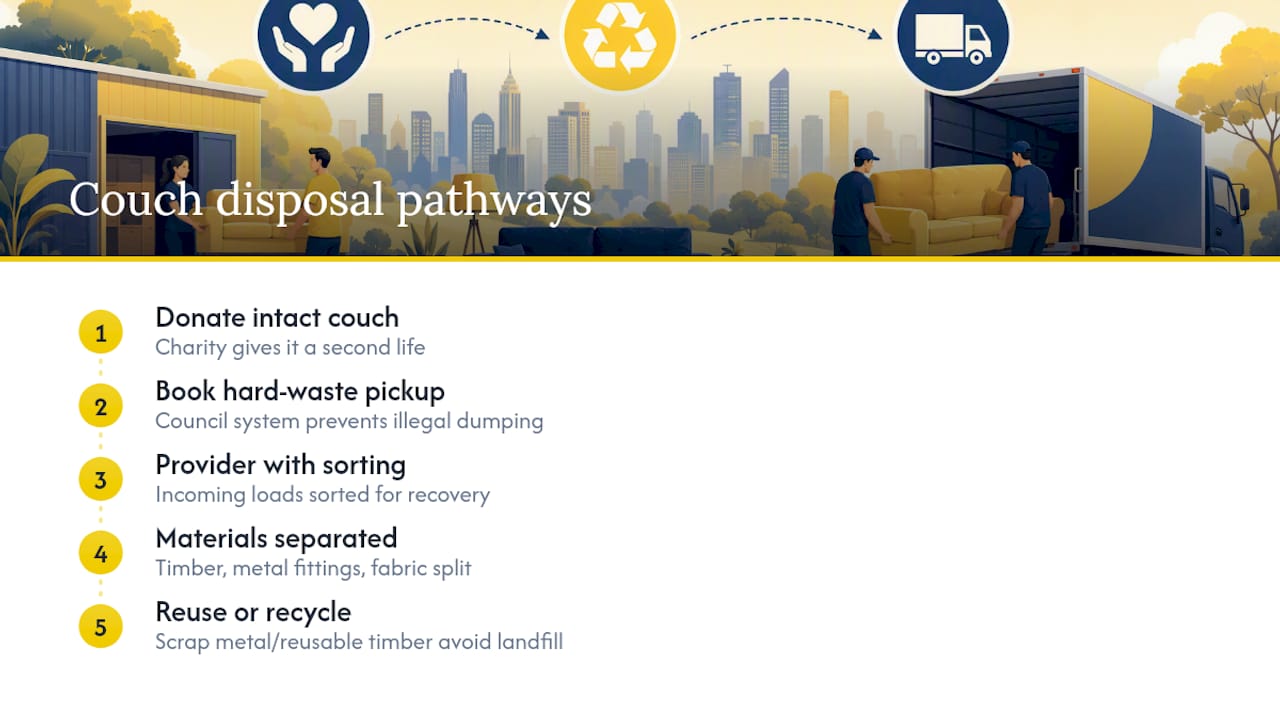
Environmental guidelines push hard toward diverting furniture from landfill wherever possible. Timber, metal fittings, and fabric can often be separated and recycled rather than buried, and many councils and waste facilities now sort incoming loads with recovery in mind rather than sending everything straight to a tip face. That’s part of why choosing donation or a provider with sorting practices carries more weight environmentally than it might seem: a couch frame stripped for scrap metal and reusable timber avoids landfill entirely, while an intact couch donated to a charity gets a second life without any processing at all.
Strata properties and rental tenancies carry their own obligations. Landlords and managing agents are generally responsible for common area waste, and tenants leaving furniture behind at the end of a lease can be charged for its removal. If you’re clearing an office or a shared building, check your lease or strata by-laws before assuming kerbside collection covers you, because commercial premises are usually excluded from residential hard waste entitlements altogether.
Hazardous or special furniture items disposal protocols
Not every piece of furniture is straightforward rubbish. Items with foam padding, particularly older sofas and mattresses manufactured before fire retardant standards tightened, sometimes require separate handling because foam breakdown products aren’t ideal for standard landfill streams. Councils and waste centres generally still accept these through standard hard waste or drop-off channels, but mattresses in particular often need wrapping or bagging first for hygiene reasons before a charity or council crew will touch them.
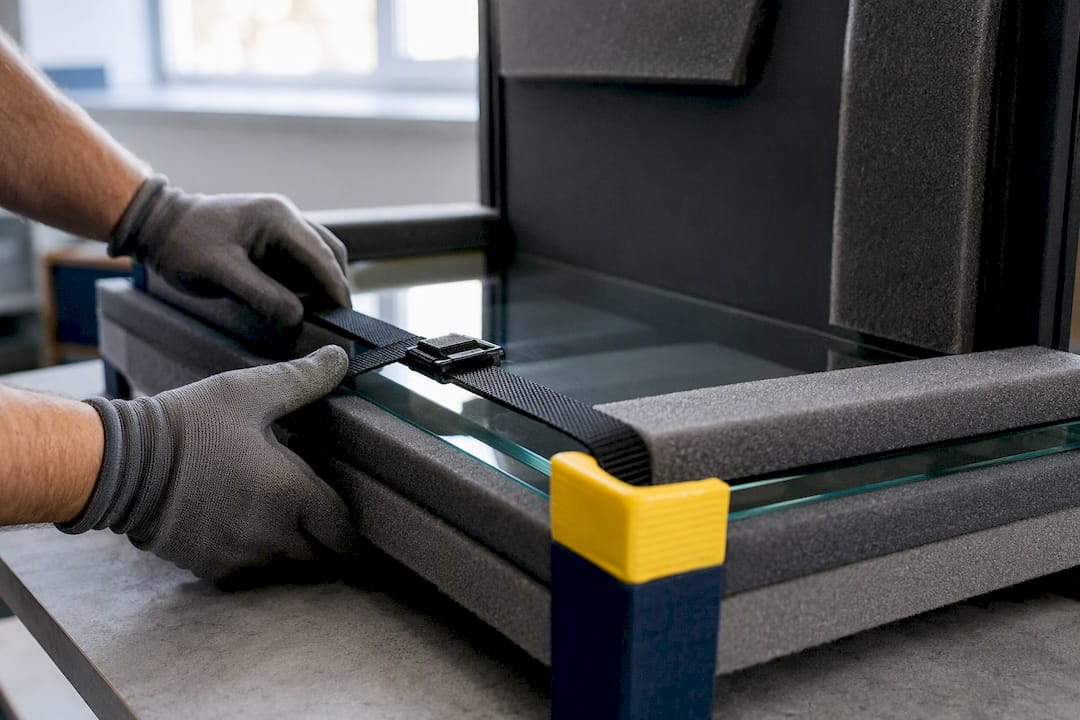
Furniture containing glass, such as cabinet doors or coffee tables, needs the glass removed or well secured before collection to avoid injury to collection crews. Broken glass should never go out loose with general hard waste.
Electrical furniture components are a separate category entirely. Recliners and adjustable beds with motors, built in lighting, or charging ports count as e-waste for the electrical part, even though the frame is ordinary furniture. Most councils ask you to separate these components or flag them clearly, since e-waste has its own recycling stream distinct from general hard waste.
Asbestos is the one genuine hazard worth flagging for older furniture, particularly vintage cabinetry or built-ins from properties constructed before the 1990s. If you suspect any furniture contains asbestos backing or insulation, don’t attempt removal yourself. That’s a job for a licensed specialist, not a standard collection.
Melbourne City Rubbish: book a fast, local removal when you need one
When council slots are booked out, a charity says no, and you’ve still got a couch sitting in the driveway, A local removal service can fill that gap, handling fast couch disposal, fridge and appliance removal, and full office or strata clearances, with options for sustainable disposal rather than tipping straight into landfill.
Services often come with a no-mess guarantee, meaning the crew doesn’t just take the furniture, they clean up after themselves. To get an accurate price, have your item count, rough volume, and property access details ready (stairs, lift access, parking) when you request a quick quote. Larger jobs, like clearing an entire office floor of desks and chairs, are covered through the office cleanout service as well. Collections can usually be scheduled same-day or within a short window, and every job includes sorting for reuse or recycling where possible, plus a disposal receipt so you know exactly where your old furniture ended up.
Where to book or check the rules
Before you commit to a route, these are the pages worth bookmarking:
- City of Melbourne hard waste booking — book your free annual collection and check the one cubic metre limit.
- A–Z waste guide — find Dynon Road Waste and Recycling Centre details for drop-offs beyond your free allowance.
- Sacred Heart Mission’s free collection service — check coverage and book a charity pickup for larger donations.
- Vinnies furniture donation guidance — confirm acceptance rules before dropping off or booking a pickup.
Sources
- Hard waste — City of Melbourne
- Free collection service — Sacred Heart Mission
- RIMERN — donate goods guidance
- Vinnies — donate furniture guidance