For an office relocation, hire a specialist commercial waste removal team that documents lawful disposal, handles segregation and runs the logistics around dock and lift bookings. Skipping this step raises compliance risk, because businesses retain legal responsibility for where their waste ends up, and it slows your whole programme. Build in reuse and donation early to cut both cost and landfill volume.
TL;DR:
- Hire a specialist waste removal team to handle lawful disposal, segregation, and logistics planning to reduce compliance risks and avoid delays.
- Conduct a thorough audit, confirm access times, and clearly communicate disposal plans with contractors during the week before the move.
- Sort waste streams into furniture, e-waste, fitout materials, and hazardous waste, ensuring proper handling and documentation for each type.
- Coordinate site access early by mapping constraints, negotiating with building management, and scheduling staged or after-hours collections to minimize costs.
- Ensure waste transporters are authorized, with all records such as consignment notes and disposal reports kept for audits and sustainability reporting.
Table of Contents
- A 7-day checklist to prepare waste for collection
- Handling common office relocation waste streams
- Site logistics that set your programme length and cost
- Legal responsibilities and the compliance checks to request
- Choosing between same-day trucks, scheduled runs and skip hire
- How to choose and brief a waste contractor
- Melbourne City Rubbish: a practical option for office relocation waste removal
- FAQ
- Sources
A 7-day checklist to prepare waste for collection
The week before a move is when most relocation waste problems start, usually because nobody audited what was leaving the building until the last minute. A short, ordered checklist keeps the removal crew, the building manager and your own staff working to the same plan.
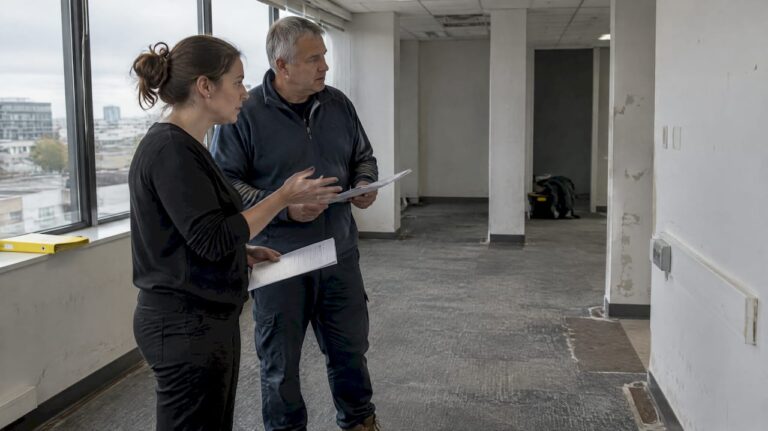
- Audit and tag everything: walk the floor, separate reuse candidates from rubbish, and label any hazardous or reportable items clearly.
- Confirm access windows: book dock and lift times with the building manager and schedule your removal crew around those slots, not the other way round.
- Get it in writing: ask any contractor to confirm, before the job, where each waste stream will be taken.
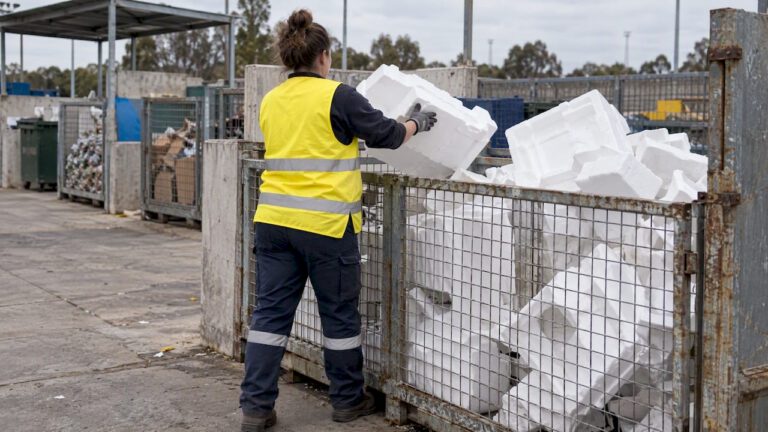
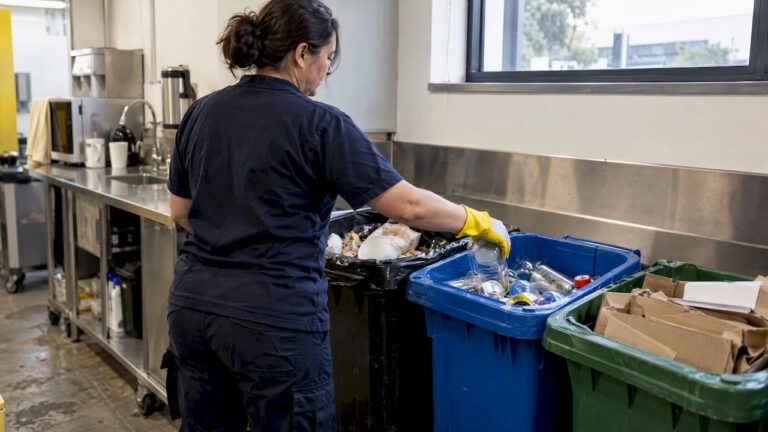
- Sort by material: group furniture, e-waste, plasterboard and carpet separately so the crew can load and report accurately.
- Brief your staff: tell the team what stays, what’s donated and what’s collected, so nothing useful ends up in a skip by accident.
Doing this in order avoids the common failure mode: a truck arriving to a floor that hasn’t been sorted, which turns a half-day job into two.
Handling common office relocation waste streams
Office moves generate a predictable mix of furniture, electronics, fitout materials and the occasional hazardous item, and each needs different handling.
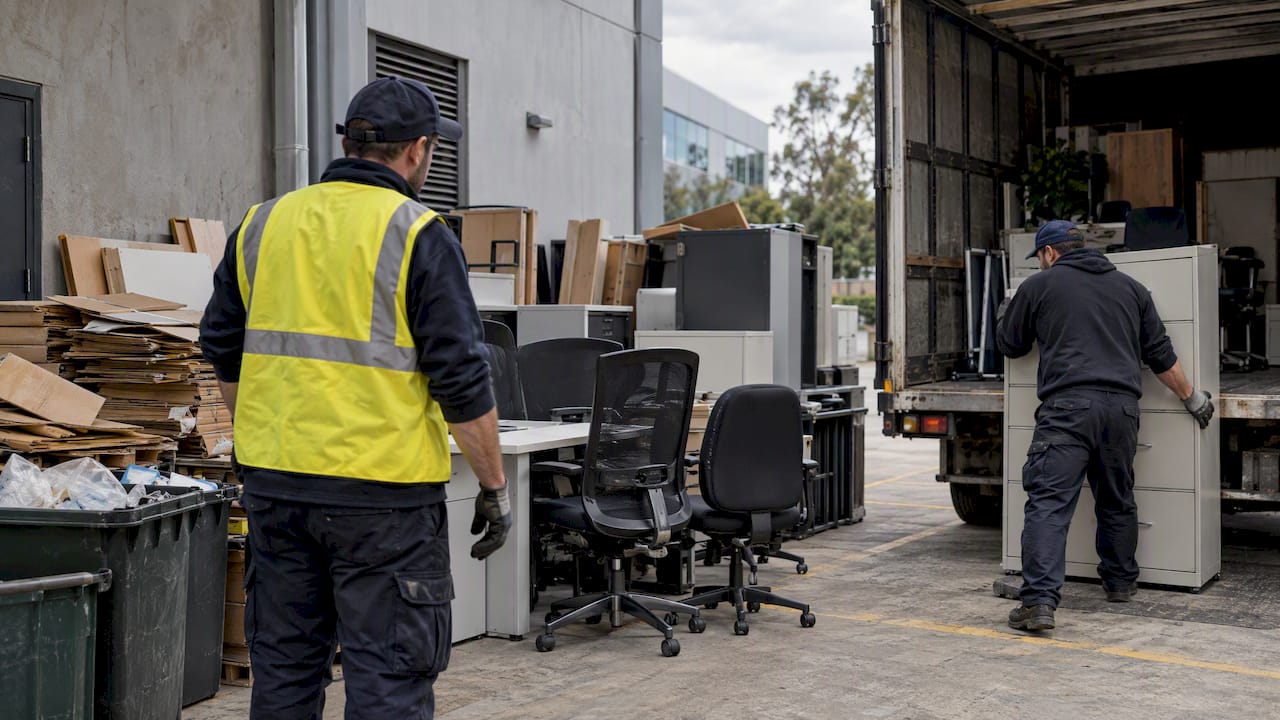
- Furniture: disassemble desks and shelving where it speeds removal, and check with local charities, furniture reuse networks or your own staff before anything goes to landfill; specialist removal is worth booking when volumes are large or items are bulky.
- E-waste: sanitise data on any device before it leaves the building and route it to an authorised electronics recycler. Most councils and transfer stations now restrict or ban e-waste from general landfill.
- Fitout materials: plasterboard, carpet and flooring often carry landfill bans or extra gate fees, so confirm handling requirements before the strip-out starts; commercial suppliers like Trade wall panel orders for Charlton refurbishments can assist with fitout materials.
- Hazardous or reportable wastes: these must move through permissioned transporters, with the movement tracked rather than just invoiced.
Pro Tip: Photograph furniture and fittings before disassembly. It speeds up donation listings and gives your contractor a clear reference for packing and reuse sorting.
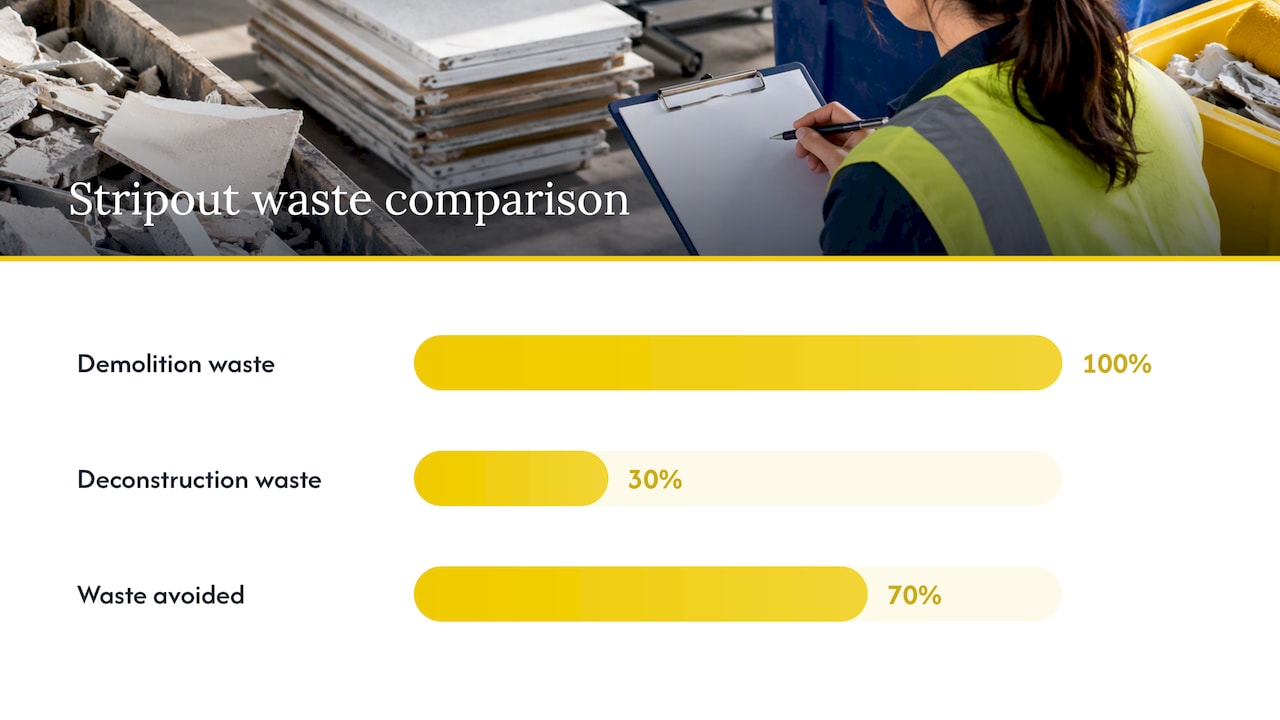
Sustainable fitout practitioners report up to a 70% reduction in stripout and construction waste when deconstruction and reuse replace straight demolition, which turns a chunk of the disposal bill into a procurement saving instead.
Site logistics that set your programme length and cost
Dock bookings and goods lifts, not the removal crew’s size, usually decide how long an office relocation takes. Logistics and building access constraints are often the real pacing item on fitout and defit programmes, more so than the trade work itself.
- Map the constraint first: find out dock hours, lift capacity and any heritage or security restrictions before you lock in a moving date.
- Negotiate access early: loop in the building manager, the incoming and outgoing tenants and your removal contractor in one timeline, not three separate conversations.
- Use staged runs: splitting the job into several smaller collections often clears a floor faster than waiting for one large truck booking.
- Book after-hours or weekend windows: this avoids clashing with other tenants and can shorten the overall schedule.
Smaller tenancies in shared buildings often carry a disproportionate share of these costs, because dock and lift regimes are fixed regardless of how much waste one tenant generates. Coordinating with building managers on access protocols ahead of the move reduces that friction considerably.
Legal responsibilities and the compliance checks to request
Engaging a contractor does not transfer legal responsibility. EPA Victoria requires waste generators to take all reasonable steps to ensure waste reaches an authorised receiving facility, including checking a transporter’s arrangements in writing before the job starts.
- Classify the waste: industrial, priority and reportable priority waste each carry different handling and record-keeping duties.
- Check authorisation: ask for written confirmation that the transporter and the receiving facility are both authorised to take your waste type.
- Keep the paper trail: consignment notes, weighbridge dockets and disposal or diversion reports should be filed for audits and ESG reporting.
Reportable priority wastes must be tracked through every change of custody using Waste Tracker, Victoria’s system for recording movement of higher-risk waste streams. Contract terms should state plainly who is responsible for entering those records, so nobody assumes it’s “handled” when it isn’t.
Choosing between same-day trucks, scheduled runs and skip hire
The right service shape depends on how much notice you have and how predictable your waste volume is. Same-day truck removal earns its premium when a lease deadline is tight or a floor needs to be cleared in one pass. Scheduled runs, spread across several days, usually work out cheaper for larger offices because loads can be sorted and consolidated rather than rushed.
- Weigh volume against weight: a skip full of light furniture costs differently to the same skip full of plasterboard or tiles.
- Factor in separation: well-sorted waste is cheaper to process than mixed loads, so good labelling at source pays off in the quote.
- Account for access fees: after-hours work, dock bookings and landfill gate charges all add to the final number.
When comparing quotes, ask each supplier to itemise volume or weight pricing, separation handling, any after-hours loading and the landfill or recycling gate fee, so you’re comparing like for like rather than one all-in figure against another.
How to choose and brief a waste contractor
A contractor with office-move experience, rather than general rubbish removal alone, tends to handle access constraints and documentation far more smoothly.
- Check relevant experience: ask whether they’ve worked in similar building types, including towers with shared docks and lifts.
- Request the paperwork: receiving-facility authorisation, Waste Tracker proof for reportable wastes, current insurance and an OH&S plan.
- Confirm diversion reporting: ask how they document what was reused, recycled or landfilled, and whether that comes as a formal report.
- Set the operational brief: access times, on-site contact, protective measures for lifts and corridors, and how proof-of-disposal will be delivered and invoiced.
Pro Tip: Ask for a sample diversion report from a past job before booking. It tells you more about a contractor’s actual practice than any pitch.
Melbourne City Rubbish: a practical option for office relocation waste removal
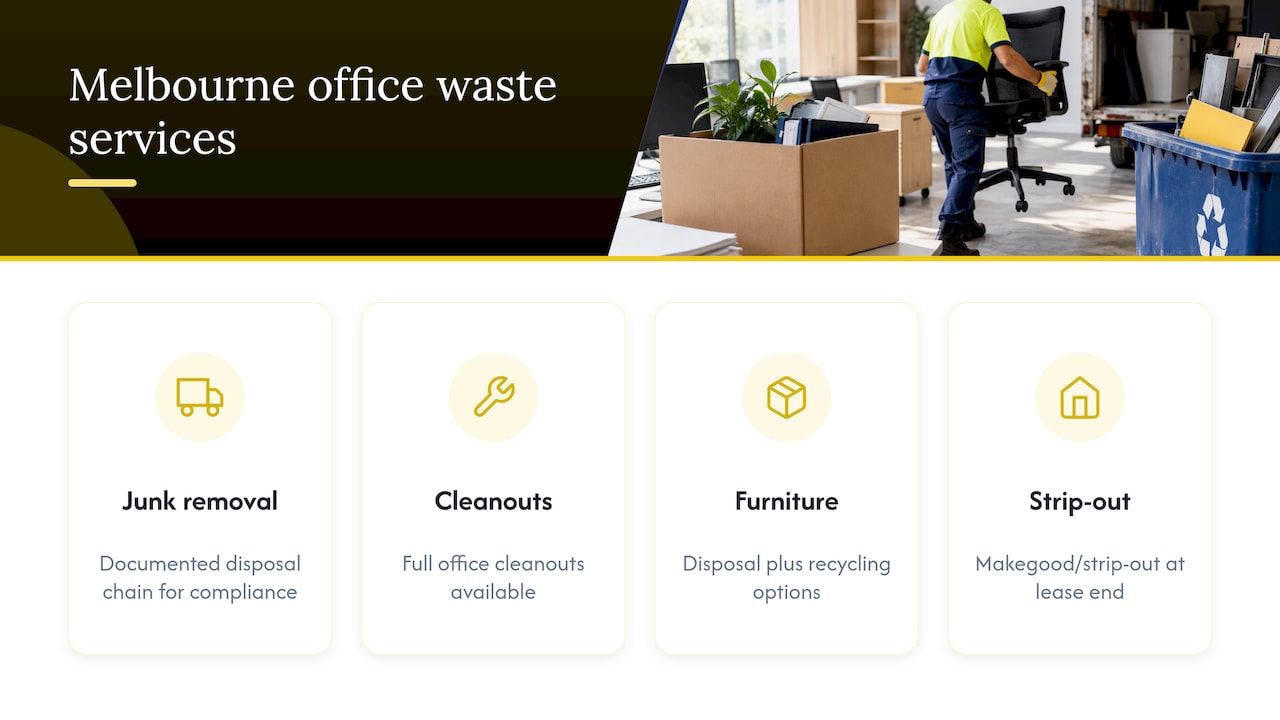
We handle the parts of an office move that usually cause the most friction: office junk removal, full office cleanouts, furniture disposal and recycling, and makegood or strip-out work when a lease is ending. Each job comes with a documented disposal chain, so you have a clear record for your own compliance file rather than a guess about where things ended up.
We offer removal services with options that support sustainability goals, and we back punctual bookings with real-time updates.
If you’re planning a move, the fastest way to get a number against your floor plan is a quick quote, or you can go straight to commercial office rubbish removal to see how the service works before you book.
FAQ
What are the new waste laws in New South Wales?
Waste rules shift periodically across Australian states, and the most relevant recent change is NSW’s push toward office reuse programmes, which the NSW Government reports has delivered large-scale diversion of furniture and equipment at lower cost than disposal. For Victorian offices, the governing framework remains EPA Victoria’s waste obligations and duties, which apply regardless of state-specific reuse initiatives elsewhere.
Who handles office relocation waste removal?
Office relocation waste is typically handled by commercial rubbish removal operators who segregate furniture, e-waste and fitout materials and arrange lawful disposal or recycling. We offer commercial office rubbish removal with documented disposal practices for businesses moving premises.
How do I keep waste to a minimum when using office equipment?
Favour equipment that’s repairable and modular, maintain it so it lasts through more than one tenancy, and route anything surplus to donation or resale channels before it becomes rubbish. Labelling reusable items early, before a move is even announced, keeps far more furniture and equipment out of landfill than trying to sort it all in the final week.
What are the basic steps in managing waste during an office move?
A sound approach covers identifying and classifying waste streams, segregating them at source, arranging lawful and authorised transport, confirming the final disposal or recycling destination, and keeping records such as consignment notes for audit purposes. For any reportable priority waste, that record-keeping extends to tracking every change of custody.
Does Melbourne City Rubbish provide proof of lawful disposal?
Yes, we document the disposal chain for office relocation jobs, including furniture, e-waste and fitout materials, so businesses have a record to support their own compliance and ESG reporting. Details on the relevant service can be found on our furniture disposal and recycling page.
Sources
- Understand your waste obligations and duties (EPA Victoria)
- Minns Labor Government cuts waste and saves with office reuse program (NSW Government)
- Sustainable fitouts eliminate construction waste (Agero Fitouts)