Most office strip outs in Melbourne land between about $40 and $140 per square metre, and small suites often come in as a flat project price in the low tens of thousands of dollars or less. Where your job sits in that range depends on what is being removed, what your lease says you must hand back, how the building lets trucks and tradies in, and whether asbestos turns up. This guide explains each of those drivers, shows worked examples, and tells you what a quote should list so you can compare offers properly.
TL;DR
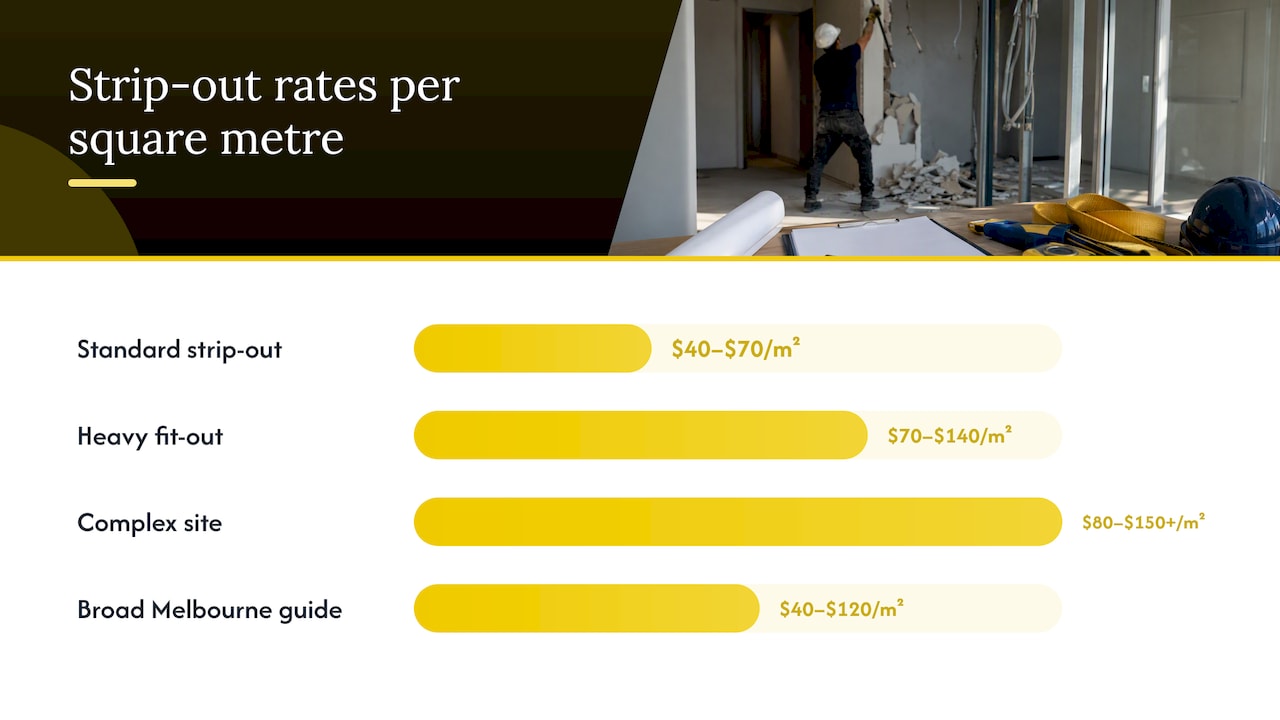
- Published Melbourne contractor guides for 2026 put standard office strip outs at roughly $40 to $70 per square metre, and heavy fit-outs with joinery, meeting rooms and plenty of services at $70 to $140 or more.
- Small suites often attract a minimum charge rather than a per-square-metre rate, because getting crews, bins and equipment on site costs the same whatever the floor area.
- Your lease make good clause, building access rules (after-hours work, lifts, loading dock) and asbestos are the three biggest swing factors.
- Asbestos removal is a separate, licensed job and should be a separate line on the quote, never an unpriced assumption.
- Two quotes that differ by thousands are usually pricing different scopes. Get a site inspection, a written scope and itemised exclusions before you compare.
Table of Contents
- What an office strip out actually involves
- Office strip out cost per square metre in Melbourne
- What pushes the price up or down
- Waste rules your contractor must follow
- How to compare strip out quotes like for like
- Where we fit: strip outs, make goods and waste removal in one job
- Cost-saving tips that do not cut corners
- FAQ
- Sources
What an office strip out actually involves
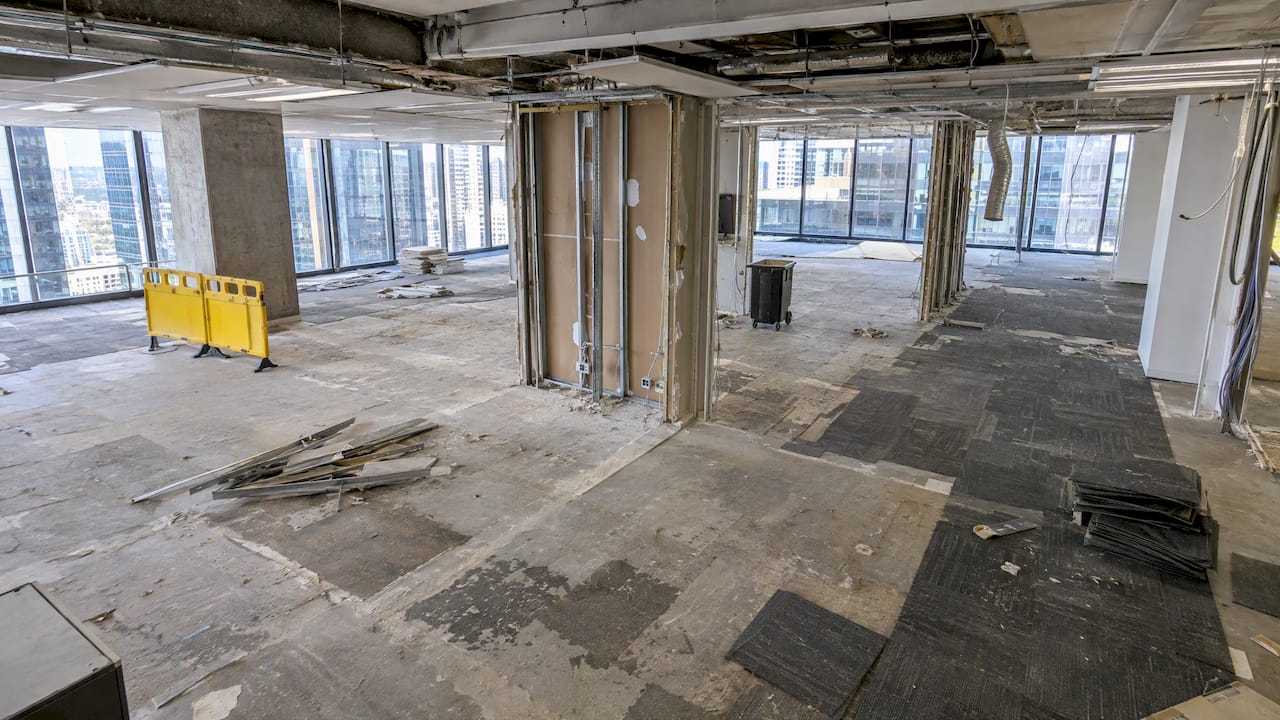
An office strip out removes the fit-out that a previous tenant or you installed, so the space returns to a bare or agreed condition. Typical items include:
- Partition walls and glazed screens
- Ceiling tiles, grids and light fittings
- Carpet, vinyl and floor adhesives
- Joinery, kitchenettes and reception counters
- Data cabling, power outlets and redundant services
- Workstations, loose furniture and general waste
It is related to, but not the same as, a make good. A strip out is the physical removal work. Make good is the lease obligation that decides how much removal and reinstatement the landlord requires. Sometimes the two are identical (hand back as a bare shell), sometimes the lease asks you to put back ceilings, restore walls or remove cabling to the riser. Our guide to office make good in Melbourne covers what tenants must do before lease end.
Office strip out cost per square metre in Melbourne
No single official price list exists for this work, so the figures below come from 2026 contractor guides and published rate cards across Melbourne and Australia. Treat them as planning ranges, not quotes.
| Type of office | Typical range (per m²) | What it usually means |
|---|---|---|
| Basic open-plan | $30 to $50 | Workstations, carpet, light partitions, few services |
| Standard partitioned office | $40 to $80 | Offices, meeting rooms, ceilings, kitchenette |
| Heavy fit-out | $70 to $150+ | Joinery, server rooms, wet areas, glazing, difficult access |
| Full make good to lease standard | $100 to $200 or more | Strip out plus reinstatement of ceilings, walls or floors |
A few things to read into that table.
The ranges overlap on purpose. Different contractors draw the lines differently, and some figures include waste disposal while others do not. One Melbourne contractor describes standard open-plan strip outs at $40 to $70 per square metre and heavy fit-outs at $70 to $140, while another national guide puts complex sites at $80 to $150 and above. Broad 2026 Melbourne guides quote $40 to $120 for commercial internal strip outs, depending on services, asbestos and access.
Make good figures run higher because they include more than removal. Published Melbourne estimates for office make good span from around $100 per square metre at the low end to several hundred at the high end, depending on what your lease requires to be reinstated. Do not compare a strip out quote with a make good quote without checking which work each one covers.
Small suites behave differently. For spaces under roughly 100 to 200 m², many contractors apply a minimum charge. Small office strip out projects covering fit-out removal, services disconnection and waste disposal are commonly reported in the $8,000 to $20,000 range. That is why a 90 m² office can cost more per square metre than a 400 m² floor next door.
Worked examples
These use the ranges above to show how the arithmetic works. They are illustrations, not our prices.
- 250 m² open-plan office, carpet and light partitions. At $40 to $70 per m², the planning range is $10,000 to $17,500 before extras such as after-hours work or asbestos.
- 400 m² partitioned floor with a kitchenette and server room. At $70 to $140 per m², the planning range is $28,000 to $56,000. The server room and wet area push this towards the upper half.
- 80 m² suite on the 12th floor. A per-square-metre rate would suggest a few thousand dollars, but a minimum charge, lift booking and after-hours work will probably put it in the small-project band of $8,000 to $20,000.
If you want a number for your own space, our office clearance cost guide for Melbourne shows how to compare quotes like for like, including permits.
What pushes the price up or down
Your lease and the required handback condition
The make good clause sets the scope. A lease that accepts “broom clean, fit-out removed” costs far less than one that requires ceilings, services and floors reinstated to base building. Read the clause early, and revisit it around 6 to 9 months before expiry so you have time to get quotes, book the work and negotiate with the landlord if the requirements are unclear. Some tenants get the clause priced at the time of the fit-out, which avoids a nasty surprise years later.
How much has been built in
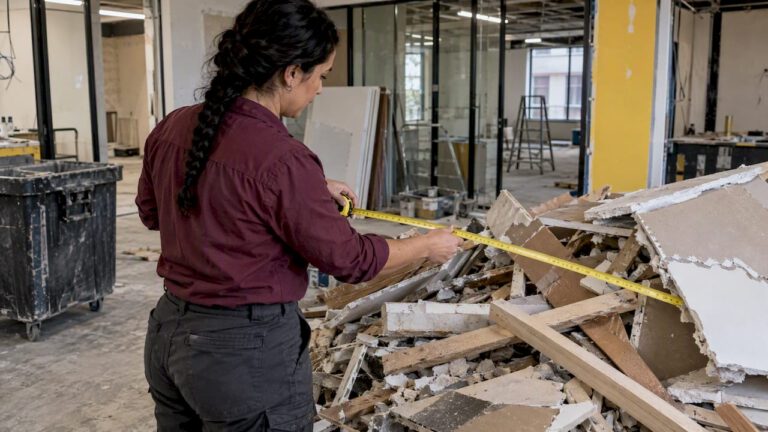
An open-plan floor with carpet tiles and workstations is quick. Plasterboard partitions, full-height glazing, bulkheads, commercial kitchens, bathrooms, comms rooms and extensive cabling take longer and generate more waste. Services-heavy areas such as server rooms and kitchenettes usually add more cost than the same floor area of open desks.
Building access
Melbourne CBD towers often impose rules that change the price:
- Work only after hours or on weekends, with penalty rates for crews
- Lift bookings and protection of lifts and common areas
- Loading dock limits on truck size and time slots
- Long carry distances from the floor to the bin or truck
- Building induction, insurance and permit requirements
A ground-floor shopfront with a rear lane is a different job from a tenancy on level 30 with a single goods lift. Ask the building manager for the contractor rules before you collect quotes, so every contractor prices the same constraints.
Waste volume and type
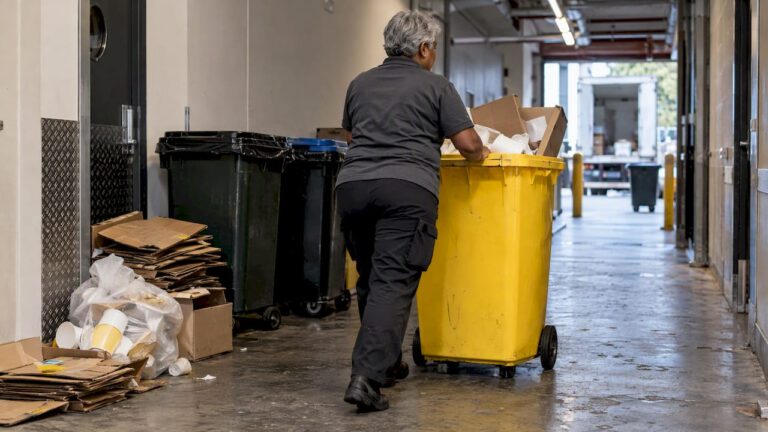
Disposal is a large part of the bill. Plasterboard, timber, metals, carpet, ceiling tiles and e-waste each follow different routes, and recycling can cut landfill costs. We handle office furniture removal and sorted disposal alongside the strip out itself, which keeps the whole job under one supplier and one schedule.
Asbestos and hazardous materials
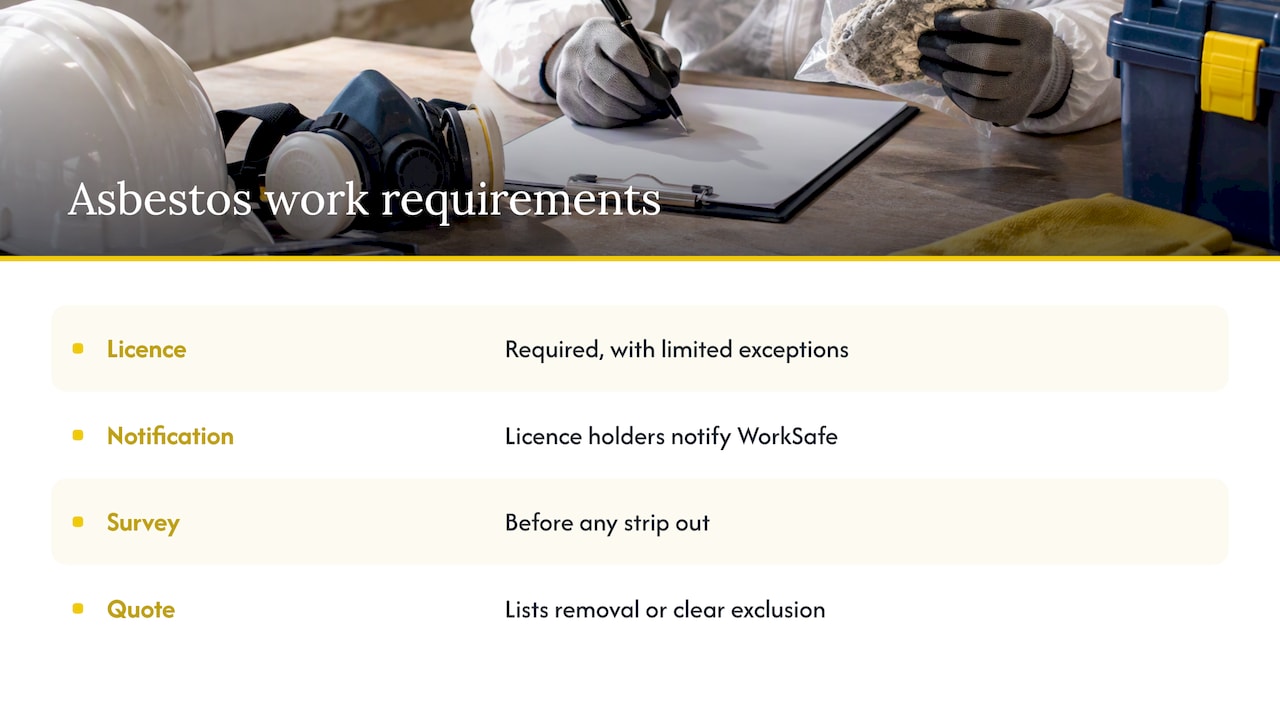
This is the wildcard. Many older Melbourne buildings still contain asbestos in ceiling tiles, floor adhesives, sheeting or lagging. Asbestos removal is a licensed activity in Victoria: WorkSafe states that a licence is required to remove asbestos (with limited exceptions) and that licence holders must notify WorkSafe of removal work. A sensible sequence is to get a hazardous materials survey before any strip out begins, so the quote reflects what is actually in the walls and floors.
A good quote lists asbestos removal as its own line, or states clearly that it is excluded and what will happen if it is found. Be cautious of any price that ignores the question in a building from before the asbestos ban. If you are unsure about a particular building, ask the building manager for its asbestos register and speak with a licensed asbestos assessor before work starts.
Waste rules your contractor must follow
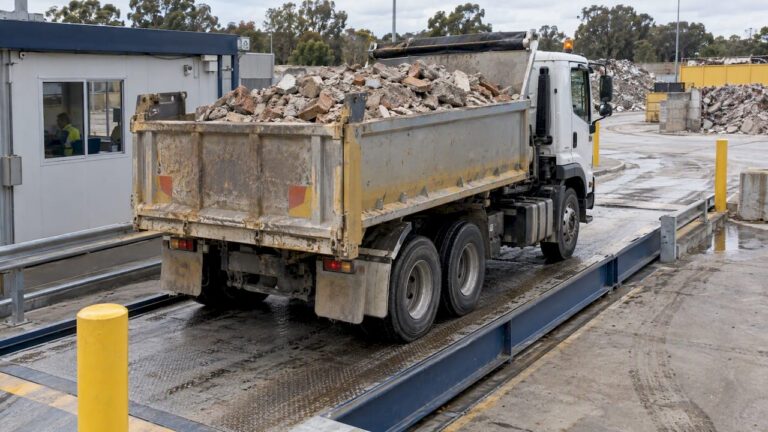
Strip out debris is industrial waste in Victoria, and the responsibility does not stop when the skip leaves your building. EPA Victoria’s construction guidance says industrial waste producers must take reasonable steps to ensure waste is transported to a lawful place authorised to receive it. The same guidance covers correct classification of demolition waste and tighter tracking for priority waste such as asbestos.
For you as the tenant or building owner, that means asking your contractor:
- Where will the waste go, and can you see the receipt or documentation?
- Who is transporting it, and are they permitted for the waste type?
- What will be recycled, and how is that reported?
A contractor who answers these without hesitation is usually one whose disposal costs are properly built into the price. A very cheap quote with vague disposal terms is a warning sign. For partitions in particular, putting office partition disposal terms in writing avoids disputes about who removes what.
How to compare strip out quotes like for like
Quote differences are often about scope rather than margin. If one contractor assumes ceilings stay and another assumes they go, the totals will not match, and neither is wrong. Follow these steps:
- Book a site inspection. Quotes from drawings or a phone call rely on guesses. Ask each contractor to walk the space.
- Give everyone the same brief. Share the make good clause, floor plans, building rules and access hours.
- Ask for line items. You want separate lines for labour, machinery, waste disposal, services disconnection, asbestos (if any), protection of common areas and after-hours loadings.
- Check the exclusions. Painting, ceiling reinstatement, electrical isolation, cabling removal and landlord fees are the usual gaps.
- Ask about allowances for unknowns. Hidden services or damaged substrates can lead to variations. A fair quote explains how variations are priced.
- Confirm insurance and licences. Public liability, workers compensation and the right licences for any specialist work.
- Confirm timing. Start date, duration, and whether the work finishes before your lease end date.
If your strip out is part of a move, it helps to line up the timeline with your relocation. A guide on planning an office relocation without downtime is useful for sequencing IT, staff and furniture so the strip out crew has a clear floor on the agreed date.
Where we fit: strip outs, make goods and waste removal in one job
Melbourne City Rubbish removes fit-outs and the waste they create in Melbourne commercial buildings, from open-plan floors to CBD towers. Our office strip out and commercial defit service covers partitions, ceilings, floor finishes, joinery and the clearance of everything left behind. Larger projects can extend into commercial demolition.
What tenants and property managers usually ask us about:
- Written quotes. We give written quotes per project, and we promise to beat any written quote by 5%.
- Punctuality. Real-time notifications keep you informed, and a lateness credit applies if we are late.
- A clean finish. We have worked in all types of Melbourne commercial buildings and aim to leave no mess and no damage to property.
- Sustainability. A carbon-neutral disposal option is available if you want it.
For a price on your own space, send us the floor area, a few photos and your lease clause through our quick quote page, and we will tell you what we need to see on site.
Cost-saving tips that do not cut corners
- Start early. Rushed jobs near lease expiry cost more because crews and bin slots are scarce.
- Remove and reuse furniture first. Selling, donating or relocating desks and chairs reduces waste volume. Our furniture disposal and recycling service handles what is left.
- Clear the junk before the crew arrives. Loose boxes, old files and e-waste slow a strip out. An office cleanout beforehand keeps the strip out crew focused on the fit-out.
- Negotiate the make good scope. Ask the landlord or agent in writing which items they actually require removed. Some landlords will accept existing partitions or cabling if the next tenant wants them.
- Bundle services. One contractor handling strip out, disposal and floor finish removal avoids duplicated mobilisation costs.
- Do not skip the survey. Finding asbestos mid-job costs far more in delay than finding it beforehand.
FAQ
How much does an office strip out cost per square metre in Melbourne?
Planning ranges for 2026 run from about $40 to $70 per square metre for standard open-plan offices, and $70 to $140 or more for heavy fit-outs. Complex sites with asbestos, tight access or extensive services can go higher. Small suites often attract a minimum charge instead.
Is a strip out the same as a make good?
No. A strip out is the removal of the fit-out. A make good is your lease obligation to return the premises to a specified condition, which may include reinstating ceilings, walls or floors on top of the strip out. Make good usually costs more per square metre because it covers more work.
Do I need an asbestos survey before an office strip out?
In buildings that may contain asbestos, a hazardous materials survey before work starts is the sensible step, and it lets contractors price the job properly. Removal itself must be done by a licensed removalist, and WorkSafe must be notified. Ask your building manager for the asbestos register and speak with a licensed assessor if you are unsure.
How long before lease end should I organise a strip out?
Read your make good clause 6 to 9 months before expiry and book quotes soon after. That leaves time for building approvals, a hazardous materials survey if needed, and a contractor start date that finishes before handback.
Why are my strip out quotes so different?
Usually because they assume different scopes, exclusions or access conditions. Ask each contractor for itemised quotes after a site inspection, and compare what is included before you compare the totals.
Sources
- WorkSafe Victoria: asbestos removal licence application
- EPA Victoria: Construction industrial waste guidance (PDF)