The fastest way to clear rubbish after an event is to plan the clean-up before the first guest arrives. Estimate how much waste you will create, split it into streams, line up a licensed contractor for collection straight after close, and keep a short checklist so nothing is left on site. This guide covers each step for Melbourne venues, offices, tenants and organisers, including the rules that catch people out.
TL;DR
- Write a waste plan before the event: venue, attendance, waste types, bin locations, collection times and who clears what.
- Budget roughly one litre of food and drink waste per person per meal, then add bulky items such as staging, furniture and packaging.
- Business waste in Victoria falls under EPA rules. Anything hazardous, like asbestos from a fit-out or demolition, needs specialist handling, not a general clean-up crew.
- Book collection before the event, not after it, so rubbish does not sit overnight on a public footpath or in a loading dock.
- Finish with a walk-through checklist and photos, so you can prove the site was left clean.
Table of Contents
- What counts as post-event rubbish
- Plan the waste before the event
- Estimate how much waste you will have
- Sort waste into streams
- Rules that apply in Melbourne and Victoria
- The safest way to clear rubbish after the event
- When to call a professional crew
- Specialty items after an event
- Cut the cost and impact next time
- FAQ
- Sources
What counts as post-event rubbish
Most people picture cups, plates and bottles. In practice, the rubbish left after a Melbourne event falls into four groups:
- Food and beverage waste: scraps, compostable serviceware, cans, bottles, cartons and cigarette butts.
- Packaging: cardboard, pallets, shrink wrap and cartons from suppliers and caterers.
- Bulky items: broken furniture, display stands, banners, flooring, temporary fit-outs and staging.
- Specialty items: e-waste such as screens and AV gear, commercial fridges, and leftover chemicals or cleaning agents.
The mix depends on the event. A product launch in a CBD tenancy leaves display joinery and packaging. A street festival leaves food waste and litter. A corporate conference that ends with an office reshuffle leaves furniture and old equipment. Knowing your mix tells you which bins, trucks and crew you need.
Plan the waste before the event
Councils that run events treat waste as part of planning, not an afterthought. Wellington Shire Council’s event guide says a waste management plan should cover the venue, expected attendance, likely waste types, bin locations, collection logistics, hazardous waste handling and the post-event clean-up schedule. That works as a template for a ten-person launch or a 5,000-person festival.
A one-page version is enough for most business events:
- Who is responsible? Name one person on the day, and one person for each stallholder, caterer or supplier.
- Where does waste go? Mark bin stations, a back-of-house holding area and the truck access point on the site map.
- When is collection? Book a time directly after close, or at pack-down, not “sometime tomorrow”.
- What is unusual? List anything bulky, electronic, chemical or potentially hazardous so it can be handled separately.
- What is the sign-off? Decide who walks the site at the end and what they check.
Cut waste at the source
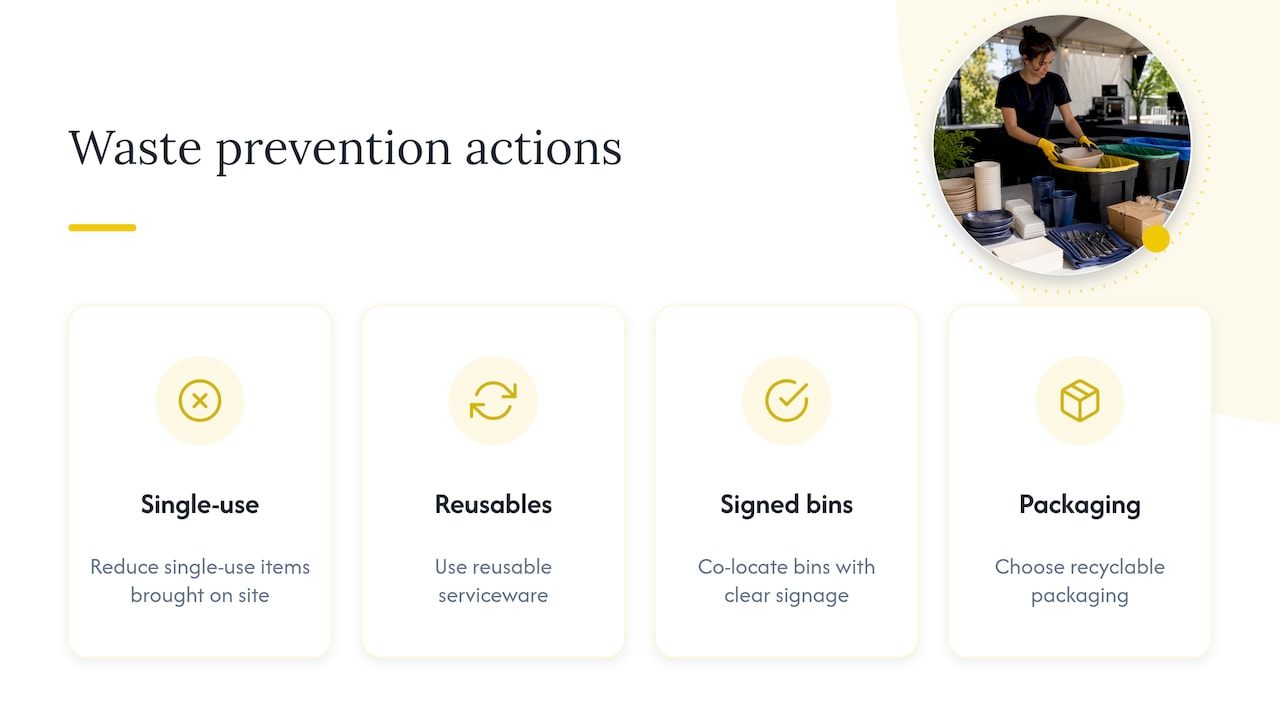
The cheapest rubbish to remove is rubbish that never arrives. Green Industries SA suggests avoidance first: reduce the single-use items brought on site, use reusable serviceware, and provide co-located bins with clear signage. That lowers both litter risk and disposal cost. If you serve food, it also pays to look at the packaging itself, and this piece on eco-friendly dessert packaging shows the kind of questions to ask a food supplier.
In Victoria, single-use plastic is banned, and the City of Melbourne’s Moomba guidelines tell catering operators to use recyclable packaging and avoid single-use items, or swap them for options such as bamboo, wood or paper. Apply the same rule to your own event and you will have less to sort afterwards.
Estimate how much waste you will have
Underestimating is the usual mistake: bins overflow at 9 pm, and staff end up stuffing bags into laneways. Green Industries SA’s guidance gives a simple starting point: allow one litre of food and beverage waste per patron per meal. A New Zealand council guide gives the same rule of thumb and notes that it varies with event length and crowd type.
Here is how that looks for a dinner event, using the one-litre rule:
| Event | Guests | Meals served | Food and drink waste (approx.) |
|---|---|---|---|
| Staff dinner | 80 | 1 | 80 litres |
| Product launch with canapés | 150 | 1 | 150 litres |
| Two-meal conference day | 300 | 2 | 600 litres |
That covers food and drink only. Add packaging from suppliers, bulky items from set-up and pack-down, and a buffer. If you are unsure, order for the higher figure. An extra empty bin costs far less than an overflowing one.
Sort waste into streams
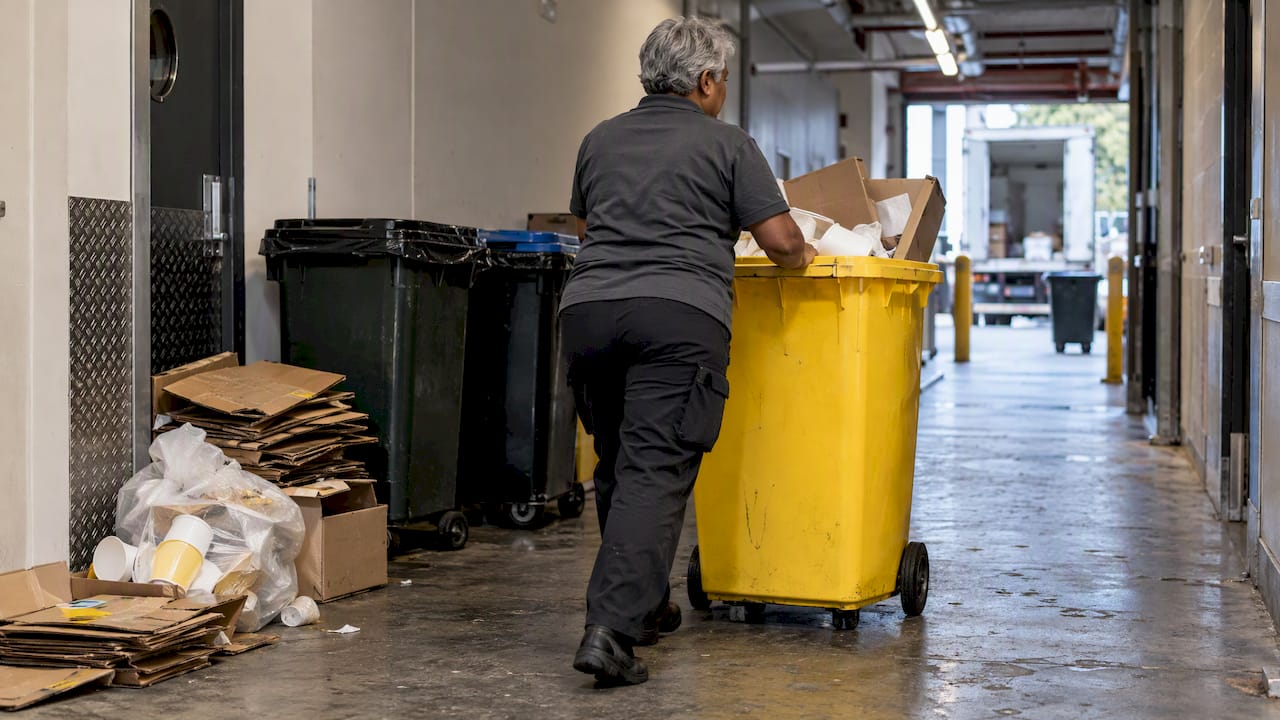
Green Industries SA recommends front-of-house bin stations with three streams: organics, container-deposit items and general waste, with extra streams if you use reusable serviceware. Put the bins together at one station so guests can sort in a single stop, and use signs with pictures, not only words.
Back of house, keep separate piles for:
- flattened cardboard and packaging (catering operators at council events are expected to flatten cartons and keep them in the compound or take them to the main containers for recycling)
- reusable items you are keeping, such as signage and furniture
- items that need specialist disposal, such as electronics, fridges and chemicals
- bulky rubbish for truck collection
For more on what can be recycled in the CBD, see our guide to recycling in the Melbourne CBD.
Rules that apply in Melbourne and Victoria
This is where events trip up, because the rules sit with several bodies.
EPA Victoria and business waste
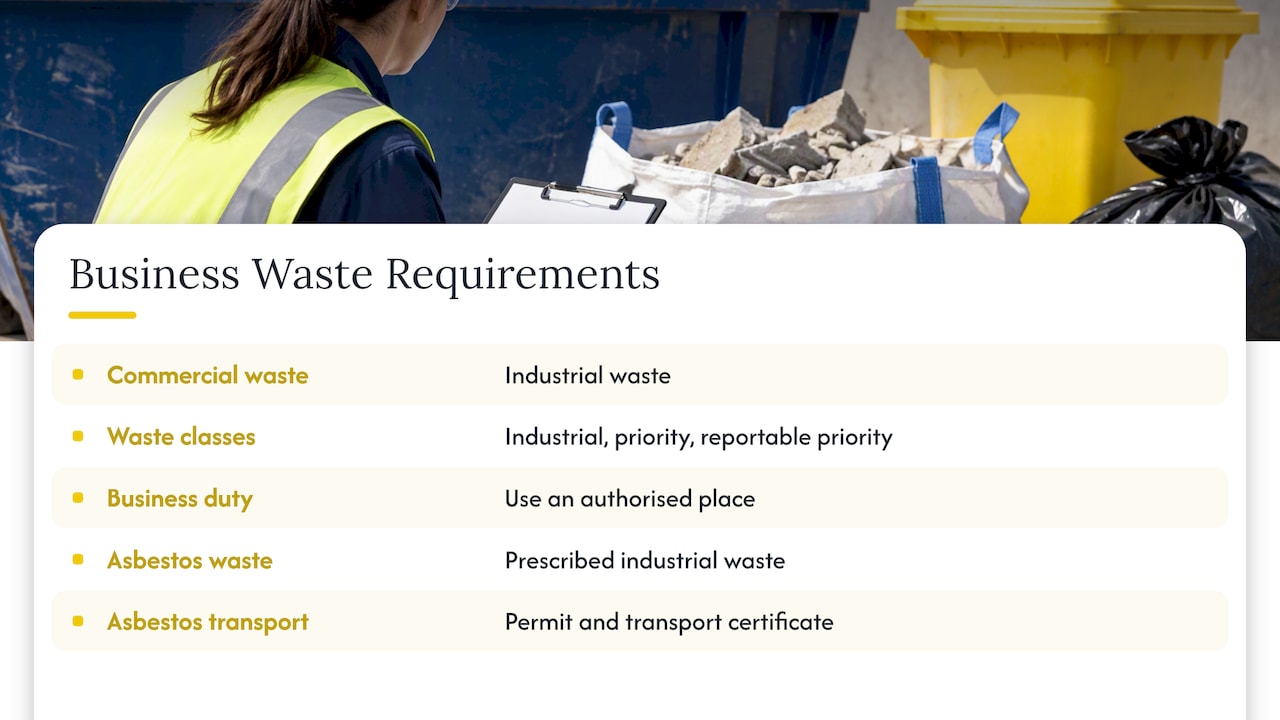
Under Victoria’s Environment Protection Act 2017, businesses must manage the risks their waste creates. EPA Victoria’s guidance says waste from commercial, industrial or trade activities is industrial waste and must be classified as industrial, priority or reportable priority waste. Businesses must take reasonable steps to make sure it goes to an authorised place, and transporters of reportable priority waste need the relevant permission. If you are the business hiring a contractor, ask what licences and permissions they hold.
Asbestos is the case to watch if your event involves a strip-out, make-good or old building. EPA Victoria states that asbestos from commercial or trade activities is prescribed industrial waste, which must be packaged to the guidance and moved in a vehicle with an EPA waste transport permit, and the waste producer must provide a waste transport certificate. If you suspect asbestos in materials, stop and call a licensed asbestos professional before anyone bags or loads it.
City of Melbourne local rules
If your event is in the municipality, three council rules are worth knowing:
- Bins and public space. All waste bins must be stored within your property, and bins put out for collection only in the central city can require a permit. The City of Melbourne’s waste bin permits page sets out when each type applies and notes that a waste management plan, if you have one, can change what you need.
- Footpath trading. Temporary infrastructure used to display goods must be removed at the end of trade each day.
- Cigarette butts. The City of Melbourne’s local law requires businesses to keep waste, including butts, in an approved container and keep the area clean, and fines of up to $4,070 apply to businesses under the Environment Protection Act 2017 for incorrect cigarette-butt disposal. Put a butt bin at every smoking spot.
For wastewater, council guidance for events says oils, fuels, cleaning agents and detergents must not go into waterways or stormwater drains, and some wastewater disposal may need a council permit. Caterers at City of Melbourne events are responsible for sullage disposal: it must not be poured onto the ground, into waterways or down toilets.
Rules vary by council and venue, so check your own council and venue contract before the event.
The safest way to clear rubbish after the event
WALGA’s better practice manual for public events points to three habits: clean up litter promptly, watch waste storage areas, and make sure accredited contractors collect all waste. In practice, that means:
- Stop adding to the pile. Once guests leave, close bin stations and move to pack-down.
- Clear walkways and loading areas first. Trip hazards and blocked fire exits matter more than neatness.
- Separate hazardous and bulky items. Do not mix broken glass, chemicals or electronics into general bags.
- Lift safely. Heavy furniture, staging and joinery need two people or a crew with the right equipment, not a tired event team at midnight.
- Load once. Bring the truck to a single pick-up point so waste is not handled twice.
- Check for leftovers. Look under tables, in toilets, behind stages and in car parks or laneways.
Post-event checklist
The same WALGA manual suggests a post-event checklist that confirms stallholders have cleaned their sites, includes a thorough litter sweep, checks that contractors have collected all waste, and records photos or measurements for an audit. Here is a version you can print:
- Every supplier, stallholder and caterer has cleared their area
- Litter sweep done inside, outside and along the approach routes
- Bulky items and e-waste removed, not left in loading docks
- Temporary signage, barriers and displays taken down
- Contractor confirms all waste collected, with a docket
- Photos of the cleared site taken for your records
- Bin counts or weights noted for next time
When to call a professional crew
Small events can be cleared with a few bins and a ute. Call a professional when any of these apply:
- you have bulky items such as staging, joinery, furniture or flooring
- the venue is a commercial tenancy with lift access, loading dock hours or building management rules
- you need a fast turnaround because the space must be handed back or reopened
- there is e-waste, a commercial fridge or building material mixed in
- you want proof of lawful disposal
We at Melbourne City Rubbish handle event rubbish removal in Melbourne for businesses, property managers and organisers, and we have worked in all kinds of Melbourne commercial buildings. We aim to leave no mess and no damage to property. Our punctuality comes with real-time notifications and a lateness credit, and you can opt in to carbon-neutral disposal. If you already have a written quote from another provider, we promise to beat it by 5%. Send the details through our quick quote page, or see everything we take on our services page.
If the event is tomorrow, our same-day rubbish removal page explains how to book.
Specialty items after an event
Furniture and fit-out
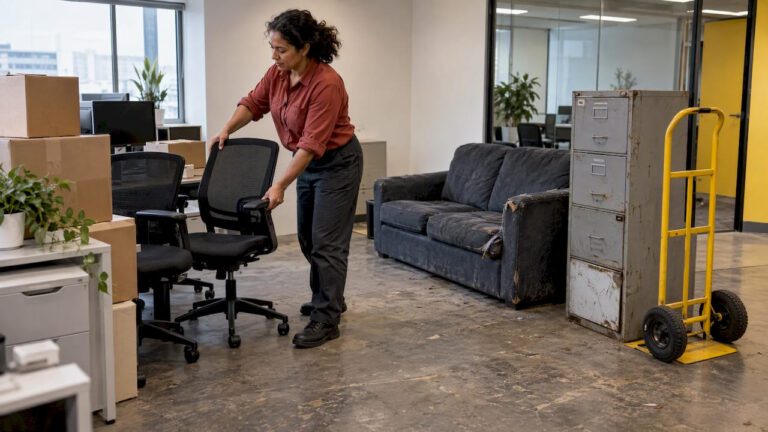
Pop-up shops, expos and launches leave behind counters, shelving and display joinery. Rather than send it all to landfill, ask your contractor what can be reused or recycled. Our furniture disposal and recycling service covers this, and if the event wrapped up an office move or refit, an office cleanout can handle the rest in one visit.
Electronics and fridges
AV screens, cables and old computers should not go into general waste. Read our guide to disposing of e-waste in Melbourne. Hired or owned commercial fridges and drink coolers have their own rules, covered in our page on commercial fridge disposal.
Construction and demolition debris
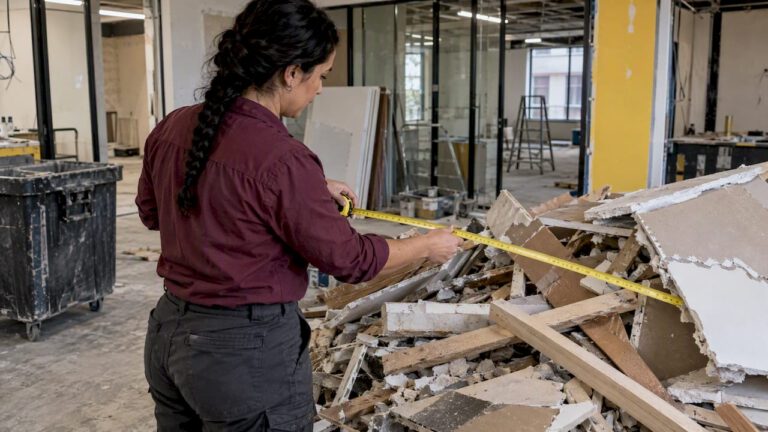
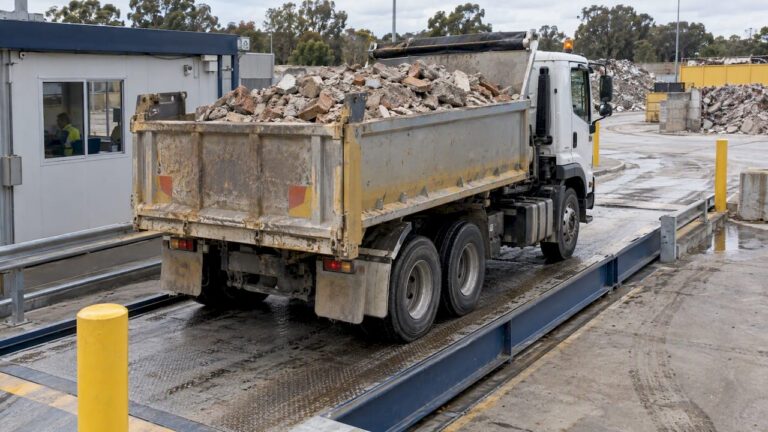
If your event used a building site, a vacant shopfront or a space being stripped back, you may be left with plasterboard, timber, metal or concrete. That is construction waste removal territory, and our guide on how to dispose of building waste explains the steps. Remember the asbestos rule above: unknown old material should be tested before anyone moves it.
Cut the cost and impact next time
A waste audit turns this event into a better next event. Hamilton City Council’s guide recommends audits after the event, either by weighing waste or by asking your contractor for data, to benchmark performance. Ask your contractor for weights or bin counts per stream, then compare against attendance.
A few ways to lower the bill:
- Reduce volume. Fewer disposable items and flat-packed supplier deliveries mean fewer bins and fewer truck trips.
- Separate streams properly. Clean recycling is easier to handle than a contaminated mixed bin.
- Book early. A scheduled collection is usually easier to organise than an urgent one.
- Compare written quotes like for like. Check that each includes labour, loading, disposal and clean-up.
- Choose a greener option. Our eco-friendly rubbish removal page explains how carbon-neutral disposal works for businesses.
FAQ
How soon should rubbish be removed after an event?
As soon as pack-down finishes, and ideally the same night or the next morning. Council rules, such as the City of Melbourne requirement to remove temporary street displays at the end of trade each day, mean waste should not sit in public space. Book the collection time before the event.
Who is responsible for post-event rubbish?
The event organiser, host business or tenant is usually responsible, and suppliers and caterers are responsible for their own waste. Check your venue contract, since some venues charge for clean-up or set required contractors. Under Victorian EPA rules, businesses must also take reasonable steps to make sure their waste goes to an authorised place.
How much waste will my event produce?
A common rule of thumb is one litre of food and drink waste per person per meal. Adjust for event length and crowd type, then add packaging and bulky items. When unsure, plan for more capacity than you expect.
Can I leave bags outside for collection?
Not without checking. In the City of Melbourne, bins and bags in public space can need a permit, and rubbish left on footpaths can attract penalties. Keep waste inside your property or venue until the truck arrives.
What if I find asbestos or hazardous material?
Stop work and do not bag or move it. Asbestos from commercial activity must be packaged and transported under EPA Victoria rules, so call a licensed asbestos professional first.
Sources
- Wellington Shire Council Event Planning Guide
- Green Industries SA: Waste and recycling at events and venues (2026)
- Green Industries SA: Waste and recycling at events and venues (2026), Replace the Waste edition
- Hamilton City Council: Event Waste Management and Minimisation Guide (2025)
- City of Melbourne: Moomba catering operators
- City of Melbourne: Docklands Firelight Festival catering operators
- EPA Victoria: Industrial waste guide (1824.1)
- EPA Victoria: Transport and disposal of waste asbestos
- City of Melbourne: Waste bin permits
- City of Melbourne: Footpath street trading
- City of Melbourne: Cigarette butt disposal
- WALGA: Better Practice Waste Management for Public Events