Yes, plasterboard is recyclable, provided it’s kept clean and dry. Skip the mixed waste bin. Instead: keep it separate from other rubble, pull out nails and screws, and book a dedicated recycler or collection service rather than tossing it in a general skip. If the building predates the 2000s, get it checked for asbestos or lead paint before you touch it.
Key Takeaways
Plasterboard recycling works when uncontaminated gypsum is kept separate, tested where lead or asbestos risk exists, and sent to a recycler that can prove where it ends up.
| Point | Details |
|---|---|
| Confirm recyclability first | Clean, uncontaminated plasterboard, including most painted boards, is recyclable through dedicated processors. |
| Separate before collection | Remove nails, keep boards dry, and segregate foil-backed or moisture-resistant sheets. |
| Test older material | Check pre-1980s buildings for asbestos and pre-2000s painted boards for lead before handling. |
| Match the route to volume | Use drop-off for small loads, manufacturer take-back or mobile processing for large jobs. |
| Book a service that documents recovery | Melbournecityrubbish can segregate plasterboard on-site during renovation, strata, or commercial clean-outs and arrange it for proper recycling rather than mixed landfill disposal. |
Where to check the rules and find a recycler
- RecyclingNearYou lists local drop-off points and acceptance rules by postcode
- SafeWork SA covers lead paint testing obligations
- Queensland’s approved plasterboard processing policy outlines state-level approval pathways
Table of Contents
- Why plasterboard recycling matters more than most people realise
- What counts as recyclable plasterboard?
- How do you prepare plasterboard for recycling?
- Where can you actually recycle plasterboard?
- What does plasterboard recycling cost and how long does it take?
- What happens to recycled plasterboard afterwards?
- What safety and regulatory checks should you do first?
- How do you choose a reliable plasterboard recycler?
- How Melbourne City Rubbish handles your plasterboard collection
- Frequently asked questions
- Sources
Why plasterboard recycling matters more than most people realise
The Gypsum Board Manufacturers Association of Australia estimates more than 100,000 tonnes of plasterboard waste from construction gets landfilled every year. That’s not an abstract number. Every one of those tonnes sits in a hole in the ground, and gypsum doesn’t behave well down there.
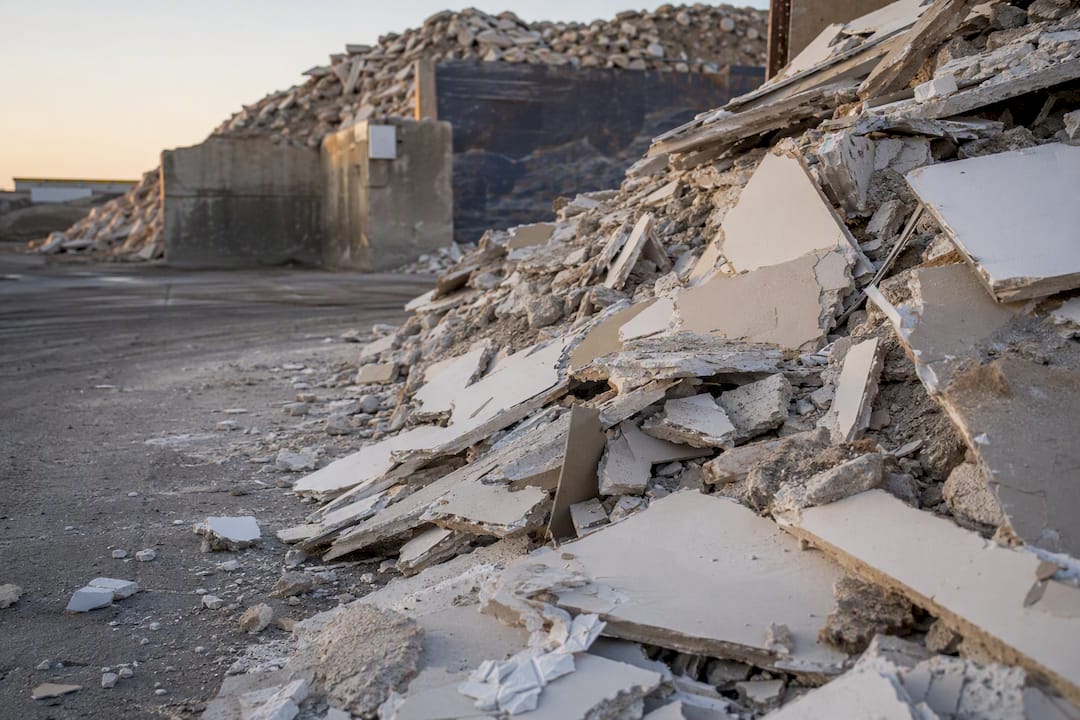
Buried in wet, oxygen-starved landfill, gypsum can generate hydrogen sulphide gas, the rotten-egg smell you sometimes catch near older tips. It’s toxic in concentration and one of the reasons plasterboard should never go into a mixed waste bin.
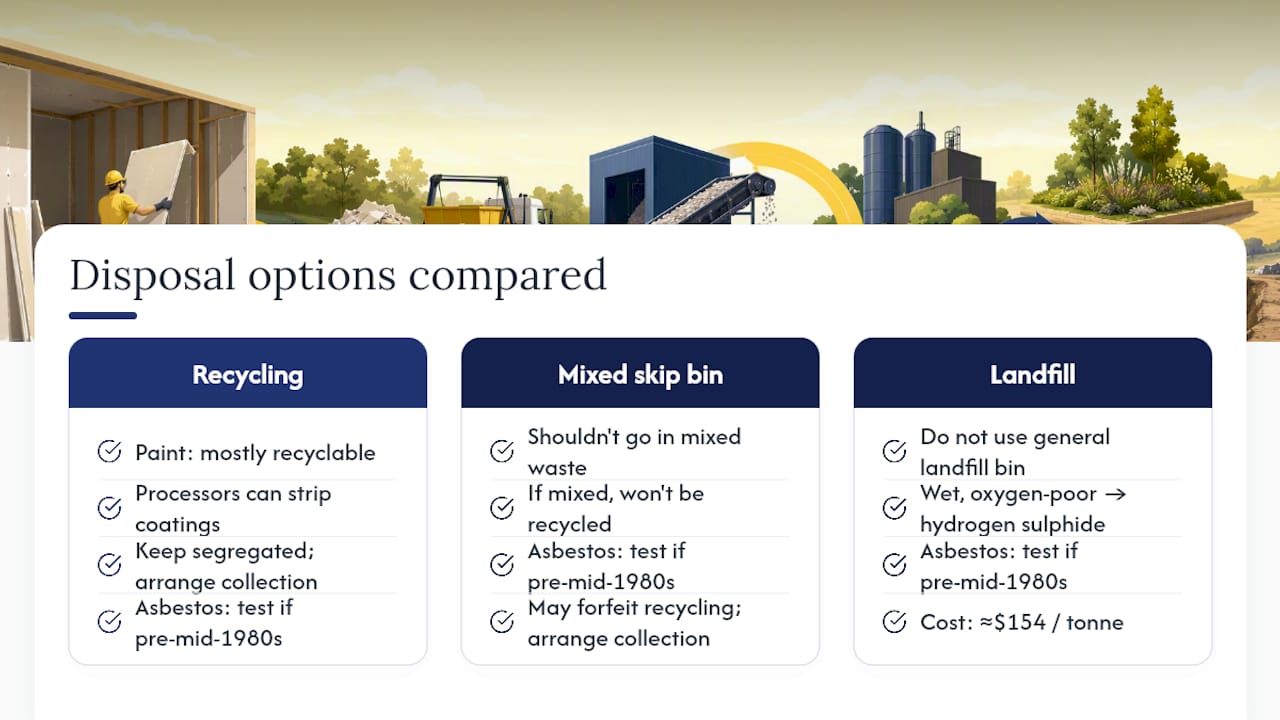
There’s a money angle too. Landfill levies keep climbing, and recycling is often the cheaper option once you factor in the avoided levy. Case studies referenced by EPA NSW put landfill disposal around $154 per tonne against roughly $60 per tonne for recycling. On a mid-size renovation, that gap adds up fast.
- Landfilled gypsum can produce hazardous H2S gas in anaerobic conditions
- Recycling frees up landfill airspace that’s already under pressure
- Recycling typically costs less per tonne than tipping fees
What counts as recyclable plasterboard?
Plasterboard is a gypsum core sandwiched between two layers of paper facing, and most of it is recyclable when it’s clean. Painted boards are usually fine too. Many Australian processors can strip paint and coatings during processing, so a painted sheet isn’t automatically rubbish.
Generally accepted:
- Clean offcuts and manufacture waste
- Unpainted or lightly painted sheets
- Cornices and set plaster trims
Usually rejected or restricted:
- Plasterboard mixed into general construction and demolition rubble
- Boards with insulation, tape, or adhesive still attached
- Foil-backed, moisture-resistant, or fire-rated specialist boards, depending on the facility’s processing line
Pro Tip: If the building went up before the mid-1980s, get it tested for asbestos before you cut, sand, or stack anything. If it’s pre-2000s and painted, a quick lead check is worth the small cost, especially before recycling or reuse.
How do you prepare plasterboard for recycling?
Getting this right on site saves you contamination fees and rejected loads later. Follow this order:
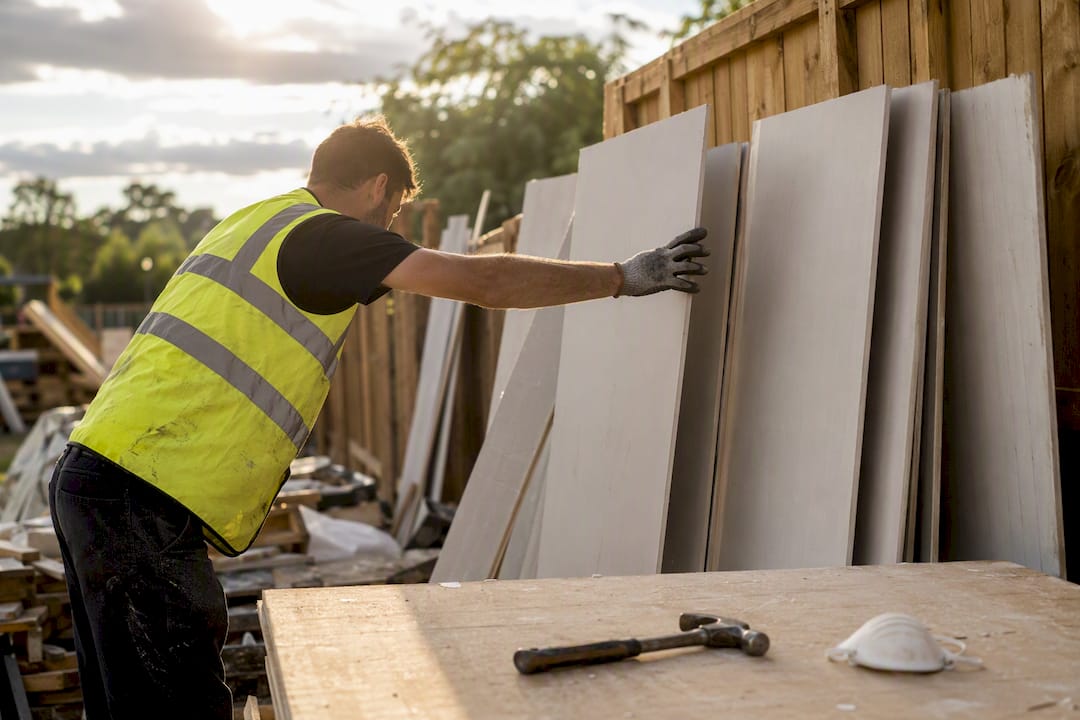
- Pull out all screws, nails, and metal fixings before stacking anything.
- Separate full sheets from small offcuts; bag the small stuff so it doesn’t scatter in transit.
- Keep everything dry and under cover, tarps work fine on a job site.
- Segregate foil-backed or moisture-resistant boards into their own pile and label them clearly.
- Avoid crushing or grinding boards you haven’t tested, especially on older demolition jobs.
Wet gypsum sheets go soft, crumble, and become far harder to process, so a covered stack near the skip location is better than a pile left in the weather overnight.
Pro Tip: Stack sheets flat rather than leaning them, it stops them snapping under their own weight and makes loading a collection truck quicker for everyone involved.
Where can you actually recycle plasterboard?
The right route depends on volume and timeline. A few offcuts from a bathroom reno don’t need the same solution as a full demolition site.
- Drop-off points suit small DIY quantities, a trailer load or less, dropped at a transfer station that accepts gypsum separately.
- Manufacturer take-back, such as Gyprock’s recycling arrangements, can work for larger commercial jobs buying new board and returning offcuts through the supply chain.
- Mobile processing units, tracked screening plants covered in industry reporting from Waste Management Review, can process large piles on-site, useful for demolition jobs or flood-damaged material where transport costs would otherwise blow out the budget.
- Skip or bin collection services suit mixed-trade sites where plasterboard needs picking up alongside other renovation debris.
When you book, have a tonnage estimate ready, know whether the material is contaminated, and be clear on board types. That’s the difference between a smooth quote and a surprise contamination surcharge.
What does plasterboard recycling cost and how long does it take?
Ballpark figures back the case for recycling over landfill. The EPA NSW case studies mentioned earlier put recycling around $60 per tonne against $154 for landfill. Actual quotes vary by state, levy rates, and volume, so treat those as a guide rather than a fixed price.
- Small DIY loads (a trailer or a few bags) often cost more per kilogram than a consolidated commercial load
- Booked collections typically get scheduled within a few days to a week
- On-site mobile processing can turn around large volumes faster than trucking everything off-site
Bigger, consolidated loads almost always win on price per tonne, which is one reason multiple trades on a site benefit from coordinating a single pickup rather than each arranging their own.
What happens to recycled plasterboard afterwards?
Recovered gypsum doesn’t just disappear into a stockpile. It has real markets waiting for it.
- New plasterboard manufacture, as a partial input alongside virgin gypsum
- Agricultural soil conditioners, gypsum is prized for improving clay soils
- Cement additives and bulk civil engineering uses
Clean, well-sorted gypsum reaches higher-value end markets than contaminated loads, which is the practical reason for separating nails, insulation, and other debris before collection. A dirty load might only qualify for lower-grade civil use instead of going back into new board.
What safety and regulatory checks should you do first?
Before you touch a large volume of old plasterboard, run through a short safety checklist. Wear a mask and eye protection, wet down dust before sweeping, and never grind or sand painted boards until they’ve been tested.
- Test older buildings for asbestos and, where paint is present, check for lead before any cutting or demolition work
- Contact your local environment or waste authority if you’re dealing with large volumes or need permits for a demolition-scale job
- Ask your recycler for a weight ticket or recovery certificate, particularly on commercial projects where waste tracking documentation matters
How do you choose a reliable plasterboard recycler?
Not every operator advertising “recycling” actually separates and processes gypsum properly, some just consolidate loads before landfill. A few pointed questions sort the genuine operators from the rest.
- What contamination is acceptable, and what triggers a surcharge?
- Can you provide a weight ticket or certificate showing where the material actually ends up?
- What’s the quote structure, flat rate, per tonne, or volume-based?
- Do you carry insurance and safety compliance for on-site collection work?
Favour recyclers who can show you where the gypsum actually goes rather than a vague assurance it’s “diverted from landfill.” A written quote with contamination charges spelled out upfront beats a surprise invoice after collection.
How Melbourne City Rubbish handles your plasterboard collection
Sorting through drop-off points, take-back schemes, and mobile processors takes time most renovators and builders don’t have spare. Melbournecityrubbish handles plasterboard collection directly, whether it’s a trailer of bathroom offcuts, a full strip-out from a strata unit, or demolition debris from a commercial fit-out, and segregates it on-site to avoid the contamination fees that trip up mixed loads.
When you book, ask about segregation on collection, proof of where the material ends up, and pricing for consolidated loads if you’ve got multiple trades generating waste on the same site. Renovators can start with the guide to managing renovation waste, and strata managers can check the strata rubbish removal service for multi-unit jobs. To get a quote for your next plasterboard clean-out, book a collection today.
Frequently asked questions
Is all plasterboard recyclable, including painted sheets?
Most painted plasterboard is recyclable. Many Australian processors can strip paint and coatings during processing, though heavy coatings or specialist boards may need separate handling.
Can plasterboard go in a normal skip bin?
It shouldn’t go in with mixed waste if you want it recycled, and definitely not into a general landfill bin, since gypsum in wet, oxygen-poor conditions can produce hydrogen sulphide gas. Keep it segregated and arrange a dedicated collection.
Do I need asbestos testing before recycling plasterboard?
If the building was constructed before the mid-1980s, get it tested before cutting, sanding, or demolishing anything. It’s a small cost against a serious health risk.
How much cheaper is recycling than landfill?
Case studies cited by EPA NSW put recycling around $60 per tonne against roughly $154 for landfill, though actual rates vary by state levy and provider.