Most private rubbish removal bookings land within 1 to 14 days, with same-day or next-business-day slots available for straightforward jobs. Council bulky collections run much slower, often 1 to 8 weeks depending on the season and your area, and regulated waste like asbestos needs pre-booking that adds its own fixed delay. If your deadline is tight, booking a private same-day service is the only way to control the timing yourself.
TL;DR:
- Private rubbish removal can be scheduled within 1 to 14 days, with same-day or next-business-day options available for simple jobs outside peak periods.
- Council bulky collections often take 2 to 8 weeks, depending on season and area, making private services more suitable for time-sensitive tasks.
- Permits for street access, construction, or parking can add weeks to scheduling, especially for long-term or complex jobs requiring assessments or detailed planning.
- Regulated waste like asbestos requires pre-booked disposal, Waste Tracker documentation, and specific delivery windows, making same-day disposal rarely possible.
- Proper sequencing of permits, regulated waste bookings, and removal scheduling is essential to meet fixed deadlines and avoid delays or additional costs.
Table of Contents
- Typical wait times by service type and season
- Council permits, construction traffic plans and how they affect scheduling
- Regulated and reportable waste: mandatory bookings and documentation
- Practical planning steps to shorten wait times and manage risk
- Sequencing removal around assessors, restoration crews and site access
- Average costs associated with different lead times
- Detailed timeline overview from booking to completion
- Impact of location and site access restrictions on lead times
- Communication strategies for clients during wait periods to set expectations
- How Melbourne City Rubbish can help with short lead times
- FAQ
- Sources
Typical wait times by service type and season
The gap between a private booking and a council collection is the single biggest factor in how long you will wait. Private operators schedule around their own fleet, so a straightforward office cleanout or a trailer load of green waste can often be arranged for the same day or the next business day. Outside peak periods, a booked private slot for a larger job, such as a strip-out or multi-room clearance, typically takes 1 to 2 weeks to lock in a crew and the right vehicle.
Council-run bulky waste and kerbside collections work on a completely different model. Some councils publish current wait times of around 2 weeks in quieter months, but warn that busy periods can push that out to as much as 8 weeks, which is why early booking is consistently recommended by council bulk waste services. Some councils go further and schedule kerbside bulky pickups for just one week per suburb each financial year, requiring items to be placed out by 6am on the first day of that window, according to Brisbane City Council’s kerbside collection calendar. Miss that week and you are waiting for next year’s allocation or paying for a private alternative.
Some councils publish current bulk-waste wait times of roughly 2 weeks in quiet periods, stretching to up to 8 weeks during peak season. That spread alone should push time-critical jobs toward private booking rather than a council slot.
Fleet capacity explains most of the seasonal swing. Spring cleaning, end-of-lease periods and the lead-up to public holidays all concentrate demand into a few weeks, and neither private operators nor councils can scale trucks and crews instantly to match a spike. A few patterns are worth building into your planning:
- Same-day or next-business-day slots are realistic for private removals outside peak demand windows.
- Booked private jobs outside peak season generally confirm within 1 to 2 weeks.
- Council bulky collections can extend to 8 weeks in busy periods, even when the normal wait is closer to 2 weeks.
- Public holiday weeks commonly close booking windows earlier and push the next available slot out further than usual.
Booking cut-off times matter too. Some council and private booking systems require a request to be submitted by a set time, such as 2pm on the working day before collection, to be considered for the next available slot. Missing that window by even an hour can mean waiting an extra day or longer, so it pays to confirm the exact cut-off with whoever you book through rather than assuming a same-day request will be accepted.
Council permits, construction traffic plans and how they affect scheduling
For any job involving a skip bin on the street, a crane lift or a truck that needs to park where it normally could not, the permit timeline often becomes the real constraint, not the removal itself. Short-term verge or parking permits usually take days to a couple of weeks depending on the council, but some authorities request applications well in advance. The City of Melbourne, for example, asks that permit applications for parking or verge changes be submitted at least 35 business days before the date you need them, which is roughly seven working weeks.
Longer construction jobs raise the bar further. Works that change traffic flow or occupy public space for an extended period typically require a Construction Traffic Impact Assessment as part of a broader Construction Management Plan, and that documentation needs to be lodged at the start of the project, not once the skip is already booked. Treat the permit application as the first domino, because everything else, including your removal booking, tends to fall into place around it.
A complete, well-prepared application is the fastest way through this process. Before you submit anything, gather:
- A measured site plan showing exactly where the bin, truck or equipment will sit.
- The proposed start and end dates, with a few days of buffer built in.
- A description of any traffic or pedestrian impact, including detour or signage needs.
- A nominated site contact who can answer council queries without delay.
- Your removal company’s booking confirmation or quote reference, where the council asks for it.
Pro Tip: Submit your permit application and your removal booking in the same week, then follow up directly with your council contact a few days later rather than waiting for an automated update.
Regulated and reportable waste: mandatory bookings and documentation
Asbestos and other reportable priority waste do not move on the same timeline as general rubbish, and no amount of planning shortens the fixed steps involved. Any load classed as reportable priority waste must be recorded through EPA Victoria’s Waste Tracker, which logs the movement from collection to disposal and creates a hard scheduling dependency: the removal cannot proceed until the tracking record is set up correctly.
Disposal sites add their own constraints on top of that. Asbestos loads commonly need to be pre-booked, are only accepted within a set delivery window such as a morning slot, and can be refused on arrival if the paperwork or movement number is missing. One facility requires asbestos bookings to be made before 3.30pm on the last weekday ahead of delivery, with loads accepted only in a morning time window. Weather and site safety conditions can also close a booking window at short notice, which is why same-day disposal of asbestos is rarely possible even when a transporter is ready to go.
To avoid a refused load and a lost day, prepare in advance:
- Confirm the disposal site’s booking cut-off and accepted delivery window before you schedule the collection truck.
- Identify who is authorised to sign the waste movement manifest, and make sure that person is available on the day.
- Have your Waste Tracker record set up and matched to the correct load classification before collection begins.
- Keep a printed and digital copy of the booking confirmation with the vehicle, since some sites will not accept a load without it.
Readers managing a site clearance that involves hazardous residue, rather than asbestos itself, may also find value in non-toxic cleaning approaches for hazardous waste when deciding how to handle contaminated materials ahead of disposal.
Practical planning steps to shorten wait times and manage risk
If you are working to a fixed deadline, the order you book things in matters as much as how early you start. Get the sequence wrong and you can end up with a truck booked and nowhere to take the load, or a skip permitted but no removal crew free to use it.
- Lodge any required council permit first, since it has the longest and least flexible lead time.
- Book regulated-waste disposal (asbestos or other reportable waste) as soon as the scope is confirmed, because site acceptance windows are fixed.
- Confirm your general removal quote and booking once the permit and any regulated-waste slots are locked in.
- Align the final date with any assessor or trade sign-off the job depends on, so the truck is not left waiting on-site.
Choosing between a private same-day service and a council collection comes down to certainty versus cost. Council collections cost nothing extra but carry real scheduling risk, especially in peak season. Private, booked removal costs more but gives you a confirmed date, which matters when a lease handover, settlement or site handback is on the line.
Pro Tip: Photograph the site and access route before you book, and send those photos with your quote request. It lets the removal company confirm truck access and crew size upfront, which avoids a second visit.
Where neither option fits the timeline, a staged clear-out, short-term storage, or hiring a private skip for your own property (which avoids council permit timing altogether) can bridge the gap while the main booking is confirmed.
Sequencing removal around assessors, restoration crews and site access
Removal rarely happens in isolation. On most jobs it sits between an assessor’s sign-off, a trade crew finishing demolition or fit-out work, and the final clean. The most common delay is a removal truck booked before the site is actually ready, which means paying for a slot that cannot be used.
For a one-day urgent clearout, reserve the morning for final sign-off or inspection, book the removal crew for early afternoon, and leave a buffer before end-of-day for any items that need separate handling. For a multi-stage strip-out, the pattern looks different:
- Day 1 to 2: assessor inspection and scope confirmation.
- Day 3 to 5: regulated-waste bookings and permit lodgement, run in parallel.
- Week 2: strip-out and demolition work, with removal trucks staged across the week rather than one single visit.
- Final day: last-load removal and site clean, timed after trades confirm completion.
Confirming each milestone with the relevant party a day or two ahead keeps the truck booking from becoming the limiting step.
Average costs associated with different lead times
Speed generally costs more, and it is worth budgeting for that trade-off rather than discovering it mid-project. A private same-day or next-business-day removal typically sits at a premium compared with a standard booked slot, since the operator is reshuffling a schedule to fit you in. A job booked a week or two ahead usually gets standard pricing because it fits into normal route planning.
Council collections are free or low-cost but come with the scheduling risk already covered, and that risk has its own cost if it forces a late private booking to meet a deadline. Regulated waste such as asbestos carries disposal site fees on top of transport, and those fees do not change based on how quickly you need the job done, only the booking slot does.
For budgeting purposes, request quotes early enough to compare a standard-timeline price against an expedited one before you commit to a date. Melbourne City Rubbish’s quick quote page and other providers’ quote tools let you see both options side by side rather than guessing at the premium.
Detailed timeline overview from booking to completion
A typical private removal job moves through a consistent sequence, even though the exact days vary with job size. First comes the enquiry and quote, usually same-day to 48 hours after you send photos or a description of the waste. Next is the booking confirmation, which locks in a date and, for larger jobs, a crew size and vehicle type.

Between booking and collection day, any permit or regulated-waste steps run in parallel, which is why starting those early prevents them from becoming the bottleneck. On collection day itself, the crew arrives within the confirmed window, sorts and loads the waste, and where carbon-neutral or recycling-focused disposal is requested, materials are separated on-site before transport. Disposal or recycling facility drop-off follows, with reportable waste subject to the Waste Tracker and site booking requirements already covered. The job closes with a final site check, and for strip-outs or demolition work, a handover to the next trade or a make-good inspection.
Knowing this sequence helps you spot where a delay is likely to originate: it is almost always the permit or regulated-waste step, not the removal crew itself.
Impact of location and site access restrictions on lead times
Where the waste is and how a truck reaches it changes the timeline as much as any permit. Ground-floor residential jobs with street parking are usually the fastest to schedule, since there is nothing beyond the removal booking itself to coordinate. High-rise apartments and CBD commercial sites add lift bookings, loading dock schedules and building management approval, each of which can add its own lead time on top of the removal date.
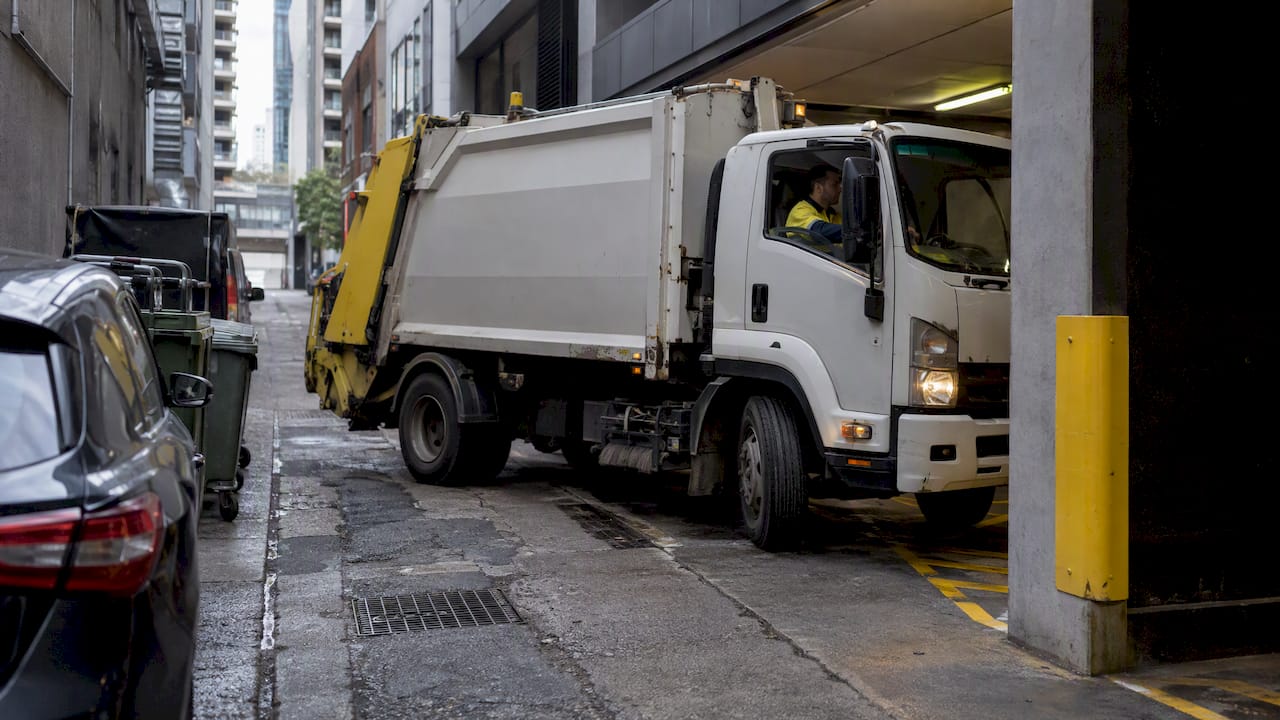
Multi-unit buildings face a particular constraint: some councils allocate just one bulky-collection slot per property each year, which forces property managers to coordinate a single building-wide window or switch to private removal once that allocation is used. Sites with restricted truck access, narrow laneways or limited parking also need an operator who can confirm vehicle size against the access route before the date is locked in, which is why sending photos with your quote request (as covered earlier) saves a wasted trip.
Regional and outer-suburban sites can face longer private booking windows simply due to lower operator density in the area, so confirming service coverage before committing to a deadline is worth the extra five-minute phone call.
Communication strategies for clients during wait periods to set expectations
Most frustration around rubbish removal timing comes from uncertainty, not the wait itself. Setting expectations early, both with your own stakeholders and with whoever is doing the removal, prevents last-minute scrambling.
For property managers, send tenants or site occupants a confirmed date range as soon as a booking is locked in, rather than a vague window, and flag any permit-dependent steps that could shift the date. For larger jobs involving multiple trades, a short written timeline shared with everyone involved (assessor, removal crew, trades) avoids the common problem of one party assuming another has already confirmed the date. Field service scheduling tools built for trades, such as those covered in guidance on scheduling performance for tradies, illustrate how structured updates reduce the back-and-forth that otherwise eats into lead time.
If a delay does occur, communicating it as soon as it is known, along with the revised date, matters more than the delay itself for keeping a job on track.
How Melbourne City Rubbish can help with short lead times
We specialise in hassle-free rubbish removal across commercial and residential sites, and where your timeline is tight, we work to offer same-day or rapid-booking options. We aim to provide real-time notifications so you know when the crew is arriving. For sites that want it, we also offer carbon-neutral disposal options at no extra complexity to the booking process.
If a deadline is approaching, our same-day rubbish removal service is built for exactly that situation, and for office cleanouts, strip-outs or construction waste, our team can quote against your specific access and timing constraints. Get a quick quote now and we will confirm the fastest available slot for your job.
FAQ
What is the minimum charge for junk removal?
Minimum charges vary by provider and depend on load size, waste type and site access, so there is no single fixed figure across the industry. For an exact minimum on your job, request a quote with photos or a description of the waste so the removal company can price it accurately.
How much does it cost to remove rubbish?
Rubbish removal pricing depends on volume, waste type, access restrictions and how quickly you need the job done, with expedited or same-day bookings generally priced above a standard scheduled slot. Melbourne City Rubbish provides pricing on request through a quick quote based on your specific job details.
What is the cheapest way to get rid of junk?
Council kerbside or bulky collection is typically the lowest-cost option, though it comes with limited scheduling windows and can run anywhere from around 2 weeks to up to 8 weeks in busy periods. For a guaranteed date, a private booking costs more but removes that scheduling uncertainty entirely.
How long does a private rubbish removal booking take?
Private removal bookings commonly fall within 1 to 14 days, with same-day or next-business-day slots available for straightforward jobs outside peak demand. Larger jobs involving permits or regulated waste take longer, since those steps run on their own fixed timelines before the removal itself can proceed.
Does asbestos removal take longer to schedule than general waste?
Yes, asbestos and other reportable priority waste require pre-booking, fall within limited delivery windows, and depend on Waste Tracker documentation being in place before collection. These fixed steps mean asbestos jobs cannot be scheduled with the same speed as general rubbish removal, regardless of how quickly a transporter is available.
Sources
- Park or unload vehicles on the road (construction permit zone) | City of Melbourne
- What is Waste Tracker | EPA Victoria
- Kerbside collection calendar | Brisbane City Council
- Bulk waste service FAQ | City of Newcastle