‘Strip out’ means to remove the internal parts, fittings or components from something, usually so they can be replaced, extracted, or cleared away entirely. It’s a transitive phrasal verb, and its exact meaning shifts with context: mechanics strip out worn machine parts, chemists and process engineers strip out a target compound from a mixture, and builders strip out everything non-structural before a fit-out or demolition. This article walks through all three, plus the grammar, synonyms and common mix-ups worth knowing.
TL;DR:
- Machinery strip-outs typically involve removing parts for repair, replacement, or salvage, and should be clearly documented for warranty purposes.
- In chemical processes, stripping uses external media like steam or air to extract volatile compounds from liquids or gases, not relying on boiling points.
- Building strip-outs focus on removing non-structural fixtures, services, and finishes in a specific sequence to ensure safety and compliance with hazardous material regulations.
- Proper planning and safety checks are essential before starting a building strip-out, including site surveys, hazardous material tests, and waste segregation strategies.
- ‘Strip out’ is a technical, separable term mainly used in practical fields such as engineering, construction, and process industries, not in formal or legal contexts.
Table of Contents
- The core senses of ‘strip out’
- Using ‘strip out’ when you’re talking about machinery
- How ‘strip out’ applies to chemistry and process engineering
- What a building strip-out actually involves
- Example sentences and close synonyms
- When to use ‘strip out’ and how to phrase it correctly
- When it’s worth calling in a professional strip-out team
- Sources
The core senses of ‘strip out’
Dictionaries agree on the shape of the phrase even when the context changes. The Cambridge Dictionary defines one sense as removing a piece of equipment or machinery to replace it with something newer, while Collins Dictionary records the technical sense of removing a chemical or component from a mixture. Dictionary backs both readings, listing “remove the working parts of a machine” alongside the chemistry sense.
Three practical meanings cover almost every real-world use:
- Machinery: taking out working parts, usually for repair, replacement or salvage.
- Chemistry/process engineering: extracting a specific component (often a gas or volatile compound) from a liquid or mixture.
- Building and construction: removing non-structural fixtures, linings and services ahead of a refurbishment or demolition.
The phrase turns up constantly in technical manuals, business reports and construction tender documents, which tells you something about its register: it’s practical, workmanlike language, not literary or casual. Grammatically, it’s separable, so you’ll see both “strip out the wiring” and “strip the wiring out” without any change in meaning.
Using ‘strip out’ when you’re talking about machinery
In a mechanical context, to strip out a machine or system means removing its working parts, usually so they can be replaced, rebuilt or sent for scrap. It’s the language of workshops, production floors and maintenance logs.
A few examples show how it works in practice:
- “The maintenance crew stripped out the old conveyor motors before fitting the upgraded units.”
- “We’ll need to strip the engine out completely if the block’s cracked.”
- “Production lines have been stripped out and replaced” with newer, faster equipment, as Cambridge’s own example puts it.
It’s worth distinguishing ‘strip out’ from two close cousins. ‘Strip down’ usually means dismantling something into its component pieces without necessarily removing them from the machine, think of stripping down an engine on a bench for inspection. ‘Dismantle’ is broader and more formal, and it doesn’t carry the same implication of clearing something out for replacement. ‘Strip out’ specifically signals removal with intent, either to repair, replace or discard.
Pro Tip: In repair reports or handover documents, be specific about what was stripped out and why. “Stripped out and replaced worn bearings” reads far better in an audit than “did maintenance work,” and it protects you if a warranty claim comes up later.
How ‘strip out’ applies to chemistry and process engineering
In chemistry and industrial process work, stripping means removing a lighter or target component from a liquid or gas stream using an external carrier, typically steam or air, rather than by heating the whole mixture to boiling point. That’s the key difference from distillation, which separates components by relying on differences in boiling point within the mixture itself, whereas stripping introduces an outside medium to pull the target substance out.
Sulzer’s process technology guide explains steam stripping and air stripping as common industrial methods, both used to strip out volatile compounds from a liquid stream.
- Steam stripping passes steam through a liquid to carry off volatile organic compounds, common in solvent recovery.
- Air stripping uses air instead of steam, often for pulling contaminants out of contaminated groundwater or wastewater.
A wastewater treatment plant might strip out dissolved ammonia or volatile solvents before discharging water, using exactly this kind of process. It’s a deliberate, engineered separation, not a casual “get rid of it” removal.
What a building strip-out actually involves
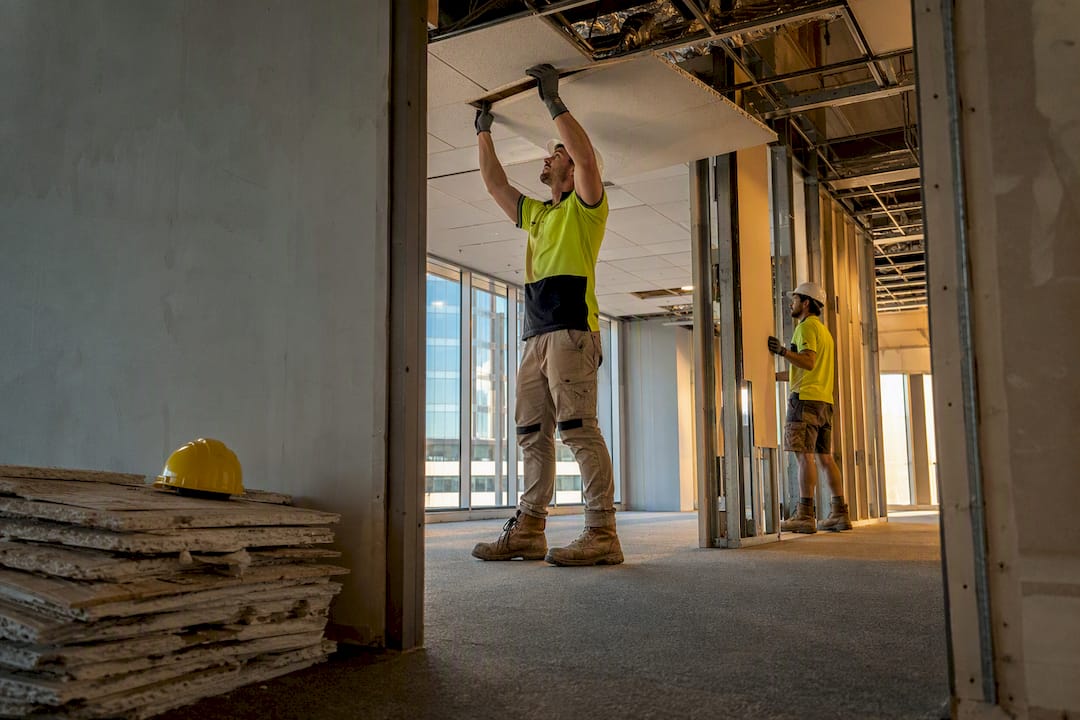
A building strip-out, sometimes called a soft strip, means removing everything non-structural inside a space before demolition or refurbishment begins. That includes mechanical and electrical (M&E) services, partitions, suspended ceilings, floor coverings, fixed furniture and fit-out finishes. What stays behind is the bare shell: structural walls, floors and the building’s frame.
LexisNexis’s glossary entry on soft strip describes it as a scoped item in tender and contract documentation, and that scoping matters, because a soft strip contract explicitly excludes structural work.
Sequencing is where most strip-out jobs go wrong if they’re rushed. Soft strip has to happen before any structural demolition starts, and for good reason: it lets surveyors check for hazardous materials like asbestos before heavier work disturbs anything, and it keeps the building’s temporary structural assumptions valid while services are still live. Industry guidance on selective demolition and strip-out sequencing treats this order as a safety rule, not a preference.
A practical sequence for organising a strip-out looks like this: For practical guidance on replacing interior doors that complements strip-out sequencing, see One Day Doors & Closets.
- Commission a site survey to identify what’s structural, what’s services, and what needs specialist handling.
- Arrange an asbestos and hazardous materials check before anyone touches ceilings, floor tiles or old insulation.
- Isolate services including power, gas and water so removal work is safe.
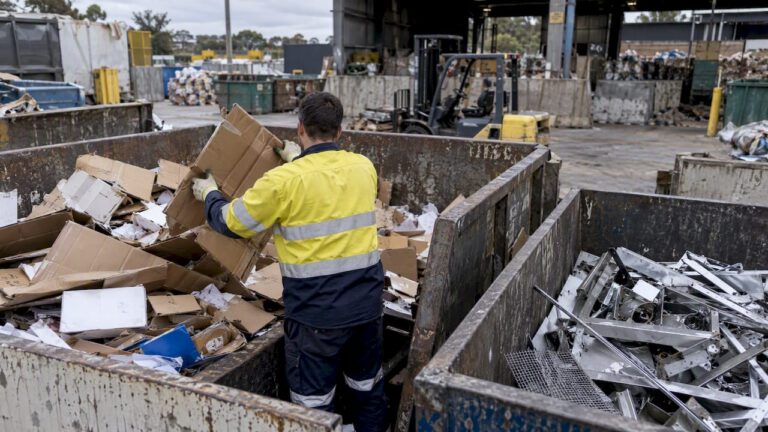
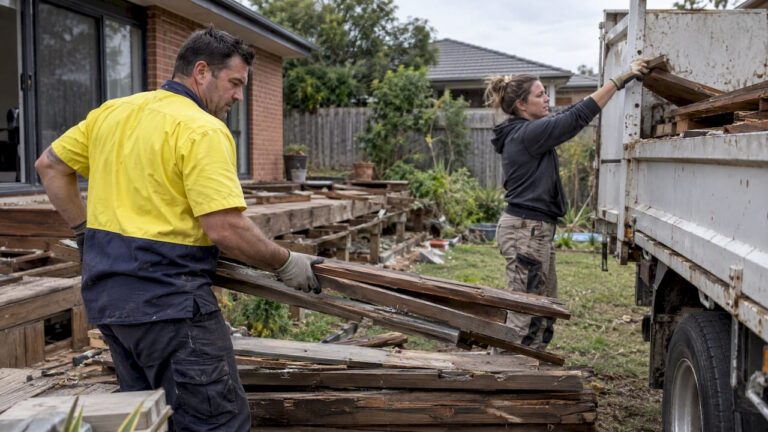
- Segregate waste by type as it comes out, timber, metal, plasterboard, e-waste, so it can be recycled or disposed of correctly. Our guide on how to dispose of building waste covers this step in more detail.
- Confirm disposal routes for each waste stream before the skip bins arrive, not after.
Pro Tip: Before signing off on a contractor, ask for their risk assessment, method statement and waste handling plan in writing. If a contractor can’t produce these three documents on request, that’s a red flag worth chasing before work starts, not after.
Example sentences and close synonyms
Seeing the phrase used across contexts makes the differences click faster than any definition alone.
- Machinery: “They stripped out the hydraulic pump for a full service.”
- Chemistry: “The plant strips out residual solvent using steam before the water’s discharged.”
- Building: “The tenant fit-out team stripped out the old partitions over a weekend.”
- Business/data: “Core inflation strips out volatile items like fuel and fresh food to show the underlying trend.”
Close synonyms carry slightly different shades of meaning. ‘Strip down’ leans toward disassembly for inspection rather than permanent removal. ‘Dismantle’ is more formal and general. ‘Extract’ fits chemistry and data contexts especially well, where you’re pulling one specific thing out of a larger set. ‘Soft strip’ is the construction industry’s own term for a building strip-out specifically.
One quick note to avoid confusion: on its own, ‘strip’ can also mean to undress, as Oxford Learner’s Dictionaries confirms among its listed senses. Adding “out” removes any ambiguity. Nobody reads “strip out the wiring” as anything other than a technical instruction.
When to use ‘strip out’ and how to phrase it correctly
Object placement is flexible: “strip out the cabling” and “strip the cabling out” both work, though the first reads slightly more natural in technical writing and reports.
- Do use ‘strip out’ in technical manuals, maintenance logs and construction scopes, it’s precise and widely understood in those fields.
- Do pair it with a specific object (“strip out the ductwork”) rather than leaving it vague (“strip stuff out”).
- Don’t use it in formal legal or contractual writing where “remove the internal components” or “remove and dispose of fixtures” carries more precision and less ambiguity.
- Don’t confuse it with ‘strip away’, which leans figurative, “strip away the excuses”, rather than physical removal.
When it’s worth calling in a professional strip-out team
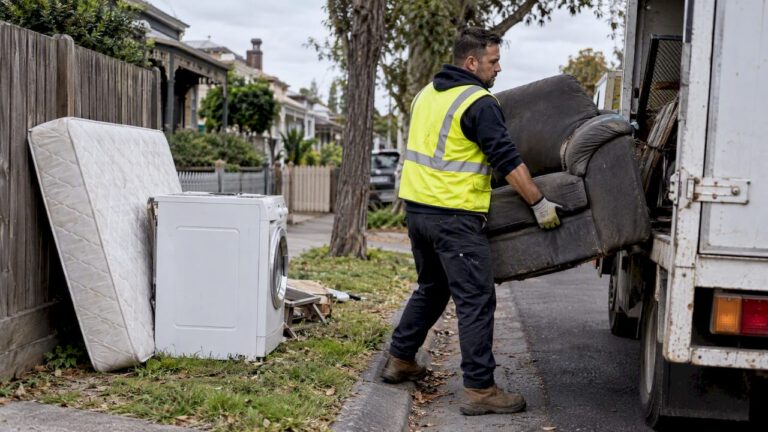
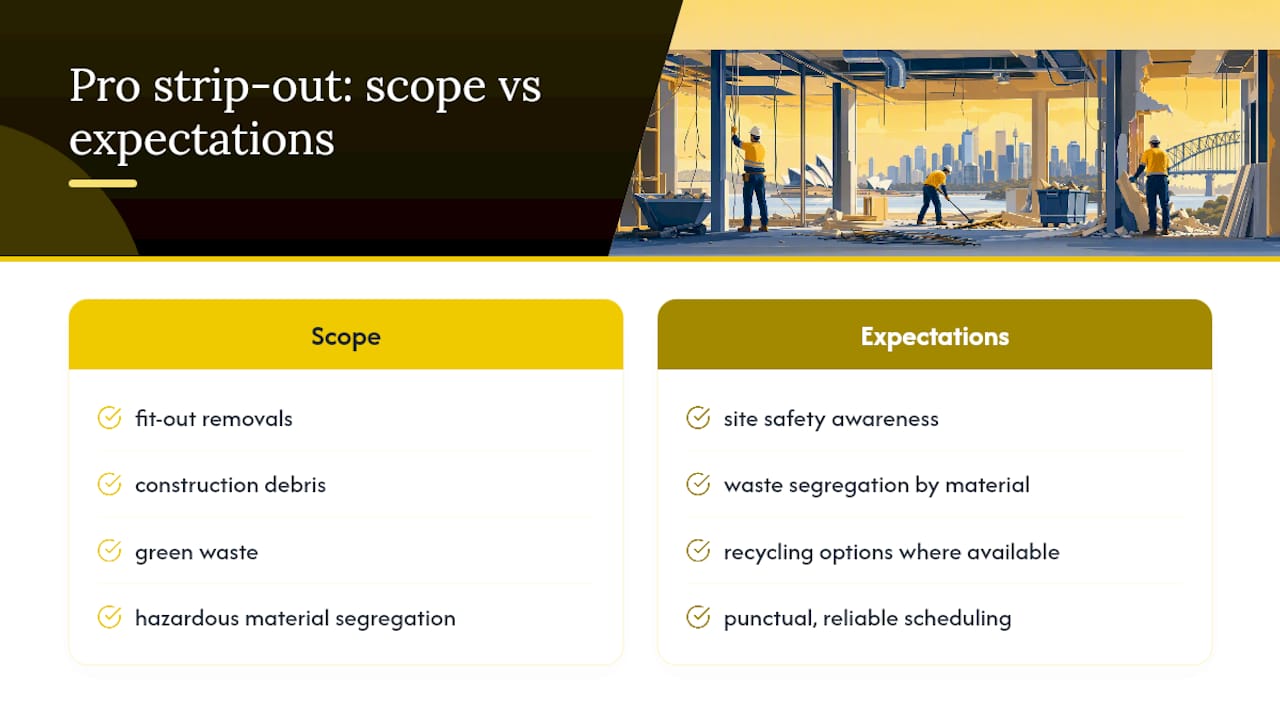
Handling the physical side of a strip-out, especially in commercial or construction settings, is where things get demanding fast. Professional strip-out teams take on fit-out removals, construction debris, green waste and hazardous material segregation, covering the physical labour and disposal logistics once the planning and safety checks are done.
What you should expect from a professional team on a strip-out job: site safety awareness, proper waste segregation by material type, recycling options where they’re genuinely available, and punctual, reliable scheduling so the job doesn’t blow out your project timeline.
If you’re planning a strip-out and want to see what it’ll cost before committing to anything, get a quick quote for rubbish removal and compare it against what you’ve already got on the table.
Sources
- Cambridge Dictionary — strip out
- Collins Dictionary — strip out
- Sulzer — Stripping technology
- LexisNexis — Soft strip
- Dictionary