Sustainable waste disposal in Melbourne means working down the waste hierarchy: avoid waste first, then reuse, recycle, recover energy, and send to landfill only what is left. In practice, you sort at the source, use a remover who takes material to facilities authorised to receive it, and keep the paperwork. This guide shows how to do that for offices, building sites, green waste and end-of-lease clear-outs.
TL;DR
- Victoria’s approach follows a hierarchy: avoidance, reuse, recycling, energy recovery, treatment, containment, then disposal. Landfill is the last step, not the default.
- Sorting at the source does most of the work. Separate bins with clear signs for recycling, organics and general waste keep recoverable material out of landfill.
- Building and demolition material such as concrete, bricks, timber and metals is solid inert waste, and reuse and recycling options should be investigated before landfill.
- Waste must go to a facility the EPA has authorised for that waste type, so choose a remover who can show where your load ended up.
- We offer opt-in carbon-neutral disposal for commercial and residential clients across Melbourne.
Table of Contents
- What sustainable waste disposal actually means here
- Why the stakes are high in Melbourne
- Offices and commercial buildings: sort first, then remove
- Construction and demolition waste
- Green waste and end-of-lease clear-outs
- What the rules require of anyone who moves your waste
- When landfill is still the answer
- How we approach sustainable disposal
- A simple checklist before you book
- FAQ
- Sources
What sustainable waste disposal actually means here
The phrase gets used loosely, so it helps to pin it to Victorian rules. The Environment Protection Act 1970 introduced a waste hierarchy with waste avoidance at the top, followed by reuse and then recycling. EPA Victoria’s classification publication sets out the full order of preference: avoidance, reuse, recycling, recovery of energy, treatment, containment and disposal.
That order is a useful test for any job. Before you book a truck, ask four questions in sequence:
- Can we avoid creating this waste (fewer fit-out offcuts, less packaging, no over-ordering)?
- Can anything be reused, such as desks, chairs, joinery, pallets or timber?
- Can what is left be recycled in separated streams?
- Only then: where does the residual go, and is that facility authorised for it?
A remover who works through those questions with you is doing sustainable disposal. One who tips everything into a single bin is not.
Why the stakes are high in Melbourne
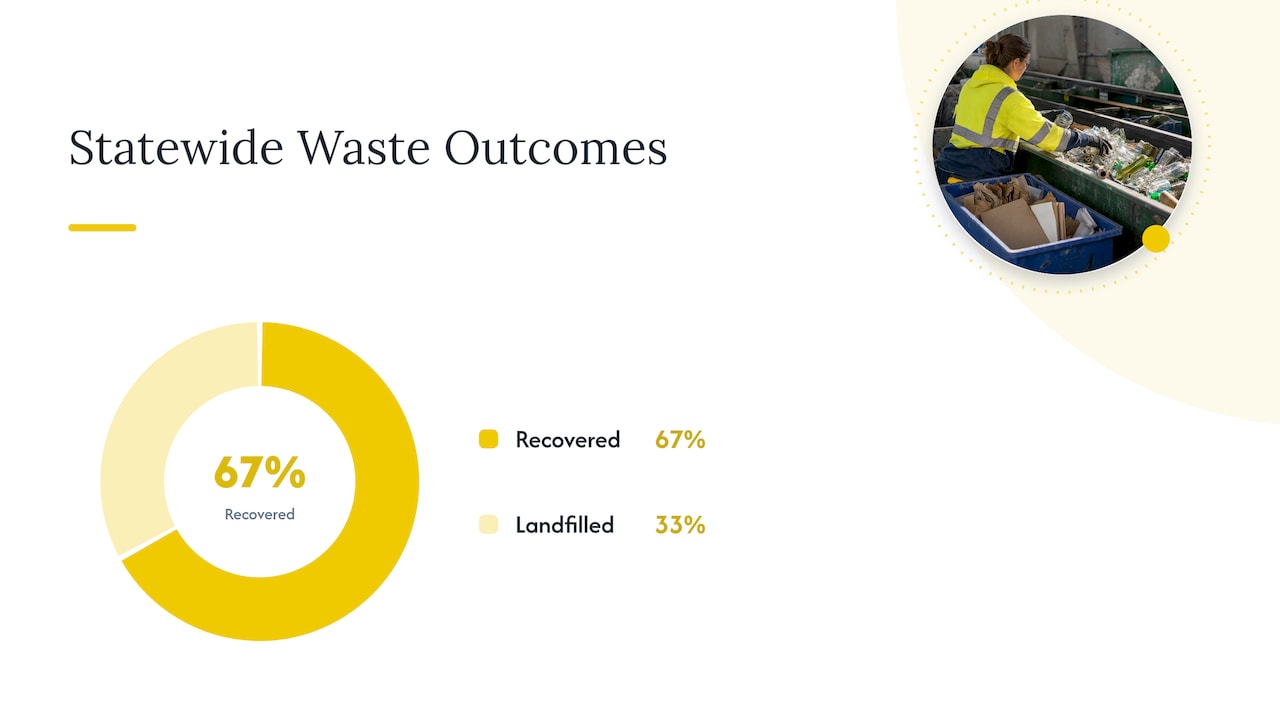
The scale is large. The Victorian Auditor-General’s Office estimated that in 2016–17 Victorians generated nearly 12.9 million tonnes of waste, with metropolitan Melbourne producing around 80 per cent of it. Of that total, 67 per cent was recovered for recycling and 33 per cent went to landfill across the state.
There is also room to improve. A 2015 bin audit by a metropolitan Melbourne council estimated that 65 per cent of what goes to landfill could be viably recovered and reprocessed, according to the same audit report. That is the gap good sorting and good contractor choice can close.
The state has set a direction. Sustainability Victoria says new recycling services and supporting facilities will help divert 80% of waste from landfill by 2030. It also notes that 83% of Victoria’s recycling is sent to reprocessing facilities, while the other 17% is contaminated or too small to process. Contamination is the part you control at your own bin.
Offices and commercial buildings: sort first, then remove
Most office waste is recoverable: paper, cardboard, containers, e-waste, furniture and food scraps. The trouble is that it arrives in one mixed stream.
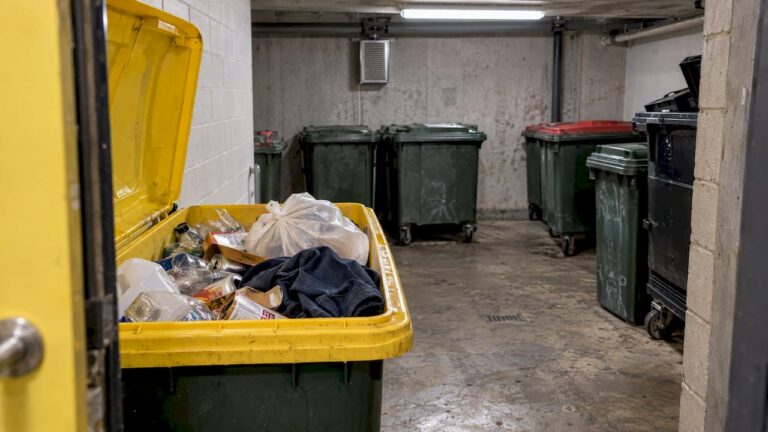
business.gov.au advises businesses to sort and track what is in their bins, provide separate bins with clear signage and images for each waste type (reused, recycled, composted), and ask whether building management or the local council offers compost services to keep food waste out of landfill.
A workable routine for a tenant or facility manager looks like this:
- Audit for a week. Look at what is actually in the bins before you change anything. Photograph the contents.
- Match bins to the building. Use the same colours and labels as the building’s collection contractor so cleaners do not re-mix streams.
- Put signs at the bin. Pictures beat words. Show what goes in, not only what stays out.
- Separate bulky items. Old desks, screens, filing cabinets and carpet tiles should never go in the general bin. Book them as a separate pickup.
- Review quarterly. Track volumes so you can see whether landfill loads are shrinking.
For a step-by-step schedule, this office waste segregation playbook breaks the process into a 90-day plan for facility managers. If you manage a tower or strata building, our guide to waste management for office building managers covers the building-level side, and our notes on recycling in the Melbourne CBD cover the particulars of laneways and high-rise arrangements.
Furniture and e-waste
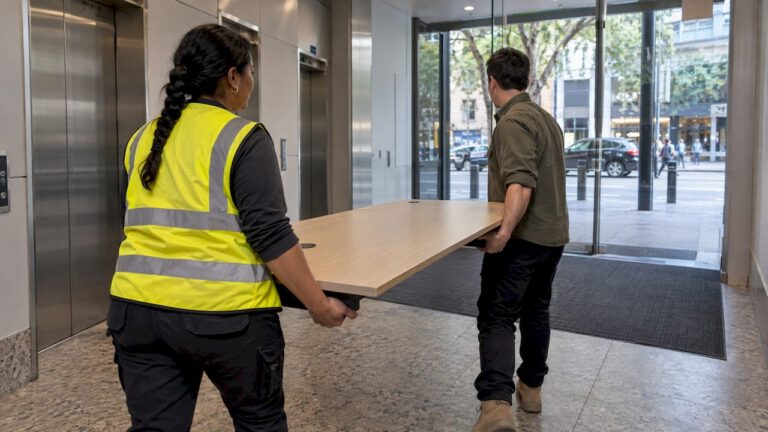
Bulky items are where reuse matters most. A good desk or chair can be donated, resold or recycled by material, and that sits higher on the hierarchy than disposal. Our furniture disposal and recycling service is built around that order, and our old furniture guide explains when to donate first and book removal second.
Electronics need their own stream because they contain materials that should not sit in landfill. Our page on disposing of e-waste in Melbourne explains how we handle screens, computers and cabling.
Construction and demolition waste
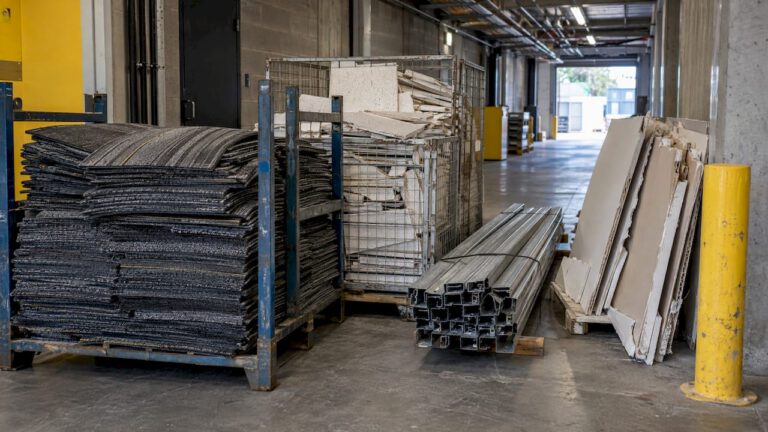
Building sites generate some of the largest and most recoverable loads. EPA classification treats concrete, bricks, dry timber, plastic, glass, metals and bitumen as solid inert waste, and says reuse and recycling options should be investigated before landfill.
That is not theoretical in Melbourne. Metropolitan councils point residents and builders to specialist recyclers for bricks, tiles and reinforced and unreinforced concrete, and to services that recover mixed construction and demolition waste. Merri-bek City Council’s building waste guide lists these services along with the materials they accept, including broken bricks, concrete, green waste, plasterboard, metals, soils, tiles and timber.
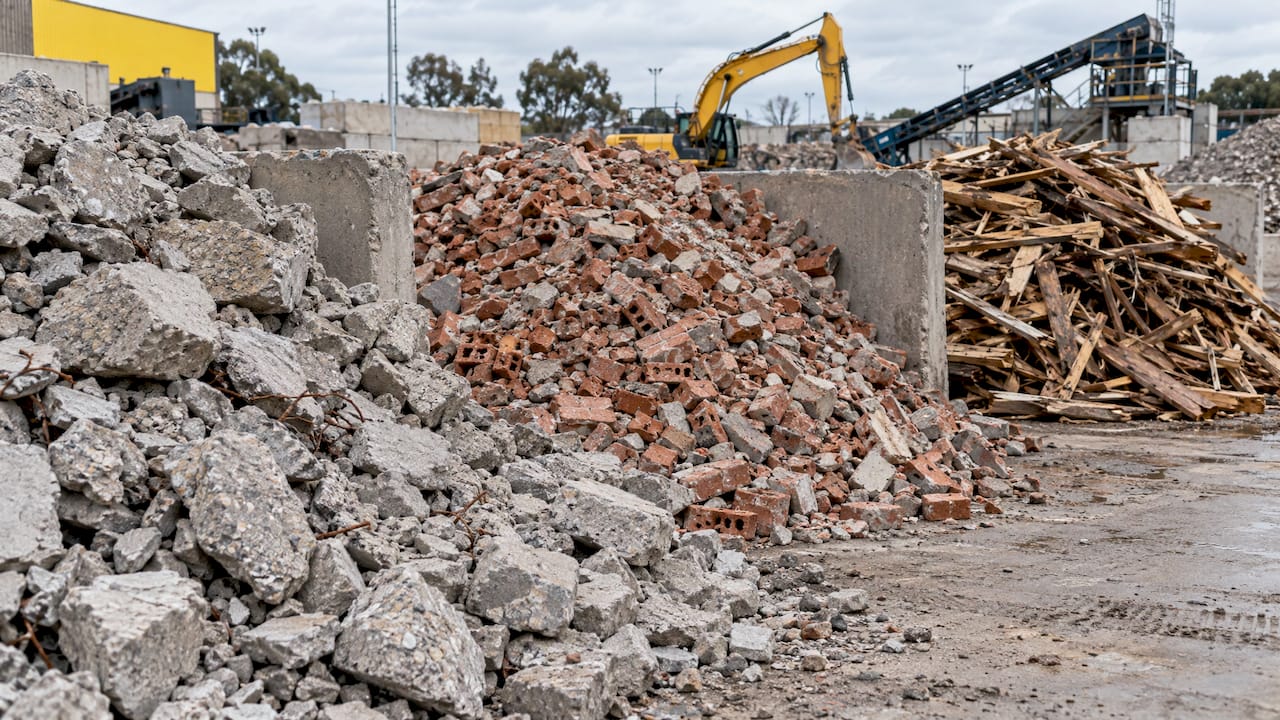
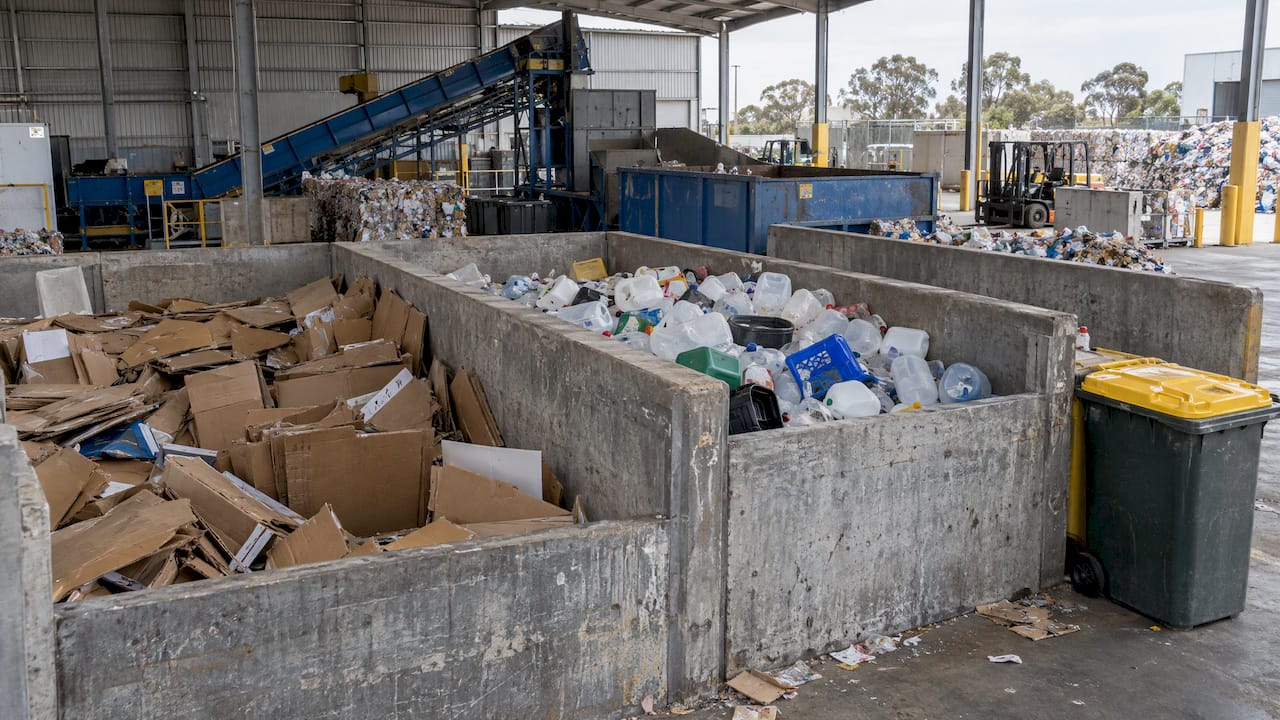
The outcomes at the best facilities are significant. The Repurpose It facility in Epping accepts over 700,000 tonnes a year of construction and demolition, organic and timber waste. According to its operations manager, it achieves a 99% resource recovery rate, turning C&D material into road subgrade and capping, organics into compost and soil amendments, and timber into mulch. DCCEEW also states it diverts over 30,000 tonnes of CO2 a year.
Separate on site, save at the tip
Mixed loads are harder to recycle than separated ones. If your site has room, split these streams:
| Stream | Typical destination |
|---|---|
| Concrete, bricks, tiles | Crushed and reused as road base or fill |
| Timber | Reuse, or chipped to mulch |
| Metals | Scrap recycling |
| Plasterboard | Specialist plasterboard recovery |
| Soil and green waste | Composting or soil recovery |
| Mixed residual | Sorted at a recovery facility, then landfill for the remainder |
Where space is tight, such as a CBD fit-out, mixed loads taken to a facility that sorts them are the practical answer. Our construction waste removal team works in all types of Melbourne commercial buildings, and we aim to leave no mess and no damage to property.
Strip-outs, make-good and demolition
Strip-outs and make-good jobs create a mix of reusable fit-out, metals, plasterboard and flooring. Planning the sequence matters: take out reusable items first, then metals and ceilings, then the residual. If you are weighing a strip-out against a full demolition, our guide for property managers on strip out versus demolition explains the differences, including why older buildings need careful checks for hazardous materials before work starts.
Green waste and end-of-lease clear-outs
Green waste is the easiest win in Melbourne because the collection system already exists. The City of Melbourne introduced a food and garden organics service to 23,000 households and low-rise apartments, which diverted more than 2,368 tonnes of organic waste from landfill.
What happens next is worth knowing. In the City of Port Phillip, kerbside food and garden organics bins and communal hubs are emptied and the material is composted at the Repurpose It Epping facility at 50 to 70 degrees over 16 to 20 weeks. Your prunings become soil amendment rather than landfill.
A few practical rules:
- Use the council organics bin for everyday volumes.
- For big clear-outs, such as a tenant handing back a property with an overgrown courtyard, book a pickup. Our garden waste removal service takes green waste to be processed, and our green waste disposal guide walks through the fastest options.
- Keep green waste clean. Plastic bags, treated timber and rubble in a load can send the whole lot to a lower-value stream.
For end-of-lease, the sequence is simple: donate or sell usable furniture, recycle e-waste and metals, compost green waste, and book removal for what remains. Our rubbish removal preparation checklist covers six checks that help avoid rejected items on the day.
What the rules require of anyone who moves your waste
Victoria’s environmental laws require waste to be taken to a facility authorised by the EPA to receive and manage it safely, and transporters must make sure the facilities they use are permitted to accept the type of waste they carry. EPA Victoria stated this when it launched an inspection blitz on 50 skip bin operators in August 2026 as part of the Illegal Waste Dumping Taskforce, warning that operators who fail their obligations could face regulatory action.
For you as the customer, that translates into practical habits:
- Ask where your waste will be taken, and whether that facility accepts the type of waste you have.
- Ask for a receipt or record from the recycling or landfill facility after the job.
- Be wary of a price that is far below everyone else’s for a heavy or mixed load. Disposal costs money, and a very low quote leaves the question of where the waste ends up.
- For concrete, plasterboard and timber, councils such as Yarra City Council say disposal is through waste transfer stations or a private collection service, and a skip bin permit is required if the bin sits on a public road. The same guide notes that what can be recycled changes over time with the market for recycled materials, so check your council’s current list.
Hazardous materials such as asbestos need licensed handling and are not part of a general rubbish pickup. If you suspect asbestos in a building, stop work and arrange a licensed assessment before any strip-out begins.
When landfill is still the answer
Some waste cannot be reused or recycled: heavily contaminated material, mixed residue with no viable end market, and items that have reached the end of their life. Landfill is the last step in the hierarchy for these.
Recovery also depends on demand. The Auditor-General found that without accessible and competitive end markets for recycled products, stockpiles will keep growing and recyclables will eventually end up in landfill. For businesses, that is one more reason to ask for recycled content in what you buy, and to choose reuse over recycling where you can.
How we approach sustainable disposal
We provide rubbish removal across Melbourne for commercial and residential clients, including office junk, construction debris, green waste, electronic waste, strip-outs, demolition debris and make-good clearances. Clients can opt in to carbon-neutral disposal, and we offer regular or one-off collections, including strata packages.
Our approach to service is designed around a few commitments:
- Punctuality. Real-time notifications keep you informed, and we offer a credit if we are late.
- A clean finish. We aim to leave no mess and no damage to property.
- Price. We promise to beat any written quote by 5%.
- Experience in commercial buildings. We work in all types of Melbourne commercial buildings, from CBD offices to South Melbourne and Port Melbourne sites.
Read more about our eco-friendly rubbish removal for Melbourne businesses, see the full list of commercial rubbish removal services, or get a price through our quick quote page. If you are planning a launch or festival, our guide to event rubbish removal covers keeping an event clean and green.
A simple checklist before you book
- List what you have by type: furniture, e-waste, green waste, building material, general.
- Pull out anything reusable or donatable.
- Separate hazardous items and flag any suspected asbestos.
- Ask your remover where each stream will be taken.
- Ask for a receipt or record from the facility.
- Ask about carbon-neutral options, and compare written quotes.
- Track volumes after the job so the next one costs less.
FAQ
Is sustainable waste disposal more expensive than regular rubbish removal?
Not necessarily. Separating streams can lower the volume that goes to landfill, where disposal is charged by weight or load. The cost depends on the job, so the best step is a written quote that lists how each stream is handled. We promise to beat any written quote by 5%.
Where does green waste from Melbourne go?
Council organics collections are taken to composting facilities. In Port Phillip, for example, the material goes to the Repurpose It facility in Epping, where it is composted over 16 to 20 weeks. Larger loads from clear-outs can be booked as a pickup and taken for processing.
Can construction and demolition waste be recycled in Melbourne?
Yes. Concrete, bricks, tiles, timber, metals and plasterboard all have recovery routes in the metropolitan area, and EPA guidance says reuse and recycling should be investigated before landfill. Separating materials on site makes recovery easier and the result cleaner.
How do I know my waste was disposed of lawfully?
Victorian law requires waste to go to a facility authorised to accept it. Ask your remover which facility they use, and request a receipt or record after the job. Keep it with your project files.
Sources
- Recycling is changing for the better, Sustainability Victoria
- Recovering and Reprocessing Resources from Waste, Victorian Auditor-General’s Office
- EPA Publication 448: Classification of Wastes
- Manage business waste, business.gov.au
- Building waste, Merri-bek City Council
- Repurpose It turning construction, demolition and organic waste, DCCEEW
- Dispose of your Food and Garden Organics (FOGO), City of Port Phillip
- A to Z Waste and Recycling Guide, Yarra City Council
- EPA targets 50 skip bin operators in illegal dumping crackdown, Inside Waste
- 90 Day Playbook: Office Waste Segregation for Facility Managers